Pain in Left Temple Explained: Common Triggers and Red Flags

Pain in the left temple is a symptom, not a diagnosis, and can come from headache disorders, jaw problems, sinus disease, eye strain, or blood vessel inflammation. Features such as throbbing pain, light sensitivity, nausea, or one-sided symptoms may suggest migraine rather than a simple tension headache.
Key Takeaways
- Pain in the left temple is a symptom, not a diagnosis, and can come from headache disorders, jaw problems, sinus disease, eye strain, or blood vessel inflammation.
- Features such as throbbing pain, light sensitivity, nausea, or one-sided symptoms may suggest migraine rather than a simple tension headache.
- New temple pain in older adults, especially with scalp tenderness or jaw pain when chewing, should be assessed urgently.
- Immediate medical care is important for sudden severe headache, confusion, weakness, trouble speaking, fainting, or vision loss.
- Keeping track of triggers such as stress, dehydration, poor sleep, skipped meals, and screen strain can help prevent repeat episodes.
Pain in the left temple is commonly linked to tension headaches, migraine, jaw clenching, sinus pressure, or muscle strain. Most causes are not dangerous, but sudden severe pain, vision changes, weakness, or fever can point to a condition that needs prompt medical assessment.
Overview: What pain in the left temple can mean
Pain in the left temple refers to discomfort felt on one side of the head near the forehead and eye. In many people, it is caused by a primary headache disorder such as tension-type headache or migraine. It may also come from nearby structures, including the jaw joint, scalp muscles, sinuses, eyes, teeth, or blood vessels.
The pattern of the pain often gives useful clues. A dull, band-like ache may fit muscle tension, while throbbing pain with nausea or light sensitivity can suggest migraine. Pain that worsens with chewing may point to jaw joint strain, and pain with nasal congestion may be more consistent with sinus inflammation.
Although left temple pain is often manageable and short-lived, it should not be ignored if it is new, unusually intense, or paired with symptoms such as weakness, fever, confusion, fainting, or visual changes. The goal is to look not only at where the pain is, but also how it feels, how long it lasts, what triggers it, and what other symptoms happen at the same time.
Common causes and triggers
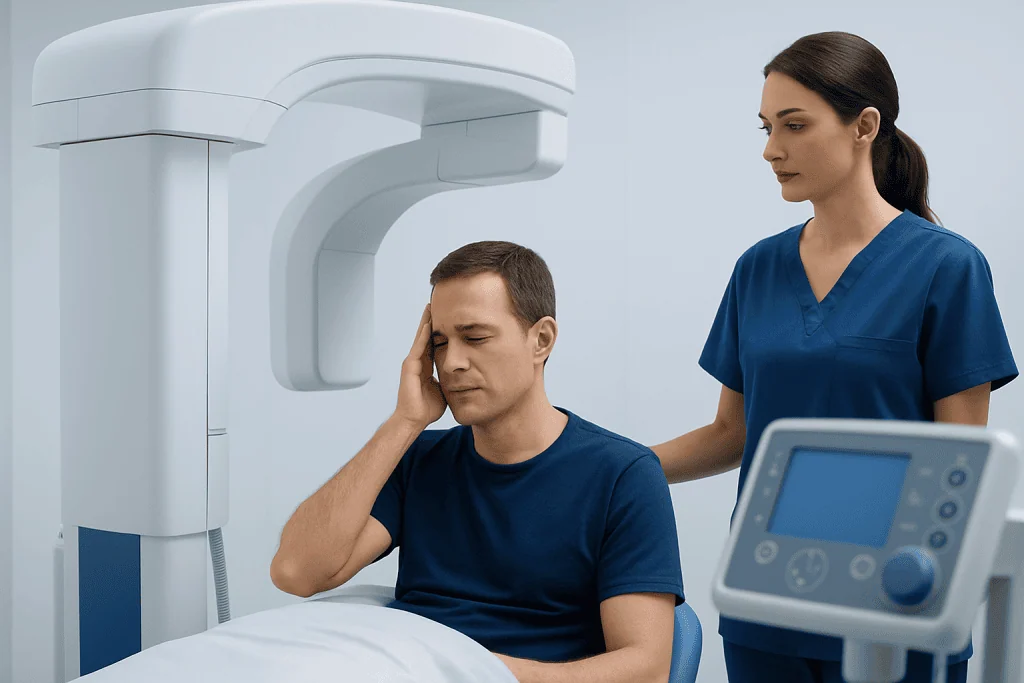
One-sided temple pain can have several everyday causes. Tension headaches are among the most common and may follow stress, poor posture, long hours at a screen, eye strain, or lack of sleep. Migraine is another frequent cause and may bring pulsating pain, nausea, vomiting, sensitivity to light or sound, and sometimes visual changes before the headache begins. People who have repeated migraine attacks may benefit from medical evaluation for migraine.
Jaw-related problems are also important. Teeth grinding, jaw clenching, and temporomandibular joint dysfunction can create pain that spreads from the jaw to the temple and ear. Dental infections, inflamed gums, or an uneven bite can cause similar discomfort. Scalp or neck muscle strain may also refer pain forward into one temple.
Sinus congestion can create pressure around the forehead, eyes, and temples, especially during colds or allergies. Less commonly, temple pain may come from conditions affecting blood vessels or nerves, such as temporal arteritis in older adults, cluster headache, or nerve irritation. Lifestyle triggers that can worsen symptoms include dehydration, skipped meals, excess caffeine, caffeine withdrawal, alcohol, and abrupt changes in sleep routine.
- Tension-type headache
- Migraine
- Jaw clenching or TMJ dysfunction
- Sinus inflammation or congestion
- Eye strain or uncorrected vision problems
- Neck and scalp muscle tension
- Less commonly, vascular or inflammatory conditions
How symptoms can help narrow the cause

The exact quality of left temple pain matters. Throbbing or pulsing pain often points toward migraine, especially if routine activity makes it worse. A pressure-like, tight, or dull ache is more typical of tension-type headache. A stabbing or burning sensation may suggest nerve irritation, while pain that is tender to touch can signal scalp inflammation or a vascular cause.
Associated symptoms provide further direction. Migraine commonly occurs with nausea, vomiting, sensitivity to light, sound, or smells, and a desire to rest in a dark room. Temple pain with jaw clicking, facial soreness, or morning headaches may suggest overnight grinding. Temple discomfort with runny nose, stuffiness, facial pressure, and recent upper respiratory symptoms may fit a sinus problem.
Doctors also pay attention to timing. A headache that has been recurring in a similar pattern for years is approached differently from a first or worst headache of life. New headache after age 50, pain linked to fever or scalp tenderness, or temple pain accompanied by one-sided weakness or trouble speaking requires a more urgent evaluation because these features can be associated with serious causes, including stroke.
Red flags that need urgent evaluation
Most temple pain is not an emergency, but certain warning signs should be treated seriously. Sudden explosive headache that reaches maximum intensity within seconds to minutes needs emergency care. The same is true for headache after head injury, fainting, seizure, or a new headache with confusion or reduced alertness.
Neurologic symptoms are especially important. If left temple pain comes with weakness, numbness, trouble speaking, facial drooping, severe dizziness, loss of balance, or changes in vision, urgent assessment is needed. These symptoms may occur with migraine in some people, but they can also be signs of a vascular emergency. In selected cases, doctors may recommend imaging such as MRI scanning or CT scanning to look for bleeding, stroke, mass effect, or other structural causes.
New temple pain in an older adult deserves careful attention, particularly when accompanied by scalp tenderness, fatigue, fever, shoulder stiffness, or pain when chewing. This can raise concern for giant cell arteritis, an inflammatory blood vessel condition that may threaten vision if untreated. Immediate care is also advised for temple pain with eye redness, blurred vision, or halos around lights, because some eye conditions can quickly damage sight.
How doctors diagnose the cause
Evaluation usually starts with a detailed history. A clinician will ask when the pain began, whether it is constant or episodic, what it feels like, how severe it is, and what symptoms come with it. They may also ask about stress, sleep, medications, hydration, menstrual pattern, caffeine intake, dental issues, visual strain, and any prior history of headaches.
A physical examination often includes blood pressure measurement, a neurologic exam, and checks of the eyes, sinuses, jaw joint, neck muscles, and scalp tenderness. Depending on the presentation, additional assessment may involve blood tests for inflammation, infection, or anemia. Eye examination may be needed if visual symptoms are present, while dental or ENT review can help when facial, sinus, or jaw causes are suspected.
Imaging is not necessary for every headache, especially when the pattern strongly suggests a familiar primary headache disorder and the examination is normal. However, new, progressive, atypical, or severe symptoms may justify imaging or specialist referral. If ongoing headache patterns are difficult to classify, a consultation with specialists in neurology care can help clarify the diagnosis and guide treatment.
Treatment and practical relief options
Treatment depends on the underlying cause. Tension-type headaches often improve with rest, hydration, regular meals, stress reduction, posture correction, and limiting long periods of screen use without breaks. Migraine treatment may include medicines that relieve an attack once it starts as well as preventive strategies when headaches are frequent or disabling. If sinus disease, dental disease, or jaw dysfunction is responsible, treatment is directed at that source rather than only masking the pain.
Simple supportive measures can also help. Many people benefit from a quiet dark room, a cold or warm compress, gentle neck stretching, and consistent sleep habits. For jaw clenching, relaxation exercises, a dental review, and avoiding gum chewing or hard foods may reduce temple pain. Eye strain may improve with updated glasses, better lighting, and scheduled screen breaks.
People should be cautious about frequent use of pain-relieving medicines without medical guidance. Overuse of headache medications can itself lead to more frequent headaches over time. If temple pain is recurring, changing, or interfering with work, sleep, or daily life, a doctor can build a safer long-term plan. Near the end of the care pathway, Acibadem International’s multidisciplinary specialists and JCI-accredited hospitals evaluate and treat patients with headache, neurologic, ENT, eye, and dental causes of temple pain.
Prevention and self-care
Prevention begins with identifying personal triggers. A simple symptom diary can be useful for tracking when left temple pain starts, how long it lasts, foods or drinks consumed beforehand, sleep pattern, stress level, menstrual timing, and any associated symptoms. Over time, patterns often emerge that make prevention easier.
Healthy daily habits reduce headache frequency for many people. Drinking enough fluids, eating regular meals, maintaining a steady sleep schedule, taking screen breaks, and managing stress can make a real difference. Neck and shoulder tension may improve with posture awareness, ergonomic adjustments, and gentle stretching. Reducing excess caffeine and avoiding abrupt caffeine withdrawal may also help.
People who grind their teeth may benefit from dental advice and stress-management techniques. Those with frequent migraine-like symptoms should avoid self-diagnosing for long periods, because formal diagnosis can open the door to preventive options and more targeted treatment. Self-care is helpful, but persistent or changing pain should still be reviewed by a qualified clinician.
When to seek medical care
Medical review is appropriate if pain in the left temple is severe, keeps returning, is getting worse, or does not improve with rest and simple measures. A doctor should also assess temple pain that is associated with vomiting, sleep disruption, fever, sinus symptoms that do not settle, dental pain, or jaw discomfort when chewing.
Urgent care is needed for sudden severe headache, head injury, weakness, numbness, trouble speaking, loss of consciousness, seizure, double vision, vision loss, or confusion. New temple pain after age 50 should be assessed promptly, especially if there is scalp tenderness or pain while chewing. These signs do not always mean a dangerous condition is present, but they do need timely professional evaluation to rule out serious causes and protect health.
Frequently asked questions
Is pain in the left temple usually serious?
Usually not. It is often related to tension headache, migraine, jaw clenching, sinus pressure, or muscle strain. It becomes more concerning when it is sudden and severe or comes with symptoms such as weakness, confusion, fever, or vision changes.
Can stress cause pain in the left temple?
Yes. Stress can tighten scalp, jaw, and neck muscles and can trigger tension headaches or migraine attacks. Poor sleep and jaw clenching during stressful periods may make temple pain more noticeable.
How can someone tell if left temple pain is migraine or tension headache?
Migraine is more likely when the pain is throbbing, one-sided, worsened by activity, and paired with nausea or sensitivity to light and sound. Tension headache is often a dull, pressing, or tightening pain and may feel less intense, though symptoms can overlap.
Can jaw problems cause temple pain on one side?
Yes. Teeth grinding, jaw clenching, and temporomandibular joint problems commonly refer pain to the temple, ear, and side of the face. Pain may be worse in the morning or after chewing, and some people notice jaw clicking or soreness.
When should left temple pain be checked by a doctor?
A medical review is sensible if the pain is new, frequent, worsening, or interfering with normal life. Prompt assessment is especially important if there is fever, scalp tenderness, chewing pain, eye symptoms, or any neurologic symptoms such as weakness or trouble speaking.
What can help relieve mild temple pain at home?
Rest, hydration, regular meals, a quiet environment, and limiting screen time can help. A cold or warm compress, gentle stretching, and attention to sleep and posture may also reduce symptoms. If headaches keep returning, a doctor should help identify the cause rather than relying only on repeated self-treatment.
References
- American Migraine Foundation
- National Institute of Neurological Disorders and Stroke
- Mayo Clinic
- National Health Service
- Cleveland Clinic
This article is for general information only and is not a substitute for professional medical advice. Please consult a qualified doctor about your individual situation.
Hair transplant in Turkey — costs, graft counts & a free assessment
JCI-accredited · board-certified surgeons · reply within 24h
Add us as a Preferred Source to see more of our trusted health content across Google Search, AI Overviews and Discover.