What Part of the Brain Controls Speech? Here Is What the Evidence Says

Speech is not controlled by one single spot but by a connected brain network. Broca’s area helps plan and produce speech, while Wernicke’s area supports understanding spoken language.
Key Takeaways
- Speech is not controlled by one single spot but by a connected brain network.
- Broca’s area helps plan and produce speech, while Wernicke’s area supports understanding spoken language.
- Other regions, including the motor cortex, cerebellum, and brainstem, help coordinate clear speech.
- Occasional word-finding lapses can be normal, but sudden speech trouble may signal a stroke or another urgent problem.
- Doctors evaluate speech changes with a history, neurological exam, and sometimes brain imaging and language testing.
What part of the brain controls speech? In most people, speech depends mainly on a network in the left side of the brain, especially frontal and temporal regions that plan words, understand language, and coordinate the muscles used to speak. Everyday word-finding slips are often harmless, but sudden or persistent speech changes should be medically assessed.
Overview: the short answer
The answer to “what part of the brain controls speech” is that speech is managed by a network rather than one single structure. In most right-handed people, and in many left-handed people, the most important language areas are on the left side of the brain, especially parts of the frontal and temporal lobes.
Two well-known regions in this network are Broca’s area, which helps organize and produce spoken language, and Wernicke’s area, which helps make sense of words that are heard. These regions work together with nearby and distant brain areas that support breathing, voice, mouth movements, hearing, memory, and attention.
Many brief speech lapses, such as losing a word when tired or stressed, are common and not usually a sign of disease. However, sudden slurred speech, difficulty getting words out, confusion, or trouble understanding others can be important warning signs and should not be ignored.
How the brain produces speech
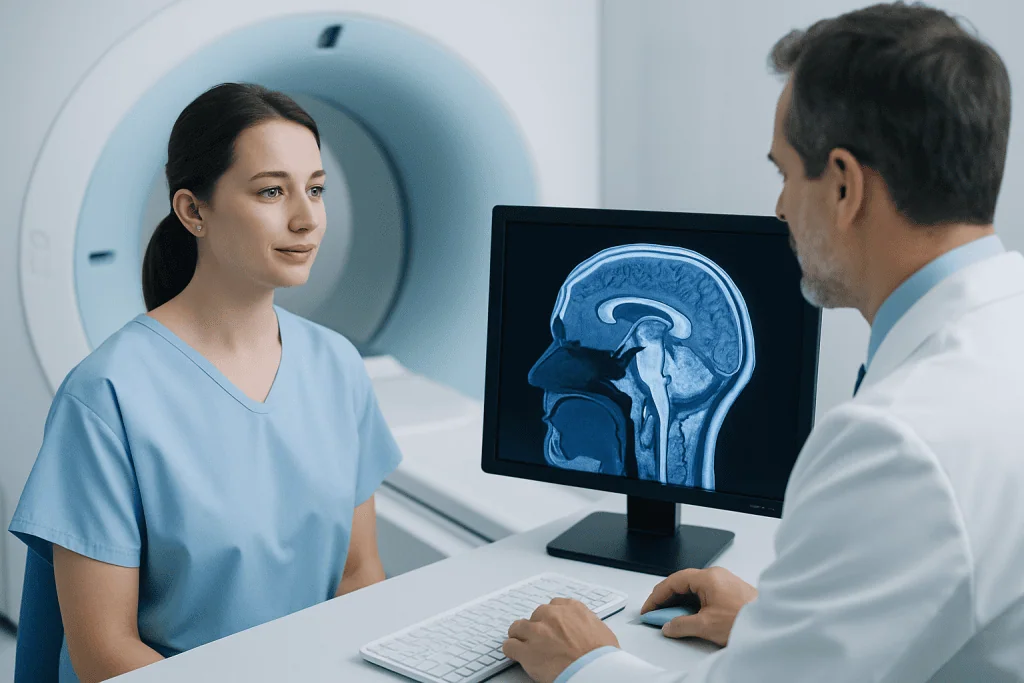
Speaking is a complex task that begins before a sound is made. The brain must first choose the right idea, find the correct words, arrange them in order, and then send precise instructions to the muscles of the lips, tongue, jaw, larynx, and breathing system.
Broca’s area, located in the frontal lobe of the dominant hemisphere, is closely linked with speech production. It helps convert thoughts into a motor plan for speaking. When this area or its connections are affected, a person may know what they want to say but struggle to form words fluently.
The primary motor cortex then helps activate the muscles needed for articulation. At the same time, the cerebellum fine-tunes timing and coordination, while the brainstem supports the basic pathways involved in voice, swallowing, and facial movement. This is why speech can change not only from language disorders, but also from conditions that affect movement control.
Speech also depends on intact hearing and self-monitoring. As a person talks, the brain listens to the sound of the voice and makes rapid adjustments. This feedback loop helps maintain clear pronunciation, rhythm, and volume.
Which brain areas are most important for language?
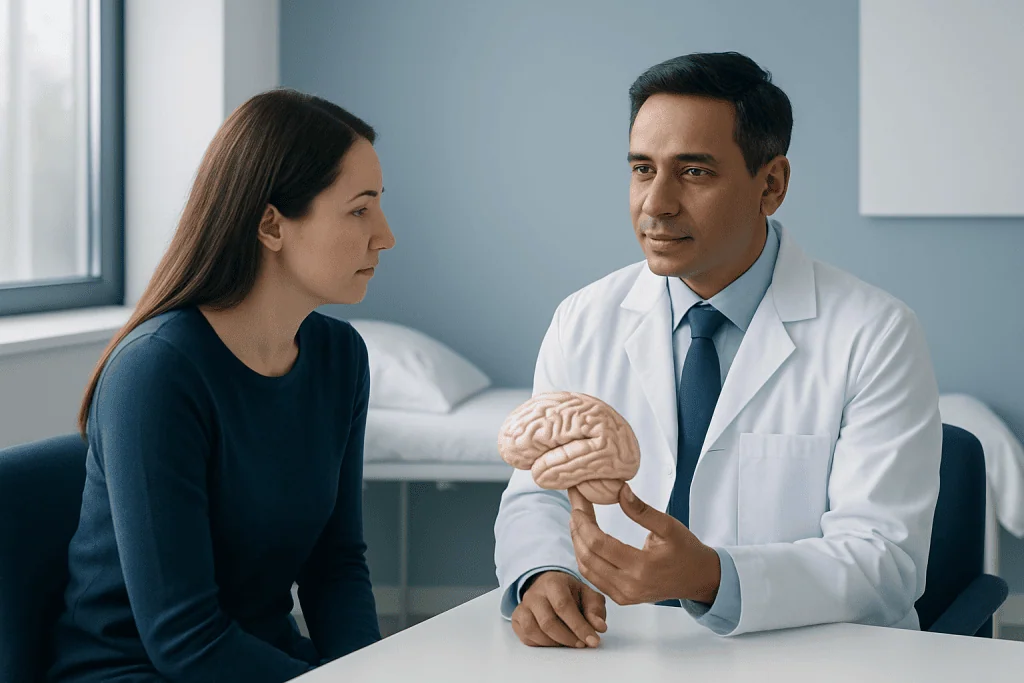
Although speech and language are often discussed together, they are not exactly the same. Language includes understanding, selecting, and organizing words and meaning. Speech is the physical act of producing sounds. Several brain regions support both functions.
Wernicke’s area, in the temporal lobe of the dominant hemisphere, plays a major role in understanding spoken language. When it is affected, a person may speak fluently but use incorrect words or have trouble understanding what others say. Broca’s area, by contrast, is more closely linked to producing words and sentence structure.
Other important structures include the arcuate fasciculus, a bundle of nerve fibers connecting major language regions; the angular and supramarginal gyri, which help integrate language, reading, and sensory information; and frontal executive networks that support attention and planning. This network-based view is the reason modern medicine no longer treats speech as the job of one isolated “speech center.”
For most people, language is left-dominant, but not always. Some left-handed people and a smaller number of right-handed people may have more bilateral or right-sided language representation. Doctors keep this variation in mind, especially when planning brain surgery or evaluating brain injury.
What can cause speech problems?
Speech changes can happen for many reasons, and not all are serious. Temporary problems may occur with fatigue, anxiety, migraine, fever, low blood sugar, dehydration, medication effects, or lack of sleep. These situations can make attention and word retrieval less efficient, leading to occasional pauses or word-finding difficulty.
Persistent or sudden speech problems can point to a neurological condition. One major cause is stroke, which may reduce blood flow to language areas or motor pathways. Brain tumors, head injury, seizures, infections, multiple sclerosis, and neurodegenerative conditions can also affect speech or language.
The symptoms depend on which part of the speech network is involved. A person with aphasia may have trouble understanding or using words. A person with dysarthria may know exactly what they want to say but sound slurred because the speech muscles are weak or poorly coordinated. Apraxia of speech involves difficulty planning the mouth movements needed for speech despite adequate muscle strength.
Because many different conditions can alter speech, the pattern matters. Trouble finding words, mixing up names, slurring, sounding hoarse, or becoming unable to understand sentences may each suggest different parts of the brain or nervous system are involved.
Signs that may help identify the cause
Doctors often listen closely to the type of speech difficulty because it provides clues about the brain systems involved. Nonfluent speech with short, effortful phrases may suggest a problem in frontal language networks. Fluent but nonsensical speech, especially with poor comprehension, may suggest temporal lobe language involvement.
Slurred speech without a major language problem may be more consistent with dysarthria, which can occur with stroke, Parkinson’s disease, motor neuron disorders, medication effects, or cerebellar disease. Trouble repeating phrases, naming objects, reading, or writing can also help localize the problem.
Associated symptoms are especially important. Weakness on one side, facial drooping, numbness, severe headache, double vision, sudden confusion, or trouble walking can suggest an urgent neurological problem. Memory decline, gradual personality change, or slowly progressive communication difficulty may point to a longer-term condition that still needs evaluation.
- Word-finding trouble may reflect language network strain or aphasia.
- Slurred speech may reflect muscle control or coordination problems.
- Trouble understanding words may suggest receptive language impairment.
- Sudden speech change with other neurological symptoms is an emergency.
How doctors diagnose speech-related brain problems
If speech changes are new, recurrent, or worsening, a doctor typically starts with a detailed history. They may ask when the problem began, whether it came on suddenly or gradually, what the speech sounds like, and whether other symptoms such as weakness, headache, confusion, or swallowing problems are present.
A neurological examination usually follows. This can include checking alertness, comprehension, naming, repetition, reading, writing, facial movement, tongue movement, strength, coordination, and reflexes. In some cases, formal assessment by a speech-language pathologist is helpful to define whether the main issue is aphasia, dysarthria, apraxia, or another communication disorder.
Imaging may be needed when a structural brain problem is suspected. Depending on the situation, doctors may recommend MRI or CT scan to look for stroke, bleeding, tumor, inflammation, or injury. Blood tests, hearing assessment, or electroencephalography may also be used when clinically appropriate.
If a tumor or another focal brain lesion is found, care is often planned by a multidisciplinary team. In selected cases, evaluation may involve brain tumor surgery planning as well as neurological rehabilitation to protect speech and language function as much as possible.
Treatment, recovery, and self-care
Treatment depends on the cause. If speech difficulty is related to stroke, urgent care is the priority, followed by rehabilitation. If medication side effects, infection, migraine, or metabolic problems are responsible, addressing the underlying issue may improve speech. For progressive neurological conditions, treatment focuses on symptom management, communication strategies, and supportive care.
Speech-language therapy is a central part of recovery for many people. Therapy may help rebuild language skills, improve speech clarity, strengthen compensatory strategies, and support safe communication in daily life. Family education is often useful because communication tends to improve when others know how to give extra time, reduce background noise, and use clear, simple phrases.
Self-care can support brain health, although it should not replace medical review for concerning symptoms. Good sleep, hydration, blood sugar control when relevant, hearing support, stress management, and treatment of vascular risk factors such as high blood pressure may all help reduce avoidable strain on communication.
For international patients who need neurological assessment, Acibadem International’s multidisciplinary specialists and JCI-accredited hospitals evaluate speech-related brain conditions and coordinate treatment and rehabilitation when needed.
When to seek medical care
Occasional mild word-finding difficulty can happen in healthy people, especially during stress, multitasking, or tiredness. Still, any speech problem that is new, persistent, clearly worsening, or interfering with daily life should be discussed with a qualified doctor.
Urgent medical care is needed if speech changes start suddenly, especially if they are accompanied by facial drooping, arm or leg weakness, severe headache, confusion, loss of balance, or vision changes. These symptoms may indicate a stroke or another emergency and should be assessed immediately.
Medical review is also important when speech problems follow a head injury, occur with seizures, or are associated with swallowing difficulty, weight loss, or noticeable changes in memory or behavior. Early assessment can help identify the cause, rule out serious conditions, and guide the right treatment plan.
Frequently asked questions
Is speech controlled by the left or right side of the brain?
In most people, speech and language are mainly controlled by the left side of the brain. However, the exact pattern varies, and some people have more shared involvement from both sides, especially for aspects such as tone, emotion, and rhythm.
What is the difference between Broca’s area and Wernicke’s area?
Broca’s area is more closely linked to planning and producing speech. Wernicke’s area is more closely linked to understanding spoken language and attaching meaning to words.
Can stress cause speech problems?
Stress can make speech feel less smooth by affecting concentration, memory, and word retrieval. This may lead to occasional pauses or trouble finding words, but sudden or significant speech changes still need medical attention.
Does slurred speech always mean a stroke?
No, slurred speech can also happen with medication effects, fatigue, alcohol, migraine, nerve or muscle disorders, and other neurological conditions. But because stroke is a serious possibility, sudden slurred speech should be treated as urgent until a doctor says otherwise.
What doctor should a person see for speech changes?
A primary care doctor can be a good starting point for mild or gradual symptoms. Depending on the pattern, they may refer the person to a neurologist, an ear, nose and throat specialist, or a speech-language pathologist.
Can speech recover after a brain problem?
Recovery is often possible, but it depends on the cause, the brain area affected, and how quickly treatment begins. Speech-language therapy can be very helpful, and improvement may continue over time with consistent support and practice.
References
- National Institute of Neurological Disorders and Stroke
- National Institute on Deafness and Other Communication Disorders
- American Stroke Association
- Mayo Clinic
- Merck Manual
This article is for general information only and is not a substitute for professional medical advice. Please consult a qualified doctor about your individual situation.
Explore treatments in Turkey — costs, top hospitals & a free quote
JCI-accredited · board-certified surgeons · reply within 24h
Add us as a Preferred Source to see more of our trusted health content across Google Search, AI Overviews and Discover.

More from the Health Library



Related Specialists

Dr. Mutluhan Temizsoy
Aesthetic Plastic & Reconstructive Surgery
Gizem Erbil
Pediatric Rehabilitation
Prof. Dr. Turgut Aydın
Gynecology & Obstetrics
Dr. Cenk İlham
Anesthesiology