Calf Strain Recovery Time: What Patients Need to Know
Calf strain recovery time varies by injury severity, age, activity level, and how soon treatment begins. A mild calf strain may settle within 1 to 3 weeks, but more significant tears can take 6 to 12 weeks or longer.
Key Takeaways
- Calf strain recovery time varies by injury severity, age, activity level, and how soon treatment begins.
- A mild calf strain may settle within 1 to 3 weeks, but more significant tears can take 6 to 12 weeks or longer.
- Early rest, gradual movement, and a structured return to activity may reduce the risk of reinjury.
- Severe pain, marked swelling, inability to walk, or sudden calf swelling after inactivity need medical assessment.
- Rehabilitation often focuses on pain control, flexibility, calf strength, and balance before return to sport or exercise.
Calf strain recovery time depends mainly on how much the muscle fibers are stretched or torn. Mild calf strains may improve within 1 to 3 weeks, while moderate or severe injuries can take several weeks to a few months and may benefit from guided rehabilitation.
Overview: how long does a calf strain take to heal?
Calf strain recovery time is often shorter than people fear, but it is not the same for every injury. In general, a mild strain may improve in 1 to 3 weeks, a moderate strain may need 4 to 8 weeks, and a more severe tear can take 2 to 3 months or sometimes longer. The timeline depends on the extent of muscle damage, whether the Achilles region is involved, and how carefully activity is restarted.
A calf strain happens when muscle fibers in the back of the lower leg are overstretched or torn. It most often affects the gastrocnemius or soleus muscles and may follow sprinting, jumping, sudden changes in direction, climbing stairs, or even a forceful push-off while walking. Some people describe it as a “pull” or a sudden sharp pain in the calf.
Recovery is not only about waiting for pain to fade. True healing also involves restoring normal movement, calf strength, endurance, and confidence with walking or sport. Returning too quickly may increase the chance of another strain, so many patients do best with a gradual plan rather than a fixed calendar date.
What affects calf strain recovery time
The most important factor is injury severity. In a grade 1 strain, only a small number of fibers are affected, so discomfort may be mild and walking is usually possible. A grade 2 strain involves a larger partial tear and often causes more pain, limping, swelling, and bruising. A grade 3 strain is a major tear or complete rupture and may make weight-bearing very difficult.
Recovery time is also shaped by age, general conditioning, circulation, previous calf injuries, and the physical demands of work or sport. People who return to sprinting, tennis, football, or hill running too soon may feel better at rest but still lack the calf power needed for safe performance.
Early self-care can also influence the healing course. Protecting the muscle in the first days, avoiding painful overload, and beginning gentle rehabilitation when appropriate may support steadier recovery. On the other hand, prolonged complete inactivity or pushing through pain can delay progress.
- Grade 1 strain: often about 1 to 3 weeks
- Grade 2 strain: often about 4 to 8 weeks
- Grade 3 strain: often 8 to 12 weeks or more
- Reinjury, poor rehabilitation, or tendon involvement may prolong healing
Symptoms and signs of a calf strain
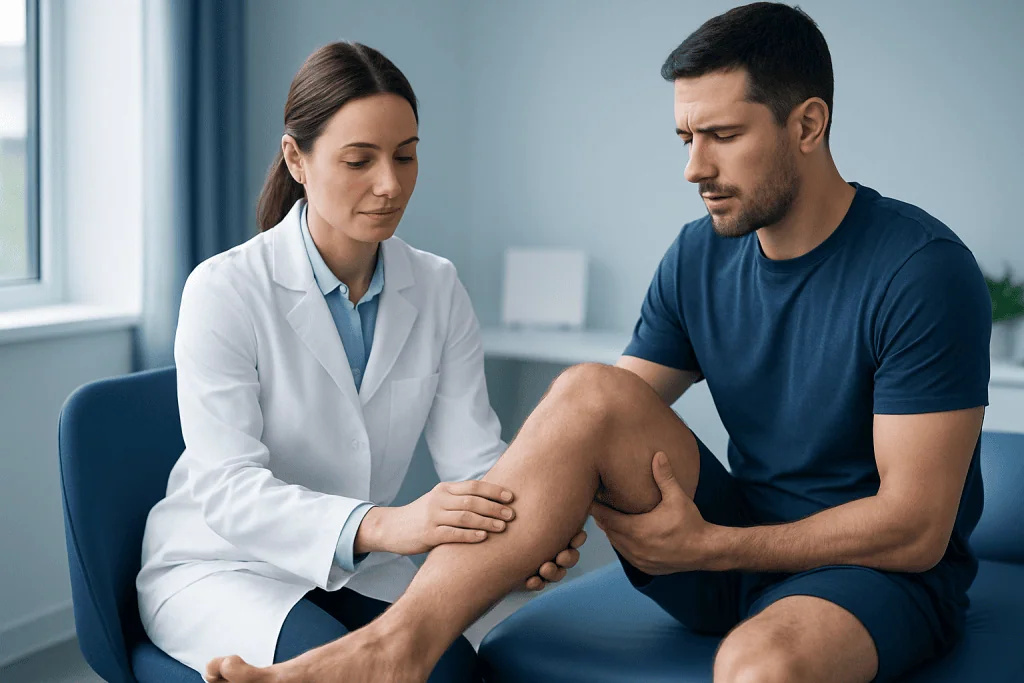
Patients often feel a sudden tightness, stab, or snapping sensation in the calf during movement. Pain may begin immediately or increase over the next several hours. Walking, pushing off the toes, climbing stairs, or standing on one leg can become uncomfortable.
Common symptoms include tenderness in one area of the calf, swelling, stiffness, and reduced ankle movement. Bruising may appear after a day or two, especially with a moderate tear. Some people notice that the calf feels weak or that it is hard to rise onto the toes of the injured leg.
Not all calf pain is a muscle strain. Problems such as Achilles tendon rupture, muscle cramp, a Baker cyst, nerve irritation, or a blood clot in the leg can sometimes feel similar. If the pain is severe, unusual, or accompanied by major swelling, warmth, or shortness of breath, prompt medical advice is important.
Diagnosis and when testing may be needed
Doctors usually diagnose a calf strain through the history and physical examination. They ask how the injury happened, where the pain is felt, whether a snap was noticed, and what movements are difficult. During the exam, the calf is checked for tenderness, swelling, bruising, strength, and ankle movement.
Imaging is not always necessary for a straightforward mild strain. However, ultrasound or MRI may be considered when the diagnosis is unclear, symptoms are severe, recovery is slower than expected, or a tendon injury is suspected. These tests can help estimate the extent of the tear and guide return-to-sport planning.
It is especially important to distinguish a simple strain from other conditions that can require different treatment. Sudden calf swelling after a long flight, surgery, or prolonged immobility may raise concern for deep vein thrombosis. If a doctor suspects a vascular problem, urgent assessment is needed rather than routine home care.
Treatment and rehabilitation options
Early treatment usually focuses on protecting the injured muscle and reducing pain. In the first 48 to 72 hours, many clinicians recommend relative rest, avoiding painful stretching, and using compression or elevation if swelling is present. Ice may help some people with pain relief, especially early on, though it should be used carefully to protect the skin.
As pain begins to settle, the goal shifts toward gentle movement and progressive loading. This may start with easy ankle motion and short walks, then progress to calf raises, balance work, and strengthening. A structured rehabilitation plan is often more useful than complete rest because the muscle needs gradual loading to regain function.
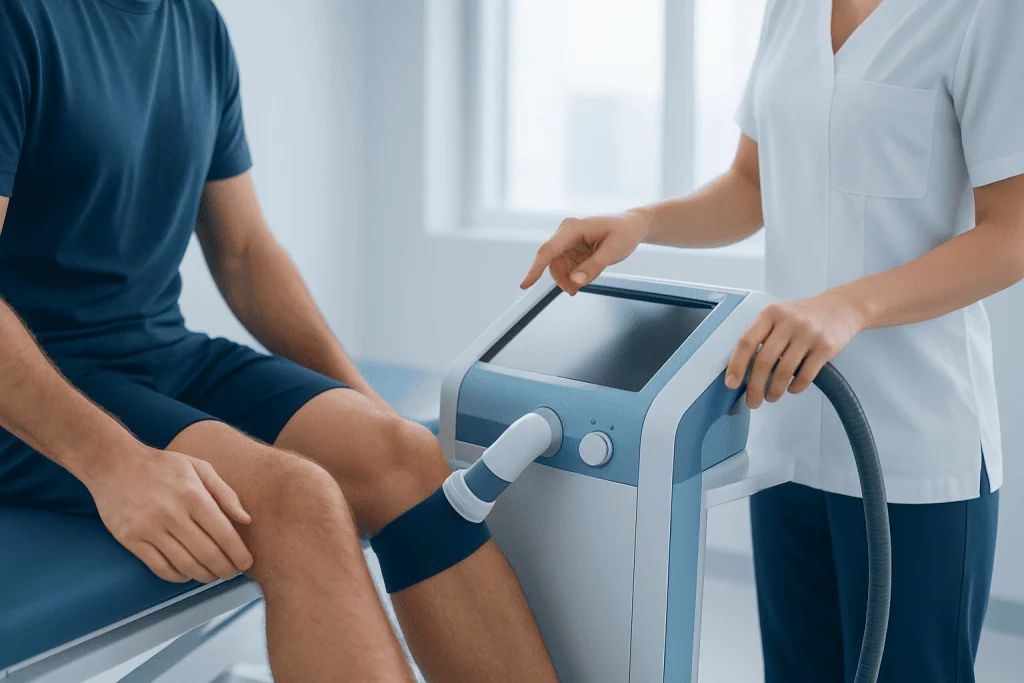
Physical therapy can be helpful when the strain is moderate, recurrent, or slow to improve. Rehabilitation may include guided stretching, strengthening, walking drills, and return-to-running progressions. In some patients, an orthopedic or sports medicine specialist may assess related issues such as biomechanics, tendon involvement, or overlap with Achilles tendonitis. When specialist support is needed, evaluation through orthopedics and traumatology or a personalized physical therapy and rehabilitation program may be appropriate.
Medication decisions should be individualized. Over-the-counter pain relief may be suitable for some patients, but it is best used according to a doctor’s or pharmacist’s advice, especially for people with stomach, kidney, bleeding, or heart concerns. Severe tears may require a longer protected recovery and closer follow-up.
Return to walking, exercise, and sport
Many patients want a clear date for return to normal activity, but readiness is better judged by function than by the calendar alone. A person is often progressing well when walking becomes comfortable, swelling is controlled, ankle motion has improved, and the calf can tolerate light strengthening without a pain flare later the same day or the next morning.
Before returning to higher-impact activity, the injured leg should be able to manage repeated calf raises with good control and only minimal discomfort. Jogging, cutting, jumping, and sprinting place much higher demand on the calf, so these are usually added step by step. A return that is too fast can reopen healing fibers and restart the recovery clock.
Sports medicine or rehabilitation guidance can be especially useful for runners and active adults who need a staged plan. In selected cases, assessment through sports injuries care may help match recovery goals to the demands of training and competition. Patients recovering from a serious tear may also benefit from follow-up within orthopedic rehabilitation if that service is part of their broader care plan.
Prevention, self-care, and when to seek medical care
Reducing the chance of another calf strain usually involves several small habits rather than one single fix. A sensible warm-up, gradual increases in exercise intensity, regular calf strengthening, and attention to ankle mobility can all help. Supportive footwear and recovery time between hard sessions may also matter, especially for runners and court-sport athletes.
At home, patients should listen to pain rather than trying to “push through” it. Mild discomfort during rehabilitation can be normal, but sharp pain, increasing swelling, or limping after activity suggests the muscle is not ready for that level yet. Hydration, sleep, and a balanced diet support general healing, even though they do not replace rehabilitation.
Medical care should be sought if pain is severe, there is a popping sensation with immediate weakness, walking is very difficult, or swelling and bruising are marked. Prompt assessment is also important if the calf becomes suddenly swollen, warm, or red without a clear injury, or if symptoms are associated with chest pain or shortness of breath. Near the end of recovery, if symptoms are not improving as expected, specialist review may help identify an alternative diagnosis or a slower-healing tear.
For international patients who need coordinated evaluation, Acibadem International’s multidisciplinary specialists and JCI-accredited hospitals diagnose and treat muscle, tendon, and sports-related conditions with individualized planning.
Frequently asked questions
How long does a mild calf strain take to heal?
A mild calf strain often improves within 1 to 3 weeks. Some tightness or sensitivity can last a little longer, especially during faster walking or exercise, but day-to-day activity usually becomes easier fairly quickly.
Can a calf strain heal on its own?
Many mild calf strains do heal with relative rest, time, and gradual return to activity. Even so, a guided rehabilitation approach is often helpful because it can restore strength and reduce the risk of reinjury.
Should a calf strain be completely rested?
Complete rest is usually most useful only in the very early phase if walking is painful. After that, gentle movement and progressive loading are often part of recovery, as long as they do not significantly increase pain or swelling.
What is the difference between a calf strain and a blood clot?
A calf strain usually follows a specific movement or injury and causes localized pain, tenderness, and pain with muscle use. A blood clot may cause swelling, warmth, and aching without a clear muscle injury, and it needs urgent medical assessment because treatment is different.
When can someone return to running after a calf strain?
Return to running depends on comfort, strength, and control rather than a fixed number of days. Many people begin only after walking is pain-free, calf raises are well tolerated, and there is no significant pain increase the next day.
Is bruising normal after a pulled calf muscle?
Yes, bruising can happen, especially with a moderate tear. It may appear a day or two after the injury and can track downward with gravity, but heavy bruising or major swelling should be discussed with a doctor.
References
- American Academy of Orthopaedic Surgeons
- American College of Sports Medicine
- National Health Service
- MedlinePlus
- American Physical Therapy Association
This article is for general information only and is not a substitute for professional medical advice. Please consult a qualified doctor about your individual situation.
Explore treatments in Turkey — costs, top hospitals & a free quote
JCI-accredited · board-certified surgeons · reply within 24h