Achilles Tendon Rupture
Achilles Tendon Rupture is a tear of the heel cord causing sudden pain, weakness, and walking difficulty. Learn symptoms, diagnosis, and care.
Quick answer
Achilles tendon rupture is a tear of the strong tendon connecting the calf muscles to the heel, typically causing sudden pain, swelling, and difficulty walking or pushing off the foot. Treatment depends on the location and severity of the tear and may include immobilization, rehabilitation, or surgical repair, with diagnosis and care planned through orthopedic assessment and imaging when needed.
Achilles Tendon Rupture is a partial or complete tear of the strong tendon that connects the calf muscles to the heel bone. It usually causes sudden pain, weakness when pushing off the foot, and difficulty walking, and it should be assessed by an orthopedic specialist.
Overview
Achilles Tendon Rupture is a tear in the Achilles tendon, the thick band of tissue at the back of the ankle that connects the calf muscles to the heel bone. This tendon is essential for walking, running, jumping, climbing stairs, and standing on tiptoe because it helps the foot push down against the ground.
A rupture may be complete, meaning the tendon ends separate, or partial, meaning some tendon fibers remain intact. The injury often happens suddenly during sports or activities that involve a quick push-off, jump, sprint, or change of direction. It can also occur during everyday movement, especially if the tendon has become weakened over time.
Although an Achilles tendon rupture can be painful and limiting, effective treatment is available. Many people recover well with timely diagnosis, appropriate immobilization or surgery when indicated, and a carefully supervised rehabilitation program.
Symptoms
The symptoms of Achilles Tendon Rupture often begin suddenly. Many people describe feeling as if they were kicked, struck, or hit at the back of the ankle or lower calf, even though no one touched them. A popping or snapping sensation may occur at the moment of injury.
Typical symptoms include pain near the heel or lower calf, swelling around the back of the ankle, bruising, and difficulty walking normally. The person may be unable to push off the injured foot, climb stairs comfortably, or stand on tiptoe on the affected side.
- Sudden sharp pain at the back of the ankle or calf
- A pop, snap, or tearing sensation during activity
- Swelling and tenderness above the heel
- Weakness when pushing the foot downward
- Difficulty walking, running, or rising onto the toes
- A visible or felt gap in the tendon in some complete tears
Pain levels can vary. Some people have severe pain at first that improves, while others notice mainly weakness and instability. Because symptoms can sometimes be mistaken for a calf strain or ankle sprain, medical evaluation is important.
Causes & Risk Factors
Achilles Tendon Rupture usually occurs when the tendon is suddenly stretched or loaded beyond its capacity. This may happen during sports such as football, basketball, tennis, running, or other activities that require explosive movement. It can also happen when stepping into a hole, slipping, falling, or suddenly increasing activity intensity.
The tendon may be more vulnerable if it has been affected by long-term overuse or tendinopathy. Tendinopathy can cause microscopic tendon changes, stiffness, or pain before a rupture occurs, although some people have no warning symptoms before the tear.
- Sudden acceleration, jumping, or pivoting movements
- Irregular or intense exercise after a period of inactivity
- Previous Achilles tendon pain or tendinopathy
- Tight calf muscles or reduced ankle flexibility
- Poor conditioning or inadequate warm-up
- Certain medical conditions or medications that may affect tendon health
- Previous injury to the ankle, calf, or tendon
Risk is influenced by a combination of tendon health, training habits, footwear, activity type, and individual health factors. A specialist can help identify contributing factors and guide prevention of future injury during recovery.
Diagnosis
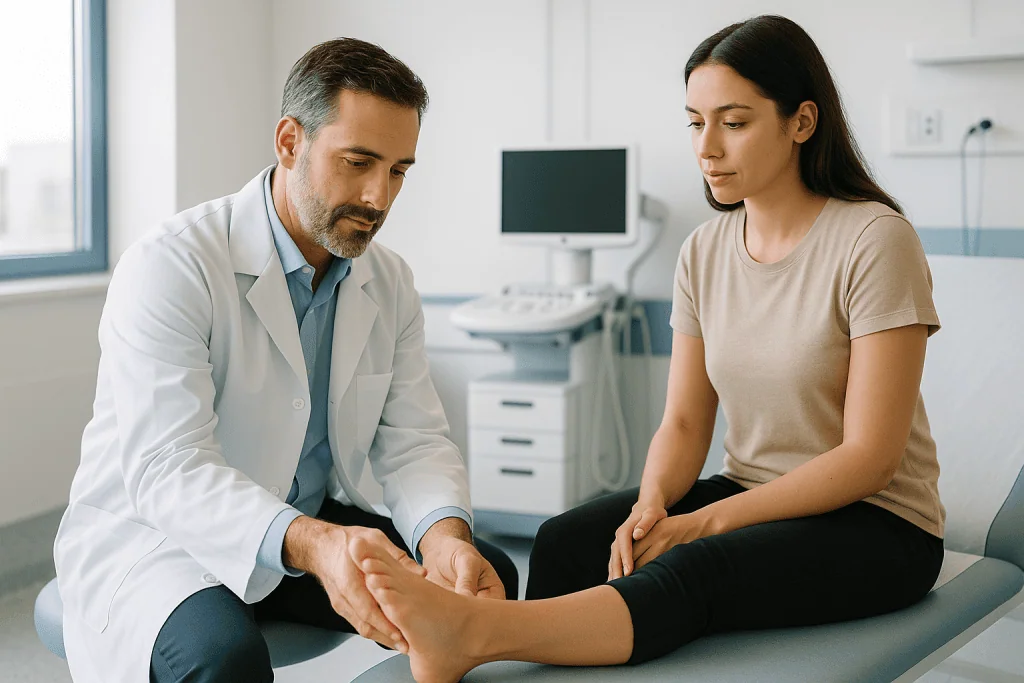
Diagnosis of Achilles Tendon Rupture begins with a clinical assessment. The doctor asks how the injury happened, what symptoms occurred at the time, and whether the person can walk or push off the foot. The back of the ankle and calf are examined for swelling, tenderness, bruising, weakness, and a possible gap in the tendon.
A common examination method is a calf squeeze test, in which the doctor gently squeezes the calf while observing whether the foot moves as expected. Reduced or absent movement may suggest a rupture. The doctor may also compare both legs to assess strength, ankle position, and tendon continuity.
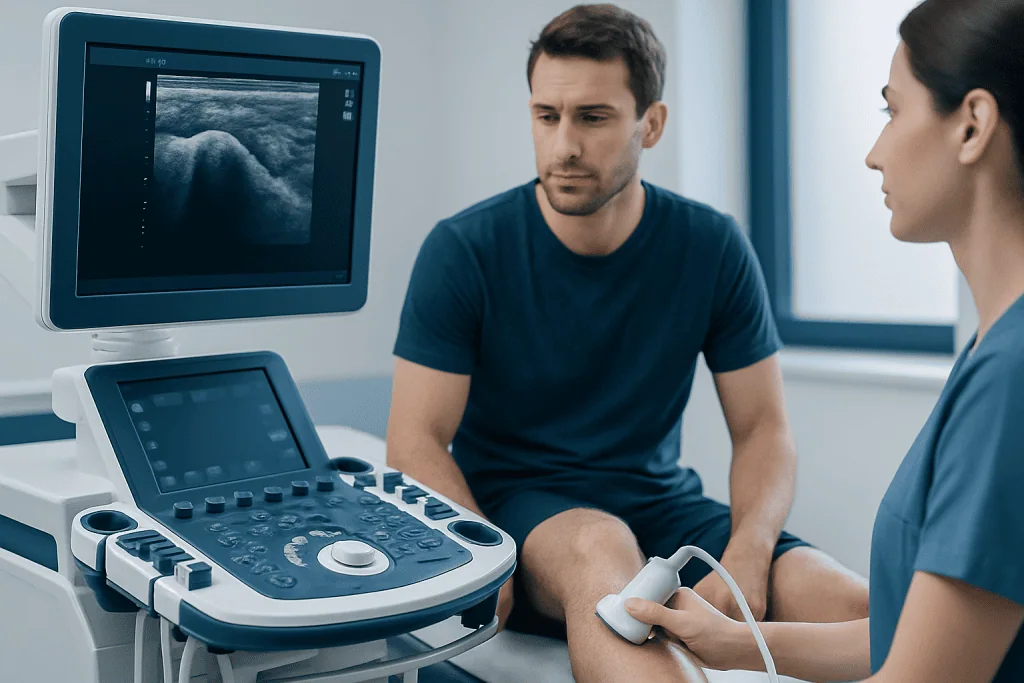
Imaging may be used when the diagnosis is uncertain, when a partial tear is suspected, or when planning treatment. Ultrasound can show tendon disruption and movement in real time, while MRI can provide detailed images of the tendon, surrounding soft tissues, and the extent of injury. X-rays do not show the tendon itself but may be used if a bone injury is suspected.
Early diagnosis is helpful because the tendon ends may need to be positioned correctly for healing. Until a doctor evaluates the injury, the person should avoid pushing off, running, or stretching the affected ankle.
Treatment Options
Treatment for Achilles Tendon Rupture aims to allow the tendon to heal in a strong position, restore ankle function, and reduce the risk of repeat rupture. The right approach is decided by an orthopedic specialist after assessing the tear pattern, tendon gap, age, activity level, general health, timing of injury, and patient goals.
Non-surgical treatment usually involves immobilizing the foot and ankle in a pointed-down position using a cast, boot, or brace so the tendon ends can heal. This is followed by a controlled rehabilitation program with gradual changes in ankle position, protected weight-bearing, and progressive strengthening. Non-surgical care may be suitable for selected patients and requires careful follow-up.
Surgical treatment involves repairing the torn tendon ends, usually followed by immobilization and rehabilitation. Surgery may be considered for active patients, certain complete ruptures, wider tendon gaps, or cases where specialist assessment suggests that operative repair may provide the best chance of restoring strength and function. Like all procedures, surgery has potential risks, so the decision is individualized.
Rehabilitation is an essential part of both surgical and non-surgical treatment. Physiotherapy may include range-of-motion exercises, calf strengthening, gait training, balance work, and sport-specific or work-specific conditioning when appropriate. Return to running, jumping, and competitive sport should be guided by clinical healing, strength testing, and the treating specialist’s advice rather than by time alone.
Living With / Prognosis
Recovery from Achilles Tendon Rupture takes time and requires patience. Many people are able to return to normal walking and daily activities, but strength, endurance, and confidence in the injured leg may take longer to rebuild. Following the prescribed rehabilitation plan is one of the most important factors in regaining function safely.
During recovery, patients are usually advised to protect the tendon from sudden loading. This may include using a walking boot, crutches, heel lifts, or activity restrictions for a period of time. As healing progresses, the rehabilitation team gradually increases movement, weight-bearing, and strengthening exercises.
Long-term prevention focuses on calf strength, flexibility, balance, gradual training progression, and appropriate footwear. People returning to sport should avoid sudden increases in intensity and should warm up properly. Any recurring pain, swelling, or weakness should be discussed with a healthcare professional.
For international patients, Acibadem International’s multidisciplinary orthopedic and rehabilitation teams in JCI-accredited hospitals can assess and treat Achilles tendon injuries, including surgical and non-surgical care, according to each patient’s needs.
When to See a Doctor
A person should seek medical attention promptly if they feel a sudden pop or snap at the back of the ankle, develop sudden calf or heel pain, or have difficulty pushing off the foot after an injury. Early assessment helps confirm the diagnosis and start appropriate protection of the tendon.
Urgent evaluation is especially important if the person cannot stand on tiptoe, cannot walk normally, has marked swelling or bruising, or feels a gap above the heel. Continuing to walk or exercise on a suspected rupture may make the injury more difficult to treat.
People already recovering from an Achilles tendon injury should contact their doctor if pain suddenly worsens, swelling increases, the wound changes after surgery, or the leg feels unusually weak. Any concern about circulation, sensation, fever, or increasing redness should also be assessed by a qualified healthcare professional.
Frequently asked questions
What is Achilles Tendon Rupture?
Achilles Tendon Rupture is a partial or complete tear of the tendon that connects the calf muscles to the heel bone. It affects the ability to push the foot downward, which is needed for walking, running, jumping, and standing on tiptoe.
How does an Achilles tendon rupture feel?
Many people feel a sudden pop, snap, or sharp pain at the back of the ankle or calf. Some describe it as feeling like they were kicked from behind. Afterward, walking and pushing off the injured foot may be difficult.
Can an Achilles tendon rupture heal without surgery?
Some Achilles tendon ruptures can heal with non-surgical treatment using immobilization and a structured rehabilitation program. Suitability depends on the type of tear, tendon position, activity level, medical history, and specialist assessment. A doctor should guide this decision.
When is surgery considered for a torn Achilles tendon?
Surgery may be considered for certain complete tears, larger tendon gaps, active patients, or cases where the orthopedic specialist believes repair may best restore function. The decision is individualized because both surgical and non-surgical treatments have benefits and risks.
How is Achilles Tendon Rupture diagnosed?
Diagnosis is often made through medical history and physical examination, including tests of tendon function. Ultrasound or MRI may be used to confirm the rupture, assess whether it is partial or complete, and help plan treatment.
How long does recovery from Achilles Tendon Rupture take?
Recovery varies depending on the severity of the tear, treatment method, general health, and rehabilitation progress. Daily walking often returns before full strength and sports performance. A safe return to demanding activity should be guided by the treating specialist and physiotherapist.
What should someone do immediately after a suspected Achilles rupture?
They should stop activity, avoid pushing off the injured foot, protect the ankle, and seek medical assessment as soon as possible. Ice and elevation may help with swelling, but the key step is prompt evaluation by a qualified healthcare professional.
This article is for general information only and is not a substitute for professional medical advice. Please consult a qualified doctor about your individual situation.
From the Acibadem Blog

Achilles Tendon Repair: Surgery, Recovery and the Return to Sport
Achilles tendon repair is surgery that stitches the torn ends of the tendon back together, usually in under an hour as a same-day procedure.…
Medically reviewed by the Acıbadem International Medical Board June 20, 2026
See our medical review board →
Update history
- PublishedJune 8, 2026
- Medical review approvedJune 20, 2026
- Last content updateJune 10, 2026