Syphilis Test: A Complete Medical Overview

A syphilis test usually involves blood tests, but direct testing of a sore may also be used in some cases. Diagnosis often requires two different laboratory tests to confirm whether infection is present.
Key Takeaways
- A syphilis test usually involves blood tests, but direct testing of a sore may also be used in some cases.
- Diagnosis often requires two different laboratory tests to confirm whether infection is present.
- Syphilis may not cause noticeable symptoms, so testing is important after exposure, during pregnancy, or when symptoms suggest infection.
- A positive test does not always show when the infection began, so a clinician interprets results together with symptoms and medical history.
- Syphilis is treatable, and follow-up testing is often needed to confirm that treatment has worked.
A syphilis test is used to detect a sexually transmitted infection caused by the bacterium Treponema pallidum, most often through blood testing and sometimes by sampling a sore. Testing is important because syphilis may cause mild symptoms or no symptoms at all, yet it can still be treated effectively when diagnosed promptly.
Overview: what a syphilis test checks for
A syphilis test looks for evidence of infection with Treponema pallidum, the bacterium that causes syphilis. In most people, testing is done with a blood sample. Depending on the situation, a clinician may also examine fluid from a sore or use other laboratory methods to identify the infection more directly.
This testing matters because syphilis can be easy to miss. Some people develop a painless sore, rash, or flu-like symptoms, while others have no obvious symptoms for long periods. Without diagnosis and treatment, the infection can progress and affect the nervous system, eyes, heart, and other organs.
A syphilis test is not usually a single yes-or-no check. In many healthcare settings, doctors use an initial screening test followed by a second confirmatory test. This two-step approach helps improve accuracy and reduces the chance of misinterpreting results.
When syphilis testing is recommended
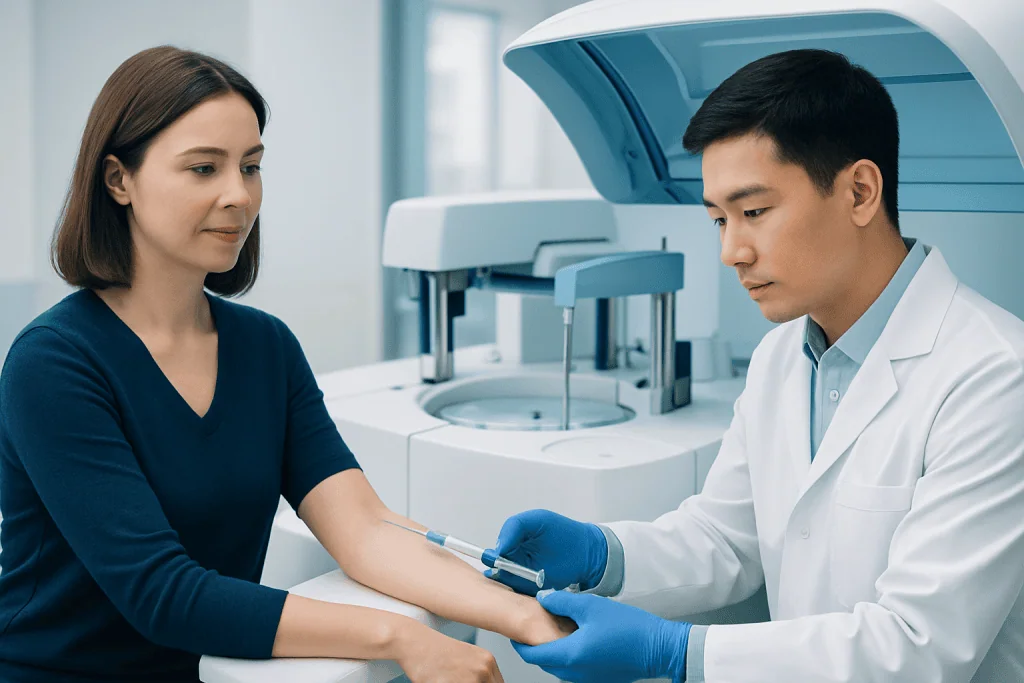
A clinician may advise a syphilis test when symptoms suggest infection, after sexual contact that may have involved exposure, or when a person learns that a partner has tested positive. Testing is also commonly included in broader sexual health screening for people with higher risk of sexually transmitted infections.
Pregnancy is another important reason for testing. Untreated syphilis during pregnancy can pass to the baby, so screening is recommended in routine prenatal care. Additional testing may be needed later in pregnancy for some patients, depending on risk factors and local guidance.
Testing may also be appropriate for people being evaluated for other sexually transmitted infections, including gonorrhea or HIV, because these conditions can occur together. In some situations, a doctor may recommend a fuller sexual health assessment that includes a medical check-up and targeted laboratory testing.
- After unprotected vaginal, anal, or oral sex
- If a partner has syphilis or another STI
- When there is a genital sore, rash, or unexplained swollen lymph nodes
- During pregnancy or preconception care
- As part of regular screening for people at ongoing risk
Types of syphilis tests

There are two main categories of blood tests used for syphilis: nontreponemal tests and treponemal tests. Nontreponemal tests look for antibodies that can be produced during syphilis infection, while treponemal tests look for antibodies more specifically linked to the bacterium itself. Because each type provides different information, both are often used together.
Nontreponemal tests are often used for screening and for monitoring response to treatment over time. Their results may be reported as titers, which help doctors see whether antibody levels are rising, falling, or staying the same. Treponemal tests are often used to confirm infection after a screening result is positive, but they can remain positive long after successful treatment.
If a person has an active sore, a direct test on material from the lesion may sometimes be performed. Depending on laboratory resources and the stage of infection, special microscopy or molecular testing may be used. These methods can be helpful early in infection, when blood test results may not yet be clearly positive.
Because interpretation can be complex, clinicians do not rely on one result alone. They combine laboratory findings with symptoms, exposure history, physical examination, and sometimes repeat testing after a short interval if recent exposure is suspected.
Symptoms and timing: why test results can vary
Syphilis develops in stages, and symptoms can change over time. Early infection may cause a painless sore, often on the genitals, anus, rectum, lips, or mouth. Later, some people develop a rash, fever, swollen lymph nodes, sore throat, or patchy hair loss. After that, symptoms may disappear even though the infection remains in the body.
The timing of a syphilis test matters because the immune system needs time to produce detectable antibodies. If testing is done very soon after exposure, the result may be negative even if infection is present. In that situation, a doctor may advise repeat testing after an appropriate interval.
Results can also be influenced by past infection and treatment. A treponemal test may stay positive for years, so it does not always mean a current untreated infection. A nontreponemal test can help show whether infection is active or whether follow-up after treatment is reassuring, but it still needs expert interpretation.
Because syphilis can affect different parts of the body, additional testing may be needed if there are neurological, eye, or hearing symptoms. In selected cases, doctors may investigate related concerns such as HIV infection or discuss broader infectious diseases care when symptoms are more complex.
How doctors interpret syphilis test results
A negative syphilis test may mean there is no infection, but it can also reflect testing during the early window before antibodies become detectable. If exposure was recent or symptoms strongly suggest syphilis, a doctor may recommend repeating the test. This is why timing and clinical context are so important.
A positive screening result usually needs confirmation with a second test. When both test types support the diagnosis, the clinician considers whether the infection is likely to be recent, past, treated, or still active. The stage of infection and the patient’s history help determine the next steps.
Sometimes results are discordant, meaning one test is positive and another is negative. This does not automatically mean the result is wrong. It may reflect prior treated infection, very early disease, another medical condition affecting the test, or a technical issue that requires repeat or additional testing.
For this reason, people should avoid trying to interpret a syphilis test on their own. A qualified clinician can explain what the result means, whether treatment is needed, whether sexual partners should be informed and tested, and when repeat blood work is appropriate.
Treatment and follow-up after a positive test
If a syphilis test confirms infection, treatment is usually straightforward and highly effective when given at the appropriate stage. The choice of treatment depends on factors such as how long the infection may have been present, whether there are neurological or eye symptoms, pregnancy status, and any medication allergies. Early treatment helps prevent complications and reduces the risk of transmission.
Follow-up is an important part of care. Doctors often repeat nontreponemal blood tests over time to make sure antibody levels are dropping as expected. Improvement in symptoms and planned repeat testing together help show whether treatment has worked.
Sexual partners may also need evaluation and treatment. This helps prevent reinfection and limits further spread. During this period, the healthcare team may advise avoiding sexual contact until treatment is completed and a clinician says it is safe to resume.
In more complex cases, such as suspected nervous system or eye involvement, specialist assessment may be needed. Near the end of the care pathway, patients seeking coordinated international care may choose centers such as Acibadem International, where multidisciplinary specialists in JCI-accredited hospitals diagnose and treat sexually transmitted infections and their complications.
Prevention, self-care, and reducing future risk
The best way to lower the chance of needing a syphilis test after exposure is to reduce risk through safer sex practices. Barrier methods can lower transmission risk, and open communication with partners about testing history is also helpful. Regular sexual health screening is especially important for people with new or multiple partners.
Self-care after testing includes following medical advice carefully, taking prescribed treatment exactly as directed, and returning for repeat blood tests if advised. It is also important to let recent sexual partners know they may need testing, even if they feel well. Many sexually transmitted infections can be present without clear symptoms.
People who have had one STI may benefit from broader screening for conditions such as genital herpes or chlamydia, based on their doctor’s advice and local recommendations. Preventive care may include counseling, risk reduction planning, vaccination where relevant, and timely follow-up.
- Use condoms or other barrier protection correctly and consistently
- Have regular STI screening if risk is ongoing
- Seek testing promptly after possible exposure
- Complete treatment and attend follow-up visits
- Encourage partner notification and testing
When to seek medical care
Medical care should be sought promptly after possible exposure to syphilis, especially if there is a genital, anal, or oral sore, an unexplained rash, or a known contact with someone who has tested positive. Pregnant patients should not delay testing, because early diagnosis protects both parent and baby.
Urgent assessment is also important if there are symptoms that could suggest complications, such as vision changes, hearing loss, severe headache, confusion, or weakness. These symptoms do not always mean syphilis is the cause, but they need prompt medical evaluation.
Even without symptoms, anyone worried about exposure should speak with a qualified doctor or sexual health clinic. Early testing, careful interpretation of results, and timely treatment offer the best chance of preventing long-term problems.
Frequently asked questions
What is the most common syphilis test?
The most common syphilis test is a blood test. In many cases, doctors use a screening blood test first and then a second blood test to confirm the result. This helps improve accuracy and guides treatment decisions.
How soon after exposure can a syphilis test detect infection?
A syphilis test may not turn positive immediately after exposure because the body needs time to produce detectable antibodies. The exact timing varies, so a doctor may recommend repeat testing if exposure was recent. If symptoms are present, a lesion-based test may sometimes help earlier.
Can a syphilis test be positive after treatment?
Yes. Some syphilis tests, especially treponemal tests, can remain positive long after successful treatment. That is why doctors often use additional test results and follow-up blood work to decide whether infection is active or already treated.
Do I need a syphilis test if I have no symptoms?
Possibly. Syphilis can cause no symptoms for a long time, so testing may still be recommended after possible exposure, during pregnancy, or as part of routine STI screening. A clinician can advise whether testing is appropriate based on risk factors and history.
Is a home syphilis test reliable?
Some home collection or rapid test options are available, but reliability depends on the type of test, when it is taken, and whether results are confirmed in a laboratory. A positive or unclear home result should always be reviewed by a healthcare professional. Medical follow-up is also important if symptoms are present.
What happens if my syphilis test is positive?
If the result is positive, a clinician will usually confirm the diagnosis, determine the likely stage of infection, and recommend treatment. Follow-up testing is often needed to make sure treatment has worked. Recent sexual partners may also need testing and care.
This article is for general information only and is not a substitute for professional medical advice. Please consult a qualified doctor about your individual situation.
Explore treatments in Turkey — costs, top hospitals & a free quote
JCI-accredited · board-certified surgeons · reply within 24h
Add us as a Preferred Source to see more of our trusted health content across Google Search, AI Overviews and Discover.

More from the Health Library
Tonic Neck Reflex: An Evidence-Based Guide for Patients
Stress Induced Fits: A Complete Medical Overview

Flea Bites: An Evidence-Based Guide for Patients

Cherry Juice Benefits — Explained by Medical Evidence, Not Myths

Crying Blood: What Patients Need to Know