Forefoot: An Evidence-Based Guide for Patients

The forefoot includes the toes, metatarsal bones, joints, nerves, and soft tissues at the front of the foot. Forefoot pain is a symptom, not a diagnosis, and may result from pressure, injury, deformity, nerve irritation, or arthritis.
Key Takeaways
- The forefoot includes the toes, metatarsal bones, joints, nerves, and soft tissues at the front of the foot.
- Forefoot pain is a symptom, not a diagnosis, and may result from pressure, injury, deformity, nerve irritation, or arthritis.
- Supportive footwear, activity changes, and targeted treatment often improve symptoms.
- Persistent pain, swelling, numbness, or trouble walking should be assessed by a qualified doctor.
- Early evaluation may help prevent worsening deformity, chronic pain, and changes in walking pattern.
The forefoot is the front part of the foot, including the toes and the long bones behind them. Problems in this area are common and often cause pain at the ball of the foot, especially during walking, running, or standing, but many causes can be identified and treated with the right evaluation.
Overview: what the forefoot is and why it matters
The forefoot is the front portion of the foot. It includes the five metatarsal bones, the toe bones, the joints connecting them, and the surrounding ligaments, tendons, nerves, skin, and cushioning tissue. This part of the foot plays a major role in balance, shock absorption, and push-off during walking and running.
When people talk about pain in the “ball of the foot,” they are usually describing discomfort in the forefoot. This area carries significant pressure with every step, especially during faster movement, long periods of standing, or while wearing shoes that crowd the toes. Because several structures are packed closely together, different conditions can cause similar symptoms.
Forefoot pain is not a disease on its own. It is a symptom that can develop from mechanical strain, irritation of a nerve, inflammation, joint problems, deformity, or injury. A careful assessment helps distinguish simple overuse from issues that may need specific treatment, such as Morton’s neuroma or a structural deformity such as hallux valgus (bunion).
Common symptoms of forefoot problems
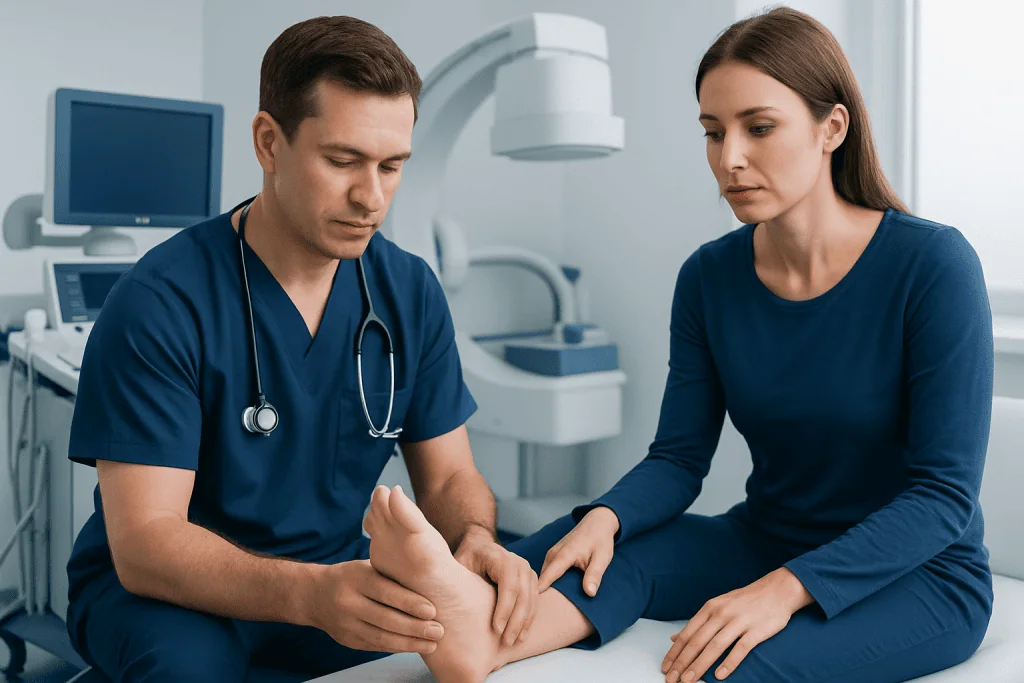
Symptoms vary depending on the cause, but many people describe aching, burning, or sharp pain under the metatarsal heads, especially when walking barefoot or pushing off during a step. The pain may start gradually and become more noticeable after exercise, prolonged standing, or wearing narrow or high-heeled shoes.
Some forefoot conditions also cause numbness, tingling, swelling, stiffness, or the sensation of “walking on a pebble.” Corns or calluses may form where pressure is concentrated. Toe position can also change over time, with drifting, crowding, or curling if a deformity is present.
Symptoms may affect one area or several parts of the front of the foot. Common warning signs include:
- Pain at the ball of the foot
- Tenderness under one or more toes
- Burning or tingling between the toes
- Swelling after activity
- Pain that improves with rest but returns with walking
- Difficulty wearing usual shoes comfortably
Because symptoms often overlap, a professional diagnosis is important when pain does not settle or when there is numbness, visible deformity, or recurrent swelling.
Causes and risk factors

Forefoot pain often develops when pressure is repeatedly concentrated on the front of the foot. This may happen because of high-impact exercise, long hours standing, sudden changes in activity, or poorly fitting shoes. Shoes with a narrow toe box or high heel shift body weight forward and can increase stress across the metatarsal heads and toes.
Structural issues can also contribute. Bunions, hammertoes, a very high arch, a very flat foot, or differences in toe length can change how weight is distributed. In some people, thinning of the natural fat pad beneath the forefoot reduces cushioning and makes walking on hard surfaces more uncomfortable.
Specific medical conditions may involve the forefoot as well. These include metatarsalgia, stress fracture, arthritis, sesamoiditis, tendon inflammation, and nerve compression. A compressed or irritated nerve between the metatarsal bones can cause burning pain or numbness; this is often seen in Morton’s neuroma. Inflammatory diseases such as rheumatoid arthritis may affect the toe joints and cause persistent swelling or stiffness.
Risk factors include aging, obesity, repetitive sports, diabetes-related nerve problems, previous foot injury, and occupations that require prolonged standing. Not every person with these risk factors develops pain, but they can increase the chance that symptoms will appear or persist.
How doctors diagnose forefoot pain
Diagnosis begins with a medical history and physical examination. The doctor asks where the pain is felt, what makes it worse, how long it has been present, what footwear is usually worn, and whether there has been a recent increase in activity. Information about past injuries, arthritis, diabetes, and nerve symptoms also helps guide the evaluation.
During the exam, the foot is checked for tenderness, swelling, callus pattern, joint motion, toe alignment, arch shape, and signs of nerve irritation. The doctor may observe walking or standing to see how body weight moves across the forefoot. This can reveal whether one metatarsal head is taking more pressure than the others.
Imaging is sometimes useful when the diagnosis is unclear or a fracture, arthritis, or deformity is suspected. Standard X-rays can show bone alignment, joint changes, and some stress injuries. Ultrasound or MRI may be considered when soft tissue structures, such as a neuroma, tendon, or ligament, need closer assessment. In selected cases, blood tests may be ordered if inflammatory arthritis or infection is a concern.
The main goal is to identify the exact source of symptoms rather than simply labeling the problem as “forefoot pain.” This makes treatment more targeted and helps avoid unnecessary delays.
Treatment options for forefoot conditions
Treatment depends on the cause, severity of symptoms, and how much daily life is affected. Many forefoot problems improve with conservative care. This may include rest from aggravating activities, ice after strain, temporary activity modification, and supportive shoes with a wide toe box and cushioning under the ball of the foot. Padding, metatarsal inserts, and custom orthotics may reduce pressure on painful areas.
Doctors may also recommend exercises or physical therapy to improve foot mechanics, flexibility, and strength. Stretching the calf muscles and addressing walking pattern can reduce overload on the front of the foot. If there is inflammation, medication may be considered under medical guidance. When a nerve is involved, treatment may focus on unloading the irritated area and reducing compression from footwear.
Some conditions require more specific care. For bunions or structural forefoot deformities, management may begin with shoe changes and orthotics but may progress to surgical correction if pain is persistent and function is limited. In these situations, doctors may discuss bunion surgery or other forefoot procedures. A painful neuroma that does not improve with conservative treatment may be assessed for foot and ankle surgery.
Stress fractures, inflammatory arthritis, or significant joint degeneration need tailored management plans. Surgery is usually considered when symptoms remain significant despite appropriate non-surgical treatment, or when deformity or instability prevents normal walking. The most suitable approach depends on the diagnosis rather than on pain location alone.
Self-care and prevention
Many forefoot problems can be reduced or prevented by lowering excess pressure on the front of the foot. Footwear is one of the most important factors. Shoes should fit well, provide cushioning, and leave enough room for the toes to spread naturally. A shoe that feels acceptable when first tried on may still be too tight if it causes numbness or pressure after walking.
Gradual activity progression also helps. Increasing running distance, walking intensity, or exercise volume too quickly can overload the forefoot. Alternating high-impact exercise with lower-impact activities and using suitable athletic shoes may reduce strain. Maintaining a healthy body weight can also lessen repetitive pressure across the front of the foot.
Helpful self-care habits include:
- Choosing supportive shoes with a wide toe box
- Avoiding prolonged use of high heels if they worsen symptoms
- Using metatarsal pads or inserts if recommended
- Resting after flare-ups and returning to activity gradually
- Checking the feet regularly for calluses, redness, or skin breakdown
- Seeking foot care advice early if there is diabetes or reduced sensation
Self-care can relieve mild symptoms, but it should not replace medical assessment if pain is persistent, recurrent, or associated with deformity or numbness.
When to seek medical care
Forefoot discomfort after unusual activity may settle with rest and shoe changes, but medical review is sensible when symptoms last more than a short time or keep returning. Pain that changes the way a person walks should not be ignored, because compensation can affect the ankle, knee, hip, and lower back over time.
Prompt assessment is especially important if there is significant swelling, sudden severe pain, visible deformity, numbness, tingling, a wound, or inability to bear weight. People with diabetes, circulation problems, or inflammatory joint disease should seek care sooner because foot symptoms can be more complex and complications may develop more easily.
A diagnosis from an orthopedic, podiatric, or musculoskeletal specialist can clarify whether the issue is simple overload or something more specific that needs targeted treatment. Near the end of the care pathway, some patients may benefit from evaluation by centers with multidisciplinary expertise. Acibadem International’s specialists in JCI-accredited hospitals diagnose and treat forefoot conditions, including cases that may need orthopedic assessment and treatment for international patients.
Frequently asked questions
What is the forefoot?
The forefoot is the front part of the foot. It includes the metatarsal bones, the toes, and the joints and soft tissues that help with balance and push-off during walking.
Why does the ball of the foot hurt?
Pain at the ball of the foot often comes from excess pressure on the forefoot. Common reasons include overuse, tight or high-heeled shoes, nerve irritation, deformity, arthritis, or a stress injury.
Is forefoot pain the same as metatarsalgia?
Not exactly. Metatarsalgia is a common diagnosis describing pain and inflammation around the metatarsal heads, but forefoot pain is a broader symptom that can have several causes.
Can shoes really cause forefoot problems?
Yes. Shoes that are narrow, unsupportive, or high-heeled can shift pressure toward the front of the foot and crowd the toes. Over time, this may worsen pain and contribute to conditions such as bunions or nerve irritation.
How is forefoot pain diagnosed?
Doctors diagnose forefoot pain by combining symptom history with a physical examination. If needed, they may use X-rays, ultrasound, or MRI to look for fractures, deformity, arthritis, or soft tissue problems.
Does forefoot pain always need surgery?
No. Many cases improve with rest, shoe changes, padding, orthotics, and physical therapy. Surgery is usually considered only when symptoms persist, a deformity is significant, or a specific condition does not respond to conservative treatment.
When should someone see a doctor for forefoot pain?
Medical advice is important if pain lasts, keeps coming back, causes limping, or is associated with swelling, numbness, or visible deformity. Urgent assessment is needed if there is sudden severe pain, inability to bear weight, or a foot wound, especially in a person with diabetes.
This article is for general information only and is not a substitute for professional medical advice. Please consult a qualified doctor about your individual situation.
Explore treatments in Turkey — costs, top hospitals & a free quote
JCI-accredited · board-certified surgeons · reply within 24h
Add us as a Preferred Source to see more of our trusted health content across Google Search, AI Overviews and Discover.

More from the Health Library

Couch Stretch: What Patients Need to Know

Chambers Are in the Heart: A Complete Medical Overview

Peptides for Muscle Growth — Explained by Medical Evidence, Not Myths

Kenalog: An Evidence-Based Guide for Patients

Cause of ulcers on the tongue: A Complete Medical Guide for Patients