Couch Stretch: What Patients Need to Know

The couch stretch mainly lengthens the hip flexors and quadriceps. Good form matters more than depth; the stretch should feel strong but not painful.
Key Takeaways
- The couch stretch mainly lengthens the hip flexors and quadriceps.
- Good form matters more than depth; the stretch should feel strong but not painful.
- People with knee, hip, or low back pain may need modifications or a different stretch.
- A gradual approach, steady breathing, and regular practice are safer than forcing range of motion.
- Medical advice is important if stretching causes sharp pain, numbness, weakness, or symptoms that persist.
The couch stretch is a kneeling stretch that targets the front of the hip and thigh, especially the hip flexors and quadriceps. When performed with careful form and appropriate modifications, it may help improve flexibility, posture, and comfort during daily movement.
Overview: What the Couch Stretch Is
The couch stretch is a floor-based stretch commonly used to lengthen the muscles at the front of the hip and thigh. It is usually performed with one knee bent on the floor near a wall, couch, or bench, while the lower leg rests upright behind the body. The other foot is placed in front for support, creating a lunge-like position.
Patients often ask whether the couch stretch is useful. In general, it can be helpful for people with tight hip flexors or quadriceps, especially those who spend long periods sitting. By opening the front of the hip, it may improve comfort with standing, walking, climbing stairs, and exercise.
The key point is that the couch stretch is not meant to be forced. A person should feel a controlled stretch along the front of the hip or thigh, not pinching in the back, pressure in the knee, or sharp pain anywhere. When done carefully, it can be a practical part of a mobility routine.
What Muscles the Couch Stretch Targets
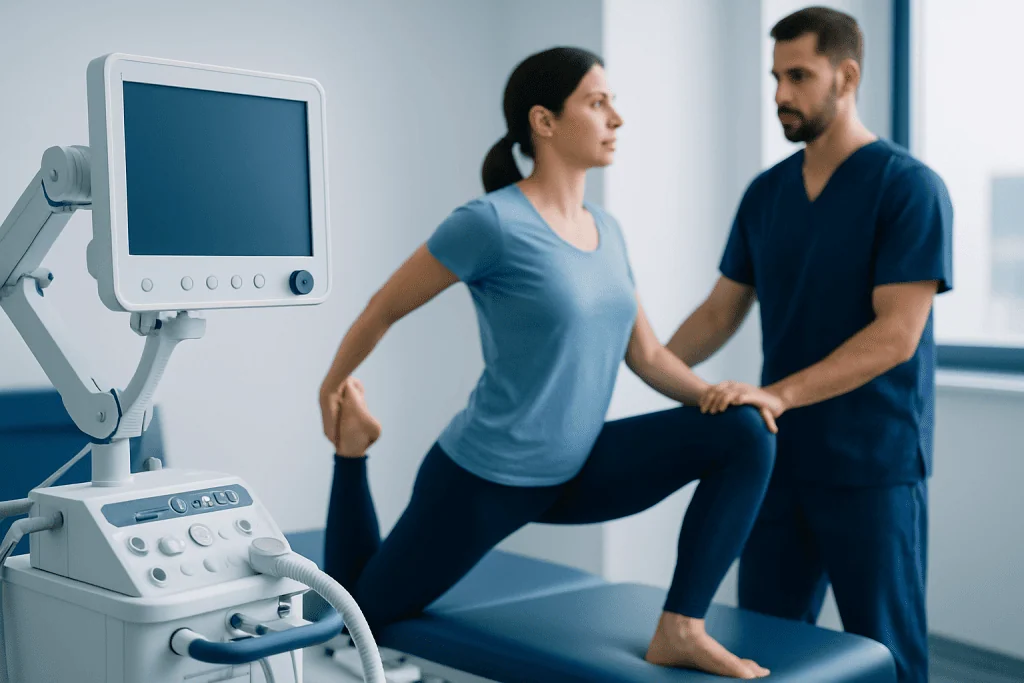
The couch stretch mainly affects the hip flexors and quadriceps. These include the rectus femoris, a quadriceps muscle that crosses both the hip and knee, and the iliopsoas, an important hip-flexor muscle group. Because the back knee is bent and the hip is extended, both areas may be stretched at the same time.
This matters because prolonged sitting can leave the front of the hips feeling shortened or stiff. Some people notice a sense of tightness when they stand up after a long day at a desk, drive for extended periods, or return to exercise after inactivity. A structured stretch can sometimes ease that stiffness.
It is also important to understand that “tightness” is not always the only issue. In some cases, weakness, poor movement control, or related conditions such as lower back pain can affect how the body feels during stretching. That is one reason why technique and overall movement habits matter as much as flexibility itself.
Potential Benefits and Who May Find It Helpful

For many adults, the couch stretch is used to support hip mobility. It may be useful for people who sit often, cyclists, runners, gym-goers, and anyone who feels pulling in the front of the hips during upright movement. Some also find that it helps them prepare for activities that require hip extension, such as walking briskly, climbing, or certain strength exercises.
Possible benefits include improved flexibility of the front thigh, a greater sense of ease when standing tall, and better tolerance of mobility work over time. Some people report that stretching the hip flexors makes lunges, squats, and stride-based movement feel smoother. However, results vary from person to person, and the stretch is not a cure for every type of hip or back discomfort.
The couch stretch may fit well into a broader plan that includes strengthening, posture awareness, and activity changes. If a person has ongoing stiffness after injury, surgery, or chronic pain, a clinician may recommend an individualized rehabilitation approach such as physical therapy and rehabilitation rather than relying on stretching alone.
How to Do the Couch Stretch Safely
A common starting setup is to place a cushion under the back knee and position that knee near a wall or couch. The shin of the back leg rests upward against the support, while the other leg steps forward with the foot flat on the floor. The torso begins slightly inclined forward, then gradually comes more upright if comfortable.
During the stretch, the person should gently tighten the abdominal muscles and keep the pelvis in a neutral or slightly tucked position. This often helps prevent arching the lower back, which can shift the sensation away from the target muscles and create discomfort. The stretch should be felt in the front of the back-leg hip or thigh.
Helpful safety cues include:
- Move into position slowly and use support for balance.
- Keep the front foot planted and the back knee cushioned.
- Stop if there is sharp pain, tingling, numbness, or joint pressure.
- Breathe steadily instead of holding the breath.
- Choose a mild to moderate intensity rather than pushing to the maximum.
Many people start with shorter holds and lighter angles, then progress as tolerated. If the upright torso position feels too intense, keeping the chest slightly forward is a reasonable modification. Comfort and control are better goals than trying to copy a deep stretch seen online.
Common Mistakes, Risks, and When to Avoid It
The most common mistake is forcing the body into a very deep position too quickly. This may overload the knee, irritate the low back, or create a pinching sensation at the front of the hip. Another frequent error is leaning excessively into the lumbar spine rather than lengthening the hip flexors.
The couch stretch may not be suitable for everyone. People with recent knee injury, kneecap pain, hip impingement symptoms, severe balance problems, or acute low back pain may need a different exercise. Patients with known joint disease, recent surgery, or nerve-related symptoms should seek individualized advice before attempting deeper mobility work.
In some cases, pain at the front of the hip can relate to a structural or inflammatory problem rather than simple muscular tightness. If symptoms are recurrent or limit activity, medical assessment can help rule out conditions that may need further care, including hip pain related to the joint, tendon, or surrounding soft tissues.
Modifications, Alternatives, and How to Build a Routine
If the standard couch stretch is uncomfortable, a gentler version may work better. One option is a half-kneeling hip-flexor stretch with the back knee on the floor and the back foot relaxed, without placing the shin against a wall. Another option is to elevate the hands on a chair or bed to reduce the load and improve balance.
Alternatives can also be useful when the knee does not tolerate kneeling. Some people benefit from standing quadriceps stretches, prone quad stretches with a strap, or guided mobility exercises tailored to their needs. When discomfort is part of a wider movement problem, assessment through orthopedics and traumatology or rehabilitation services may be appropriate.
As part of a routine, stretching often works best when done consistently rather than aggressively. A person may include the couch stretch after light movement, after exercise, or during a mobility session. Pairing it with glute and core strengthening can support more balanced movement patterns and may reduce the tendency to overarch the lower back.
When to Seek Medical Care
Medical advice is a good idea if stretching causes sharp or worsening pain, swelling, joint catching, instability, numbness, tingling, or weakness. Care is also important when symptoms began after a fall, sports injury, or sudden twisting movement. Ongoing pain that does not improve with rest or simple modification should not be ignored.
Patients should also seek evaluation if pain interferes with walking, sleep, exercise, or normal daily activities. A clinician may examine the hip, knee, pelvis, and lower back to identify whether the issue is muscular, joint-related, or nerve-related. In some cases, diagnostic imaging such as MRI may be used when symptoms suggest a deeper structural problem.
Near the end of a care pathway, patients may benefit from coordinated support across rehabilitation, orthopedics, and imaging. Acibadem International’s multidisciplinary specialists and JCI-accredited hospitals diagnose and treat musculoskeletal conditions for international patients when further evaluation is needed.
Frequently asked questions
What does the couch stretch help with?
The couch stretch mainly targets the hip flexors and quadriceps, which are muscles at the front of the hip and thigh. It may help improve flexibility and reduce the sense of stiffness that some people feel after prolonged sitting or exercise.
Why does the couch stretch feel so intense?
It can feel intense because it stretches muscles that are often sensitive or deconditioned, especially in people who sit for long periods. The position also combines hip extension with knee bending, which can increase the stretch on the front thigh.
Should the couch stretch hurt?
A strong pulling sensation can be normal, but sharp pain is not. If there is pain in the knee, hip joint, or lower back, the position should be adjusted or stopped, and a clinician should be consulted if symptoms persist.
How long should a person hold the couch stretch?
The exact timing varies by comfort, flexibility, and health status. In general, shorter, controlled holds performed with steady breathing are safer than trying to stay in a painful position for a long time.
Can the couch stretch cause back pain?
Yes, it can if the lower back arches excessively during the movement or if the stretch is forced too deeply. Keeping the abdomen gently engaged and the pelvis controlled may help reduce strain on the lumbar spine.
Who should avoid the couch stretch?
People with recent knee injuries, acute hip pain, severe low back pain, balance problems, or recent surgery may need to avoid or modify it. Anyone with persistent symptoms or uncertainty about safety should ask a qualified healthcare professional for guidance.
References
- American Academy of Orthopaedic Surgeons
- American College of Sports Medicine
- National Institute of Arthritis and Musculoskeletal and Skin Diseases
- National Health Service
- Mayo Clinic
This article is for general information only and is not a substitute for professional medical advice. Please consult a qualified doctor about your individual situation.
Joint and spine care in Turkey — expert assessment & treatment
JCI-accredited · board-certified surgeons · reply within 24h
Add us as a Preferred Source to see more of our trusted health content across Google Search, AI Overviews and Discover.

More from the Health Library

High fever and chills: A Complete Medical Guide for Patients

Taking Levothyroxine With Coffee: Timing Matters

Fat Burner: An Evidence-Based Guide for Patients

Cytoxan: A Complete Medical Overview

Methadone — Explained by Medical Evidence, Not Myths