Full Mouth Debridement: An Evidence-Based Guide for Patients

Full mouth debridement removes heavy plaque and tartar when routine cleaning is not enough. It is often the first step before a full dental exam and gum health assessment.
Key Takeaways
- Full mouth debridement removes heavy plaque and tartar when routine cleaning is not enough.
- It is often the first step before a full dental exam and gum health assessment.
- The procedure is different from regular cleaning and may also differ from deep gum treatment.
- Good brushing, flossing, and regular dental visits help prevent severe buildup from returning.
- Ongoing gum symptoms, pain, swelling, or bleeding should be assessed by a dental professional.
Full mouth debridement is an initial dental procedure used when thick plaque and tartar make it hard to properly examine the teeth and gums. It helps clear away buildup, improve oral hygiene, and prepare for a more complete dental assessment and follow-up care.
Overview: what full mouth debridement means
Full mouth debridement is a dental procedure used to remove heavy plaque, tartar, and surface debris from the teeth when the buildup is so extensive that a routine exam cannot be done properly. In simple terms, it is an initial clearing procedure that allows the dentist to see the teeth and gums more clearly and judge what care is needed next.
This treatment is usually recommended for people who have not had professional dental care for a long time, have visible hard deposits on the teeth, or show signs of poor gum health. The goal is not only to clean the teeth, but also to create the conditions for an accurate diagnosis.
Patients sometimes confuse full mouth debridement with a standard cleaning or with treatment for advanced gum disease. A regular cleaning focuses on routine prevention, while debridement is performed when severe buildup blocks a proper assessment. If gum pockets or deeper infection are found afterward, the dentist may recommend additional care, such as periodontal treatment.
Why it is done and how it differs from other dental cleanings
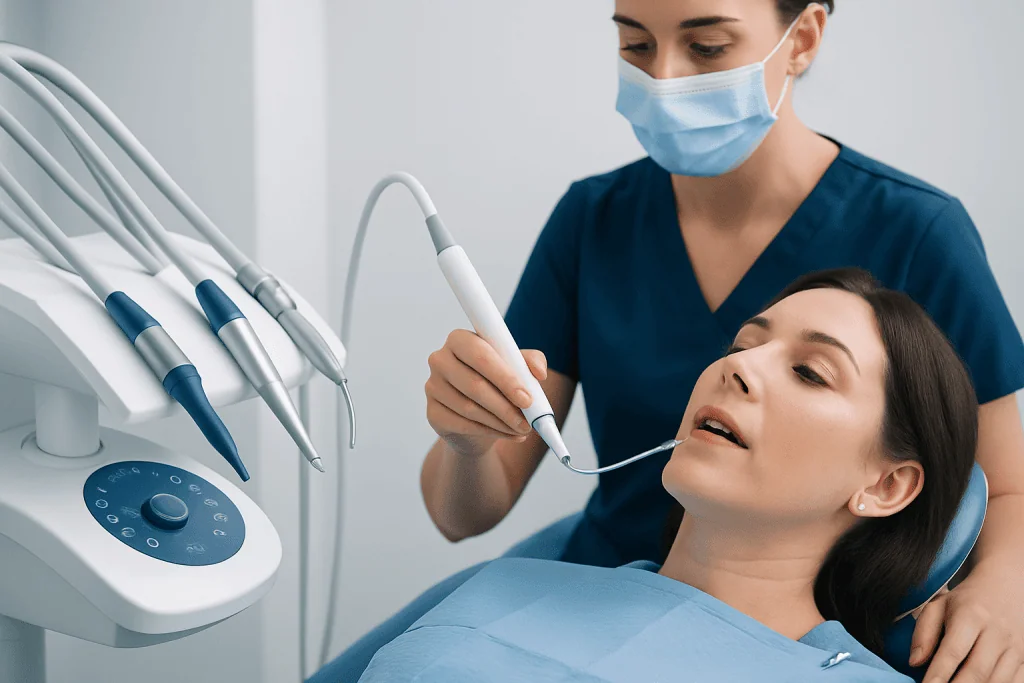
The main reason for full mouth debridement is visibility. When thick tartar covers the teeth, especially near the gumline, it can hide cavities, gum inflammation, tooth fractures, and other oral health problems. Removing this material first helps the dental team assess the mouth more accurately.
It is not the same as a simple preventive cleaning. During a routine cleaning, the hygienist removes lighter plaque and tartar deposits from teeth that can already be examined adequately. In contrast, debridement is used when oral debris is extensive enough to interfere with diagnosis and treatment planning.
It is also not always the same as scaling and root planing, which is often used to treat deeper stages of gum disease. After debridement, the dentist may decide that no further treatment is needed beyond regular maintenance, or they may identify problems that require more targeted care.
- Routine cleaning: preventive care for manageable plaque and tartar
- Full mouth debridement: initial removal of heavy buildup so the mouth can be properly examined
- Scaling and root planing: deeper cleaning below the gumline when periodontal disease is present
Signs that a person may need full mouth debridement

Only a dental professional can decide whether full mouth debridement is necessary, but some signs make it more likely. One common clue is visible yellow, brown, or hard crust-like deposits on the teeth, especially near the gums or behind the lower front teeth.
Other possible symptoms include persistent bad breath, gums that bleed during brushing, swollen or tender gums, and a feeling that the teeth are coated or rough. Some people also notice tooth sensitivity or changes in how their gums look, such as redness or recession.
In many cases, there may be no severe pain at all. That is why heavy tartar buildup can progress silently over time. People who have avoided dental visits because of anxiety, difficulty accessing care, or long gaps between appointments are often the ones most likely to be told they need debridement first.
What happens during the procedure
Before treatment begins, the dentist or dental hygienist usually inspects the mouth and reviews symptoms, oral hygiene habits, and medical history. The procedure itself is designed to remove large amounts of plaque and hardened tartar from the visible surfaces of the teeth and around the gumline.
Dental teams often use a combination of hand instruments and ultrasonic devices. Ultrasonic tools use vibration and water to loosen and wash away deposits, while hand instruments can help remove more stubborn areas. If the mouth is sensitive or the buildup is extensive, a local anesthetic may be used to improve comfort.
Some patients complete treatment in a single visit, while others may need more than one session depending on the amount of buildup and their comfort level. Once the teeth are clearer, the dentist may perform or schedule a fuller exam, including gum measurements and dental X-rays if needed. In some cases, further care may include dental treatment for cavities, infection, or periodontal disease.
After the procedure, the teeth may feel cleaner but also temporarily more sensitive, especially if the tartar had covered exposed root surfaces. Mild gum tenderness or slight bleeding can occur for a short time, but this usually improves as the tissues heal and daily oral hygiene becomes easier.
Benefits, limitations, and possible next steps
The main benefit of full mouth debridement is that it creates a clearer starting point for diagnosis. Once heavy deposits are removed, the dentist can better assess the gums, detect decay, evaluate damaged fillings, and identify signs of infection or tooth wear. It can also improve breath odor and make home brushing and flossing more effective.
However, debridement is often only the first step, not the final treatment plan. Removing tartar does not automatically reverse every problem caused by long-standing plaque buildup. If the gums are inflamed or if deep pockets are present, additional periodontal care may be needed. If decay, broken teeth, or infection are found, those issues will need separate treatment.
Possible next steps can include a detailed periodontal evaluation, preventive cleaning at a later visit, or restorative care. Depending on what is found, the dental team may discuss fillings, gum therapy, or replacement of missing or severely damaged teeth. For some patients with significant tooth loss or hopeless teeth, long-term planning may involve options such as dental implant care after the gums and oral tissues have been stabilized.
Prevention and self-care after debridement
Good daily oral care is the best way to prevent heavy plaque and tartar from returning. Brushing twice a day with fluoride toothpaste, cleaning between the teeth every day with floss or interdental brushes, and keeping regular dental visits all play an important role. Once tartar forms, it cannot be removed by brushing alone and requires professional instruments.
After full mouth debridement, the dental team may suggest a softer diet for a short period if the gums feel tender. They may also recommend gentle but thorough brushing, attention to the gumline, and temporary strategies for sensitivity. Following these instructions can support healing and make future treatment more comfortable.
Lifestyle habits also matter. Tobacco use, dry mouth, frequent sugary snacks, and neglected dental care can all increase plaque retention and raise the risk of recurrent gum problems. Drinking enough water, managing health conditions such as diabetes, and seeking early help for dental symptoms can support better long-term oral health.
If a more complete evaluation later shows advanced decay or major structural problems, the dentist may discuss broader solutions, including full mouth restoration in selected cases. The right plan depends on the condition of the teeth, gums, bone support, and the person’s overall health goals.
When to seek medical care
A dental appointment should be arranged if there is persistent bad breath, visible tartar buildup, bleeding gums, gum swelling, tooth mobility, or pain when chewing. These symptoms do not always mean serious disease, but they should be evaluated because untreated plaque and tartar can contribute to worsening gum and tooth problems over time.
Urgent assessment is especially important if there is facial swelling, fever, pus, severe toothache, or sudden difficulty swallowing or opening the mouth. These symptoms can suggest an infection that needs prompt professional care. People with diabetes, heart conditions, suppressed immunity, or pregnancy should be especially careful about ongoing gum symptoms.
For patients who need coordinated care, Acibadem International’s multidisciplinary specialists and JCI-accredited hospitals diagnose and treat dental and oral health conditions for international patients. The most appropriate next step depends on the findings after examination and, when needed, imaging or periodontal assessment.
Frequently asked questions
Is full mouth debridement painful?
Many people feel pressure, vibration, or scraping rather than significant pain. If the gums are inflamed or the teeth are sensitive, the dental team may use numbing measures to improve comfort. Mild soreness or sensitivity afterward is possible but usually temporary.
How is full mouth debridement different from a regular cleaning?
A regular cleaning is preventive care for routine plaque and tartar removal when the mouth can already be examined properly. Full mouth debridement is used when buildup is so heavy that it blocks the dentist's view of the teeth and gums. It is often the first step before a full assessment.
Will one visit be enough?
Sometimes yes, but not always. The number of visits depends on how much tartar is present, how sensitive the mouth is, and whether the dentist needs to divide treatment into more comfortable stages. Some people also need follow-up periodontal or restorative care afterward.
Can full mouth debridement treat gum disease by itself?
It can improve the oral environment and make gum evaluation possible, but it is not always the complete treatment for gum disease. If deeper periodontal infection is found, the dentist may recommend additional procedures such as scaling and root planing. The final diagnosis is often made more clearly after the initial buildup is removed.
Why does tartar build up so heavily in some people?
Tartar forms when dental plaque is left on the teeth and hardens over time. Missed cleanings, inadequate brushing and flossing, tobacco use, dry mouth, crowded teeth, and some health conditions can all contribute. Once tartar hardens, it usually needs professional removal.
What should a person do after full mouth debridement?
They should follow the dental team's instructions for brushing, flossing, sensitivity care, and any recommended follow-up visits. Keeping the mouth clean every day is important because fresh plaque starts to form again quickly. Ongoing care helps maintain the result and reduces the chance of needing another debridement.
References
- American Dental Association
- National Institute of Dental and Craniofacial Research
- Centers for Disease Control and Prevention
- American Academy of Periodontology
This article is for general information only and is not a substitute for professional medical advice. Please consult a qualified doctor about your individual situation.
Explore treatments in Turkey — costs, top hospitals & a free quote
JCI-accredited · board-certified surgeons · reply within 24h
Add us as a Preferred Source to see more of our trusted health content across Google Search, AI Overviews and Discover.

More from the Health Library

Monistat 1: What Patients Need to Know

Phytic Acid: An Evidence-Based Guide for Patients

Oseltamivir Phosphate: An Evidence-Based Guide for Patients

Rem Sleep: A Complete Medical Overview

Inotropic: An Evidence-Based Guide for Patients