Escharotomy: An Evidence-Based Guide for Patients
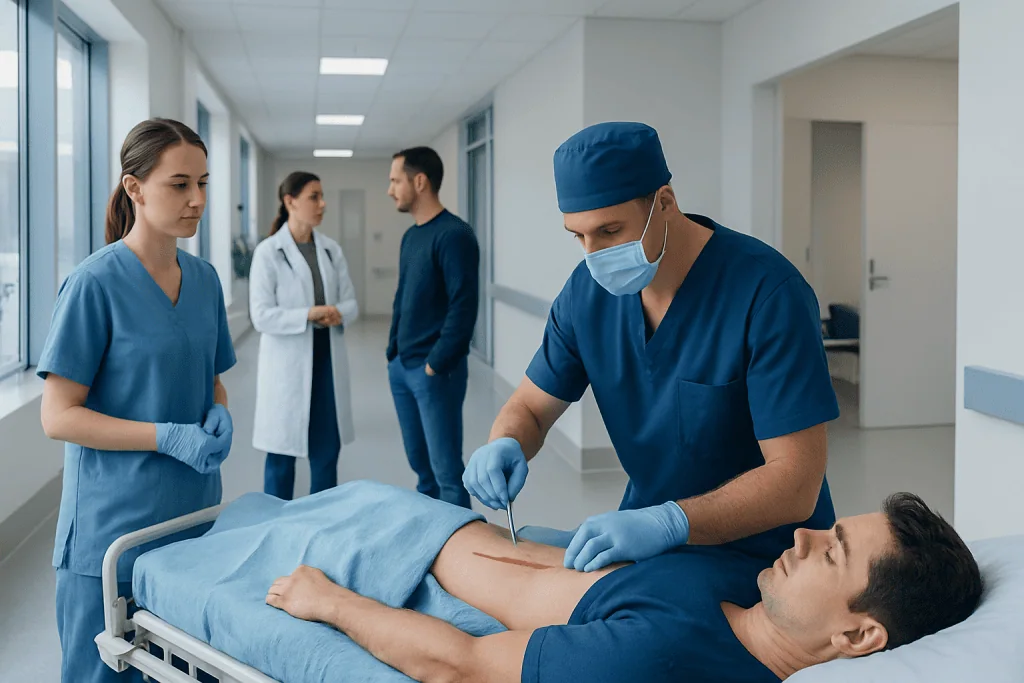
Escharotomy is performed to release pressure caused by tight, non-stretching burned skin. It is most often considered in deep circumferential burns of the arms, legs, chest, or neck.
Key Takeaways
- Escharotomy is performed to release pressure caused by tight, non-stretching burned skin.
- It is most often considered in deep circumferential burns of the arms, legs, chest, or neck.
- Doctors use physical examination and monitoring of circulation and breathing to decide if it is needed.
- The procedure is different from burn wound cleaning or skin grafting and is usually done urgently.
- Recovery includes ongoing burn care, pain control, infection prevention, and close follow-up.
Escharotomy is an emergency procedure used when stiff, deeply burned skin becomes too tight and starts to restrict blood flow, nerve function, or chest movement. It does not treat every burn, but it can be life- and limb-saving in selected patients with severe burns.
What escharotomy is and why it is done
Escharotomy is a surgical release of tight, leathery burned skin, called eschar, when that skin acts like a constricting band around part of the body. The main goal is to relieve dangerous pressure so blood can reach tissues, nerves can function normally, and the chest can expand during breathing. In practical terms, escharotomy is used when a severe burn causes swelling underneath skin that can no longer stretch.
This procedure is most often considered after deep partial-thickness or full-thickness burns, especially when the burn circles an arm, leg, chest, abdomen, or neck. Doctors may recommend it when they see signs that circulation is being reduced or that the chest wall is too tight to allow normal breathing. It is an emergency intervention rather than a routine part of burn care.
Escharotomy is different from other burn procedures. It is not the same as cleaning dead tissue, dressing a wound, or performing a skin graft. Instead, it is a pressure-relieving step that may happen early in treatment, often alongside fluids, monitoring, wound care, and other measures used in comprehensive burn treatment.
How severe burns lead to dangerous pressure
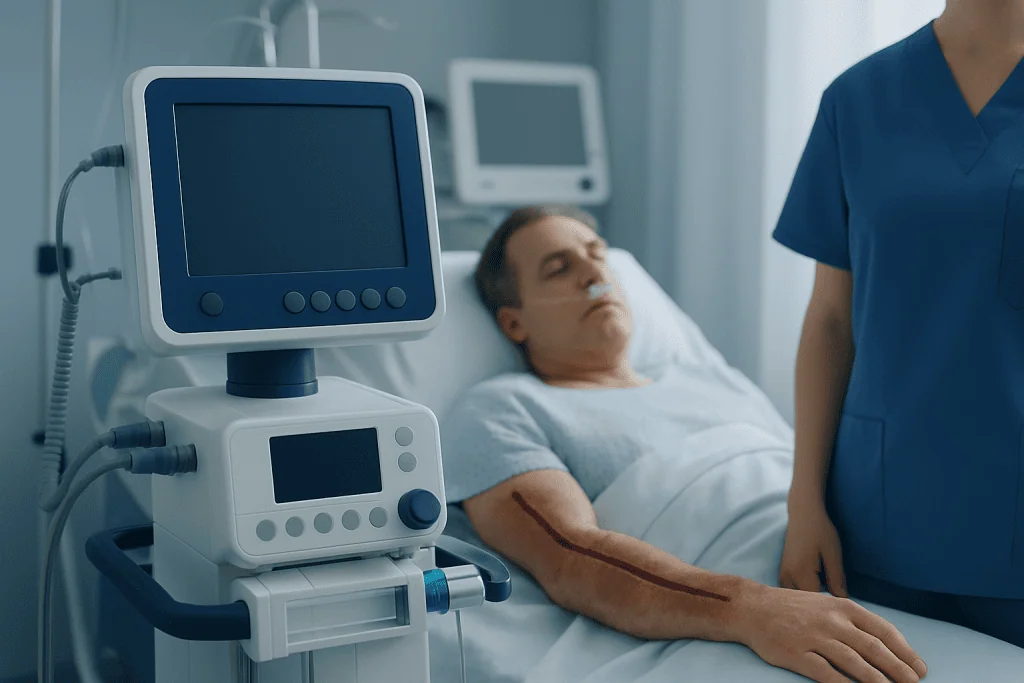
After a major burn, the body responds with inflammation and swelling. In healthy skin, some expansion is possible. In a deep burn, however, the outer tissues can become stiff, dry, and inelastic. When swelling builds underneath that tight layer, pressure rises in the tissues below.
If a burn completely circles an extremity, called a circumferential burn, the rigid eschar may act like a tourniquet. This can reduce blood flow to the hand, foot, fingers, or toes and may also affect nerve function. Patients may notice increasing pain, numbness, cool skin, color changes, or trouble moving the affected area, although in deeper burns sensation may already be reduced.
When circumferential burns involve the chest or upper abdomen, the issue can be breathing rather than limb circulation. The chest wall may become too tight to expand properly, making each breath more difficult. In these situations, escharotomy may be used to restore chest movement and improve ventilation.
Doctors also distinguish escharotomy from fasciotomy. Escharotomy releases burned skin. Fasciotomy goes deeper into tissue compartments and is used when pressure remains dangerously high below the fascia. Not every patient with a severe burn needs either procedure, but recognizing the difference helps explain why specialist burn assessment is important.
Signs and symptoms that may suggest escharotomy is needed

The need for escharotomy is based on clinical findings, not on the appearance of a burn alone. A deep circular burn may look severe, but the key question is whether swelling and tight eschar are compromising function. Doctors repeatedly assess circulation, nerve status, and breathing because these changes can develop over time, especially during fluid resuscitation after a major burn.
Possible warning signs in an arm or leg include increasing tightness, severe swelling, pain that seems out of proportion, numbness, tingling, weakness, pale or bluish skin, coolness, delayed capillary refill, or weaker pulses. In some cases, blood flow to the deeper tissues becomes reduced even before pulses disappear, so doctors consider the whole clinical picture rather than a single sign.
For burns involving the chest or neck, warning signs may include labored breathing, poor chest rise, increasing breathing support requirements, or signs that ventilation is becoming more difficult. These symptoms require urgent evaluation, particularly in patients with extensive thermal injuries or associated inhalation concerns such as severe burns.
- Tight circumferential burn around a limb
- Changes in skin color, temperature, or sensation
- Decreased movement or increasing swelling
- Difficulty with chest expansion or breathing
- Clinical concern for impaired blood flow or nerve function
How doctors assess the need for escharotomy
Diagnosis is mainly clinical and often happens at the bedside. The care team examines the depth and pattern of the burn, checks pulses and skin temperature, and looks for changes in sensation and movement. They also compare the affected area with the unaffected side when possible. Because burn swelling can progress, repeated reassessment is essential in the first hours and days.
Monitoring tools may support the examination. Doppler assessment can help detect blood flow in arteries when pulses are hard to feel. In some cases, doctors measure compartment pressures if they are concerned about deeper pressure build-up, although the decision to perform escharotomy is still guided primarily by the overall clinical situation.
For chest burns, the team monitors oxygenation, ventilation, and the work of breathing. If the chest wall becomes mechanically restricted by burned skin, a prompt release may be needed. Patients with major burns are often managed by a multidisciplinary team that may include emergency physicians, intensive care specialists, plastic or reconstructive surgeons, and wound-care professionals. Depending on the extent of injury, advanced imaging and supportive tests may also be part of broader emergency care.
What happens during the procedure
Escharotomy involves making carefully placed incisions through the burned skin to release the constricting eschar. The exact location of these incisions depends on the body area involved and is planned to avoid important nerves and vessels. The procedure is commonly done in an emergency or critical-care setting when delay could risk tissue damage or breathing compromise.
The patient receives appropriate pain management, sedation, or anesthesia based on the situation, the depth of the burn, and overall medical condition. Once the release is made, the team looks for immediate improvement such as better tissue perfusion, warmer skin, improved capillary refill, easier chest expansion, or stronger Doppler signals. The wounds are then dressed and monitored closely.
Escharotomy does not remove all burned tissue or finish burn treatment. Instead, it creates room for swollen tissues and helps preserve function while the wider care plan continues. Some patients later need debridement, grafting, rehabilitation, or reconstructive procedures as part of recovery. In selected cases, this may overlap with specialist plastic and reconstructive surgery after the acute phase has passed.
As with any procedure, there are potential risks, including bleeding, infection, scarring, and injury to nearby structures. However, when escharotomy is indicated, the benefits of restoring blood flow or breathing usually outweigh these risks. Burn specialists aim to perform it only when medically necessary and in a controlled setting.
Treatment after escharotomy and recovery
Recovery after escharotomy depends largely on the severity and extent of the original burn. The procedure itself addresses pressure, but ongoing treatment focuses on the burn injury as a whole. This may include intravenous fluids, wound dressings, infection prevention, nutritional support, pain control, breathing support when needed, and regular reassessment of circulation and healing.
The release incisions created during escharotomy require wound care and observation. Doctors watch for adequate perfusion, signs of infection, and the condition of the underlying tissues. If areas of dead tissue remain, the patient may later need surgical cleaning or grafting to promote wound closure. Some people are also referred for physical and occupational therapy to maintain movement and reduce stiffness.
Healing times vary. Smaller or more localized injuries may recover more quickly, while extensive burns can require longer hospital care and rehabilitation. Emotional recovery also matters, and many patients benefit from practical support, scar management guidance, and counseling during the healing process.
Near the end of recovery planning, some patients may seek care in specialized centers that coordinate surgery, critical care, rehabilitation, and follow-up. Acibadem International’s multidisciplinary specialists and JCI-accredited hospitals diagnose and treat complex burn-related conditions for international patients when advanced care is needed.
When to seek medical care
Any suspected deep burn, especially one involving the face, hands, feet, genitals, a major joint, or a large body area, should be assessed promptly by a qualified medical professional. Urgent evaluation is particularly important if the burn circles an arm, leg, chest, or neck, because swelling can create serious pressure even when the skin first appears dry and stable.
Immediate medical attention is needed if there is worsening pain, increasing tightness, numbness, trouble moving fingers or toes, color change, cool skin, weak pulses, or any difficulty breathing. These symptoms do not always mean escharotomy will be required, but they can signal a time-sensitive problem that should not be managed at home.
While waiting for medical help, basic first aid is important. Stop the burning source, cool the area briefly with cool running water if appropriate, remove tight jewelry or clothing unless stuck to the skin, and cover the burn with a clean cloth or non-stick dressing. Ice, creams, butter, toothpaste, and home remedies should be avoided, as they may worsen tissue injury or delay proper treatment.
Frequently asked questions
Is escharotomy the same as surgery for all burns?
No. Escharotomy is a specific emergency procedure used to relieve pressure caused by tight, deeply burned skin. Many burns are treated without escharotomy and may only need dressings, pain control, and monitoring.
Does every circumferential burn require escharotomy?
Not always. A circumferential burn raises concern because swelling under non-stretching skin can reduce blood flow or restrict breathing, but doctors base the decision on examination and monitoring. Some patients can be observed closely without needing the procedure.
How quickly is escharotomy performed?
It is performed urgently when doctors believe pressure is threatening tissue viability or breathing. The exact timing depends on how the patient is doing clinically, but the goal is to act before prolonged loss of circulation causes damage.
Is escharotomy painful?
Burn injuries themselves can be very painful, although very deep burns may have reduced sensation. During escharotomy, the medical team uses appropriate pain relief, sedation, or anesthesia based on the setting and the patient’s condition.
Will a patient still need more treatment after escharotomy?
Usually yes. Escharotomy relieves pressure, but it does not complete burn treatment. Ongoing care may include wound management, infection prevention, rehabilitation, and sometimes later procedures such as debridement or skin grafting.
What is the difference between escharotomy and fasciotomy?
Escharotomy releases the burned skin itself when it becomes too tight. Fasciotomy is a deeper procedure that opens the fascia around muscle compartments when pressure remains dangerously high below the skin. Doctors choose between them based on where the pressure problem is occurring.
References
- World Health Organization
- American Burn Association
- National Institute of General Medical Sciences
- MedlinePlus
- Society of Critical Care Medicine
This article is for general information only and is not a substitute for professional medical advice. Please consult a qualified doctor about your individual situation.
Explore treatments in Turkey — costs, top hospitals & a free quote
JCI-accredited · board-certified surgeons · reply within 24h
Add us as a Preferred Source to see more of our trusted health content across Google Search, AI Overviews and Discover.

More from the Health Library



Related Specialists
Prof. Dr. Aziz Polat
Pediatrics
Prof. Dr. Burak Tander
Pediatric Surgery
Prof. Dr. Süda Tekin
Infectious Diseases & Clinical Microbiology
Dr. Tuğba Çelebi
Internal Medicine