Non Surgical Face Lift: How It Works, Recovery, and What to Expect

A non surgical face lift can improve mild to moderate sagging, volume loss, and skin texture without surgery. Common approaches include dermal fillers, botulinum toxin, energy-based skin tightening, and thread lifts.
Key Takeaways
- A non surgical face lift can improve mild to moderate sagging, volume loss, and skin texture without surgery.
- Common approaches include dermal fillers, botulinum toxin, energy-based skin tightening, and thread lifts.
- Results vary by treatment type and usually develop gradually or last for a limited time, so maintenance is often needed.
- The best candidates have realistic expectations and want facial rejuvenation with less downtime than surgery.
- Evaluation by a qualified doctor is important to match the safest technique to the patient's skin, anatomy, and goals.
A non surgical face lift is a group of treatments that can lift, tighten, smooth, or restore volume to the face without surgical incisions. It usually involves injectables, skin-tightening devices, or threads, and recovery is often shorter than with a traditional facelift, although results are typically more subtle and temporary.
Overview: what a non surgical face lift can do
A non surgical face lift is a broad term for treatments designed to improve facial contours, skin laxity, wrinkles, and volume loss without the incisions and longer recovery associated with surgery. Depending on the method used, treatment may lift the cheeks, soften lines around the mouth, define the jawline, improve skin firmness, or restore a fresher overall appearance.
Rather than one single procedure, a non surgical face lift usually combines several techniques. These may include injectable treatments such as fillers and neuromodulators, energy-based procedures that stimulate collagen, or absorbable threads placed under the skin for support. A doctor may recommend one option or a tailored combination based on the patient’s age, facial structure, skin quality, and goals.
It is important to understand the difference between a non surgical approach and a surgical facelift. Non surgical treatments can create meaningful improvement, especially for early signs of aging, but they do not remove excess skin in the same way surgery can. In general, the results are more subtle, and they often require repeat sessions or maintenance over time.
How it works
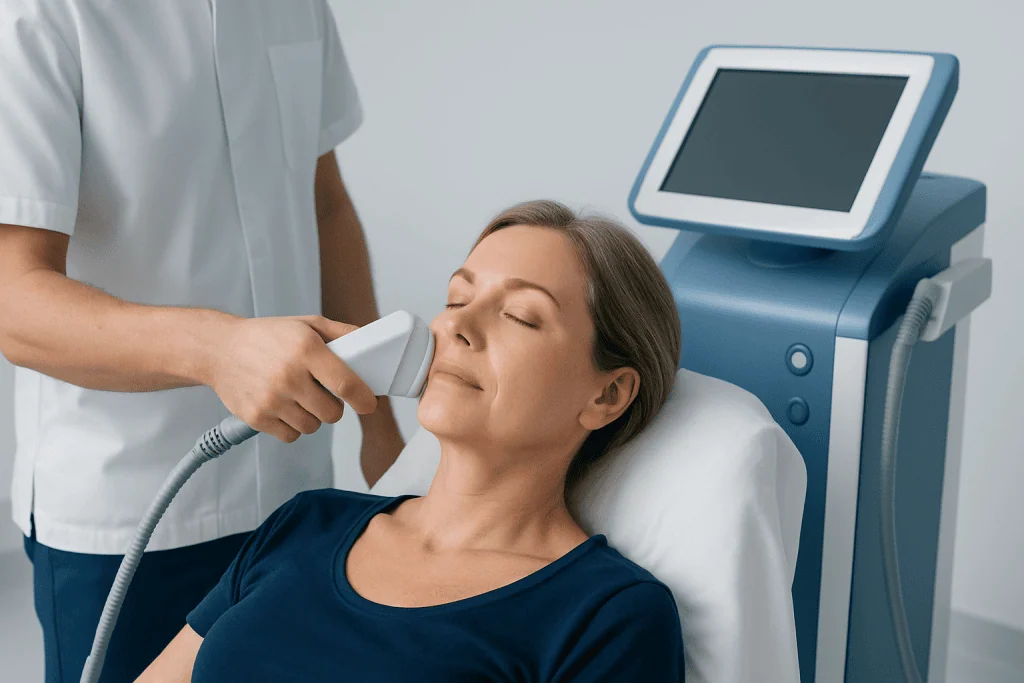
The main principle behind a non surgical face lift is targeted facial rejuvenation. Some treatments relax muscles that deepen dynamic wrinkles, while others replace lost volume or stimulate the body’s natural collagen production. Together, these effects can make the face look smoother, firmer, and more balanced.
Injectable fillers work by adding support beneath the skin in areas such as the cheeks, temples, jawline, or folds around the nose and mouth. Neuromodulators reduce the pull of selected facial muscles, which can soften expression lines and sometimes create a gentle lifting effect in areas such as the brows or lower face. Energy-based treatments, including ultrasound, radiofrequency, or laser-based approaches, heat deeper skin layers in a controlled way to encourage collagen remodeling and tightening over time.
Thread lifts use dissolvable threads inserted under the skin to reposition tissue and stimulate collagen as they are absorbed. These methods are often considered when a patient wants some lifting but is not ready for surgery. In many cases, the most natural-looking result comes from combining skin tightening with volume restoration rather than relying on only one technique.
Patients considering facial rejuvenation may also hear about broader plastic surgery options. A specialist can explain whether a non surgical plan is likely to meet the patient’s goals or whether a surgical approach would offer a more predictable result.
Who may be a good candidate

A good candidate for a non surgical face lift is typically someone with mild to moderate signs of facial aging who wants improvement without an operation. Common concerns include early jowling, a less defined jawline, loss of cheek volume, fine lines, mild skin looseness, or a tired appearance. Many people choose this option because they prefer shorter downtime and a lower level of intervention than surgery.
Realistic expectations are essential. These treatments can refresh and enhance the face, but they cannot fully reproduce the effect of a surgical facelift in someone with marked skin laxity or significant drooping. A detailed consultation helps determine whether the desired result is achievable with a non surgical method.
Doctors also consider medical history, skin type, medications, previous cosmetic procedures, and active skin conditions. Treatment may be postponed if there is an active infection, inflammation, certain autoimmune concerns affecting healing, or pregnancy and breastfeeding in some cases, depending on the method planned. People with very loose skin or those seeking long-lasting, dramatic lifting may be advised to discuss facelift surgery as an alternative.
Step by step: what happens during the procedure
The process usually starts with a facial assessment rather than immediate treatment. The doctor examines skin quality, volume loss, facial symmetry, and the pattern of aging in motion and at rest. Photographs may be taken for planning. The patient is then guided through the expected level of change, likely duration of results, possible risks, and aftercare.
On the day of treatment, the skin is cleaned and marked if needed. A topical numbing cream may be used, and some injectable products already contain local anesthetic. With fillers or neuromodulators, the doctor places small amounts of product in carefully chosen areas using a fine needle or cannula. For energy-based treatments, a handheld device is applied to the skin to deliver controlled heat to targeted layers. For threads, local anesthesia is usually used before the threads are inserted through small entry points.
The session may take from a short office visit to a longer appointment, depending on the number of areas treated and the technique used. Many people return home the same day. Some see immediate changes, especially after fillers or threads, while collagen-stimulating treatments often improve gradually over weeks to months.
In selected patients, doctors may combine rejuvenation methods with skin-focused care or procedures related to dermatology to improve tone, texture, pigmentation, or acne-related concerns at the same time.
Recovery timeline and what to expect after treatment
Recovery after a non surgical face lift is usually shorter than after surgery, but the exact timeline depends on the treatment used. Injectable procedures commonly cause mild swelling, redness, tenderness, or bruising for a few days. Energy-based treatments may lead to temporary warmth, swelling, or a feeling of tightness. Thread lifts can involve more soreness, swelling, or puckering initially, which usually settles over time.
Many patients return to daily activities quickly, sometimes on the same day or within a day or two. However, doctors often recommend avoiding strenuous exercise, heavy alcohol intake, facial massage, heat exposure, or sleeping face-down for a short period, depending on the procedure. Makeup may be allowed after a certain number of hours if the skin is intact and the doctor agrees.
Results can be immediate, gradual, or both. Fillers may show prompt contour improvement, but final results become clearer after swelling settles. Neuromodulators usually take several days to start working and around two weeks for full effect. Collagen-based tightening treatments often continue to improve over several weeks or months. Follow-up visits help the doctor assess healing and decide whether touch-ups are needed.
Benefits, limitations, and possible risks
The main benefits of a non surgical face lift are convenience, less downtime, and the ability to personalize treatment. It can be a useful option for people who want a fresher look without general anesthesia or a longer recovery period. The changes are often subtle and natural-looking when treatment is planned carefully and done conservatively.
Its limitations are equally important. Results are not permanent, and maintenance is usually needed. It also cannot correct more advanced sagging as effectively as surgery. In some cases, trying to achieve too much lift with repeated non surgical treatment can create an unnatural appearance or fail to address the underlying anatomy.
Possible risks vary by technique and may include bruising, swelling, discomfort, asymmetry, temporary lumps, skin irritation, thread visibility, infection, pigment changes, or unsatisfactory cosmetic results. Injectable fillers carry rare but serious risks if a blood vessel is affected, which is why treatment should only be performed by trained medical professionals. Patients with inflamed skin, scarring tendencies, or conditions such as rosacea may need a modified plan to reduce irritation and protect skin health.
- Benefits: minimal incisions, shorter recovery, customizable treatment, gradual or immediate improvement
- Limitations: temporary results, maintenance sessions, less effective for severe sagging
- Risks: bruising, swelling, asymmetry, infection, skin injury, and procedure-specific complications
How doctors choose the right option
There is no single best non surgical face lift for everyone. A doctor chooses the approach by identifying what is causing the aged appearance. If volume loss is the main issue, fillers may help most. If muscle movement is creating lines or pulling the lower face downward, neuromodulators may be added. If skin laxity is mild and texture is also a concern, an energy-based tightening treatment may be more appropriate.
Combination treatment is common because facial aging is multi-layered. Skin loses elasticity, fat pads shift, bone support changes, and repeated facial expressions leave lines over time. Addressing only one of these factors may give an incomplete result. A staged treatment plan can often produce a more balanced and natural outcome than trying to correct everything in one session.
Patients should ask who will perform the treatment, what product or device will be used, what side effects are expected, and what the realistic result will be. If there is a history of allergies, facial surgery, cold sores, pigment changes, or conditions such as eczema or acne flares, these should be discussed before treatment so the plan can be adjusted safely.
When to seek medical care
Most temporary side effects after a non surgical face lift are mild and improve on their own. However, patients should contact their treating clinician promptly if they develop increasing pain, marked swelling, fever, spreading redness, drainage, blanching or darkening of the skin, vision changes, severe headache, or new weakness in the face. These symptoms are uncommon but need urgent medical attention.
Medical review is also important if the result appears very uneven, if a lump does not settle, or if there is persistent numbness or discomfort. Early assessment can help identify whether the issue is part of normal healing or whether treatment is needed. People with sensitive skin or a known inflammatory condition should also seek advice if they experience a strong flare after the procedure.
For patients considering treatment, consultation matters just as much as aftercare. Acibadem International’s multidisciplinary specialists in JCI-accredited hospitals evaluate facial anatomy, skin quality, and overall health to plan appropriate care for international patients seeking medical aesthetics procedures.
Frequently asked questions
How long does a non surgical face lift last?
The duration depends on the treatment used. Some injectable treatments last a few months, while some fillers and collagen-stimulating procedures may last longer. Most people need maintenance treatments to preserve the result.
Is a non surgical face lift painful?
Most patients describe it as tolerable rather than painful. Doctors often use numbing cream, local anesthetic, or products that contain anesthetic to improve comfort. Mild tenderness or tightness afterward is common and usually temporary.
Can a non surgical face lift replace a surgical facelift?
It can be a good alternative for selected people with early or moderate signs of aging. However, it does not remove excess skin or create the same degree of lifting as surgery. A specialist can explain which option is more suitable based on the patient's goals.
How soon will results be visible?
Some results are visible immediately, especially after fillers or thread-based lifting. Other treatments, such as ultrasound or radiofrequency tightening, work more gradually as collagen rebuilds. Final results may take weeks to fully appear.
What should be avoided after treatment?
After treatment, patients are often advised to avoid strenuous exercise, alcohol, excessive heat, and pressure on the treated area for a short period. Specific instructions vary depending on whether the procedure involved injectables, threads, or energy devices. Following aftercare guidance helps reduce swelling and supports healing.
Are there any serious risks?
Serious complications are uncommon, but they can occur. The exact risks depend on the treatment type and may include infection, skin injury, or vascular complications with fillers. This is why treatment should be performed by qualified medical professionals in an appropriate clinical setting.
References
- American Society of Plastic Surgeons
- American Academy of Dermatology
- U.S. Food and Drug Administration
- American Board of Cosmetic Surgery
This article is for general information only and is not a substitute for professional medical advice. Please consult a qualified doctor about your individual situation.
Explore treatments in Turkey — costs, top hospitals & a free quote
JCI-accredited · board-certified surgeons · reply within 24h
Add us as a Preferred Source to see more of our trusted health content across Google Search, AI Overviews and Discover.