Knee Pillow: What Patients Need to Know

A knee pillow may improve sleep comfort by helping keep the pelvis, hips, and spine in a more neutral position. It is most often used by side sleepers, pregnant people, and people with low back, hip, or knee discomfort at night.
Key Takeaways
- A knee pillow may improve sleep comfort by helping keep the pelvis, hips, and spine in a more neutral position.
- It is most often used by side sleepers, pregnant people, and people with low back, hip, or knee discomfort at night.
- The right shape, firmness, and placement matter; an unsuitable pillow may feel awkward or provide little benefit.
- A knee pillow can support comfort, but persistent or worsening pain should be assessed by a qualified doctor.
- People with numbness, weakness, swelling, or sudden severe pain should seek medical evaluation rather than relying on a pillow alone.
A knee pillow is a support cushion placed between or under the knees to improve sleep posture and reduce pressure on the lower back, hips, and legs. It is not a treatment for every cause of pain, but it can be a helpful comfort measure when used correctly.
What a knee pillow is and how it may help
A knee pillow is a small support cushion designed to be placed between the knees, under the knees, or sometimes between the thighs during rest. Its main purpose is to improve body alignment during sleep and reduce pressure on joints and soft tissues. For many people, especially side sleepers, this simple change can make sleep feel more comfortable.
The idea behind a knee pillow is mechanical rather than medicinal. When the legs rest in a more supported position, the pelvis may rotate less, and the lower back, hips, and knees may be exposed to less strain. This can be useful for people who notice discomfort after sleeping in one position for several hours.
A knee pillow does not treat the underlying cause of every pain problem, and it is not a substitute for medical care. Still, it can be a practical self-care tool for nighttime comfort, particularly when symptoms are related to posture, pressure, or positioning during sleep.
Who may benefit most from a knee pillow

A knee pillow is often most helpful for people who sleep on their side. In this position, the top leg can drop forward, twisting the pelvis and putting extra stress on the low back or hips. Placing a pillow between the knees may help keep the legs more parallel and reduce that rotation.
Some back sleepers also use a pillow under the knees. This can slightly bend the hips and knees, which may reduce tension in the lower back for certain people. Others who may find it useful include pregnant people, people with mild nighttime hip discomfort, and those recovering from minor strain who want more support while resting.
It may also be considered by people with discomfort related to knee pain, hip tightness, or positional low back pain at night. In some cases, people with joint wear-and-tear such as osteoarthritis may prefer a pillow because it reduces direct knee-to-knee pressure or helps them stay in a comfortable position for longer.
Possible benefits and realistic expectations
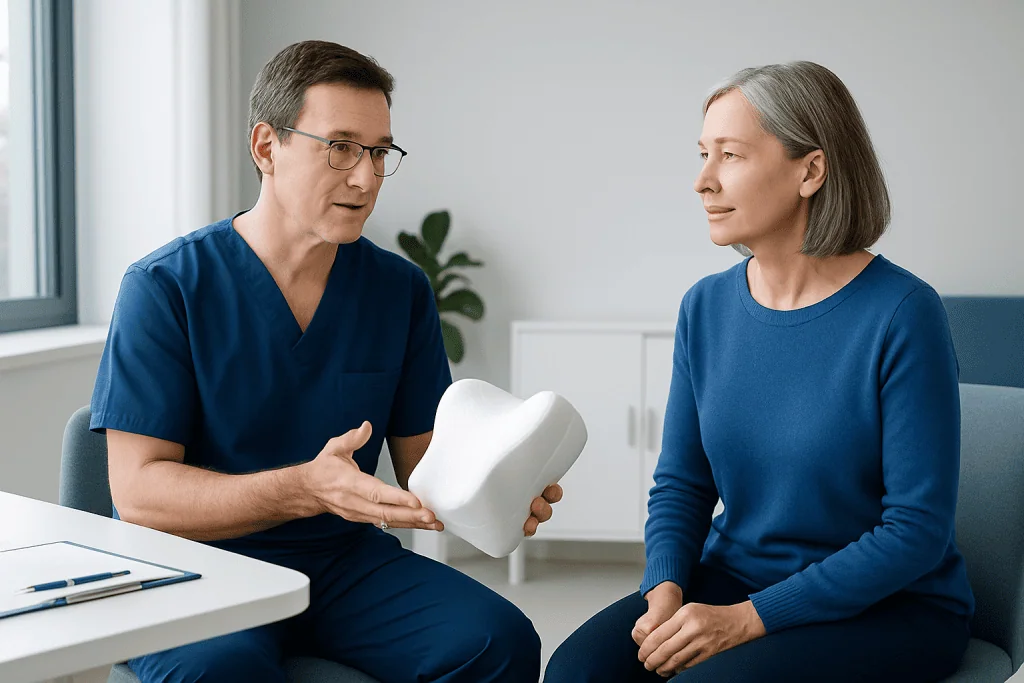
The main potential benefit of a knee pillow is improved comfort. By reducing pressure points and helping maintain a more neutral sleeping posture, it may lessen stiffness in the morning or reduce discomfort that appears after long periods in bed. Some people also report sleeping more soundly because they shift position less often.
There may be indirect benefits as well. Better alignment can mean less strain on surrounding muscles, including those in the lower back and outer hip. For side sleepers, a pillow can also prevent the knees from pressing directly against each other, which may be useful if the inner knees feel sore or sensitive.
However, expectations should stay realistic. A knee pillow is a supportive aid, not a cure. It may not help if pain is caused by significant inflammation, nerve compression, injury, infection, or advanced joint disease. If symptoms continue despite good sleep positioning, a doctor may recommend further evaluation and, when appropriate, care such as physical therapy and rehabilitation or specialist assessment.
How to use a knee pillow correctly
Correct placement is important. For side sleeping, the pillow is usually placed between the knees and sometimes slightly higher so it also supports part of the thigh. The goal is to keep the top leg from falling forward and to maintain a comfortable line from the hips through the knees and ankles. If the pillow is too small, the knees may still collapse inward; if it is too large, it may feel forced or uncomfortable.
For back sleeping, the pillow is generally placed under both knees. This position may ease tension in the lower back for some people by slightly flattening the natural arch. Stomach sleepers usually benefit less from a knee pillow, because that position itself can place stress on the neck and lower back.
It can help to choose a pillow that holds its shape without feeling overly hard. Memory foam, contoured designs, or a simple supportive cushion may all work, depending on body size, sleep position, and comfort preference. If sleep discomfort involves more than one area, a doctor may also discuss broader support strategies, and some patients with structural joint problems may eventually need treatments such as knee replacement or hip replacement when clinically appropriate.
Limitations, risks, and when it may not be enough
Although a knee pillow is generally low risk, it is not right for every situation. If it changes posture too much, it may create new discomfort in the hips, ankles, or lower back. This is more likely when the pillow is too thick, too thin, or used in a position that does not suit the person’s body shape and sleeping habits.
A knee pillow should not be used as the only response to persistent, unexplained pain. Night pain that is severe, progressive, or associated with swelling, redness, numbness, weakness, fever, or recent trauma may suggest a problem that needs medical assessment. Examples include ligament injury, nerve irritation, inflammatory joint disease, or circulation-related issues.
People recovering after surgery or injury should follow their treating clinician’s advice about sleep position and supports. In these situations, the right setup can vary. Some people may need a brace, guided exercises, or a structured recovery plan rather than relying on a pillow alone.
How to choose the right knee pillow
There is no single best design for everyone. A useful knee pillow should support the legs comfortably and help maintain a natural position without forcing the joints apart. Shape, height, firmness, and material all matter. Side sleepers often prefer a contoured pillow that stays between the knees, while back sleepers may prefer a broader cushion under both knees.
Washability and stability are practical points to consider. A removable cover can make cleaning easier, and a design that stays in place through the night may improve consistency. People who move frequently during sleep may prefer a softer or slightly larger pillow that feels less restrictive.
Trying the pillow for comfort over several nights is often more helpful than judging it after one use. If it repeatedly causes new pain, tingling, or poor sleep, it may be the wrong size or style. A doctor or physiotherapist can give more tailored advice if posture-related pain is recurring.
- Choose a height that fills the space between the legs without overstretching the hips.
- Look for moderate firmness so the pillow supports rather than collapses.
- Use it consistently in the sleep position it was designed for.
- Stop using it if it worsens symptoms or creates numbness or pressure points.
Other ways to improve nighttime comfort
A knee pillow works best as part of a broader sleep and musculoskeletal comfort plan. Mattress support, overall pillow height, sleep position, daily activity, and stretching habits can all influence nighttime pain. A supportive mattress and a head pillow that keeps the neck aligned may be just as important as leg positioning.
During the day, gentle movement and strengthening can help reduce the stiffness that becomes noticeable at night. Depending on the cause of symptoms, supportive footwear, avoiding prolonged sitting, and guided exercises may also help. For some people, local measures such as heat or cold may provide temporary relief, but these should be used carefully and according to general safety guidance.
If pain is recurrent or affects daily function, formal assessment may be useful. Specialists in orthopedics, rehabilitation, and pain management can help identify whether symptoms are due to posture alone or to an underlying condition. Acibadem International’s multidisciplinary specialists and JCI-accredited hospitals diagnose and treat musculoskeletal conditions for international patients when further evaluation is needed.
When to seek medical care
A knee pillow may improve comfort, but it should not delay medical care when symptoms suggest more than simple positional discomfort. Medical review is sensible if pain lasts for several weeks, repeatedly interrupts sleep, limits walking or climbing stairs, or continues despite posture changes and basic self-care.
Prompt medical attention is especially important after a fall or twist injury, or when pain is accompanied by marked swelling, warmth, redness, fever, weakness, numbness, calf pain, or sudden inability to bear weight. These symptoms can point to conditions that need diagnosis and treatment rather than home positioning measures alone.
In general, if a person is unsure whether nighttime discomfort is related to sleep posture or to an underlying joint, nerve, or circulation problem, discussing it with a qualified doctor is the safest next step. Evaluation may include physical examination and, when needed, imaging such as MRI to clarify the cause.
Frequently asked questions
Does a knee pillow really work?
For some people, yes. A knee pillow can improve sleep posture and reduce pressure on the hips, knees, and lower back, especially in side sleepers. Its benefit depends on the cause of symptoms and whether the pillow is the right size and used correctly.
Where should a knee pillow be placed?
Side sleepers usually place it between the knees, sometimes extending slightly between the thighs. Back sleepers often place it under both knees. The aim is to support a comfortable, neutral position rather than force the legs into an unnatural angle.
Can a knee pillow help lower back pain?
It may help some types of lower back discomfort that are related to sleep position. By reducing pelvic rotation or easing tension through the lower body, it can improve comfort at night. It is less likely to help if back pain is caused by a more significant structural or nerve-related problem.
Is a knee pillow useful during pregnancy?
Many pregnant people find support between the knees or thighs more comfortable during side sleeping. It may reduce pressure on the hips and lower back as the body changes through pregnancy. It is still best to ask a clinician for individualized advice if pain is significant or persistent.
Can a knee pillow make pain worse?
It can if the pillow is too thick, too firm, too soft, or placed incorrectly. In that case, it may create strain in the hips, knees, ankles, or lower back. If symptoms worsen, it is reasonable to stop using it and seek professional advice.
How long should someone try a knee pillow before deciding if it helps?
A short adjustment period is common, so it may help to try it for several nights to one or two weeks. Comfort, sleep quality, and morning stiffness are useful signs to watch. If there is no improvement, or if pain is ongoing, medical assessment may be more appropriate.
References
- American Academy of Orthopaedic Surgeons
- National Institute of Arthritis and Musculoskeletal and Skin Diseases
- National Health Service
- Mayo Clinic
- MedlinePlus
This article is for general information only and is not a substitute for professional medical advice. Please consult a qualified doctor about your individual situation.
Joint and spine care in Turkey — expert assessment & treatment
JCI-accredited · board-certified surgeons · reply within 24h
Add us as a Preferred Source to see more of our trusted health content across Google Search, AI Overviews and Discover.