Ulnar Wrist Pain Explained: Common Triggers and Red Flags

Ulnar wrist pain refers to pain on the pinky-side of the wrist and can come from several different structures. Symptoms may worsen with gripping, twisting, lifting, pushing up from a chair, or sports that load the wrist.
Key Takeaways
- Ulnar wrist pain refers to pain on the pinky-side of the wrist and can come from several different structures.
- Symptoms may worsen with gripping, twisting, lifting, pushing up from a chair, or sports that load the wrist.
- Common causes include tendon problems, triangular fibrocartilage complex injury, arthritis, instability, and fractures.
- Diagnosis often relies on the story of the pain, a physical exam, and sometimes X-rays or MRI.
- Many cases improve with rest, splinting, activity changes, and guided rehabilitation, but persistent or sudden severe pain should be assessed by a doctor.
Ulnar wrist pain means pain on the little-finger side of the wrist. It is a symptom rather than a diagnosis, and common causes include overuse, tendon irritation, cartilage injury, arthritis, or less often a fracture or nerve-related problem.
What ulnar wrist pain means
Ulnar wrist pain is pain felt along the outer side of the wrist on the side of the little finger. This area contains small bones, ligaments, tendons, cartilage, and nerves packed closely together, so pain there can come from several different tissues. In many people, the pain is related to overuse or a minor soft-tissue injury, but it can also reflect arthritis, instability, or a fracture.
Rather than being one condition, ulnar wrist pain is best understood as a symptom with a range of possible causes. The exact source often becomes clearer by noticing what triggers it. Pain during twisting a doorknob, turning a key, lifting a pan, using a racquet, or pushing up from bed can point to different structures around the wrist.
This area is sometimes challenging to evaluate because symptoms may overlap. A person may feel a sharp catch with movement, a deep ache after activity, tenderness to touch, swelling, or weakness when gripping. A careful assessment helps distinguish temporary strain from problems that need targeted treatment.
Common symptoms and how the pain may feel
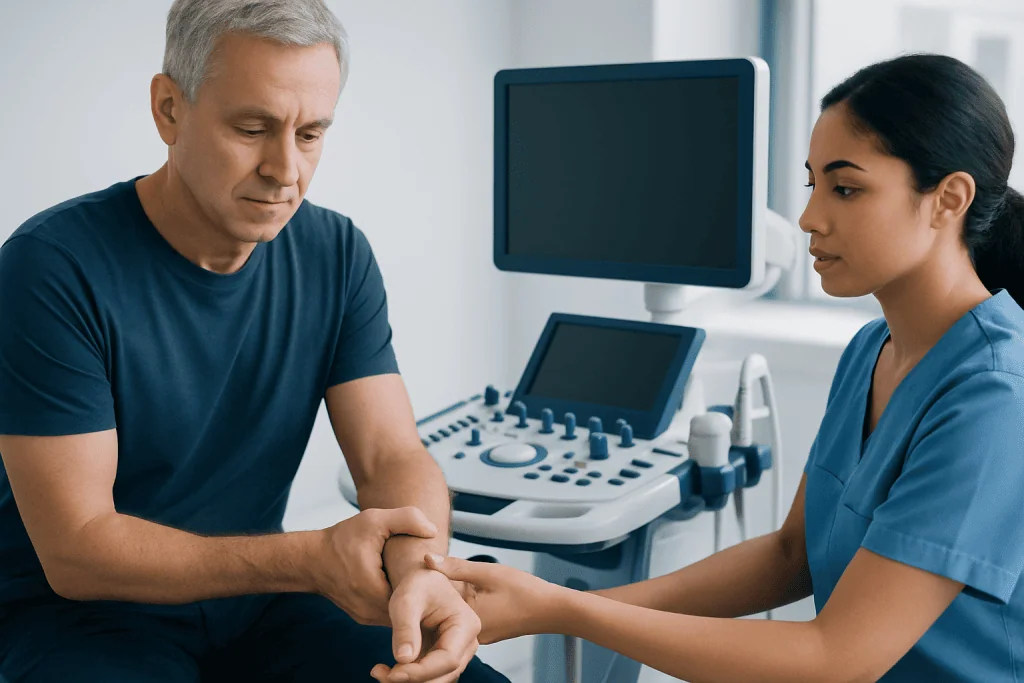
Ulnar-sided wrist pain can feel sharp, dull, aching, clicking, or unstable depending on the cause. Some people notice pain only during activity, while others feel it at rest or at night. It may come on suddenly after a fall or twisting injury, or develop gradually with repetitive hand use.
Common associated symptoms include reduced grip strength, swelling, tenderness near the wrist crease, and pain when rotating the forearm. Clicking or a sense that something is shifting can suggest a cartilage or joint problem. Tingling or numbness is less typical, but if present it may point to nerve irritation rather than a simple strain.
A few symptom patterns can be helpful:
- Pain with twisting or gripping: may be related to tendon irritation, triangular fibrocartilage complex injury, or joint overload.
- Pain after a fall: may suggest a sprain or fracture, even if swelling is mild.
- Morning stiffness or long-term aching: may occur with arthritis.
- Clicking, popping, or instability: may reflect ligament or cartilage injury.
Common triggers and underlying causes

One of the most common reasons for ulnar wrist pain is overuse. Repetitive gripping, lifting, typing with poor wrist position, manual work, racquet sports, golf, gymnastics, and weight training can all overload the tendons and supporting tissues on the little-finger side of the wrist. In these cases, pain often builds gradually and improves with rest.
Another important cause is injury to the triangular fibrocartilage complex, often called the TFCC. This cartilage-and-ligament structure helps stabilize the wrist and cushion load on the ulnar side. A TFCC injury may happen after a fall onto an outstretched hand, a forceful twist, or repetitive loading. It often causes deep pain, tenderness, clicking, or discomfort when rotating the forearm.
Tendon problems are also common. Irritation of the extensor carpi ulnaris tendon can cause pain with wrist extension, rotation, or resisted movement, and the tendon may sometimes feel as if it slips. Arthritis in the small wrist joints, joint instability after a sprain, or wear-and-tear changes can also produce ongoing pain and stiffness.
Less common but important causes include fractures of the wrist bones, especially after trauma, inflammation related to systemic conditions, ganglion cysts, and nerve compression. Sometimes wrist pain is linked to broader orthopedic problems involving the hand or forearm, and a specialist may evaluate related hand and wrist conditions when symptoms persist.
Risk factors that make ulnar wrist pain more likely
Any activity that places repeated load through a bent or rotating wrist can increase risk. This includes jobs involving tools, repetitive lifting, forceful pinching, vibration exposure, and frequent computer or assembly work without ergonomic support. Athletic activities such as tennis, rowing, baseball, yoga, gymnastics, and weightlifting can also strain the ulnar side of the wrist.
Previous wrist injury is another major risk factor. A past sprain, untreated fracture, or ligament injury can leave the wrist less stable and more prone to recurring pain. Structural differences in how the ulna and carpal bones meet can also increase pressure on this side of the wrist in some people.
Age-related wear, inflammatory joint disease, and reduced muscle support around the wrist may contribute as well. In some cases, a sudden increase in exercise intensity or a return to sport too quickly after rest is the main trigger. Understanding these patterns can help guide both treatment and prevention.
How doctors diagnose the cause
Diagnosis begins with a clear description of where the pain is, how it started, and which movements make it worse. A doctor will usually ask about injury, work demands, sports, hand dominance, swelling, clicking, weakness, and whether the pain is new or recurrent. These details often narrow the list of possible causes before any imaging is needed.
The physical exam typically includes checking tenderness, wrist motion, grip strength, forearm rotation, and specific maneuvers that stress certain ligaments, tendons, or joints. The doctor may compare both wrists and examine the hand, elbow, and forearm because pain patterns can overlap.
X-rays are often the first imaging test, especially after trauma or if arthritis is suspected. They can show fractures, bone alignment, and degenerative changes. If the pain continues and soft tissues are suspected, imaging such as MRI may help assess cartilage, ligaments, and tendons in more detail. In selected cases, wrist arthroscopy can be used to diagnose and sometimes treat internal wrist problems.
Treatment options and what recovery may involve
Treatment depends on the cause, severity, and how long symptoms have been present. Many mild or moderate cases improve with a period of activity modification, avoiding painful twisting or heavy loading, and short-term wrist support with a splint or brace. Ice and doctor-guided pain relief measures may also be used when appropriate.
Rehabilitation is often an important part of recovery. Gentle range-of-motion work, strengthening of the wrist and forearm, and correcting technique or ergonomics can reduce strain and help prevent recurrence. For tendon-related pain or minor sprains, structured physical therapy and rehabilitation may support a gradual return to work, exercise, or sport.
If imaging shows a significant tear, instability, fracture, or advanced joint problem, more specialized treatment may be needed. This may include immobilization, injections in selected cases, or surgery when symptoms do not improve with conservative care. Some patients with persistent mechanical symptoms, marked instability, or severe tissue damage may be referred for orthopedic surgery after a full evaluation.
Near the end of the care pathway, patients who need specialist assessment may benefit from a multidisciplinary approach. Acibadem International’s JCI-accredited hospitals support international patients with diagnosis and treatment by orthopedic, hand, radiology, and rehabilitation specialists.
Self-care, prevention, and wrist-friendly habits
Preventing ulnar wrist pain often comes down to reducing repeated strain and improving how the wrist is used during daily tasks. Keeping the wrist in a more neutral position during typing, lifting objects with both hands when possible, and avoiding sudden increases in training volume can make a meaningful difference. Athletes may benefit from checking technique, grip size, and equipment setup.
Regular strengthening of the forearm and shoulder can improve overall control and reduce excess wrist loading. Warm-up before sport, taking breaks from repetitive tasks, and using supportive taping or bracing during flare-ups may also help some people. These measures are especially useful after a previous wrist injury.
Self-care should not replace medical evaluation if the pain is severe, follows trauma, or keeps returning. A problem that seems like simple strain may need more specific treatment if there is instability, cartilage injury, or arthritis.
When to seek medical care
Medical review is important if ulnar wrist pain starts after a fall, sports injury, or direct blow, especially if there is swelling, bruising, deformity, or difficulty using the hand. Pain that is severe, worsening, or preventing normal grip and daily function should also be assessed. Early evaluation can help identify fractures, significant sprains, or cartilage injuries.
A person should also seek care if the pain lasts more than a short period despite rest, keeps returning, or is accompanied by clicking, a feeling of instability, numbness, fever, or visible redness and warmth. These features may suggest a condition that needs more than simple home care.
In general, if the cause is unclear or the wrist is not improving, it is sensible to consult a qualified doctor. Timely diagnosis can support recovery and reduce the chance of long-term stiffness, weakness, or repeat injury.
Frequently asked questions
What is the most common cause of ulnar wrist pain?
Common causes include overuse, tendon irritation, and injury to the triangular fibrocartilage complex. The most likely cause depends on whether the pain began gradually with repeated activity or suddenly after trauma.
Can ulnar wrist pain go away on its own?
Mild cases related to strain or temporary overuse may improve with rest, activity changes, and short-term support. However, pain that persists, returns often, or follows an injury should be checked by a doctor.
Why does my wrist hurt on the pinky side when I twist it?
Twisting loads the tendons, ligaments, and cartilage on the ulnar side of the wrist. Pain with this motion can happen with TFCC injury, tendon irritation, joint overload, or instability.
Do I need an X-ray or MRI for ulnar wrist pain?
Not always. Many people are first assessed with a history and physical exam, and X-rays are often used if there was trauma or concern about arthritis or a fracture. MRI is more useful when soft-tissue injury such as a tendon or cartilage problem is suspected.
Is ulnar wrist pain a sign of arthritis?
It can be, but arthritis is only one possible cause. Long-term aching, stiffness, swelling, and reduced movement may raise suspicion, especially in older adults or people with inflammatory joint disease.
What activities should be avoided with ulnar wrist pain?
It is usually best to limit painful gripping, twisting, heavy lifting, push-ups, racquet sports, and any movement that clearly worsens symptoms. A doctor or therapist can help guide safe modification based on the cause.
This article is for general information only and is not a substitute for professional medical advice. Please consult a qualified doctor about your individual situation.
Joint and spine care in Turkey — expert assessment & treatment
JCI-accredited · board-certified surgeons · reply within 24h
Add us as a Preferred Source to see more of our trusted health content across Google Search, AI Overviews and Discover.

More from the Health Library

Why Does My Stomach Feel Tight? Here Is What the Evidence Says

Sciatica Pain Chiropractic: Common Causes, Related Conditions, and When to See a Doctor

Xyzal vs Zyrtec: Key Differences and How Doctors Tell Them Apart

Should Poop Float or Sink? Causes, Explanations, and Next Steps

What Are Chiggers? Causes, Explanations, and Next Steps