Pectoralis Minor Muscle — Explained by Medical Evidence, Not Myths

The pectoralis minor muscle helps position and stabilize the shoulder blade during arm movement. Tightness or strain in this muscle can contribute to chest, shoulder, neck, or arm discomfort.
Key Takeaways
- The pectoralis minor muscle helps position and stabilize the shoulder blade during arm movement.
- Tightness or strain in this muscle can contribute to chest, shoulder, neck, or arm discomfort.
- Symptoms may overlap with posture-related pain, rotator cuff problems, and thoracic outlet syndrome.
- Diagnosis usually depends on a clinical examination and, when needed, imaging or nerve-related tests to rule out other causes.
- Treatment often includes activity changes, physical therapy, posture correction, and addressing the underlying cause.
- New chest pain, breathing difficulty, weakness, or persistent numbness should be assessed by a doctor.
The pectoralis minor muscle is a thin, triangular chest muscle that connects the ribs to the shoulder blade and helps stabilize shoulder movement. It can become tight, strained, or irritated, sometimes causing front shoulder, chest, arm, or upper back symptoms that are often misunderstood.
Overview: what the pectoralis minor muscle does
The pectoralis minor muscle is a small but important muscle in the upper chest. It lies underneath the larger pectoralis major and runs from the upper ribs to a part of the shoulder blade called the coracoid process. Its main role is not to create a large pushing motion like the bigger chest muscles, but to help control the position of the shoulder blade and support smooth shoulder mechanics.
When this muscle shortens or tightens, it can pull the shoulder blade forward and downward. That change may affect posture, reduce overhead shoulder comfort, and increase stress on nearby muscles, tendons, and nerves. In some people, irritation around this area can also contribute to tingling, heaviness, or aching into the arm.
The pectoralis minor muscle also has a secondary role in breathing. When the shoulder girdle is fixed, it can help lift the ribs during deep or labored breathing. This is why it may become more active in people with poor posture, repetitive upper-body work, or breathing patterns that rely heavily on the upper chest.
Anatomy and why this small muscle matters
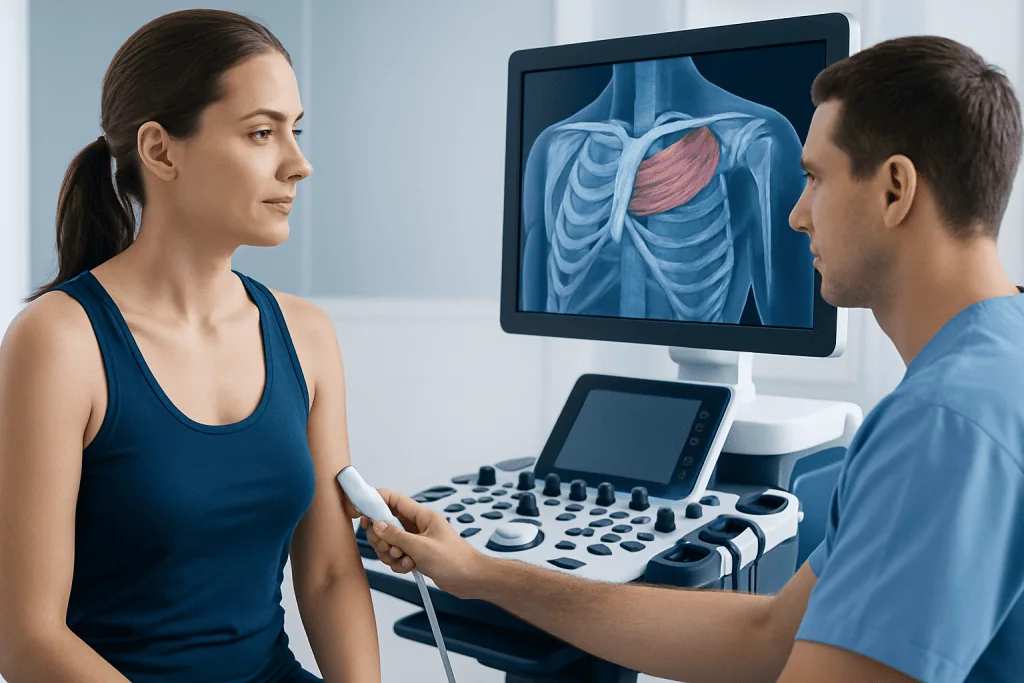
The pectoralis minor usually starts from the third, fourth, and fifth ribs and attaches to the coracoid process of the scapula. Because it links the rib cage to the shoulder blade, it sits at an important crossroads between chest wall movement and shoulder function. A well-functioning pectoralis minor helps the shoulder blade tilt, rotate, and glide in a coordinated way.
This matters because the shoulder depends on stable scapular movement. If the pectoralis minor muscle is too tight, too weak, or painful, it may alter the mechanics of lifting, reaching, throwing, or pushing. Over time, this can contribute to overload in neighboring structures such as the rotator cuff or the tissues around the front of the shoulder.
The muscle is also close to nerves and blood vessels that pass from the neck into the arm. For that reason, marked tightness or compression in this region can sometimes be associated with symptoms seen in thoracic outlet syndrome. Not every person with pectoralis minor tightness has nerve or blood vessel compression, but this relationship is clinically important when arm symptoms are present.
Common symptoms linked to the pectoralis minor muscle

Symptoms related to the pectoralis minor muscle can vary. Some people notice tenderness just below the collarbone or near the front of the shoulder. Others feel a deep ache in the upper chest, discomfort when reaching overhead, or a sense of tightness that worsens after desk work, exercise, or repeated arm use.
Because this muscle influences scapular position, symptoms are not always limited to one small spot. Tightness may contribute to rounded shoulders, neck strain, upper back fatigue, or pain around the shoulder blade. Some people report discomfort during pushing exercises, lifting objects, or sleeping in certain positions.
When nearby nerves or blood vessels are irritated, symptoms may include tingling, numbness, arm fatigue, coldness, or a heavy feeling in the hand or forearm. These symptoms should not automatically be blamed on the pectoralis minor muscle, because they can also occur with neck problems, peripheral nerve compression, or other conditions that require medical assessment.
- Front shoulder or upper chest tenderness
- Pain with overhead activity or prolonged posture
- Rounded-shoulder posture and scapular discomfort
- Tingling, numbness, or heaviness in the arm in some cases
Causes, risk factors, and common myths
The pectoralis minor muscle may become symptomatic for several reasons. Repetitive reaching, weight training, contact sports, swimming, racquet sports, and jobs that involve prolonged forward-shoulder posture can all increase strain. A sudden overload may lead to a muscle strain, while long-term posture and movement patterns often contribute to shortening and irritation over time.
Risk factors include spending many hours at a computer, weak scapular stabilizing muscles, previous shoulder injury, poor lifting mechanics, and restricted movement in the upper back. Breathing patterns may also play a role. People who tend to breathe mainly from the upper chest may overuse accessory muscles, including the pectoralis minor, especially during stress or exertion.
Several myths can make this topic confusing. One myth is that all front-chest pain in active people comes from the pectoralis muscles; in reality, pain can come from the shoulder joint, rib joints, neck, or even non-musculoskeletal causes. Another myth is that a tight pectoralis minor muscle should simply be stretched aggressively. In many cases, effective care also includes posture retraining, strengthening of supporting muscles, and correction of the activity that caused irritation in the first place.
It is also important not to confuse this area with more serious chest conditions. Pain that is crushing, associated with shortness of breath, sweating, fainting, or spreading to the jaw should be treated as urgent until a clinician determines the cause.
How doctors diagnose pectoralis minor problems
Diagnosis starts with a careful medical history and physical examination. A clinician will usually ask where the pain is felt, what movements trigger it, whether there is numbness or weakness, and whether symptoms started after exercise, injury, or long-term posture habits. They may examine shoulder blade position, range of motion, muscle tenderness, strength, and nerve-related signs in the arm and hand.
The examination is especially important because symptoms can overlap with other problems. These include rotator cuff disease, neck-related nerve irritation, rib or sternum pain, and thoracic outlet syndrome. In some cases, imaging or other tests are used not to prove a pectoralis minor problem directly, but to rule out structural injuries or alternative diagnoses.
Depending on the symptoms, a doctor may request shoulder imaging, chest imaging, or studies that assess nerves and blood flow. If there was a major sports injury, MRI may help evaluate nearby soft tissues. If arm numbness, vascular symptoms, or unusual anatomy is suspected, additional vascular or neurological assessment may be recommended. In selected cases, physical therapy and rehabilitation assessment is central to identifying movement patterns that may be contributing to symptoms.
Treatment options and recovery
Treatment depends on the cause and severity of symptoms. Mild pectoralis minor muscle irritation often improves with temporary activity modification, avoidance of painful repetitive movements, and a gradual return to exercise. Supportive care may include relative rest, gentle mobility work, and clinician-guided exercises to improve scapular control and upper-back movement.
Physical therapy is often one of the most useful treatments. A therapist may focus on posture, stretching when appropriate, strengthening of the shoulder blade stabilizers, thoracic mobility, and movement retraining for work, sports, or gym activities. Treatment is usually individualized rather than based on one standard stretch alone.
When symptoms relate to nerve or vessel compression, management depends on the exact diagnosis. Doctors may recommend supervised rehabilitation, ergonomic changes, and further assessment if symptoms persist. If another shoulder condition is contributing, care may overlap with treatment approaches used for rotator cuff tear or other musculoskeletal disorders. For ongoing pain or unclear findings, orthopedic rehabilitation may help restore safe movement and function.
Surgery is not needed for most people with pectoralis minor tightness or mild strain. However, if symptoms are severe, prolonged, or related to a defined compression problem that does not respond to conservative care, a specialist may discuss more advanced options after a full evaluation.
Prevention and self-care
Prevention usually focuses on reducing overload and improving movement habits. People who sit for long periods may benefit from frequent posture breaks, shoulder-blade movement exercises, and workstation adjustments that reduce rounded-shoulder positioning. Athletes often do best with balanced training that includes upper-back and rotator cuff strengthening, not only chest-focused exercises.
Warm-up matters as well. Before sport or resistance training, gradual activation of the shoulder girdle and thoracic spine can prepare the area for load. It is usually better to progress training volume slowly than to increase pushing, pressing, or overhead activity suddenly.
Self-care should stay gentle and practical. Short, comfortable stretches, mobility drills, heat or ice based on comfort, and attention to breathing pattern may all help. However, persistent pain should not be self-treated indefinitely, especially if there is numbness, weakness, or uncertainty about the diagnosis.
Near the end of the care pathway, some people benefit from multidisciplinary review. Acibadem International’s multidisciplinary specialists in JCI-accredited hospitals evaluate musculoskeletal and nerve-related causes of chest and shoulder symptoms for international patients when more detailed assessment is needed.
When to seek medical care
Medical care is appropriate if chest, shoulder, or arm symptoms do not improve with brief rest and activity changes, or if they keep returning. Evaluation is also important when pain limits sleep, work, sports, or daily activities. A doctor can help distinguish a pectoralis minor problem from shoulder joint disease, neck-related issues, or chest conditions that need different treatment.
Urgent medical care is needed for chest pain with shortness of breath, fainting, sweating, severe pressure, or pain spreading to the jaw or left arm. Immediate assessment is also important for sudden arm weakness, marked swelling, loss of pulse, or significant color change in the hand.
If symptoms include ongoing numbness, tingling, or vascular changes in the arm, clinicians may investigate compression syndromes and other neurological causes. In that setting, additional evaluation with specialists and tests such as EMG electromyography may be helpful in selected patients.
Frequently asked questions
What is the pectoralis minor muscle?
The pectoralis minor muscle is a small chest muscle located underneath the larger pectoralis major. It connects the ribs to the shoulder blade and helps control scapular position and assist with deep breathing.
Can the pectoralis minor muscle cause chest pain?
Yes, it can cause localized chest or front-shoulder discomfort, especially with strain, tightness, or overuse. However, chest pain has many possible causes, so new or concerning symptoms should be assessed by a doctor.
How is pectoralis minor pain different from a heart problem?
Muscle-related pain often changes with posture, pressure, or arm movement and may feel tender to touch. Heart-related pain may feel like pressure or heaviness and can be associated with shortness of breath, sweating, nausea, or pain spreading to the jaw or arm, which needs urgent care.
Can poor posture affect the pectoralis minor muscle?
Yes. Long periods of rounded shoulders and forward head posture can shorten or overload the pectoralis minor muscle. Over time, this may affect shoulder blade mechanics and contribute to pain or tightness.
What helps a tight pectoralis minor muscle?
Treatment often includes activity modification, posture correction, targeted stretching, and strengthening of the muscles that support the shoulder blade. A physical therapist can help choose the safest approach based on the cause of symptoms.
Can pectoralis minor tightness cause tingling in the arm?
Sometimes, yes. Because the muscle lies near important nerves and blood vessels, tightness or altered shoulder positioning may contribute to nerve-related symptoms in some people. Still, arm tingling can also come from the neck or other nerve compression problems, so a proper evaluation is important.
References
- American Academy of Orthopaedic Surgeons
- National Institutes of Health
- Mayo Clinic
- Cleveland Clinic
- American Physical Therapy Association
This article is for general information only and is not a substitute for professional medical advice. Please consult a qualified doctor about your individual situation.
Joint and spine care in Turkey — expert assessment & treatment
JCI-accredited · board-certified surgeons · reply within 24h
Add us as a Preferred Source to see more of our trusted health content across Google Search, AI Overviews and Discover.