Hand Reflexology — Explained by Medical Evidence, Not Myths

Hand reflexology is different from medical treatment and is best viewed as a complementary wellness practice. Research suggests reflexology may support relaxation and short-term comfort in some people, but evidence is limited and mixed.
Key Takeaways
- Hand reflexology is different from medical treatment and is best viewed as a complementary wellness practice.
- Research suggests reflexology may support relaxation and short-term comfort in some people, but evidence is limited and mixed.
- There is no strong medical proof that hand reflexology can diagnose illness or cure disease in specific organs.
- Persistent pain, numbness, weakness, swelling, or other ongoing symptoms need medical assessment rather than reflexology alone.
- People with injuries, skin infections, fractures, or certain circulation problems in the hands should ask a clinician before trying it.
Hand reflexology is a complementary practice that applies pressure to specific areas of the hands, with the goal of influencing other parts of the body. Current medical evidence suggests it may help some people feel more relaxed or comfortable, but it should not replace standard diagnosis or treatment.
What hand reflexology is—and what medical evidence says
Hand reflexology is a type of manual therapy in which pressure is applied to selected points on the hands. Supporters describe these points as corresponding to organs or body systems. From a medical perspective, the main evidence-based effect is more modest: some people report relaxation, reduced stress, and temporary relief of discomfort after a session.
Importantly, medical research has not shown that hand reflexology can identify diseases in the body or treat illnesses in a targeted way. The maps used in reflexology are based on traditional theories rather than anatomy, imaging, or laboratory science. For that reason, reflexology is usually considered a complementary practice, not a diagnostic tool and not a substitute for evidence-based care.
This distinction matters because many symptoms that people hope to manage with reflexology—such as hand pain, tingling, headaches, fatigue, or dizziness—can have medical causes that deserve proper evaluation. In some cases, these symptoms may be related to conditions such as carpal tunnel syndrome or peripheral neuropathy, which require diagnosis based on history, examination, and sometimes testing.
How hand reflexology is usually done
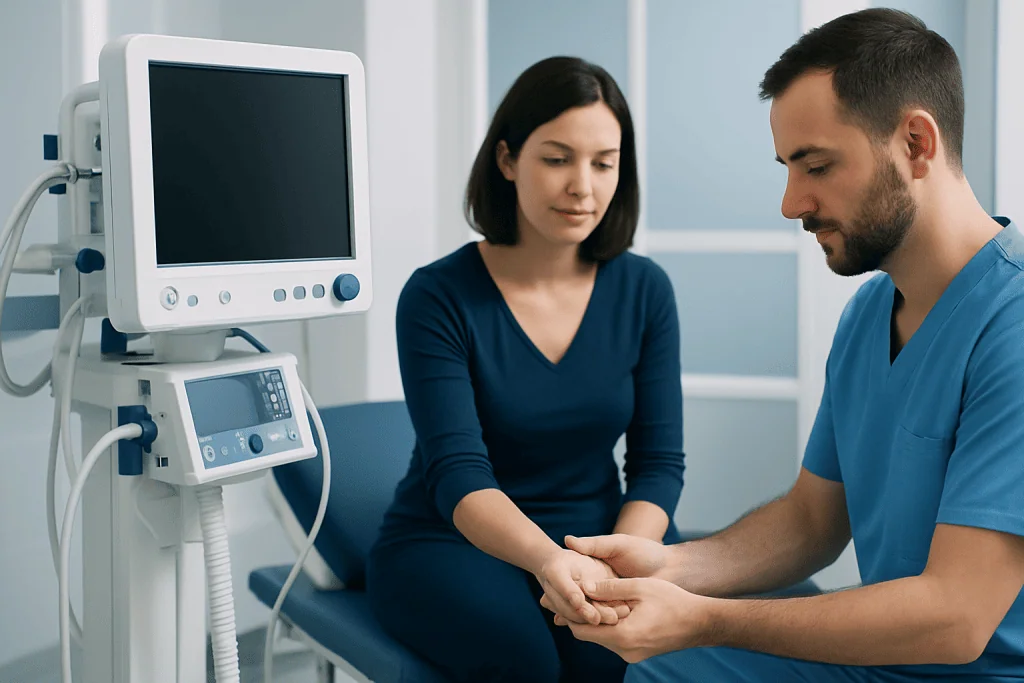
During a hand reflexology session, a practitioner uses the thumbs and fingers to apply steady pressure, kneading, or small circular movements to different parts of the hands. Sessions may involve both hands and often include the palms, fingers, knuckles, and wrists. The pressure should feel tolerable, not sharply painful.
People sometimes choose hand reflexology because it is simple, does not require undressing, and can feel less intense than foot-based techniques. Some also practice gentle self-massage at home. While self-massage may be soothing, it is still important to remember that symptom relief does not by itself explain the cause of a problem.
Medical explanations for any benefit are likely to be general rather than organ-specific. Touch, rest, focused breathing, and the calming setting of a session may help lower stress and reduce muscle tension. These effects can be valuable for wellbeing, even though they are different from proving that a pressure point directly changes the function of an internal organ.
Possible benefits, realistic expectations, and common myths
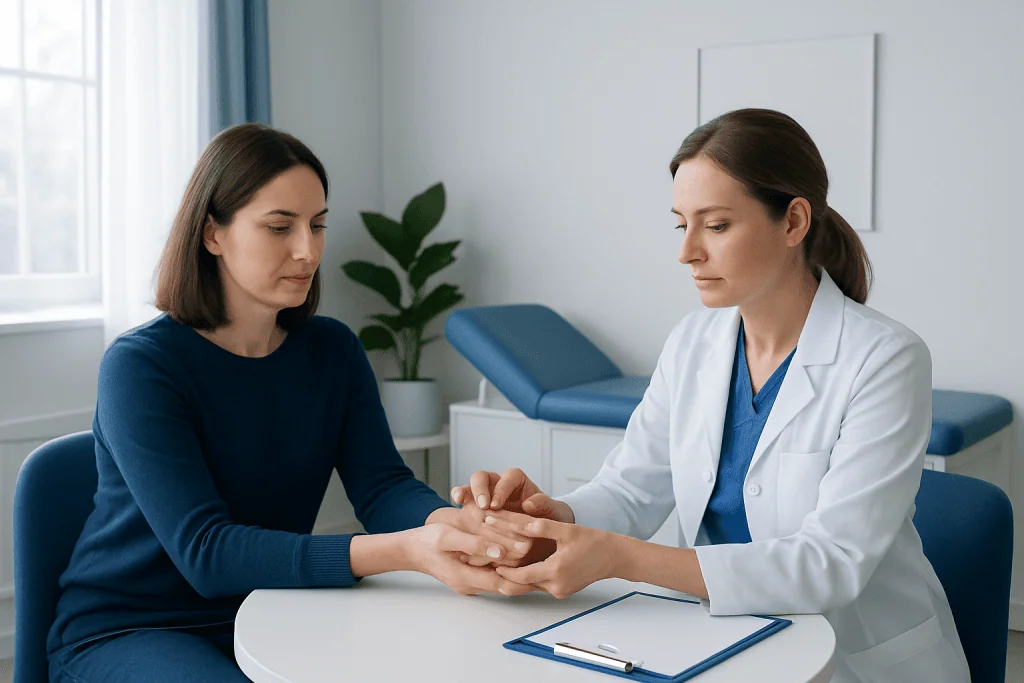
The most reasonable expectation from hand reflexology is support for relaxation and comfort. Some studies on reflexology, massage, and similar touch-based therapies suggest short-term benefits for stress, anxiety, and perceived pain in certain settings. However, studies often have small sample sizes, different techniques, or limited blinding, so results are not strong enough to confirm broad medical claims.
It is helpful to separate possible benefits from myths. A person may feel calmer, sleep better, or notice less tension after reflexology, but that does not mean toxins have been removed, circulation has been “reset,” or an organ disorder has been corrected through the hand alone. These popular claims are not supported by strong clinical evidence.
Hand reflexology may fit into a wider self-care plan when used carefully and with clear expectations. For example, some people combine it with stretching, stress management, physical therapy, or clinician-guided pain care. If ongoing hand or wrist problems are present, a medical review may be needed and could include options such as physical therapy and rehabilitation depending on the underlying cause.
- Most evidence-based benefit: relaxation and temporary comfort
- Possible but unproven benefit: support for stress reduction or general wellbeing
- Not evidence-based: diagnosing disease through the hand
- Not evidence-based: curing organ disorders by pressing hand points
What hand reflexology cannot replace
Hand reflexology should not replace a medical assessment when symptoms are new, severe, persistent, or worsening. This is especially important for numbness, weakness, loss of grip, severe pain, joint swelling, fever, skin color changes, or symptoms that interfere with work, sleep, or daily activities.
Medical diagnosis relies on a person’s history, a physical examination, and when needed, imaging or laboratory tests. Depending on the symptoms, a clinician may recommend neurology evaluation, blood tests, nerve studies, ultrasound, or MRI to look for structural, inflammatory, or nerve-related causes. Reflexology cannot provide this information.
Standard treatment is also important because hand symptoms may arise from arthritis, tendon problems, nerve compression, repetitive strain, diabetes-related nerve damage, circulation problems, or injuries. Delaying proper care can sometimes allow a treatable problem to progress. Used thoughtfully, reflexology may be a comfort measure alongside medical care, but it should not be the only response to significant symptoms.
Safety, side effects, and who should be cautious
For most healthy adults, gentle hand reflexology is low risk when performed carefully. Temporary tenderness, mild soreness, or sensitivity can happen, especially if firm pressure is used. These effects usually settle quickly, but the session should stop if pain is sharp or symptoms worsen.
Extra caution is sensible for anyone with a recent hand or wrist injury, fracture, severe arthritis flare, open wounds, burns, skin infection, unexplained swelling, or known circulation problems affecting the hands. People taking blood thinners, those with fragile skin, and individuals with significant nerve loss may also need a clinician’s advice before trying any hands-on technique.
Pregnancy, cancer care, and chronic neurological conditions do not always rule out complementary touch therapies, but they may call for an individualized approach. In these settings, it is best to ask the treating doctor what type of pressure or manual therapy is appropriate. A reputable practitioner should be willing to work within medical guidance and refer the person to a clinician if symptoms suggest an underlying disorder.
How to choose a practitioner and use hand reflexology wisely
If a person decides to try hand reflexology, it helps to choose a practitioner who presents the technique honestly. Good signs include clear explanations, attention to comfort, hygiene, willingness to adapt pressure, and an understanding that reflexology is supportive rather than curative. Caution is advised if anyone promises to diagnose disease from the hands, tells a person to stop prescribed treatment, or guarantees a cure.
Before a session, it is sensible to mention medical conditions, recent injuries, skin problems, pregnancy, surgeries, and current medicines. During the session, the pressure should remain comfortable and communication should be easy. Afterward, a person can notice whether the session helped relaxation, stress, or tension, while avoiding the assumption that symptom relief means the cause has been resolved.
Used in a balanced way, hand reflexology can sit alongside established self-care habits such as regular movement, hand stretches, ergonomic adjustments, sleep, and stress reduction. For people seeking a broader assessment, Acibadem International’s multidisciplinary specialists in JCI-accredited hospitals evaluate hand, nerve, and musculoskeletal symptoms for international patients and can advise where complementary practices fit safely into a treatment plan.
When to seek medical care
Medical care is recommended if hand symptoms are severe, last more than a short time, or keep coming back. This includes persistent numbness, tingling, weakness, reduced grip strength, swelling, visible deformity, severe stiffness, or pain after an injury. Symptoms that spread up the arm or are associated with neck pain also deserve assessment.
Urgent evaluation is important for sudden weakness, inability to move the hand, marked color change, coldness, rapidly increasing swelling, signs of infection, or symptoms that suggest a stroke such as facial droop, trouble speaking, or weakness on one side of the body. In these situations, reflexology should not delay prompt medical attention.
A doctor can help determine whether symptoms are due to overuse, a joint or tendon issue, nerve compression, a systemic illness, or another cause. Once the reason is known, treatment may range from rest and rehabilitation to medication, splinting, injections, or other targeted care. Complementary techniques may then be considered more safely and appropriately.
Frequently asked questions
Does hand reflexology really work?
Hand reflexology may help some people feel calmer or more comfortable for a short time. However, current medical evidence does not support claims that it can diagnose disease or cure problems in specific organs.
Is hand reflexology the same as massage?
They are related but not identical. Massage generally works on muscles and soft tissues, while reflexology follows a system of pressure points that are believed to correspond to other body areas.
Can hand reflexology help with pain or stress?
It may help some people with relaxation, stress relief, or temporary symptom comfort. Results vary from person to person, and it should be viewed as supportive care rather than a primary medical treatment.
Is hand reflexology safe for everyone?
Gentle hand reflexology is low risk for many adults, but it is not suitable in every situation. People with fractures, open wounds, infections, severe swelling, circulation problems, or significant nerve loss should ask a healthcare professional first.
Can hand reflexology diagnose health problems?
No. There is no strong scientific evidence that examining or pressing points on the hand can identify diseases in internal organs or replace medical testing.
When should someone see a doctor instead of trying reflexology?
A doctor should be seen for persistent pain, numbness, weakness, swelling, reduced grip, or symptoms after an injury. Urgent care is needed for sudden weakness, major color change, severe swelling, infection signs, or possible stroke symptoms.
References
- National Center for Complementary and Integrative Health
- World Health Organization
- National Institute of Neurological Disorders and Stroke
- American Academy of Orthopaedic Surgeons
- Mayo Clinic
This article is for general information only and is not a substitute for professional medical advice. Please consult a qualified doctor about your individual situation.
Explore treatments in Turkey — costs, top hospitals & a free quote
JCI-accredited · board-certified surgeons · reply within 24h
Add us as a Preferred Source to see more of our trusted health content across Google Search, AI Overviews and Discover.

More from the Health Library



Related Specialists

Prof. Dr. İsmet Tamer
Family Medicine
Dr. Gökan Güler
Emergency Service
Dr. Münür Selçuk Kendir
Aesthetic Plastic & Reconstructive Surgery
Prof. Dr. Tansu Karaahmet
Cardiology