Male infertility treatment Recovery: Week-by-Week Timeline

Recovery time depends on the diagnosis and whether treatment involves medication, varicocele repair, sperm retrieval, or another procedure. After many outpatient procedures, light daily activity can resume quickly, while heavy lifting, strenuous exercise, and sexual activity may need to wait for clinician approval.
Key Takeaways
- Recovery time depends on the diagnosis and whether treatment involves medication, varicocele repair, sperm retrieval, or another procedure.
- After many outpatient procedures, light daily activity can resume quickly, while heavy lifting, strenuous exercise, and sexual activity may need to wait for clinician approval.
- Improvements in sperm production are not immediate because a sperm-development cycle takes roughly two to three months.
- Follow-up testing and fertility planning are important parts of recovery, especially when assisted reproductive treatment is being considered.
- Increasing pain, fever, wound redness, significant swelling, or trouble urinating should be assessed promptly by a healthcare professional.
Male infertility treatment recovery depends on the treatment used, from lifestyle or medication plans to procedures such as varicocele repair or surgical sperm retrieval. Most men recover physically within days to a few weeks after minor procedures, while semen changes and fertility planning may take several months.
Overview: What Male Infertility Treatment Recovery Means
Male infertility treatment recovery is different for every person because treatment may involve health and lifestyle changes, medicines, microsurgery, a procedure to retrieve sperm, or fertility treatment with a partner. Physical healing after an outpatient procedure is often measured in days or weeks, but changes in semen quality generally take longer to assess because sperm need time to develop and mature.
Recovery also includes returning to normal routines safely, attending follow-up appointments, and understanding when fertility testing may be repeated. A clinician can tailor advice according to the procedure, the underlying cause of infertility, work demands, exercise habits, and whether assisted reproduction is planned.
For an overview of investigations and treatment pathways, see male infertility treatment. This article focuses on what recovery may look like after common male fertility procedures and how to plan a gradual return to work, sport, and sexual activity.
How Treatment Works and Who May Be a Candidate
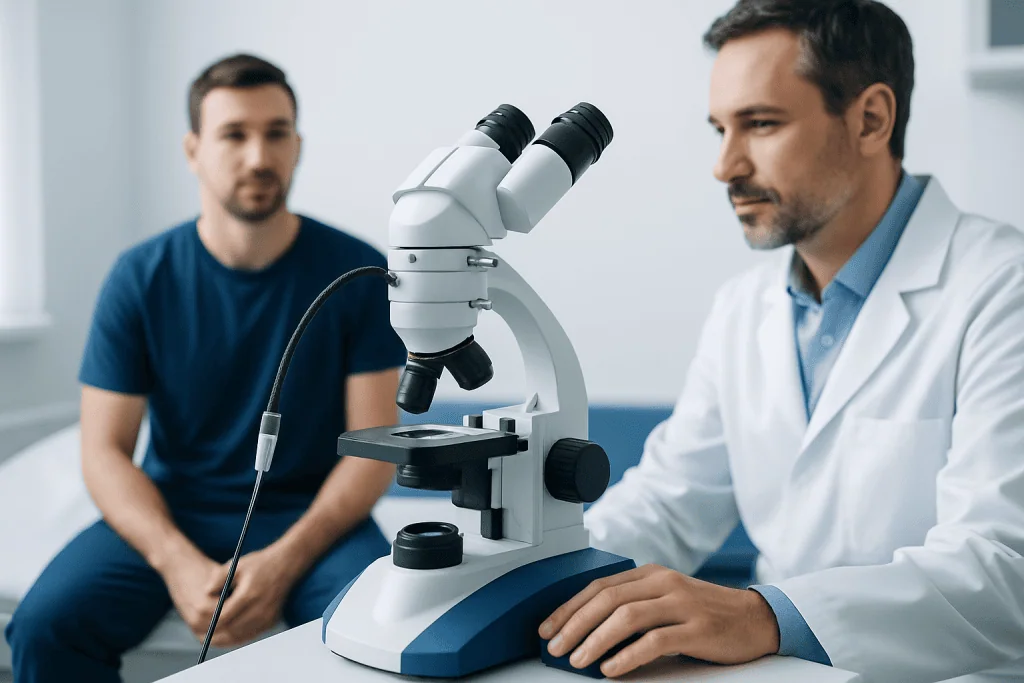
Male infertility can result from reduced sperm number or movement, blockage of the reproductive tract, varicocele (enlarged scrotal veins), hormonal conditions, genetic factors, infection, ejaculation difficulties, or previous medical treatment. Sometimes no single cause is identified. Evaluation commonly includes a medical history, physical examination, one or more semen analyses, and selected blood tests, ultrasound scans, or genetic tests.
Treatment is chosen to address a treatable cause where possible or to obtain sperm for assisted reproductive techniques. For example, varicocele repair aims to improve the function of the testicle by treating enlarged veins. Surgical sperm retrieval may be considered when sperm are absent from the ejaculate but may still be produced in the testicles, or when ejaculation or blockage prevents sperm from being collected normally.
Suitable candidates are determined individually by a urologist or reproductive specialist. The team considers semen findings, hormone results, testicular health, previous surgery, the couple’s fertility assessment, and reproductive goals. Treatment may not always improve natural conception chances, but it may help make sperm available for in vitro fertilization (IVF) with intracytoplasmic sperm injection (ICSI).
What Happens During Common Procedures

Procedures vary, so the treating clinician should provide procedure-specific instructions. Varicocele repair may be performed using microsurgical, laparoscopic, or radiological techniques. In microsurgery, a small incision is generally made in the groin area and enlarged veins are identified and treated while preserving important arteries and lymphatic vessels.
Sperm retrieval procedures include testicular sperm aspiration, testicular sperm extraction, and microsurgical testicular sperm extraction. Depending on the method and clinical situation, local anesthesia, sedation, or general anesthesia may be used. The specialist obtains sperm directly from the testicle or epididymis for immediate use or freezing, when appropriate.
Before treatment, patients are usually advised about anesthesia, fasting when relevant, current medications, smoking, and arranging transport home. After an outpatient procedure, the care team checks comfort, bleeding, urination, and recovery from anesthesia before discharge. Written instructions should explain wound care, activity restrictions, pain relief, and the contact route for concerns.
Week-by-Week Recovery Timeline
Day 0 to 3: Mild soreness, bruising, swelling, tiredness, or a pulling sensation in the groin or scrotum can occur after varicocele repair or sperm retrieval. Rest, supportive underwear, prescribed or clinician-approved pain relief, and brief gentle walks are commonly recommended. Driving should be avoided until the person is comfortable, alert, and no longer affected by anesthesia or sedating medicines.
Days 4 to 7: Many people can return to desk-based work if discomfort is controlled, though this depends on the procedure and job. Gentle walking is usually suitable. Heavy lifting, cycling, running, gym training, and other activities that strain the abdomen or scrotum are commonly postponed. Sexual activity and masturbation should resume only when the surgeon confirms it is safe, often after early healing has progressed.
Week 2: Bruising and swelling should usually be improving. People with physically demanding jobs may need more time away or temporary duties. Some clinicians allow a gradual return to low-impact exercise at this stage if the incision is healing well and pain is minimal; others recommend a longer restriction period. Follow the individual postoperative plan rather than a general timeline.
Weeks 3 to 6: Many men can progressively return to normal exercise and sport after review or once they are comfortable and have no wound concerns. Contact sports, heavy resistance training, and cycling may need a slower return, especially after scrotal surgery. Semen analysis is usually not repeated immediately, as any effect of treatment on sperm parameters may take several months to become measurable.
Months 2 to 6: This is often the period when follow-up semen testing and fertility planning become more informative. Sperm production takes approximately two to three months, and clinicians may recommend reassessment after this interval or later, depending on the procedure. If sperm were retrieved and frozen, the fertility team can discuss timing and options for IVF or ICSI.
Benefits, Risks and Expected Results
The potential benefit of treatment is to correct a specific problem, improve semen parameters in selected patients, relieve symptoms from a varicocele when present, or obtain sperm for assisted reproduction. Results vary substantially because fertility is influenced by several factors, including female-partner factors, age, underlying diagnosis, sperm quality, and the chosen reproductive approach.
Common short-term effects after procedures include tenderness, swelling, bruising, and fatigue. Less common risks can include bleeding, infection, fluid collection around the testicle, recurrence or persistence of a varicocele, injury to nearby structures, or an unsuccessful sperm retrieval. Anesthesia also has its own potential risks, which should be discussed before the procedure.
It is important not to judge success only by how quickly discomfort improves. Physical recovery and fertility outcomes follow different timelines. A follow-up plan may include wound review, semen analysis, hormone testing, and discussion with a fertility specialist about whether further treatment or assisted conception is appropriate.
Self-Care, Work and Returning to Sport
During the first days after a procedure, rest without remaining completely inactive. Short walks can support comfort and circulation, while strenuous activity should be avoided until cleared by the care team. Wearing supportive underwear may reduce movement-related discomfort. Keep the wound area clean and dry according to the discharge instructions, and do not apply creams or products unless advised.
Return to work depends on the procedure and job. Office-based work may be possible within several days for some patients, while jobs involving lifting, prolonged standing, climbing, driving, or physical labor can require a longer recovery period. Patients should ask their clinician for documentation and personalized guidance if work adjustments are needed.
For exercise, a staged approach is generally safest: walking first, then low-impact movement, followed by more demanding training when pain, swelling, and wound healing allow. Avoid pushing through pain. Maintaining a healthy weight, stopping smoking, limiting alcohol, sleeping adequately, and managing chronic health conditions can support overall reproductive health, although these measures do not replace medical treatment when it is needed.
When to Seek Medical Care
Contact the treating team promptly for worsening rather than improving pain, a fever, spreading redness, pus or foul-smelling drainage from a wound, significant bleeding, rapidly increasing swelling, nausea or vomiting that does not settle, or difficulty passing urine. These symptoms do not always indicate a serious problem, but they should be assessed without delay.
Seek urgent medical help for severe scrotal pain, fainting, chest pain, shortness of breath, or any symptom that feels severe or sudden. Patients should also contact their fertility specialist if they have questions about when to resume sexual activity, whether a medication is safe, or when semen testing should be scheduled.
Acibadem International’s multidisciplinary specialists and JCI-accredited hospitals support international patients with assessment and treatment planning for male infertility. Follow-up care should remain coordinated with the surgical, urology, and fertility teams so that recovery and reproductive next steps are considered together.
Frequently asked questions
How long does male infertility treatment recovery take?
Recovery depends on the treatment. After many minor outpatient procedures, daily activities and desk work may be possible within a few days, while full return to strenuous activity may take several weeks. Fertility-related changes, including changes in semen analysis, often require at least two to three months to evaluate.
When can someone return to work after varicocele repair or sperm retrieval?
Some people return to sedentary work within a few days when pain is controlled and they are no longer affected by anesthesia. Physically demanding work may require more time or temporary restrictions. The surgeon's advice should guide the timing because procedure details and healing differ.
When is it safe to exercise after male fertility surgery?
Gentle walking is often encouraged soon after recovery from anesthesia, but strenuous exercise, heavy lifting, cycling, and contact sports are usually delayed. A gradual return is important once swelling and pain are improving and the clinician approves activity. Stopping exercise and seeking advice is sensible if activity causes increasing pain or swelling.
Does surgery improve sperm quality immediately?
No. Sperm take time to develop, so any improvement in semen parameters may not appear for several months. A fertility specialist may schedule repeat semen analysis at an appropriate interval and interpret the results alongside other fertility factors.
Is swelling normal after sperm retrieval or varicocele treatment?
Mild swelling, bruising, and tenderness can be expected during early healing. Symptoms should gradually improve rather than worsen. Rapidly increasing swelling, severe pain, fever, bleeding, or wound drainage should be reported promptly to the treating team.
When can sexual activity resume after male infertility treatment?
The timing varies according to the procedure, wound healing, and discomfort level. Patients should wait until their surgeon or fertility clinician confirms that sexual activity is safe. Returning too early may increase discomfort or interfere with healing.
References
- American Urological Association
- American Society for Reproductive Medicine
- European Association of Urology
- National Institute for Health and Care Excellence
- World Health Organization
This article is for general information only and is not a substitute for professional medical advice. Please consult a qualified doctor about your individual situation.
Male Infertility in Turkey — costs, top hospitals & a free quote
JCI-accredited · board-certified surgeons · reply within 24h
Add us as a Preferred Source to see more of our trusted health content across Google Search, AI Overviews and Discover.

Urology
Treatment of the urinary system and male reproductive health, including robotic and laser procedures.
60 specialists in this unit