Pyelonephritis Treatment: Symptoms, Causes, and Treatment Options

Pyelonephritis is a kidney infection that commonly starts as a urinary tract infection that travels upward. Treatment often includes antibiotics, fluids, rest, and monitoring for signs of complications.
Key Takeaways
- Pyelonephritis is a kidney infection that commonly starts as a urinary tract infection that travels upward.
- Treatment often includes antibiotics, fluids, rest, and monitoring for signs of complications.
- Symptoms may include fever, back or side pain, nausea, burning with urination, and frequent urination.
- Some people need hospital care, especially if symptoms are severe, pregnancy is involved, or oral medicines cannot be tolerated.
- Prompt medical attention helps protect kidney function and reduces the risk of recurrent infection.
Pyelonephritis treatment usually involves antibiotics, hydration, pain control, and close follow-up to make sure the kidney infection fully clears. Early diagnosis is important because untreated pyelonephritis can lead to more serious illness, but most people improve well with timely care.
Overview: What pyelonephritis treatment involves
Pyelonephritis treatment is focused on clearing a bacterial infection in one or both kidneys as quickly and safely as possible. In most cases, treatment includes antibiotics, drinking enough fluids, rest, and follow-up with a doctor to confirm that symptoms are improving. When care starts early, many people recover without long-term kidney problems.
Pyelonephritis is often called a kidney infection. It usually begins lower in the urinary tract, such as in the bladder, and then moves upward through the ureters to the kidneys. Because the kidneys help filter waste and maintain fluid balance, an infection there can cause stronger symptoms than a simple bladder infection.
The exact treatment plan depends on how severe the infection is, a person’s age, pregnancy status, general health, and whether there are factors such as kidney stones, urinary blockage, or repeated infections. Mild to moderate cases may be treated at home with oral antibiotics, while severe illness may require hospital care, intravenous fluids, and additional testing.
Symptoms and warning signs

Symptoms of pyelonephritis often develop more suddenly and feel more intense than symptoms of a lower urinary tract infection. Many people have fever, chills, pain in the back or side below the ribs, nausea, vomiting, and a general feeling of being unwell. Some also notice urinary symptoms such as burning during urination, urgency, or the need to urinate more often.
Not everyone has the same symptom pattern. Older adults, young children, and people with weakened immune systems may have less typical signs, such as confusion, fatigue, poor appetite, or reduced energy. In some cases, the first clue is that a usual urinary tract infection seems to be getting worse rather than better.
Common symptoms can include:
- Fever or chills
- Flank pain or tenderness in the side or back
- Painful urination
- Frequent or urgent urination
- Cloudy, foul-smelling, or bloody urine
- Nausea or vomiting
- Feeling weak, tired, or generally ill
These symptoms can overlap with other urinary conditions, including urinary tract infection and kidney stones. That is why medical evaluation is important, especially when fever or back pain is present along with urinary symptoms.
Causes and risk factors
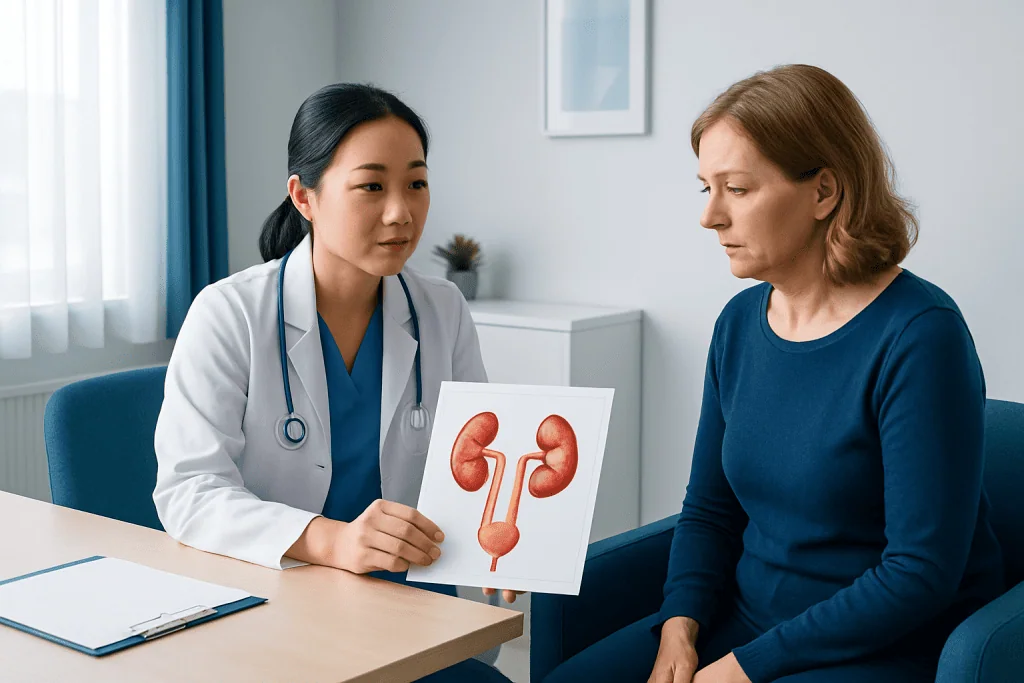
Most cases of pyelonephritis are caused by bacteria, commonly organisms that normally live in the digestive tract, entering the urinary system and traveling up to the kidneys. This may happen after a bladder infection, but it can also occur when urine flow is blocked or when bacteria are introduced during certain medical situations.
Several factors can increase the risk. Women are generally more likely to develop urinary infections because of their anatomy. Pregnancy can raise the risk as well, since hormonal and physical changes may slow urine flow. People with diabetes, a weakened immune system, or a history of repeated urinary infections may also be more vulnerable.
Structural or functional problems in the urinary tract can make pyelonephritis more likely or more difficult to treat. These include enlarged prostate, vesicoureteral reflux, congenital urinary tract abnormalities, and stones that block urine flow. Conditions such as kidney stones can contribute by creating obstruction or serving as a site where bacteria may persist.
Use of a urinary catheter, recent urinary tract procedures, or difficulty emptying the bladder can also increase risk. In these situations, treatment may need to address not only the infection itself but also the underlying reason it developed.
How doctors diagnose pyelonephritis
Doctors diagnose pyelonephritis by combining symptoms, physical examination, and urine testing. A urine sample is usually checked for white blood cells, bacteria, blood, and signs of inflammation. A urine culture is especially helpful because it can identify the specific bacteria and show which antibiotics are likely to work best.
Blood tests may be recommended if symptoms are significant, if fever is high, or if there is concern about dehydration, kidney function, or infection spreading beyond the urinary tract. In some cases, blood cultures are done, particularly when a person appears seriously unwell.
Imaging is not always needed for straightforward cases, but it becomes more important when symptoms are severe, there is poor response to treatment, or a structural problem is suspected. Ultrasound or MRI may help assess the kidneys and urinary tract. Computed tomography can also be used in selected cases, especially to look for obstruction, abscess, or other complications.
Diagnosis also involves ruling out related conditions. Depending on symptoms, a doctor may consider problems such as bladder infection, kidney stones, pelvic conditions, or other causes of abdominal and back pain. Accurate diagnosis helps guide the right pyelonephritis treatment and reduces the chance of incomplete recovery.
Treatment options and recovery
Antibiotics are the main treatment for pyelonephritis. The type of antibiotic may be chosen based on the person’s symptoms, local bacterial resistance patterns, medical history, and later adjusted once urine culture results are available. It is important to complete the full prescribed course even if symptoms improve earlier, because stopping too soon can allow the infection to return.
Supportive care is also important. Many people are advised to rest, drink fluids unless another medical condition limits intake, and use doctor-recommended pain or fever relief. Nausea and vomiting can make it difficult to stay hydrated or take tablets, and that is one reason some people need treatment in hospital.
Hospital-based pyelonephritis treatment may include intravenous antibiotics, fluids, and close monitoring. This is more likely if there is severe pain, high fever, signs of sepsis, pregnancy, reduced kidney function, inability to keep fluids down, or concern about an obstruction. If a blockage is found, procedures may be needed to drain urine and protect the kidney, such as urology care for stone-related or structural problems.
Recovery time varies, but many people start feeling better within a few days of starting appropriate antibiotics. Follow-up matters, especially if symptoms persist, return, or occur frequently. In more complex cases, additional evaluation may be needed to look for an underlying urinary tract issue or recurrent infection pattern.
Prevention and self-care after a kidney infection
Preventing future kidney infections often means reducing the chance of another urinary tract infection. Helpful steps can include drinking enough fluids, urinating when needed rather than delaying, and following practical hygiene habits. People who are prone to recurrent infections may benefit from a personalized prevention plan discussed with a doctor.
Self-care during recovery should stay simple and supportive. Rest, hydration, and taking medicines exactly as prescribed are usually the most important actions. Alcohol, dehydration, and ignoring persistent symptoms can make recovery harder. If symptoms worsen or new symptoms appear, medical advice should be sought rather than trying to manage the situation alone.
Depending on the cause, doctors may recommend further assessment of the urinary tract. This can be especially relevant for people with repeated infections, suspected obstruction, or urinary retention. In selected cases, a broader medical check-up may help identify contributing conditions such as diabetes or anatomical issues that increase risk.
Near the end of treatment, some people may need repeat urine testing, especially if symptoms are lingering, pregnancy is involved, or infections happen often. This helps confirm that the infection has cleared and guides the next steps if it has not.
When to seek medical care
Medical care should be sought promptly if urinary symptoms are accompanied by fever, chills, back or side pain, nausea, or vomiting. These features can suggest that the infection has moved beyond the bladder and may need more urgent attention. Early treatment lowers the risk of dehydration, bloodstream infection, and kidney injury.
Urgent evaluation is especially important during pregnancy, in older adults, in children, and in people with diabetes, weakened immunity, kidney disease, or a history of urinary obstruction. Care is also needed if symptoms do not improve within a couple of days of starting antibiotics, or if they return soon after treatment ends.
Emergency care may be needed for confusion, difficulty staying awake, severe weakness, low urine output, trouble keeping down fluids or medicines, or signs of severe illness. If a person appears very unwell, it is safer to seek immediate help. Acibadem International’s multidisciplinary specialists in JCI-accredited hospitals diagnose and treat kidney infections and related urinary conditions for international patients.
Frequently asked questions
What is the usual pyelonephritis treatment?
The usual pyelonephritis treatment is a course of antibiotics, along with fluids, rest, and symptom relief as advised by a doctor. Some people can be treated at home, while others need hospital care if symptoms are severe or if they cannot tolerate oral medication.
How long does it take to recover from a kidney infection?
Many people begin to feel better within a few days after starting the right antibiotic. Full recovery can take longer, especially if the infection was severe or if there is an underlying urinary tract problem.
Can pyelonephritis go away on its own?
Pyelonephritis should not be expected to go away on its own. Because it is a kidney infection, it usually needs medical treatment to clear the bacteria and reduce the risk of complications.
Is pyelonephritis the same as a urinary tract infection?
Pyelonephritis is a type of urinary tract infection, but it specifically affects the kidneys. It is generally more serious than an infection limited to the bladder because it can cause fever, flank pain, and more severe illness.
When is hospital treatment needed for pyelonephritis?
Hospital treatment may be needed if there is high fever, severe pain, vomiting, dehydration, pregnancy, kidney impairment, or concern about sepsis or urinary blockage. In these situations, intravenous antibiotics, fluids, and monitoring may be safer and more effective.
Can pyelonephritis come back?
Yes, pyelonephritis can recur, especially if a person has repeated bladder infections, kidney stones, urinary blockage, or certain medical conditions such as diabetes. If infections keep returning, a doctor may recommend further testing to find and address the cause.
References
- National Institute of Diabetes and Digestive and Kidney Diseases
- Centers for Disease Control and Prevention
- Mayo Clinic
- National Health Service
- European Association of Urology
This article is for general information only and is not a substitute for professional medical advice. Please consult a qualified doctor about your individual situation.
Explore treatments in Turkey — costs, top hospitals & a free quote
JCI-accredited · board-certified surgeons · reply within 24h
Add us as a Preferred Source to see more of our trusted health content across Google Search, AI Overviews and Discover.

More from the Health Library



Related Specialists

Prof. Dr. Ersin Erek
Cardiovascular Surgery
Prof. Dr. Nihat Yavuz
General Surgery
Prof. Dr. Burcu Yavuz
Psychiatry
Dr. Turgut Furkan Kuybulu
Aesthetic Plastic & Reconstructive Surgery