Locked Knees: What Patients Need to Know

Locked knees can be true mechanical locking or a feeling of locking caused by pain, swelling, or instability. Common causes include meniscus tears, loose cartilage or bone fragments, kneecap tracking problems, arthritis, and ligament injuries.
Key Takeaways
- Locked knees can be true mechanical locking or a feeling of locking caused by pain, swelling, or instability.
- Common causes include meniscus tears, loose cartilage or bone fragments, kneecap tracking problems, arthritis, and ligament injuries.
- A knee that cannot fully move after injury, especially with swelling or inability to bear weight, should be evaluated promptly.
- Diagnosis often involves a physical examination and may include X-rays or MRI to find the source of the problem.
- Treatment depends on the cause and may include rest, physiotherapy, medicines, bracing, or surgery in selected cases.
Locked knees usually means the knee becomes stuck, catches, or cannot fully bend or straighten for a time. It can happen after an injury or develop gradually, and the cause may range from swelling and pain-related muscle spasm to a mechanical problem inside the joint that needs medical assessment.
What locked knees means
Locked knees refers to a situation in which the knee feels stuck, catches during movement, or will not fully bend or straighten. Some people notice it suddenly after twisting the leg, while others feel intermittent catching, clicking, or stiffness over time. The term is commonly used for several different problems, so it is important to identify whether the joint is truly blocked or whether pain and swelling are limiting motion.
A true mechanical lock happens when something inside the joint physically blocks movement. This can occur when a torn piece of cartilage, a meniscus fragment, or a small loose body gets trapped between moving surfaces of the knee. A pseudo-lock is different: the knee may feel impossible to move, but the main reason is pain, inflammation, muscle spasm, or a sense of giving way rather than an actual internal blockage.
This distinction matters because treatment depends on the cause. Some episodes improve with rest, ice, and time, while others need imaging, specialist review, or a procedure to restore motion and protect the joint. Persistent or repeated knee locking should not be ignored, especially if it interferes with walking, work, sleep, or exercise.
How a locked knee can feel
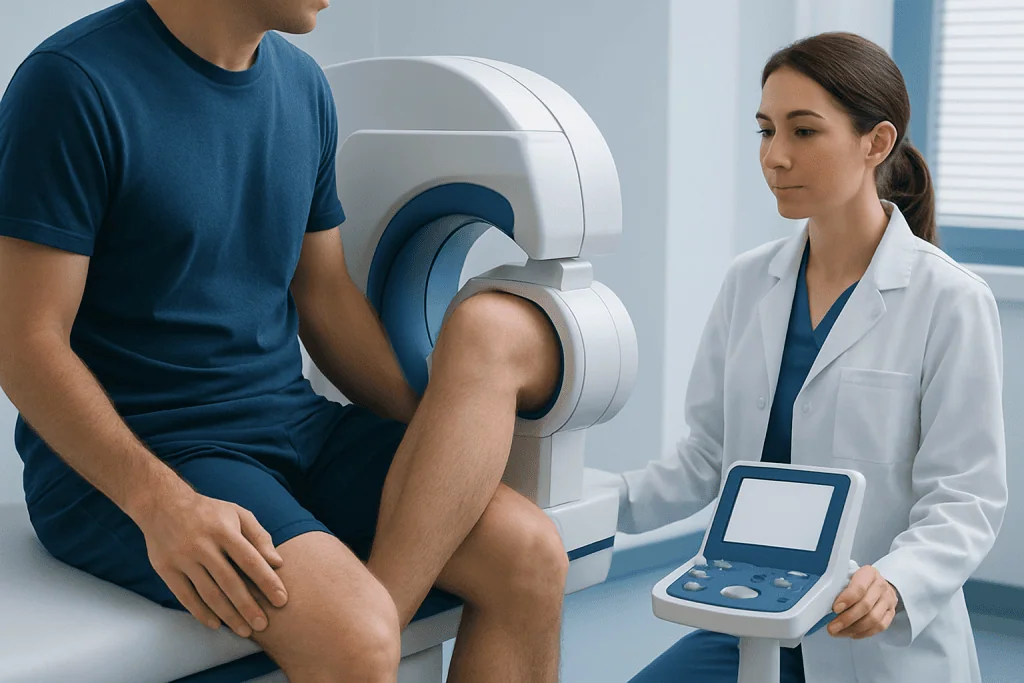
Symptoms vary from person to person. A locked knee may stay partly bent and resist straightening, or it may become difficult to bend after sitting, kneeling, or changing direction. Some people can gently work the joint loose after a few moments, while others are unable to move it without significant discomfort.
Other symptoms often help point toward the cause. Swelling soon after an injury can suggest bleeding or inflammation inside the joint. A popping sensation at the time of injury may occur with ligament or meniscus damage. Clicking, catching, grinding, or a feeling that the knee slips out of place may indicate irritation of cartilage, the kneecap, or supporting structures.
Associated symptoms can include:
- Pain along the inner or outer joint line
- Stiffness, especially after rest
- Difficulty bearing weight
- A feeling of instability or buckling
- Visible swelling or warmth
- Reduced range of motion during walking, climbing stairs, or squatting
Symptoms that come and go are still worth discussing with a clinician, because repeated locking can lead to more pain, reduced activity, and further wear inside the joint.
Common causes and risk factors

One of the best-known causes of locked knees is a meniscus tear. The menisci are rubbery pads of cartilage that cushion the knee. A flap tear or bucket-handle tear can shift into the joint space and block movement. This is more common after twisting injuries, sports, sudden pivoting, or squatting with a loaded knee. Meniscus injury may be evaluated in the context of meniscus tear when symptoms include locking, joint-line pain, and swelling.
Loose bodies are another mechanical cause. These small fragments of cartilage or bone can break free after injury or because of degenerative joint disease. When they move into the wrong position, the knee may suddenly catch or lock. Osteoarthritis can also contribute by causing rough joint surfaces, swelling, and bony changes that reduce smooth motion.
Not all locking comes from a fragment inside the joint. Painful inflammation after overuse, a sprain, patellar tracking problems, tendon irritation, or muscle guarding can create a pseudo-lock. Ligament injuries, including to the anterior cruciate ligament, may produce swelling and a sense of giving way that patients describe as locking. In some cases, patellar instability or cartilage softening under the kneecap causes recurrent catching and painful movement.
Risk factors include sports that involve pivoting, previous knee injury, repetitive kneeling or squatting, aging-related cartilage wear, obesity, weak thigh muscles, and poor movement mechanics. A clinician may also consider inflammatory arthritis or less common causes if there is prolonged swelling, morning stiffness, or symptoms in other joints.
How doctors diagnose locked knees
Diagnosis begins with a careful history. The clinician will ask when the locking started, whether there was a twist or fall, how long episodes last, and whether the knee is truly stuck or just painful to move. Details such as swelling, popping, instability, and previous injuries can help narrow the possibilities.
A physical examination checks range of motion, swelling, tenderness, ligament stability, kneecap movement, and the pattern of pain. The doctor may gently test whether the knee can be fully straightened and whether certain movements reproduce catching. This exam often provides important clues, but imaging is sometimes needed to confirm the diagnosis.
X-rays can show fractures, arthritis, alignment issues, and some loose bodies, but they do not show soft tissues well. MRI is often used when a meniscus tear, ligament injury, cartilage damage, or occult loose body is suspected. In selected situations, ultrasound or CT may be helpful. If symptoms suggest a major structural injury, the care plan may include specialist orthopedic assessment and, when appropriate, knee arthroscopy to look inside the joint and treat the problem at the same time.
Treatment options for locked knees
Treatment depends on the cause, how severe the symptoms are, and whether the knee is mechanically blocked. Initial care for a recent flare often includes activity modification, short-term rest, ice, compression, and elevation. Over-the-counter pain relief or anti-inflammatory medicines may be recommended when appropriate, but a patient should use these only as advised by a qualified clinician, especially if they have stomach, kidney, heart, or bleeding concerns.
If the knee is not truly blocked, non-surgical treatment is often the first step. Physiotherapy can help restore movement, strengthen the quadriceps and hip muscles, improve balance, and correct mechanics that overload the joint. Bracing may be useful in selected cases. Rehabilitation is especially important after sprains, overuse injuries, or episodes related to patellar tracking or mild degenerative change.
When a meniscus tear, loose body, or another structural problem is causing true locking, surgery may be considered if symptoms persist or function is significantly affected. Depending on the findings, treatment may include meniscus surgery or arthroscopic removal of loose fragments and smoothing of damaged tissue. If advanced wear of the joint is present, the broader treatment plan may also address knee arthritis with weight management, exercise therapy, injections when suitable, and sometimes knee replacement for severe disease.
The outlook is often good when the underlying cause is identified and treated appropriately. Early evaluation can help prevent repeated locking episodes, prolonged pain, and progressive joint damage.
Self-care and prevention
Although not every case can be prevented, sensible joint care can lower the risk of recurring symptoms. Warming up before sports, strengthening the muscles around the hip and knee, and improving flexibility can support smoother knee motion. Good footwear and training techniques also help reduce strain during walking, running, or pivoting activities.
For people with previous knee problems, pacing activity is important. Sudden increases in exercise intensity, deep squatting with heavy loads, or repeated kneeling may trigger pain or catching. A physiotherapist can teach movement patterns that protect the joint while keeping a person active.
Helpful self-care steps include:
- Stopping the activity that triggered pain or locking
- Using ice for short periods during a recent flare
- Elevating the leg if swelling is present
- Avoiding forceful twisting or trying to “snap” the knee back into place
- Returning gradually to activity once movement and comfort improve
- Maintaining a healthy body weight to reduce knee load
Self-care is not a substitute for medical review when symptoms are severe, recurrent, or follow an injury. Trying to push through a mechanically locked knee can worsen pain and may aggravate internal damage.
When to seek medical care
Medical assessment is advisable if the knee repeatedly locks, catches, or cannot fully bend or straighten. Prompt review is especially important after a twisting injury, fall, or sports accident. A clinician can determine whether the problem is likely to settle with conservative care or whether it needs imaging and specialist treatment.
Urgent evaluation is recommended if the knee is severely swollen, very painful, visibly deformed, or unable to bear weight. Care should also be sought promptly if there is fever, marked redness, a hot joint, numbness, or signs of poor circulation in the leg or foot. These symptoms can point to problems that need faster attention.
Even when symptoms are milder, ongoing limitation can affect mobility and quality of life. Specialist assessment may be useful for recurrent locking, unresolved pain, or suspected structural injury. Near the end of the care pathway, it can be reassuring to know that Acibadem International’s multidisciplinary specialists in JCI-accredited hospitals diagnose and treat knee conditions for international patients using individualized plans based on the cause and severity of symptoms.
Frequently asked questions
Is a locked knee always an emergency?
Not always. Some episodes are caused by pain, swelling, or muscle spasm and may improve with rest and medical guidance. However, a knee that is truly stuck, follows an injury, or cannot bear weight should be assessed promptly.
What is the difference between true locking and pseudo-locking?
True locking means something inside the knee is physically blocking movement, such as a torn meniscus fragment or loose body. Pseudo-locking feels similar, but movement is mainly limited by pain, swelling, or muscle guarding rather than a mechanical obstruction.
Can a meniscus tear cause locked knees?
Yes. Certain meniscus tears, especially flap tears or bucket-handle tears, can interfere with normal joint motion and make the knee catch or lock. This is one reason recurrent locking after a twist injury often leads to further evaluation.
Will a locked knee go away on its own?
Sometimes it can, especially if the cause is temporary swelling or irritation. But repeated locking, persistent stiffness, or inability to fully move the knee should not be ignored, because a structural cause may need treatment.
How is a locked knee diagnosed?
A doctor usually starts with questions about the injury, symptoms, and timing of the locking episodes, followed by a physical examination. Imaging such as X-rays or MRI may then be used to look for a meniscus tear, loose body, arthritis, or ligament damage.
Does a locked knee always need surgery?
No. Many patients improve with rest, physiotherapy, and treatment of inflammation or minor injury. Surgery is usually considered when there is true mechanical locking, a significant structural injury, or symptoms that do not improve with conservative care.
References
- American Academy of Orthopaedic Surgeons
- National Institute of Arthritis and Musculoskeletal and Skin Diseases
- NHS
- American College of Rheumatology
This article is for general information only and is not a substitute for professional medical advice. Please consult a qualified doctor about your individual situation.
Joint and spine care in Turkey — expert assessment & treatment
JCI-accredited · board-certified surgeons · reply within 24h
Add us as a Preferred Source to see more of our trusted health content across Google Search, AI Overviews and Discover.