Red Spotty Nose: An Evidence-Based Guide for Patients

A red spotty nose can result from several skin conditions, not just one. Rosacea is a frequent cause, especially when redness comes and goes and later becomes more persistent.
Key Takeaways
- A red spotty nose can result from several skin conditions, not just one.
- Rosacea is a frequent cause, especially when redness comes and goes and later becomes more persistent.
- Skin care, trigger avoidance, and medical treatment can often improve symptoms significantly.
- Pain, swelling, pus, fever, rapid spreading, or a new changing lesion should be medically assessed.
- A doctor may diagnose the cause by examining the skin pattern, triggers, and associated symptoms.
A red spotty nose is a common symptom rather than a diagnosis. It is often caused by rosacea, acne-like inflammation, irritation, eczema, allergies, or visible blood vessels, and the best treatment depends on the underlying cause.
What a Red Spotty Nose Usually Means
A red spotty nose usually means the skin on and around the nose is inflamed, irritated, or showing changes in small blood vessels. In many people, the most likely explanations are rosacea, acne-like spots, contact irritation from skin products, eczema, seborrheic dermatitis, sun damage, or broken capillaries. Less often, infection or another skin condition may be involved.
The pattern matters. Some people notice diffuse redness with tiny bumps, others develop dry flaky patches, and some have visible thread-like vessels or tender pimples. A clinician looks at when the redness appears, whether it burns or itches, whether there are triggers such as heat or alcohol, and whether the skin elsewhere on the face is affected.
Because a red spotty nose is a visible symptom, it can be frustrating and socially distressing even when it is not dangerous. The helpful news is that many causes can be identified through a careful skin examination and improved with a combination of skin care, trigger management, and targeted treatment.
Common Signs and Patterns to Notice
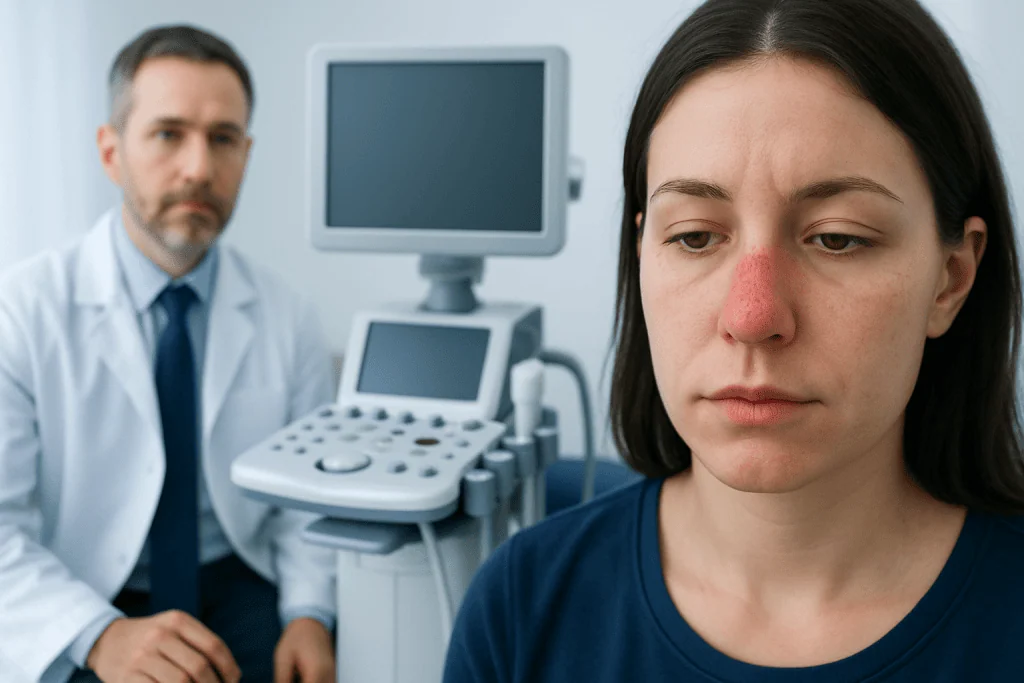
People describe a red spotty nose in different ways, and those details can help point toward the cause. Redness may be constant or it may flare after exercise, hot drinks, spicy foods, emotional stress, or sun exposure. Spots may look like small pimples, tiny red bumps, dry rough patches, or clusters of visible blood vessels.
Other symptoms are also important. Burning, stinging, or sensitivity often suggest rosacea or irritation. Itching and scaling can fit eczema or seborrheic dermatitis. Tender, pus-filled spots are more typical of inflamed acne or folliculitis. If the skin feels hot, swollen, and painful, infection becomes more of a concern.
A doctor may ask whether symptoms involve the cheeks, chin, forehead, or eyes. Redness across the center of the face can suggest rosacea, while blackheads and whiteheads are more in keeping with acne. Eye irritation, grittiness, or eyelid inflammation can occur with some forms of rosacea and should not be overlooked.
- Persistent or flushing redness
- Small red bumps or acne-like spots
- Dryness, scaling, or flaking
- Burning, stinging, or itching
- Visible fine blood vessels
- Tenderness, swelling, or warmth
Possible Causes and Risk Factors

Rosacea is one of the most common reasons for a red spotty nose in adults. It often begins with easy flushing and sensitive skin, then can progress to longer-lasting redness and pimple-like bumps. Triggers vary from person to person but commonly include sunlight, heat, alcohol, spicy foods, stress, and some skin care products.
Acne can also affect the nose, especially when pores become clogged and inflamed. Irritant or allergic contact dermatitis may occur after exposure to cosmetics, sunscreens, topical medications, masks, or fragrances. Eczema and seborrheic dermatitis can produce redness with dryness or greasy scaling. Sun damage may make blood vessels more visible and worsen background redness.
Other possibilities include folliculitis, a superficial infection around hair follicles, or less commonly, bacterial skin infection. Repeated rubbing, frequent nose blowing, harsh exfoliation, and overuse of active ingredients such as retinoids, acids, or benzoyl peroxide can weaken the skin barrier and make the nose look red and spotty. People with fair or easily reactive skin may notice symptoms more readily, but any skin type can be affected.
How Doctors Diagnose the Cause
Diagnosis usually starts with a clinical history and skin examination. A doctor will ask when the problem started, whether it comes and goes, what products are used on the face, and whether there are known triggers. They also look at the exact distribution of the redness, the type of spots present, and whether there are scales, crusts, visible capillaries, or signs of infection.
In many cases, no complex test is needed. Rosacea, acne, dermatitis, and seborrheic dermatitis are often diagnosed by appearance and symptom pattern. If a product allergy is suspected, patch testing may be discussed. If infection is possible, the clinician may consider swabs or other tests. A persistent, unusual, or changing lesion may need dermatoscopic evaluation or biopsy to rule out another skin disease.
When facial redness is long-lasting or difficult to classify, assessment by a dermatologist can be especially helpful. Advanced imaging is not usually needed for routine facial redness, but some patients benefit from a structured dermatology evaluation at centers that also provide dermatology care for complex inflammatory skin conditions.
Treatment Options for a Red Spotty Nose
Treatment depends on the cause. For rosacea, care often focuses on gentle skin routines, trigger reduction, sun protection, and prescription creams or gels that reduce inflammation. Some people with more persistent redness or visible vessels may benefit from light- or laser-based treatments. If acne-like bumps are prominent, doctors may use topical medicines and, in selected cases, oral treatment.
If irritation or dermatitis is the issue, the first step is usually to stop the triggering product and simplify skin care. Using a bland cleanser, fragrance-free moisturizer, and broad-spectrum sunscreen can help the skin barrier recover. Eczema or seborrheic dermatitis may require medicated creams prescribed by a doctor, while bacterial infection needs appropriate medical treatment.
Visible blood vessels or long-standing redness sometimes improve with procedures rather than creams alone. Depending on the skin findings, a specialist may discuss options such as laser treatment to target surface vessels or persistent redness. If there is uncertainty between acne, dermatitis, and rosacea, treatment plans are tailored to avoid making sensitive skin worse rather than using many products at once.
For some people, redness is part of broader ongoing skin sensitivity. In that setting, steady long-term management is often more effective than repeatedly changing products. Patients with troublesome or persistent symptoms may also benefit from evaluation in a dedicated skin care and dermatology service where inflammatory and vascular causes of facial redness can be reviewed together.
Daily Skin Care and Self-Care Measures
Supportive self-care can make a meaningful difference, especially when the skin is reactive. Gentle cleansing once or twice daily, avoiding scrubs, and using lukewarm rather than hot water can reduce irritation. Moisturizing helps repair the skin barrier, which often decreases stinging and visible redness over time.
Sun protection is one of the most important habits for people with recurring facial redness. A broad-spectrum sunscreen, protective clothing, and shade-seeking can help prevent flares linked to ultraviolet exposure. It is often useful to choose fragrance-free, non-irritating products labeled for sensitive skin.
Trigger tracking can also help. If flare-ups tend to follow spicy meals, alcohol, hot weather, emotional stress, vigorous exercise, or certain cosmetics, writing these down can reveal patterns. Self-care is supportive, but persistent or worsening symptoms still need medical review so that conditions such as rosacea, eczema, or infection are treated appropriately.
- Use a mild cleanser and avoid harsh exfoliants
- Apply a simple moisturizer regularly
- Wear sunscreen daily
- Avoid picking, squeezing, or scrubbing spots
- Introduce new products one at a time
- Keep a record of triggers and flares
When to Seek Medical Care
Medical assessment is a good idea if a red spotty nose lasts more than a few weeks, keeps returning, or does not improve with basic gentle skin care. A doctor should also review symptoms that are painful, warm, swollen, crusted, or producing pus, since these features can suggest infection or more significant inflammation.
Prompt care is especially important if redness spreads quickly, is accompanied by fever, affects the eyes, or is linked to a new lump or a changing skin lesion. Any lesion that bleeds easily, forms a persistent scab, or changes in shape or color should be professionally examined rather than treated at home.
People sometimes assume all facial redness is cosmetic, but that is not always the case. A clinician can distinguish common benign conditions from those that need specific treatment. Near the end of the diagnostic journey, some international patients choose centers such as Acibadem International, where multidisciplinary specialists in JCI-accredited hospitals evaluate and treat skin conditions affecting the face.
Frequently asked questions
Is a red spotty nose usually rosacea?
Rosacea is a common cause, but it is not the only one. A red spotty nose can also result from acne, eczema, seborrheic dermatitis, irritation from skin products, sun damage, or infection. The pattern of redness, bumps, scaling, and triggers helps doctors tell these apart.
Can stress make a red spotty nose worse?
Yes, stress can trigger or worsen facial flushing and inflammation in some people, especially those with rosacea-prone skin. Stress does not cause every case, but it can contribute to flare-ups alongside heat, sunlight, spicy foods, or alcohol.
Should a red spotty nose be treated at home first?
Simple gentle skin care is reasonable for mild short-term redness, especially if irritation from a product is suspected. However, if symptoms persist, recur often, become painful, or involve swelling or pus, medical review is the safer approach. Home treatment should not replace evaluation of a changing or unusual skin lesion.
What products should be avoided if the nose is red and spotty?
Harsh scrubs, fragranced products, strong acids, overuse of acne treatments, and alcohol-based toners can aggravate sensitive skin. It is often best to pause unnecessary active products and use a mild cleanser, moisturizer, and sunscreen until the skin is assessed.
Can a red spotty nose be a sign of infection?
Sometimes. Infection becomes more likely when the area is hot, very tender, swollen, rapidly worsening, or producing pus or crusting. Fever or redness that spreads quickly should be medically evaluated promptly.
Will a red spotty nose go away completely?
That depends on the cause. Temporary irritation may settle fully once the trigger is removed, while chronic conditions such as rosacea often improve with ongoing management rather than disappearing permanently. Early treatment and consistent skin care usually give the best results.
References
- American Academy of Dermatology
- National Institute of Arthritis and Musculoskeletal and Skin Diseases
- National Health Service
- Mayo Clinic
- MedlinePlus
This article is for general information only and is not a substitute for professional medical advice. Please consult a qualified doctor about your individual situation.
Explore treatments in Turkey — costs, top hospitals & a free quote
JCI-accredited · board-certified surgeons · reply within 24h
Add us as a Preferred Source to see more of our trusted health content across Google Search, AI Overviews and Discover.