Phasmophobia: A Complete Medical Overview
Phasmophobia refers to a strong fear of ghosts or supernatural phenomena that can trigger real physical and emotional anxiety symptoms. The condition is not simply imagination; the fear response can be intense even when a person knows there is no immediate danger.
Key Takeaways
- Phasmophobia refers to a strong fear of ghosts or supernatural phenomena that can trigger real physical and emotional anxiety symptoms.
- The condition is not simply imagination; the fear response can be intense even when a person knows there is no immediate danger.
- Diagnosis is based on symptoms, their impact on daily life, and ruling out other mental health, sleep, or neurological conditions.
- Treatment often includes psychotherapy, especially cognitive behavioral therapy and gradual exposure-based approaches.
- Self-care strategies such as sleep hygiene, stress reduction, and limiting frightening media may help reduce symptoms.
- Medical evaluation is important if fear leads to panic, insomnia, severe avoidance, or confusion about what is real.
Phasmophobia meaning is an intense, persistent fear of ghosts, spirits, or supernatural presence that goes beyond ordinary discomfort. It is usually understood as a type of specific phobia when the fear causes significant distress, avoidance, sleep disruption, or problems in daily life.
Overview: What does phasmophobia mean?
Phasmophobia meaning is a persistent and excessive fear of ghosts, spirits, or supernatural presence. While many people feel uneasy in the dark or after watching a frightening film, phasmophobia describes a stronger reaction that can cause intense anxiety, avoidance, and disruption to normal activities.
In clinical terms, phasmophobia is generally considered under the broader category of a specific phobia. This means the fear is focused on a particular trigger, even if the person recognizes that the threat may not be realistic or is out of proportion to the actual situation.
The experience can feel very real. A person may become highly alert at night, avoid being alone, struggle to sleep, or interpret ordinary sounds and shadows as signs of supernatural danger. The body can respond with a racing heart, sweating, shaking, or panic-like symptoms.
Although phasmophobia is not always discussed as often as other phobias, it can still affect quality of life. When fear begins to shape behavior, relationships, sleep, or work or school performance, professional support can be helpful and effective.
How phasmophobia may affect thoughts, emotions, and daily life
Phasmophobia can influence more than a person’s reaction to scary stories. It may lead to constant checking behaviors, keeping lights or television on at night, refusing to enter certain rooms, or relying heavily on others for reassurance. Some people avoid sleeping alone, staying in unfamiliar places, or discussing supernatural topics because these can trigger anxiety.
Emotionally, the fear may create ongoing tension, embarrassment, or frustration. A person may know that their fear seems excessive, yet still feel unable to control their reaction. This mismatch between logical thinking and emotional response is common in phobias.
Sleep is often affected. Fear tends to become stronger in darkness, silence, or when a person is alone, so bedtime can become a major source of distress. Over time, poor sleep may worsen anxiety, concentration, and mood, creating a cycle that reinforces the phobia.
In some people, symptoms overlap with broader anxiety patterns such as anxiety disorders or panic-related symptoms. That does not mean the person is “losing touch” with reality; it means the nervous system is reacting strongly to a feared idea or situation.
Symptoms of phasmophobia
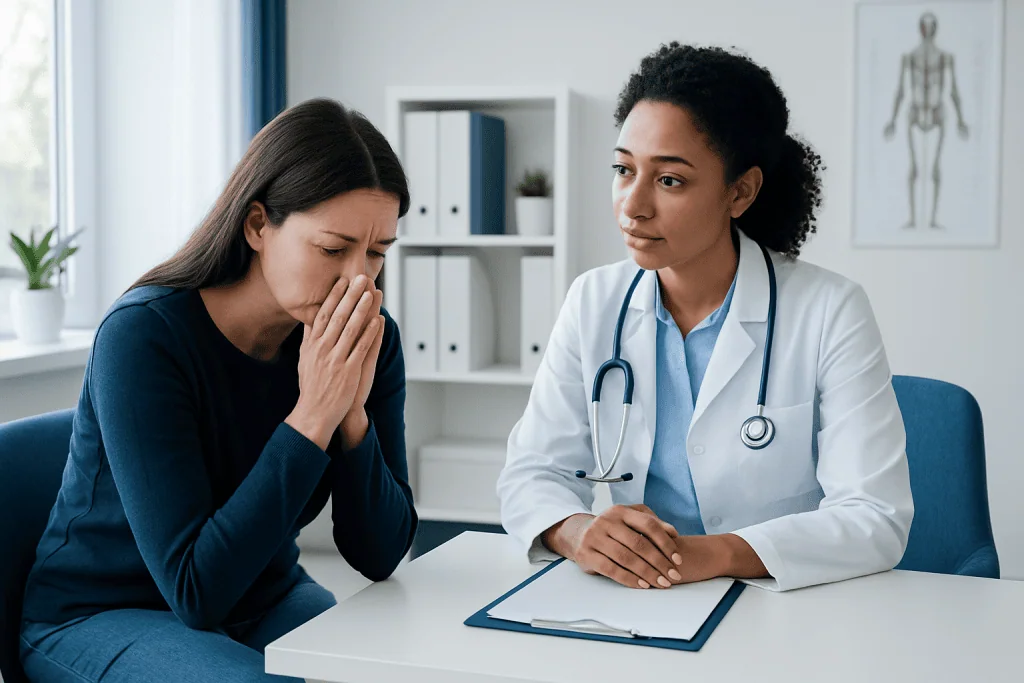
Symptoms of phasmophobia can be emotional, physical, and behavioral. They usually appear when a person thinks about ghosts, hears stories about the supernatural, is in the dark, is alone, or enters a place they associate with paranormal activity. In some cases, even anticipation alone is enough to trigger symptoms.
Common symptoms may include:
- Intense fear or dread related to ghosts or spirits
- Racing heart, sweating, shaking, or shortness of breath
- Feeling panicked in darkness or when alone
- Difficulty sleeping or fear of falling asleep
- Avoiding certain places, media, or conversations
- Constantly checking rooms, doors, or shadows
- Needing reassurance from family or friends
- Difficulty concentrating because of fear
Some people also report a sensation that someone is present nearby. This feeling can occur during periods of high anxiety, fatigue, or poor sleep and does not automatically mean a person has a psychotic disorder. A clinician may look closely at the full context to understand what is happening.
If symptoms escalate into intense episodes of chest tightness, dizziness, trembling, or a fear of losing control, they may resemble panic attacks. A proper assessment can help clarify whether the main problem is a specific phobia, panic disorder, sleep-related experiences, or another condition.
Causes and risk factors
There is no single cause of phasmophobia. Like many phobias, it usually develops through a combination of personal experience, temperament, learning, and stress. A frightening event, repeated exposure to scary stories, strict cultural beliefs about spirits, or a vivid imagination can all contribute.
Some people are more sensitive to threat cues and uncertainty. If a person already has a tendency toward anxiety, they may be more likely to misinterpret normal sounds, darkness, or body sensations as signs of danger. Sleep deprivation can also heighten fear and make nighttime experiences feel more intense.
In children and adolescents, fears may be shaped by developmental stage, family responses, and media exposure. In adults, phasmophobia may emerge during stressful periods, after grief, or alongside other anxiety-related problems. Not everyone with these risk factors will develop a phobia, but they can increase vulnerability.
Doctors may also consider whether symptoms relate to other issues such as sleep disorders, trauma, depression, substance use, or less commonly a neurological or psychiatric condition. This broader view helps ensure that treatment matches the true cause of the symptoms.
How phasmophobia is diagnosed
There is no blood test or scan that diagnoses phasmophobia directly. Diagnosis is usually based on a detailed conversation about symptoms, triggers, avoidance behaviors, sleep patterns, emotional impact, and how long the fear has been present. The main question is whether the fear is persistent, excessive, and disruptive enough to fit a phobia pattern.
A clinician may ask when the fear occurs, whether it is limited to supernatural themes, and whether the person recognizes that the reaction is stronger than the actual risk. They may also ask about panic symptoms, recent stress, trauma history, cultural beliefs, medications, and alcohol or substance use.
If symptoms are mainly nocturnal, evaluation may include questions about nightmares, sleep paralysis, insomnia, and nighttime anxiety. This matters because some sleep phenomena can produce vivid fear and a sense of presence, especially when a person is half-awake. In selected cases, a doctor may recommend a sleep study if another sleep disorder is suspected.
When symptoms are severe, confusing, or linked to hearing or seeing things outside fear-triggering situations, a more comprehensive mental health or neurological assessment may be appropriate. The goal is not to label the person quickly, but to understand the problem accurately and guide effective care.
Treatment options
Treatment depends on how severe the symptoms are and whether another condition is present. For many people, the most effective approach is psychotherapy, especially cognitive behavioral therapy. This can help a person identify fear patterns, challenge unhelpful interpretations, and reduce the cycle of avoidance and reassurance-seeking.
Exposure-based strategies are often used carefully and gradually. Rather than forcing a person into frightening situations, therapy typically builds tolerance step by step, helping the brain learn that the feared trigger can be faced safely. This process may include relaxation skills, grounding methods, and practical coping tools for nighttime anxiety.
If symptoms are linked with panic, generalized anxiety, depression, trauma, or severe insomnia, treatment may also address those conditions. In some cases, a doctor or psychiatrist may discuss medication for associated anxiety symptoms, but medicines are not the only option and should be individualized.
When sleep problems are a major part of the picture, sleep-focused therapy or behavioral sleep care may be useful. Near the end of the care pathway, some people benefit from support from a multidisciplinary team. Acibadem International’s multidisciplinary specialists in JCI-accredited hospitals evaluate and treat anxiety-related conditions for international patients when a broader assessment is needed.
Prevention and self-care
Phasmophobia cannot always be prevented, but certain habits may reduce symptom intensity and help break the fear cycle. One of the most helpful steps is improving sleep routines. Going to bed at a regular time, reducing screen use before sleep, and creating a calm bedroom environment may lower nighttime hypervigilance.
Limiting repeated exposure to frightening media can also help, especially before bedtime. Horror films, paranormal content, and social media clips may reinforce fearful expectations in sensitive individuals. Replacing these with calming activities, gentle music, reading, or breathing exercises may make evenings easier.
Useful self-care strategies may include:
- Keeping a regular sleep schedule
- Practicing relaxation or mindfulness exercises
- Reducing caffeine late in the day
- Talking openly with a trusted friend, family member, or therapist
- Gradually reducing safety behaviors such as constant checking
- Seeking professional help if fear is getting worse
Self-help can be supportive, but it should not become a way of avoiding assessment when symptoms are severe. If fear is persistent, causes panic, or affects school, work, or sleep, professional guidance is often the safest and most effective next step.
When to seek medical care
Medical or mental health evaluation is appropriate when fear of ghosts or supernatural presence causes significant distress, avoidance, or loss of sleep. Help is especially important if symptoms have lasted for weeks or months, are interfering with daily life, or are becoming more intense over time.
A person should seek professional care sooner if they are having frequent panic episodes, severe insomnia, confusion about what is real, or symptoms of depression such as hopelessness or withdrawal. Children should also be assessed if fear is strong enough to disrupt school, family routines, or normal development.
Urgent help is needed if fear is accompanied by thoughts of self-harm, inability to function, severe agitation, or sudden changes in behavior. In these situations, prompt support from a qualified healthcare professional is essential.
Even when symptoms are milder, early guidance can prevent the phobia from becoming more entrenched. A careful assessment often brings reassurance, clarifies whether another condition is involved, and opens the door to practical treatment options.
Frequently asked questions
Is phasmophobia a real medical condition?
Phasmophobia is not always listed as a separate diagnosis, but it is commonly understood as a fear of ghosts or supernatural presence that may fit under specific phobia. If the fear is persistent and disrupts daily life, clinicians take it seriously and can offer treatment.
What is the difference between phasmophobia and normal fear?
Normal fear is usually brief and manageable, such as feeling uneasy after a scary movie. Phasmophobia is stronger, more persistent, and more likely to cause avoidance, panic-like symptoms, or sleep problems.
Can phasmophobia cause panic attacks?
Yes. In some people, the fear can trigger intense physical symptoms such as rapid heartbeat, shaking, shortness of breath, or a sense of losing control. These episodes can resemble panic attacks and should be assessed if they happen repeatedly.
Is phasmophobia related to sleep problems?
Often, yes. The fear may become worse at night, especially in darkness or when a person is alone, and it can lead to insomnia or frequent waking. Sleep deprivation can then increase anxiety and make the fear feel more intense.
How is phasmophobia treated?
Treatment usually focuses on psychotherapy, particularly cognitive behavioral therapy and gradual exposure-based methods. If there are related issues such as panic, depression, trauma, or insomnia, treatment may also address those conditions.
When should someone talk to a doctor about phasmophobia?
A doctor or mental health professional should be consulted if the fear is persistent, causes distress, disrupts sleep, or leads to avoiding normal activities. Assessment is also important if the person feels confused about what is real or has severe anxiety symptoms.
References
- American Psychiatric Association
- National Institute of Mental Health
- National Health Service
- Mayo Clinic
- World Health Organization
This article is for general information only and is not a substitute for professional medical advice. Please consult a qualified doctor about your individual situation.
Explore treatments in Turkey — costs, top hospitals & a free quote
JCI-accredited · board-certified surgeons · reply within 24h
Add us as a Preferred Source to see more of our trusted health content across Google Search, AI Overviews and Discover.