Skeletal System Cool Facts: What Patients Need to Know
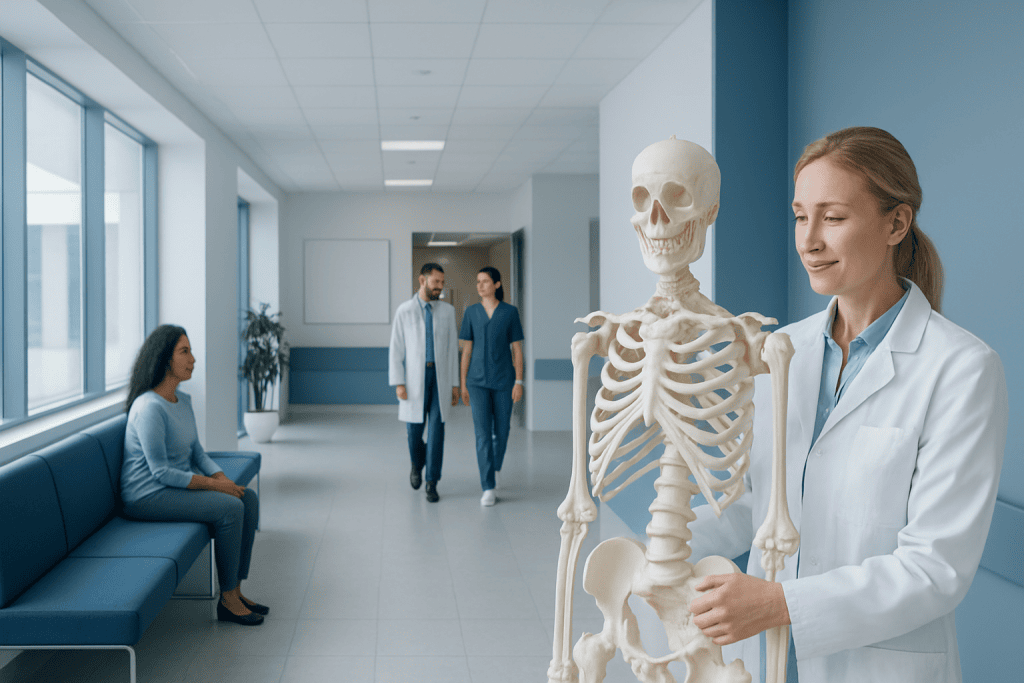
The skeleton is living tissue that continually breaks down and rebuilds itself. Bones do much more than provide shape; they protect organs, store minerals, and support blood cell production.
Key Takeaways
- The skeleton is living tissue that continually breaks down and rebuilds itself.
- Bones do much more than provide shape; they protect organs, store minerals, and support blood cell production.
- Joints, cartilage, ligaments, and bone marrow all work together as part of the skeletal system.
- Age, hormones, nutrition, exercise, smoking, and some medicines can all affect bone strength.
- Persistent bone pain, swelling, deformity, or a fracture after a minor injury should be assessed by a doctor.
Skeletal system cool facts are more than trivia: they help explain how bones support movement, protect vital organs, make blood cells, and store minerals throughout life. Understanding these basics can help patients recognize healthy habits, common warning signs, and when medical care may be needed.
Overview: why skeletal system cool facts matter
Skeletal system cool facts can answer a simple question many patients have: what do bones actually do besides hold the body up? The short answer is that the skeletal system is a living framework that supports movement, protects organs, stores key minerals such as calcium and phosphorus, and helps the body make blood cells inside the bone marrow.
Another useful fact is that the skeleton is not fixed or inactive. Bone tissue is constantly being removed and rebuilt in a process called remodeling. This is one reason nutrition, exercise, hormones, and overall health can all influence bone strength over time.
For patients, these facts are practical rather than purely interesting. Understanding how the skeletal system works can make it easier to appreciate why fractures happen, why bone density matters with age, and why symptoms such as ongoing bone pain or reduced height deserve medical attention.
Surprising facts about the human skeleton
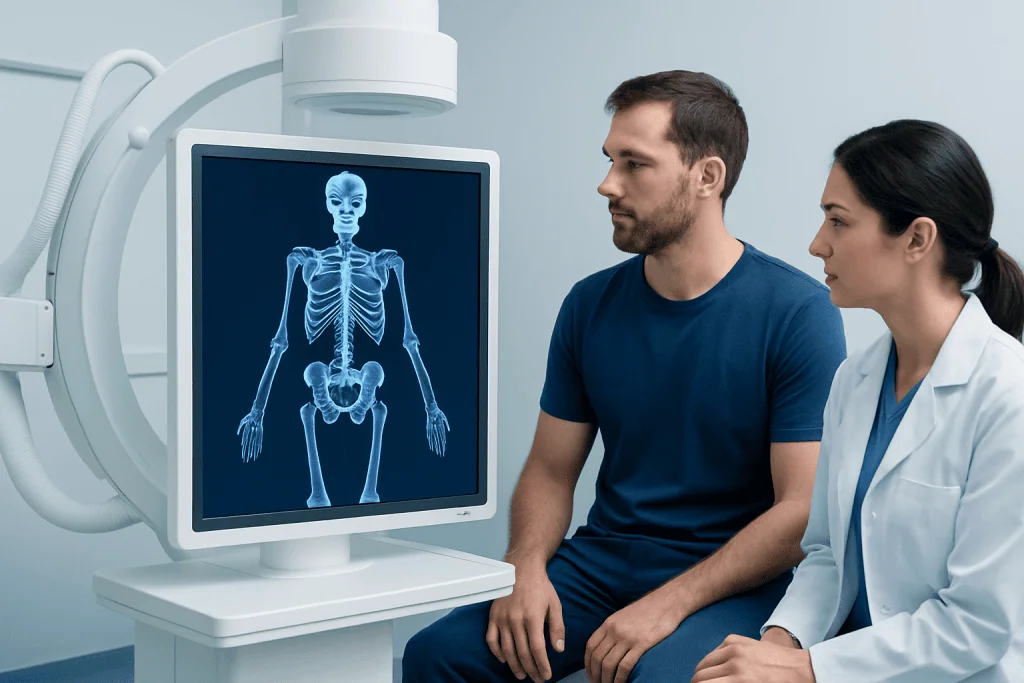
One of the best-known skeletal system cool facts is that adults usually have 206 bones, while babies are born with more. Some bones gradually fuse as a child grows, which helps create a stronger and more stable skeleton over time. This normal development is part of why children’s bones are not just smaller versions of adult bones.
The skeleton includes two main parts: the axial skeleton and the appendicular skeleton. The axial skeleton includes the skull, spine, and rib cage, which protect the brain, spinal cord, heart, and lungs. The appendicular skeleton includes the shoulders, arms, pelvis, and legs, which are closely involved in movement and balance.
Some bones are designed mainly for protection, while others are built for motion and weight-bearing. The femur, or thigh bone, is the longest and strongest bone in the body. In contrast, the tiny bones of the inner ear are among the smallest bones and help with hearing rather than support.
Bone marrow is another important part of the story. Inside certain bones, marrow helps produce red blood cells, white blood cells, and platelets. This means the skeletal system supports not only movement but also blood and immune health.
How bones, joints, and connective tissues work together
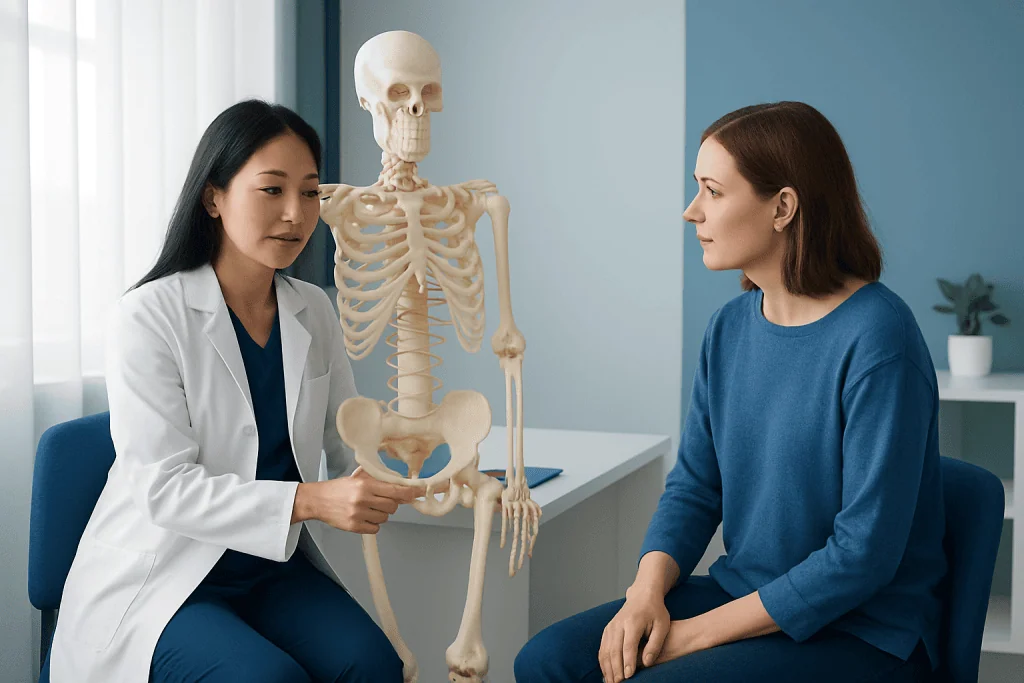
The skeletal system is not made of bone alone. It also includes joints, cartilage, ligaments, and connective tissues that allow the body to move smoothly and stay stable. Bones form the basic framework, but joints are where movement happens. Cartilage cushions bone ends and helps reduce friction, while ligaments connect bones to other bones.
Muscles and bones work as a team. When a muscle contracts, it pulls on a bone through a tendon, creating movement at a joint. This is why bone health and muscle health are closely linked. Reduced muscle strength can increase the risk of falls, and falls can lead to fractures, especially in older adults.
Bones are also dynamic in a chemical sense. They act as a storage site for minerals, especially calcium and phosphorus, which are essential for nerve signaling, muscle contraction, and many other body functions. If the body needs calcium, it can draw on bone stores, which is one reason long-term bone loss may develop silently.
When joints become painful, stiff, or swollen, the issue may involve cartilage, surrounding soft tissue, or the bone itself. Patients with long-term joint symptoms may need evaluation for conditions such as arthritis or other musculoskeletal problems.
What affects bone strength across life
Bone health changes from childhood to older age. During childhood, adolescence, and early adulthood, the body builds bone mass. Later in life, bone breakdown can begin to outpace rebuilding. This gradual shift is normal, but it can become more significant after menopause, with aging, or in people with certain medical conditions.
Nutrition plays a central role. Adequate calcium, vitamin D, and protein support healthy bones, while poor overall nutrition can weaken the skeleton over time. Weight-bearing exercise also matters because bone responds to physical stress by becoming stronger. Walking, dancing, stair climbing, and resistance exercises are common examples.
Several risk factors can reduce bone strength or raise fracture risk. These include smoking, heavy alcohol use, prolonged inactivity, low body weight, family history of bone disease, hormone changes, and long-term use of some medicines such as corticosteroids. Certain chronic illnesses can also interfere with bone health.
One of the most clinically important skeletal system cool facts is that bone loss may cause no symptoms until a fracture occurs. That is why screening and prevention matter, especially for people at higher risk of osteoporosis.
Common bone and joint problems patients should know
Fractures are among the most familiar skeletal injuries. They can happen after a major trauma, but in weakened bone they may also happen after a minor fall or even ordinary movement. Symptoms often include pain, swelling, bruising, reduced use of the limb, or a visible deformity. Some fractures, especially in the spine, may be less obvious and present as sudden back pain or loss of height.
Joint disorders are also common. Osteoarthritis can gradually wear down cartilage and lead to pain, stiffness, and reduced mobility. Inflammatory joint diseases may cause swelling, warmth, and morning stiffness. Problems can affect large weight-bearing joints such as the knee and hip, or smaller joints in the hands and feet.
The spine is another major part of the skeletal system that deserves attention. Poor posture, disc changes, injury, or bone weakness can contribute to neck or back pain. In some cases, patients may need clinical assessment and imaging to understand whether pain is coming from muscle strain, the joints, the bones, or nearby nerves.
When conservative care is not enough, treatment may involve rehabilitation, medicines, injections, or surgery depending on the problem. For selected structural joint conditions, doctors may discuss options such as knee replacement or hip replacement after careful evaluation.
How doctors assess skeletal health
Doctors begin with a medical history and physical examination. They usually ask about pain location, injuries, activity level, past fractures, family history, medicines, nutrition, and other health conditions. The examination may include checking posture, joint motion, swelling, tenderness, gait, and muscle strength.
Imaging tests are often used when there is concern about fracture, joint damage, or bone disease. Standard X-rays can show many fractures and alignment problems. In some situations, MRI, CT, or ultrasound may provide more detail about soft tissues, hidden injuries, or more complex bone conditions.
Bone density testing can help identify low bone mass and estimate fracture risk. Blood tests may also be useful to look for vitamin deficiencies, inflammatory markers, hormone-related issues, or other causes of weak bones. Not every patient needs every test; investigations are chosen based on symptoms, age, and risk profile.
Patients with persistent back pain, repeated fractures, or significant loss of mobility may be referred to orthopedics, rheumatology, endocrinology, or physical medicine specialists. If surgery becomes appropriate for a complex fracture or painful damaged joint, options such as orthopedic surgery may be considered as part of a broader care plan.
Prevention and self-care for a healthier skeleton
Many aspects of bone health can be supported through daily habits. Regular weight-bearing and strengthening exercise helps maintain bone density, coordination, and balance. This matters because preventing falls is a major part of fracture prevention, especially in later life.
A balanced diet is also important. Foods rich in calcium, vitamin D, and protein support bone remodeling and muscle function. Sensible sun exposure, when appropriate, may help vitamin D production, but some people need medical advice about testing or supplements based on age, lifestyle, skin type, or other health factors.
Patients can also protect their skeleton by avoiding smoking, limiting excess alcohol, and addressing home fall hazards such as loose rugs, poor lighting, and unstable footwear. People who have vision changes, dizziness, or medication side effects that affect balance should discuss this with a clinician.
Self-care does not replace medical evaluation when symptoms are significant or persistent. Ongoing pain, repeated sprains, suspected fractures, or a history of fragility fractures should prompt a professional assessment rather than prolonged self-treatment.
When to seek medical care
Medical care is appropriate if there is severe bone or joint pain, sudden swelling, inability to bear weight, visible deformity, or a suspected fracture. Urgent assessment is especially important after a fall, sports injury, or accident, and when pain is accompanied by numbness, weakness, fever, or loss of bladder or bowel control.
Patients should also arrange a non-urgent medical review if they notice frequent fractures, long-lasting back pain, height loss, stooped posture, or increasing difficulty with walking and daily activities. These symptoms do not always mean a serious condition, but they do justify evaluation.
For international patients who need assessment or treatment, Acibadem International’s multidisciplinary specialists and JCI-accredited hospitals diagnose and treat a wide range of bone, joint, and spine conditions with individualized care planning.
Frequently asked questions
What is the main function of the skeletal system?
The skeletal system supports the body, protects internal organs, and allows movement together with muscles and joints. It also stores minerals and contains bone marrow, which helps produce blood cells.
Are bones living tissue?
Yes. Bones are living tissue with a blood supply and active cells that constantly break down and rebuild bone. This remodeling process helps bones adapt, repair, and maintain strength.
Why do babies have more bones than adults?
Babies are born with more separate bone pieces because some parts have not fused yet. As growth continues, certain bones join together, leading to the usual adult total of 206 bones.
What helps keep bones strong?
Regular weight-bearing activity, strength training, balanced nutrition, and adequate calcium and vitamin D all support bone health. Avoiding smoking and limiting excess alcohol can also help reduce bone loss over time.
Can bone loss happen without symptoms?
Yes. Low bone density often causes no obvious symptoms until a fracture occurs. This is why screening may be recommended for some older adults and others with risk factors.
When should someone worry about bone or joint pain?
Medical advice is important if pain is severe, persistent, follows an injury, or limits daily activity. Swelling, deformity, inability to bear weight, fever, or neurologic symptoms are additional reasons to seek prompt evaluation.
References
- World Health Organization
- National Institute of Arthritis and Musculoskeletal and Skin Diseases
- National Institutes of Health Osteoporosis and Related Bone Diseases National Resource Center
- Centers for Disease Control and Prevention
- American Academy of Orthopaedic Surgeons
This article is for general information only and is not a substitute for professional medical advice. Please consult a qualified doctor about your individual situation.
Explore treatments in Turkey — costs, top hospitals & a free quote
JCI-accredited · board-certified surgeons · reply within 24h
Add us as a Preferred Source to see more of our trusted health content across Google Search, AI Overviews and Discover.