Cervical Radiculopathy Exercises Explained: Causes, Management, and When to See a Doctor

Cervical radiculopathy occurs when a nerve root in the neck becomes irritated or compressed, often causing pain that travels into the shoulder or arm. Gentle movement, postural training, and targeted strengthening are commonly included in conservative care.
Key Takeaways
- Cervical radiculopathy occurs when a nerve root in the neck becomes irritated or compressed, often causing pain that travels into the shoulder or arm.
- Gentle movement, postural training, and targeted strengthening are commonly included in conservative care.
- Exercises should not cause increasing radiating pain, new numbness, or loss of strength in the arm or hand.
- Most people improve with non-surgical treatment, although recovery time varies with the underlying cause and symptom severity.
- Urgent assessment is needed for rapidly worsening weakness, trouble walking, loss of bladder or bowel control, or symptoms after significant trauma.
Cervical radiculopathy exercises can support recovery from a compressed or irritated nerve in the neck by improving posture, neck mobility, and shoulder-blade control. The safest exercises depend on the person’s symptoms and diagnosis, so they should be introduced gradually and stopped if they worsen arm pain, numbness, or weakness.
What are cervical radiculopathy exercises?
Cervical radiculopathy exercises are carefully selected movements used to manage symptoms caused by irritation or compression of a nerve root in the cervical spine, or neck. They are not intended to “push through” nerve pain. Instead, they aim to help a person return to comfortable movement, reduce strain on sensitive tissues, and improve the muscular support around the neck, upper back, and shoulders.
A clinician, physiotherapist, or rehabilitation specialist can help determine which movements are appropriate. Some people feel better with gentle neck retraction and posture work, while others may need to focus first on shoulder-blade control, upper-back mobility, or activity modification. The best plan is individualized because the direction of movement that eases symptoms for one person may aggravate symptoms for another.
Exercises are usually one part of a broader conservative management plan. This may also include education about pacing activities, medication when appropriate, short-term symptom relief measures, and adjustments to work, sleep, or device use. People should seek professional advice before beginning a new program if they have severe pain, significant weakness, previous neck surgery, inflammatory arthritis, cancer, or recent injury.
Understanding cervical radiculopathy and its symptoms
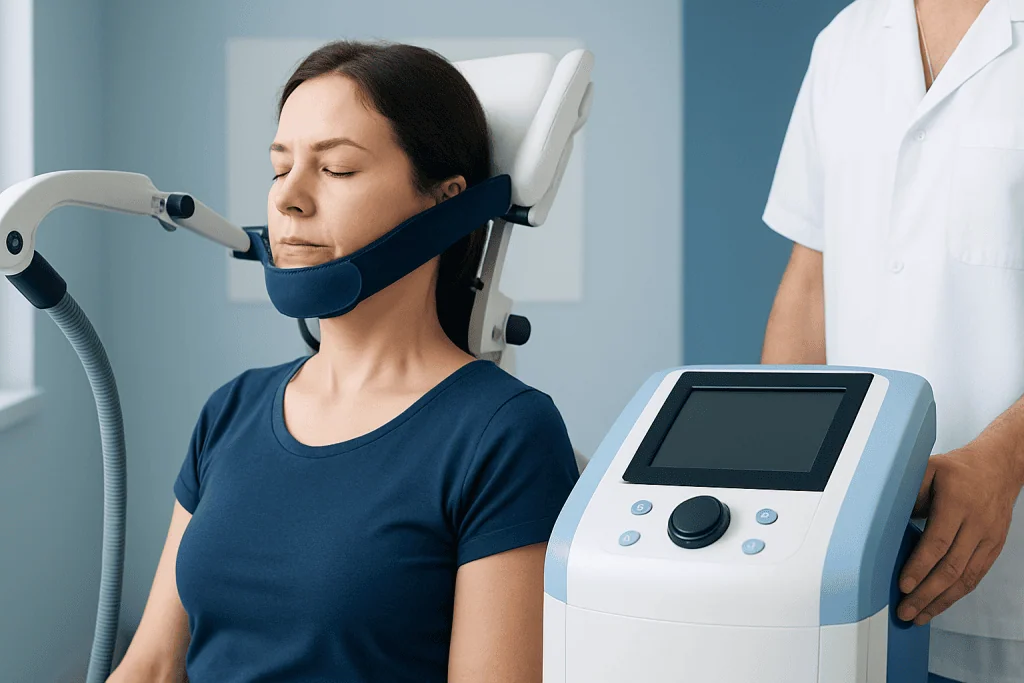
Cervical radiculopathy is sometimes described as a pinched nerve in the neck, although the nerve may be irritated by inflammation as well as physical pressure. A cervical nerve root leaves the spinal cord through openings between the neck bones. When that nerve root is affected, symptoms can be felt not only in the neck but also along the pathway of the nerve into the shoulder, arm, hand, or fingers.
Symptoms vary according to the nerve root involved and may include one-sided neck pain, burning or electric-shock-like pain into the arm, tingling, numbness, or weakness. Some people notice that looking up, turning the head, prolonged desk work, driving, or sleeping in an awkward position triggers symptoms. Others have little neck pain but clear arm or hand symptoms.
Not every episode of neck and arm pain is cervical radiculopathy. Shoulder conditions, peripheral nerve compression at the elbow or wrist, muscle strain, and some medical conditions can cause similar symptoms. A clinical assessment is important when symptoms persist, interfere with everyday function, or include weakness.
Causes and risk factors

The most common causes are age-related changes in the cervical spine. Discs may gradually lose height and flexibility, joints can develop osteoarthritis, and bony overgrowths may narrow the spaces where nerve roots travel. A disc herniation, in which disc material extends beyond its usual boundary, can also irritate a nerve root and may occur after a strain or without a clear injury.
Risk can be influenced by repetitive neck positions, prolonged computer or mobile-device use, physically demanding work, poor ergonomic setup, smoking, and prior neck injury. These factors do not mean a person will develop radiculopathy, and symptoms can also arise in people without an obvious risk factor. Maintaining general physical activity and avoiding prolonged fixed postures may be helpful for neck health.
Women may experience neck discomfort related to work demands, caregiving, sleep disruption, or hormonal changes that can affect joint and muscle symptoms, but cervical radiculopathy itself is not limited to one sex. Care should be based on the individual’s symptoms, physical findings, daily activities, and imaging results when imaging is needed.
How exercises may be used in recovery
Exercise for cervical radiculopathy generally progresses from symptom-calming movement toward restoring strength and confidence in daily activities. In the early phase, the priority is often to find positions and movements that reduce or centralize symptoms, meaning pain moves from the arm back toward the neck. Increasing pain that spreads farther down the arm is generally a sign to stop and discuss the response with a clinician.
Common components of a rehabilitation program may include gentle cervical range-of-motion exercises, chin-tuck or neck-retraction movements, shoulder-blade squeezes, thoracic extension, and stretching of tight chest or shoulder muscles. A physiotherapist may also prescribe nerve-gliding exercises. These are controlled movements designed to help the nerve move through surrounding tissues; they should be performed with particular care and should not create lingering tingling or sharp pain.
Strengthening often focuses on the deep neck flexor muscles, shoulder-blade stabilizers, and upper-back muscles. Improving endurance in these areas can reduce the load placed on the neck during sitting, lifting, reaching, and computer work. Exercise should be slow, controlled, and comfortable rather than forceful, especially during a flare-up.
- Begin with a small, tolerable range of movement.
- Use regular breaks rather than holding one posture for long periods.
- Keep the shoulders relaxed and avoid breath-holding during exercises.
- Record which movements ease or worsen symptoms to discuss at follow-up visits.
A safe approach to cervical radiculopathy exercises
A safe starting principle is that exercises should feel manageable during and after the session. Mild local muscle tightness can occur when beginning rehabilitation, but worsening arm pain, increasing numbness, new weakness, dizziness, or symptoms lasting well beyond the activity should be reviewed. People should not force neck stretches, perform high-velocity neck manipulation, or use traction devices without professional guidance.
During computer work, a person may benefit from positioning the screen near eye level, supporting the forearms, and taking brief movement breaks. When using a phone, raising the device rather than repeatedly bending the neck downward can reduce sustained strain. Sleep positioning may also matter: a pillow that keeps the neck relatively neutral is often more comfortable than one that leaves the head markedly elevated or rotated.
Activity modification does not usually mean complete rest. Prolonged inactivity can contribute to stiffness, reduced strength, and fear of movement. A clinician may recommend maintaining gentle walking and usual activities within tolerable limits while temporarily avoiding heavy overhead lifting, repetitive impact, or positions that consistently provoke radiating symptoms.
Diagnosis and treatment options beyond exercise
Diagnosis usually begins with a medical history and physical examination. A doctor may assess neck movement, reflexes, sensation, arm strength, hand function, and signs that help distinguish a cervical nerve-root problem from shoulder or peripheral nerve conditions. Imaging is not always required at the first visit, particularly when symptoms are recent and there are no warning signs.
If symptoms are severe, persistent, worsening, or associated with neurological deficits, imaging such as magnetic resonance imaging (MRI) may be considered. X-rays can show alignment and degenerative changes, while other tests, including electromyography and nerve conduction studies, may occasionally help clarify whether symptoms come from the neck or from another nerve problem.
Non-surgical treatment may include guided physiotherapy, anti-inflammatory or pain-relieving medicines when medically appropriate, and selected injections for persistent symptoms in some cases. Surgery may be considered when there is progressive neurological weakness, spinal cord compression, or pain and disability that do not improve with adequate conservative treatment. The decision is individualized and should be discussed with a spine specialist.
When to seek medical care
Medical assessment is advisable when neck pain spreads into the arm, tingling or numbness persists, symptoms affect sleep or work, or there is any noticeable loss of grip strength or difficulty lifting the arm. A clinician can identify whether cervical radiculopathy exercises are suitable and provide a plan matched to the underlying problem.
Urgent medical care is important for rapidly worsening arm or hand weakness, new difficulty walking or balancing, loss of coordination, changes in bladder or bowel control, numbness around the groin or buttocks, fever with severe neck pain, unexplained weight loss, or symptoms following a major fall, collision, or other significant trauma. These symptoms can indicate conditions requiring prompt evaluation.
Acibadem International’s multidisciplinary specialists and JCI-accredited hospitals evaluate and treat spinal and nerve-related conditions for international patients. A qualified doctor can help determine whether conservative care, rehabilitation, imaging, or referral to a spine specialist is appropriate.
Frequently asked questions
Can cervical radiculopathy exercises make symptoms worse?
They can worsen symptoms if the movement is not appropriate for the individual or is performed too forcefully. Exercise should generally not increase pain spreading down the arm, numbness, or weakness. If this occurs, the person should stop the exercise and contact a clinician or physiotherapist for advice.
Which exercises are best for a pinched nerve in the neck?
There is no single best exercise for every person with a pinched nerve in the neck. Gentle neck movement, postural exercises, shoulder-blade strengthening, upper-back mobility work, and nerve glides may be useful in selected cases. A healthcare professional can identify the movements most likely to help based on symptoms and examination findings.
Should a person rest completely with cervical radiculopathy?
Complete rest is usually not recommended for extended periods because it may increase stiffness and reduce conditioning. Relative rest, combined with comfortable movement and temporary avoidance of activities that provoke symptoms, is often more useful. The level of activity should be adjusted according to pain, strength, and medical advice.
How long does cervical radiculopathy take to improve?
Recovery varies according to the cause, severity, duration of symptoms, and presence of weakness. Many people improve with conservative treatment over time, but some need several weeks or longer to regain comfortable function. Ongoing or worsening symptoms should be reassessed rather than managed with exercises alone.
Can poor posture cause cervical radiculopathy?
Poor posture alone is not usually the only cause, but prolonged positions may increase neck strain and aggravate symptoms in someone with an irritated nerve root. Ergonomic adjustments and regular movement breaks may reduce this strain. Posture work is most helpful when combined with a broader rehabilitation plan.
When is surgery needed for cervical radiculopathy?
Surgery is not needed for most people, but it may be considered when there is progressive weakness, spinal cord involvement, or persistent disabling symptoms despite appropriate non-surgical care. Imaging findings must be considered alongside the person’s symptoms and examination. A spine surgeon can explain the potential benefits, limitations, and risks of surgery in an individual case.
References
- American Academy of Orthopaedic Surgeons
- American Association of Neurological Surgeons
- North American Spine Society
- National Institute of Arthritis and Musculoskeletal and Skin Diseases
- Mayo Clinic
This article is for general information only and is not a substitute for professional medical advice. Please consult a qualified doctor about your individual situation.
Joint and spine care in Turkey — expert assessment & treatment
JCI-accredited · board-certified surgeons · reply within 24h
Add us as a Preferred Source to see more of our trusted health content across Google Search, AI Overviews and Discover.