Tendon Sheath: An Evidence-Based Guide for Patients

Tendon sheaths reduce friction and help tendons move efficiently near joints and bony surfaces. Inflammation of a tendon sheath is called tenosynovitis and may cause pain, swelling, stiffness, or a catching sensation.
Key Takeaways
- Tendon sheaths reduce friction and help tendons move efficiently near joints and bony surfaces.
- Inflammation of a tendon sheath is called tenosynovitis and may cause pain, swelling, stiffness, or a catching sensation.
- Repetitive strain, injury, inflammatory arthritis, diabetes, and infection can contribute to tendon sheath problems.
- Diagnosis is usually based on symptoms and examination; ultrasound, X-ray, or MRI may be used in selected cases.
- Early assessment is important when symptoms follow a wound, involve redness and fever, or significantly limit hand or foot movement.
A tendon sheath is a protective, lubricated tunnel surrounding some tendons, especially in the hands, wrists, feet, and ankles. It supports smooth movement, but irritation, injury, infection, or inflammatory disease can cause the sheath to become painful or swollen.
What Is a Tendon Sheath?
A tendon sheath is a thin, protective sleeve that surrounds certain tendons. Tendons are strong bands of connective tissue that attach muscle to bone and transfer muscle force into movement. When a tendon passes through a narrow area, around a joint, or over a bony prominence, a sheath can help it glide with less friction.
The inner layer of the sheath produces a small amount of synovial fluid, a natural lubricant. The outer layer provides support and helps keep the tendon positioned correctly as a person bends, straightens, grips, walks, or moves a joint. Tendon sheaths are especially important in the fingers, thumb, wrist, ankle, and foot, where precise, repeated movement is needed.
A healthy tendon sheath usually goes unnoticed. Problems develop when the tendon, its sheath, or nearby tissues become irritated, thickened, narrowed, injured, or infected. These changes can interfere with smooth tendon movement and lead to symptoms such as discomfort, swelling, stiffness, clicking, or reduced range of motion.
Where Tendon Sheath Problems Commonly Occur
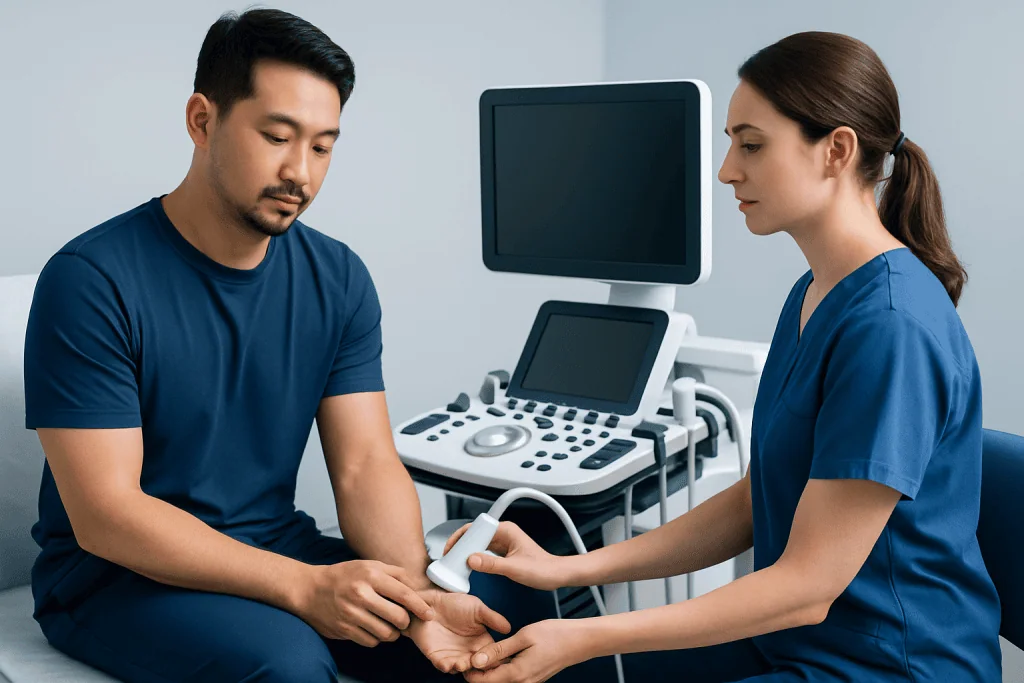
Tendon sheath conditions most often affect areas where tendons travel through tight passages. In the hand, the flexor tendons that bend the fingers move through tendon sheaths in the palm and fingers. Thickening in this system can lead to trigger finger, in which a finger catches, clicks, or locks during movement.
At the wrist, the tendons on the thumb side may become irritated within their sheath, causing a condition commonly known as de Quervain tenosynovitis. Pain is often felt near the base of the thumb and may worsen with lifting, gripping, twisting, or caring for a young child. Tendon sheaths around the ankle and foot can also become irritated after increased activity, footwear changes, overuse, or injury.
Not every tendon has a complete sheath, and not all tendon pain comes from a sheath problem. Pain may instead arise from the tendon itself, a ligament, joint arthritis, a nerve condition, a fracture, or soft-tissue strain. This is why an accurate clinical assessment is useful when symptoms persist or affect everyday activity.
Symptoms of Tendon Sheath Inflammation

Inflammation involving a tendon sheath is called tenosynovitis. Symptoms vary according to the affected body part and the cause, but pain during movement is common. The pain may be aching, sharp with certain motions, or tender when pressure is applied over the tendon pathway.
Other possible symptoms include localized swelling, warmth, stiffness, a feeling of resistance during movement, and reduced grip or walking tolerance. In the hand, a person may notice clicking, snapping, catching, or locking of a finger or thumb. In the foot or ankle, discomfort may become more noticeable during walking, climbing stairs, running, or standing for long periods.
Symptoms can develop gradually with repetitive use or appear after a specific injury. A painful tendon sheath does not always mean there is a serious condition, but ongoing symptoms should not be ignored. Continuing a painful activity without adjustment may prolong irritation and can make recovery slower.
- Pain along a tendon during movement or gripping
- Swelling or tenderness over a joint or tendon track
- Stiffness after rest or in the morning
- Clicking, catching, or locking of a finger or thumb
- Difficulty using the hand, walking, or bearing weight comfortably
Causes and Risk Factors
Repeated or forceful movements are frequent contributors to tendon sheath irritation. Examples include prolonged gripping, frequent keyboard or tool use, racquet sports, gardening, lifting, running, or sudden increases in exercise. Poorly paced activity, inadequate recovery time, and technique or equipment issues can add stress to a tendon and its surrounding sheath.
Direct trauma, such as a fall, sprain, cut, or crush injury, can also affect a tendon sheath. Some health conditions may increase susceptibility to tendon sheath disorders, including inflammatory arthritis, such as rheumatoid arthritis, and metabolic conditions such as diabetes. Hormonal changes, pregnancy, and fluid retention may contribute to symptoms in some people, particularly around the wrist and thumb.
Infection is a less common but urgent cause of tendon sheath inflammation. It can occur when bacteria enter through a puncture wound, bite, cut, or other break in the skin. Infectious flexor tenosynovitis in the hand requires prompt medical assessment because infection in this enclosed space can affect tendon function and spread to nearby tissues.
Age, previous tendon problems, certain occupations, and high-demand hobbies may also influence risk. However, tendon sheath symptoms can occur in people of any age and activity level, and they are not always caused by a single identifiable event.
How Tendon Sheath Conditions Are Diagnosed
A clinician usually begins by asking about the location and timing of symptoms, recent activities, injury, medical conditions, and any skin wounds or signs of infection. During the examination, they may check for tenderness, swelling, warmth, reduced motion, weakness, clicking, or pain with specific movements. Comparing both hands, feet, or ankles may help identify subtle changes.
Many common tendon sheath conditions can be diagnosed through the history and physical examination alone. Imaging is not always necessary, but ultrasound can show tendon movement, fluid around a tendon, thickening, and some tears. X-rays may be used to assess bone or joint problems, while MRI can provide more detailed information when the diagnosis is unclear or a more complex injury is suspected.
Blood tests may be considered if an inflammatory condition, infection, or systemic illness is suspected. The aim is not only to confirm tendon sheath inflammation, but also to identify related problems that may need different treatment. For example, a locked finger, nerve compression, joint arthritis, and tendon tear can produce overlapping symptoms but are managed differently.
Treatment and Recovery Options
Treatment depends on the cause, location, severity, and duration of symptoms. For non-infectious overuse-related problems, a clinician may recommend temporarily reducing or modifying aggravating activities while maintaining gentle movement as advised. Rest does not necessarily mean complete immobility; the goal is to avoid motions that repeatedly provoke pain while protecting function.
Supportive measures may include a splint or brace, particularly for the thumb, wrist, finger, ankle, or foot. Cold packs can sometimes help short-term pain and swelling after activity; they should be wrapped in cloth and used for limited periods to protect the skin. A doctor or pharmacist can advise whether pain-relief medicines or anti-inflammatory medicines are suitable, taking account of other health conditions and medications.
Hand therapy, physiotherapy, or occupational therapy may help restore comfortable movement, improve strength, and identify ways to adapt work, sport, posture, or equipment. Exercises should be individualized, especially after injury or when movement is significantly painful. Corticosteroid injections may be considered for selected conditions, such as trigger finger or de Quervain tenosynovitis, when simpler measures have not provided adequate relief.
Surgery is not needed for most tendon sheath conditions, but it may be considered when symptoms are persistent, movement is locked, or there is significant narrowing or structural damage. Infection requires urgent medical treatment and may involve antibiotics and, in some cases, surgical drainage. Acibadem International’s multidisciplinary specialists and JCI-accredited hospitals assess and treat tendon, hand, and musculoskeletal conditions for international patients.
Protecting Tendon Health and Supporting Self-Care
Gradual progression is one of the most useful ways to protect tendons and their sheaths. When starting a new activity or returning after a break, increasing duration, intensity, or resistance step by step gives tissues time to adapt. Alternating tasks, taking short breaks from repetitive hand movements, and varying grip positions can reduce prolonged strain.
Appropriate footwear, supportive equipment, and sound technique can also be helpful for people who exercise, perform manual work, or use tools regularly. A therapist, trainer, or clinician may suggest ergonomic changes at a workstation or modifications to an activity that is repeatedly triggering symptoms. These changes are most effective when they are tailored to the person’s usual movements.
People should avoid trying to force through a locked finger or severe pain. Gentle, pain-limited mobility may be appropriate in some circumstances, but stretching or strengthening exercises that worsen symptoms should be stopped and reviewed with a healthcare professional. Managing underlying conditions, including diabetes or inflammatory arthritis, may also support tendon health over time.
When to Seek Medical Care
Medical assessment is appropriate when tendon-area pain, swelling, catching, or stiffness lasts more than a short period, recurs, or interferes with work, sleep, exercise, walking, or hand use. A clinician can help distinguish a tendon sheath problem from other causes and recommend a safe treatment plan. Early review is particularly helpful if a finger repeatedly locks or cannot be fully straightened or bent.
Urgent medical care is needed if there is increasing redness, marked warmth, severe swelling, fever, pus, a wound near the painful area, or rapidly worsening pain. These symptoms may indicate infection, especially after an animal bite, puncture, cut, or other injury to the hand. New numbness, color changes, major weakness, or inability to move a finger, toe, wrist, or ankle after trauma also needs prompt evaluation.
People with diabetes, immune suppression, inflammatory arthritis, or circulation problems should seek advice sooner for unexplained swelling or skin injury near a tendon. Prompt care can protect movement and help address the underlying cause before symptoms become more difficult to manage.
Frequently asked questions
What does a tendon sheath do?
A tendon sheath surrounds certain tendons and helps them slide smoothly as a joint moves. Its lining produces lubricating fluid, while the outer layer supports and guides the tendon in areas where space is limited.
Is tenosynovitis the same as tendonitis?
They are related but not identical terms. Tendonitis or tendinopathy refers mainly to a problem affecting the tendon, while tenosynovitis involves inflammation or irritation of the tissue around a tendon, called the tendon sheath. Both can cause pain with movement and may occur together.
Can a tendon sheath heal on its own?
Mild irritation may improve with activity modification, appropriate support, and time. However, symptoms that persist, recur, cause locking, or limit normal movement should be assessed by a qualified clinician to identify the cause and avoid prolonged dysfunction.
Why does my finger click or lock?
Clicking or locking can occur when a flexor tendon does not glide smoothly through its sheath, often because of thickening or narrowing in the tendon pulley system. This is commonly called trigger finger. A medical professional can confirm the cause and discuss suitable treatment options.
Can tendon sheath inflammation be caused by infection?
Yes, although most tendon sheath irritation is not infectious. Infection can develop after a cut, puncture, bite, or other break in the skin and may cause increasing pain, redness, warmth, swelling, and sometimes fever. These symptoms need urgent medical assessment.
Should a painful tendon sheath be massaged or stretched?
Massage and stretching are not appropriate for every tendon sheath problem, particularly when there is acute injury, severe pain, locking, or possible infection. Gentle exercises may be useful in some cases, but they should not worsen symptoms. A clinician or therapist can recommend the safest approach for the affected area.
References
- American Academy of Orthopaedic Surgeons
- American Society for Surgery of the Hand
- National Institute of Arthritis and Musculoskeletal and Skin Diseases
- Mayo Clinic
- National Health Service
This article is for general information only and is not a substitute for professional medical advice. Please consult a qualified doctor about your individual situation.
Joint and spine care in Turkey — expert assessment & treatment
JCI-accredited · board-certified surgeons · reply within 24h
Add us as a Preferred Source to see more of our trusted health content across Google Search, AI Overviews and Discover.

More from the Health Library



Related Specialists

Dr. Gökçe Gökkaya
Gynecology & Obstetrics
Fzt. Dilek Küçükvardar
Physical Medicine & Rehabilitation
Dr. Zeki Ermiş
Ophthalmology
Dr. Mahmut Özyılmaz
Aesthetic Plastic & Reconstructive Surgery