Autistic Traits in 4 Year Olds — Explained by Medical Evidence, Not Myths

Autism is a neurodevelopmental difference with a wide range of presentations, strengths, and support needs. At age 4, possible autistic traits may involve communication, reciprocal interaction, imaginative play, routines, repetitive movements, or sensory sensitivities.
Key Takeaways
- Autism is a neurodevelopmental difference with a wide range of presentations, strengths, and support needs.
- At age 4, possible autistic traits may involve communication, reciprocal interaction, imaginative play, routines, repetitive movements, or sensory sensitivities.
- A child does not need to show every possible trait to benefit from a developmental discussion or assessment.
- Hearing, language differences, anxiety, developmental language disorder, and other factors can overlap with autistic traits.
- Early, individualized support can help children develop communication, daily living, learning, and social participation skills.
Autistic traits in 4 year olds may appear as persistent differences in social communication, play, flexibility, repetitive behaviors, or sensory responses. These traits do not confirm autism on their own, but discussing concerns with a pediatrician can help a family understand a child’s developmental profile and access appropriate support.
Overview: What Autistic Traits Can Look Like at Age 4
Autistic traits in 4 year olds are patterns of differences in how a child communicates, relates to other people, plays, responds to sensations, and manages change. Autism spectrum disorder (ASD) is a neurodevelopmental condition, meaning it affects brain development and the way a person experiences and interacts with the world. Autism is not caused by parenting style, vaccines, or a child being “naughty.”
At 4 years old, children develop at different rates, and a single behavior rarely provides a clear answer. For example, enjoying routines, being shy around unfamiliar people, or becoming upset when tired can occur in many children. Clinicians look instead for a consistent pattern of traits across settings and over time, together with how those traits affect everyday participation, communication, learning, or wellbeing.
Autism is called a spectrum because children can have very different combinations of abilities, needs, interests, and challenges. Some children speak fluently but find back-and-forth conversation or peer play difficult. Others may use few words, communicate in nonverbal ways, or need more support with daily activities. Many autistic children also have important strengths, such as strong memory, deep interests, attention to detail, honesty, or creative ways of thinking.
Possible Signs in Communication, Social Interaction and Play
One area clinicians consider is social communication. A 4-year-old with autistic traits may use language differently from peers, such as repeating phrases heard from adults or media, speaking mainly about a preferred topic, using an unusual tone, or finding it difficult to take turns in conversation. Some children may have delayed speech, while others have age-appropriate vocabulary but struggle to use language socially.
Differences may also be noticed in nonverbal communication. A child may use less eye contact than expected for their culture or personal comfort, have difficulty reading facial expressions and gestures, or not consistently point out interesting things to share enjoyment. They may not always respond to their name, although hearing should be checked rather than assumed to be the reason.
In social situations, a child may prefer playing alone, approach peers in ways that seem unusual, or have difficulty joining cooperative games. They may want friends but not know how to start or maintain play. Pretend play can also look different: some children repeat the same play sequence, focus on parts of toys, or prefer arranging objects rather than using toys in imaginative stories. These behaviors are meaningful only when considered alongside the child’s overall development.
- Limited sharing of interests, enjoyment, or attention with others
- Difficulty with conversational give-and-take or responding to social cues
- Playing near other children without regularly engaging with them
- Repeated or highly scripted pretend play
- Strong preference for discussing a narrow range of interests
Repetitive Behaviors, Routines and Sensory Differences
A second core area of autism involves restricted or repetitive behaviors and a need for sameness. At age 4, this can include repeating movements such as hand flapping, rocking, spinning, pacing, or finger movements. These actions may help a child express excitement, manage stress, focus, or regulate sensory input. They should not automatically be discouraged unless they are unsafe or interfere significantly with daily life.
Some children become very distressed by unexpected changes, such as taking a different route to preschool, changing a familiar food brand, or altering the order of a bedtime routine. They may need extra preparation, visual reminders, or time to shift from one activity to another. Intense interests, including a strong focus on vehicles, letters, animals, maps, or a particular character, can also be part of an autistic profile.
Sensory experiences may be unusually intense, reduced, or sought out. A child might cover their ears around hand dryers or crowds, dislike certain clothing textures, avoid messy play, smell objects, seek firm pressure, or watch moving objects closely. Sensory differences are real and can be tiring or overwhelming. However, sensory sensitivities alone do not establish an autism diagnosis, because they can occur in children with and without autism.
Why Autism Develops and Who May Be Affected
Autism has no single cause. Research indicates that it is associated with a complex combination of genetic and developmental factors that influence early brain development. Autism can occur in children of every sex, ethnicity, language background, family income level, and culture. It is not an illness that a child catches, and it is not caused by poor parenting, screen use alone, or routine childhood immunizations.
Having an autistic family member may increase the likelihood that a child has autistic traits, but family history does not predict any one child’s development with certainty. Some genetic conditions and developmental differences can occur alongside autism. A clinician may recommend further medical or genetic evaluation when a child has particular physical findings, seizures, significant developmental delay, or a relevant family history.
Autism may be recognized later in some children, including girls and children who have learned to copy peers in structured settings. A child may appear to manage well at preschool but become exhausted, anxious, or distressed after social demands. Bilingual or multilingual children can also be assessed for autism; exposure to more than one language does not cause autism or language delay, although an assessment should consider all languages used at home and school.
How a Developmental Assessment Works
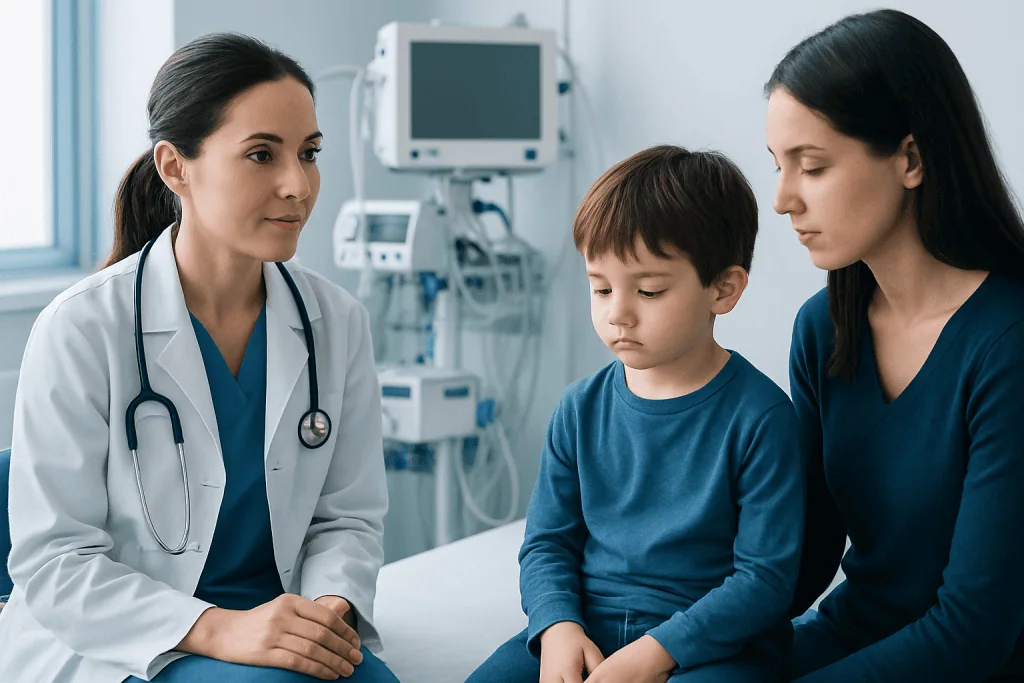
A pediatrician or child development specialist usually begins by listening carefully to a parent’s concerns and asking about milestones, communication, play, behavior, sleep, feeding, medical history, and family history. Information from preschool teachers or caregivers can be helpful because children may behave differently in different environments. Families may be asked to complete developmental or autism screening questionnaires, but screening tools do not diagnose autism by themselves.
A comprehensive autism assessment commonly includes observing the child’s communication, interaction, play, interests, and responses to activities. The clinician also considers whether traits began in early development and whether they affect daily functioning. Depending on the child’s needs, the assessment team may include a developmental pediatrician, child psychiatrist, psychologist, speech and language therapist, occupational therapist, or neurologist.
It is important to consider other explanations or co-occurring needs. Hearing testing may be recommended for a child with speech, listening, or response-to-name concerns. Language disorder, intellectual disability, attention-deficit/hyperactivity disorder, anxiety, sleep difficulties, and sensory or motor challenges can coexist with autism or share some features. A careful assessment aims to identify the child’s full pattern of strengths and support needs rather than applying a label based on one behavior.
Support and Everyday Strategies After Concerns Are Identified
Support does not always need to wait for a formal diagnosis. If a child has communication, sensory, behavior, or learning needs, a pediatrician can help guide referrals to appropriate services. Speech and language therapy may support functional communication and social language. Occupational therapy may help with sensory regulation, fine-motor skills, dressing, feeding, and participation in preschool routines. Educational support can be tailored to the child’s learning style.
Effective care is individualized and should be respectful of the child’s dignity, communication preferences, and neurodevelopmental differences. The aim is not to make a child appear less autistic. Instead, support can build useful skills, reduce distress, improve access to learning and relationships, and help the child communicate their needs. Families should ask providers about goals, methods, expected benefits, and how progress will be reviewed.
At home, predictable routines, simple language, visual schedules, advance notice of changes, and regular breaks can be useful for many children. Parents and caregivers can follow the child’s interests during play, pause to allow communication, and offer choices using words, pictures, or objects. Keeping brief notes on situations that trigger distress and what helps the child recover can provide useful information for clinicians and preschool staff.
Acibadem International’s multidisciplinary specialists and JCI-accredited hospitals can assess developmental concerns and coordinate care for international patients when clinically appropriate.
When to Seek Medical Care
Parents or caregivers should arrange a non-urgent appointment with a pediatrician if they notice persistent concerns about speech, social interaction, play, sensory responses, repetitive behavior, or coping with everyday routines. It is appropriate to seek advice even when a family is unsure whether a behavior is within the broad range of typical development. Raising concerns early does not mean that a child will receive a diagnosis; it simply creates an opportunity for informed assessment and support.
Medical advice is especially important if a child loses skills they previously had, such as words, social engagement, or play abilities. Families should also seek timely evaluation if difficulties are causing marked distress, frequent meltdowns, exclusion from preschool activities, feeding problems, sleep disruption, self-injury, or safety concerns such as wandering. If there is immediate danger of injury, caregivers should seek urgent local medical assistance.
Parents can prepare for an appointment by noting examples of behaviors, when they began, how often they occur, and what makes them easier or harder. Videos from ordinary home situations may sometimes help a clinician understand a concern, provided the child’s privacy is protected. A child’s developmental needs can change over time, so ongoing follow-up may be useful even if an initial assessment is inconclusive.
Frequently asked questions
Can a 4-year-old show autistic traits without being autistic?
Yes. Many behaviors associated with autism, such as preferring routines, being sensitive to noise, or enjoying solitary play, can also occur in children who are not autistic. Clinicians assess whether there is a persistent pattern across areas of development and whether it affects daily life.
What are early autistic traits in a verbal 4-year-old?
A verbal child may have an advanced vocabulary but find conversation, turn-taking, understanding implied meaning, or adapting language to different people difficult. They may also repeat phrases, talk extensively about a particular interest, or have difficulty joining peer play. Speech ability alone does not confirm or rule out autism.
Do autistic children always avoid eye contact?
No. Eye contact varies greatly among autistic children and among children generally. Some autistic children make eye contact comfortably, while others may use less eye contact or find it uncomfortable, particularly during conversation or sensory overload.
Can preschool or nursery identify autism?
Teachers may notice developmental patterns in group activities, communication, transitions, and peer interactions, and their observations can be valuable. However, preschool staff do not usually make a medical diagnosis. A qualified clinician performs a formal developmental or autism assessment.
Do vaccines cause autism?
No. Large, high-quality research studies have found no credible evidence that vaccines cause autism. Vaccination remains an important way to protect children from serious infectious diseases.
What should parents do while waiting for an assessment?
Parents can share concerns with the child’s preschool, ask a pediatrician about hearing and developmental evaluations, and pursue recommended support for communication or daily functioning. Helpful home approaches include predictable routines, clear choices, visual supports, and responding positively to the child’s attempts to communicate.
References
- American Academy of Pediatrics
- Centers for Disease Control and Prevention
- National Institute of Mental Health
- World Health Organization
- National Institute for Health and Care Excellence
This article is for general information only and is not a substitute for professional medical advice. Please consult a qualified doctor about your individual situation.
Explore treatments in Turkey — costs, top hospitals & a free quote
JCI-accredited · board-certified surgeons · reply within 24h
Add us as a Preferred Source to see more of our trusted health content across Google Search, AI Overviews and Discover.