Eye Color Change in Newborns: What Patients Need to Know

A newborn's eye color at birth does not always predict their permanent eye color. Most noticeable changes occur during the first 6 to 12 months, although subtle changes can continue for several years.
Key Takeaways
- A newborn's eye color at birth does not always predict their permanent eye color.
- Most noticeable changes occur during the first 6 to 12 months, although subtle changes can continue for several years.
- Eye color is influenced by multiple inherited genes and by the amount and distribution of melanin in the iris.
- A change in the iris itself is usually harmless, but a white pupil, cloudy eye, marked redness, pain, or light sensitivity needs prompt medical assessment.
- Routine newborn and well-child visits provide opportunities to check a baby's eye health and visual development.
Eye color change in newborns is usually a normal part of development. Many babies are born with blue-gray, slate-gray, or hazel-looking eyes that gradually become lighter, darker, or more defined as pigment in the iris develops.
Eye Color Change in Newborns: The Short Answer
Eye color change in newborns is usually normal. A baby’s irises may look blue-gray, gray, greenish, brown, or hazel at birth, then gradually change as pigment develops after delivery. The final shade is often not clear during the first months of life.
The iris is the colored ring around the pupil. Its appearance depends largely on melanin, a natural pigment also involved in skin and hair color. Babies with less visible iris melanin may have lighter-looking eyes, while increasing melanin can make the eyes appear greener, hazel, or browner over time.
For most families, changing eye color is a normal developmental observation rather than a sign of illness. However, a sudden change in only one eye, a cloudy or white-looking pupil, significant redness, or apparent discomfort should be assessed by a doctor without delay.
Why Baby Eye Color Can Change After Birth
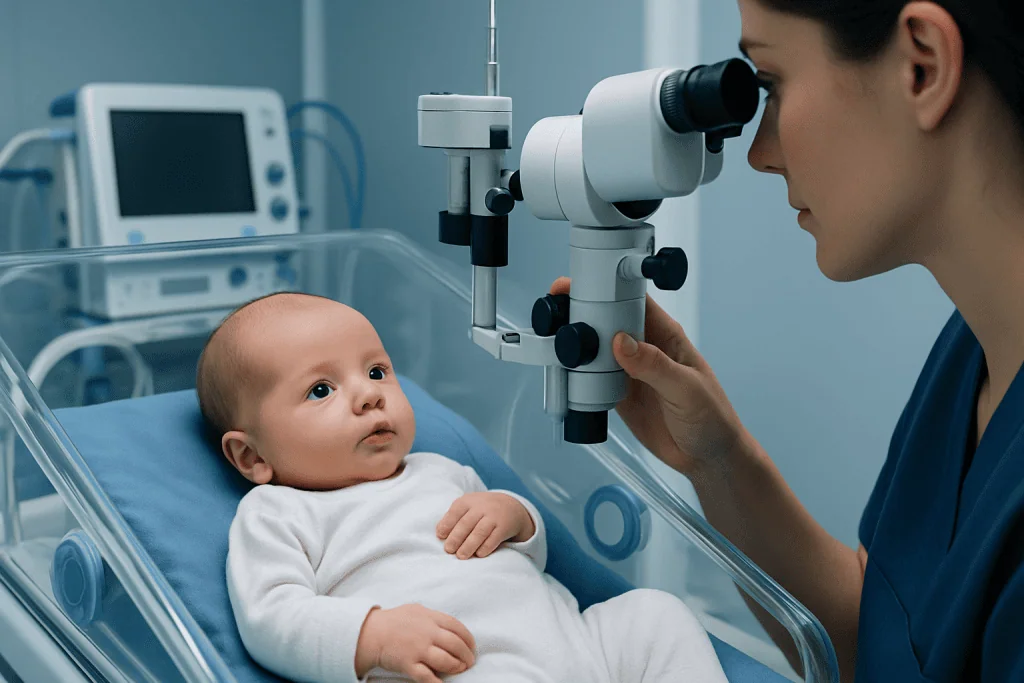
At birth, the pigment-producing cells in the iris may not yet be making or depositing their full amount of melanin. Exposure to light after birth can support the normal maturation of these cells, although light exposure does not determine a baby’s eventual eye color and parents should not expose a baby to direct sunlight for this purpose.
Eye color is not produced by a blue, green, or brown pigment alone. Rather, it reflects the quantity and placement of melanin within layers of the iris, along with the way light is scattered. Less melanin often creates a blue or gray appearance, while more melanin generally produces brown eyes. Green and hazel eyes result from more complex combinations of pigment and light scattering.
A newborn’s eyes may therefore look different under daylight, indoor lighting, or in photographs. These ordinary visual differences should not be confused with a true change in iris color. Looking at the eyes in similar natural lighting over time can help parents notice gradual, normal changes.
When Does a Baby's Eye Color Become Permanent?
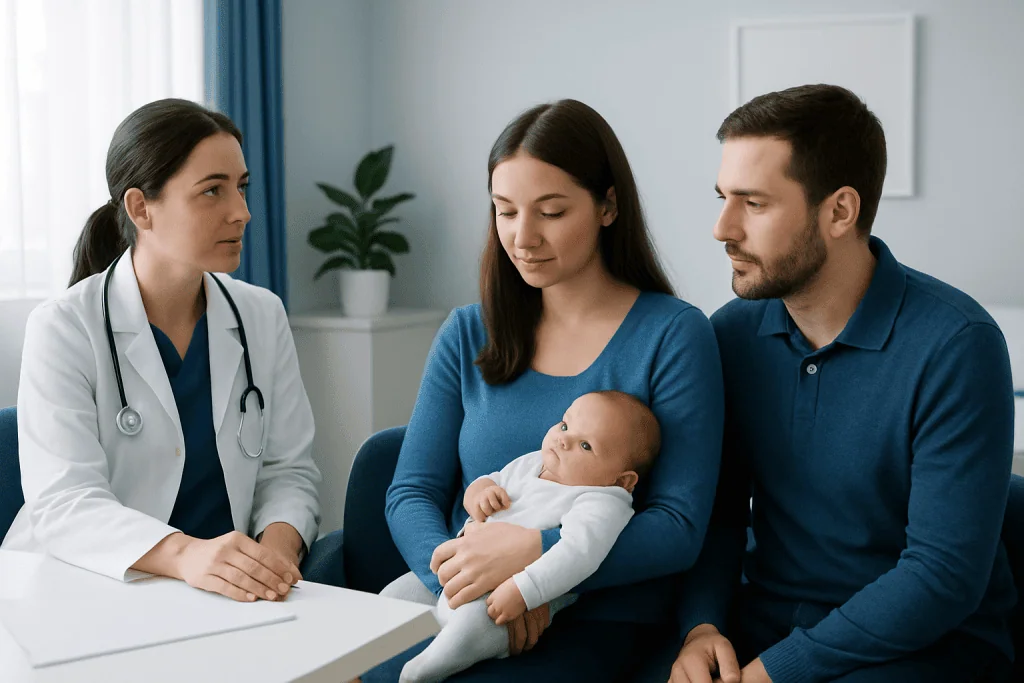
Many babies show their most noticeable eye color changes between about 3 and 9 months of age. By around 6 to 12 months, the color is often becoming more established. For some children, especially those whose eyes remain light or hazel, subtle changes in shade may continue through the toddler years and occasionally longer.
There is no exact age when every child’s eye color becomes permanent. A baby born with blue-gray eyes may remain blue-eyed, become green or hazel, or gradually turn brown. Brown eyes present at birth are also often stable, although their depth or tone can still become more noticeable as the iris matures.
Premature babies may have developmental timing that is best considered using their corrected age, particularly in the early months. Regardless of timing, a gradual and even change in both eyes is generally reassuring. Parents do not need to test, treat, or try to influence this natural process.
Genes, Family Traits, and Differences Between Eyes
Baby eye color is inherited, but it is not determined by one simple gene. Multiple genes influence melanin production, pigment distribution, and the structure of the iris. This is why parents with similar eye colors can have children with different eye colors, and why a baby’s shade may not be easy to predict from the parents’ eyes alone.
Family history can offer clues, but it cannot provide certainty. Grandparents and more distant relatives may contribute genetic variants that influence eye color. Eye color can also vary among siblings, even when they have the same parents.
Some people naturally have eyes that are not exactly the same color, a finding called heterochromia. It may involve one iris being a different color from the other, or a small segment of one iris having a different shade. When present from birth and otherwise stable, it can be harmless. Still, a pediatrician or eye specialist should evaluate a newly noticed or increasing difference between the eyes.
What Is Normal and What May Need Assessment?
A gradual, symmetrical shift from gray-blue to brown, hazel, green, or a deeper blue is usually normal. It is also common for the eyes to seem to change color from day to day because of clothing, room lighting, pupil size, and photographs. The visible white part of the eye, called the sclera, should remain clear rather than persistently red, cloudy, or yellow.
Parents should remember that the color of the iris is different from the appearance of the pupil. The pupil is normally dark. A pupil that looks white, pale, cloudy, or unusually reflective in person or repeatedly in photographs needs urgent medical evaluation. This can occasionally be associated with conditions affecting the lens, retina, or other structures inside the eye.
Newborns also may develop temporary yellowing of the skin and whites of the eyes because of jaundice. This does not represent a change in iris color. Newborn jaundice is common, but parents should follow their maternity team’s advice about monitoring it, particularly if yellowing is spreading, deepening, or accompanied by poor feeding or unusual sleepiness.
- Usually reassuring: gradual color changes in both irises, without redness, swelling, discharge, or discomfort.
- Worth discussing at a routine visit: persistent unequal iris color that has not previously been assessed.
- Needs prompt assessment: a white or cloudy pupil, a cloudy cornea, persistent tearing, strong light sensitivity, marked redness, eyelid swelling, or concern about vision.
How Doctors Check Eye Health in Babies
At newborn and well-child examinations, clinicians check the appearance of the eyes, the pupils’ response to light, and the red reflex. The red reflex is a reddish-orange reflection seen when light is shone into the eye. It helps identify possible concerns involving the lens or back of the eye and is an important part of early eye screening.
If a clinician notices an unusual pupil reflex, eye alignment concern, cloudiness, or a substantial difference between the eyes, they may recommend assessment by a pediatric ophthalmologist. This specialist can examine the eyes with appropriate infant-friendly methods and decide whether any tests or treatment are needed.
Most babies whose eye color changes gradually do not need special tests. Routine health visits, observing normal visual behaviors as a child develops, and raising any parental concerns early are usually the best approach. Parents should avoid using over-the-counter eye drops, cosmetic products, or herbal remedies to alter or “clarify” eye color.
When to Seek Medical Care
Parents should arrange timely medical advice if they notice that one eye has changed color noticeably while the other has not, particularly if the difference is new or becoming more pronounced. Although many differences are harmless, an examination can help rule out eye inflammation, injury, pressure-related problems, or other less common causes.
Urgent care is appropriate if a baby has a white or cloudy-looking pupil, a blue-gray haze over the front of the eye, severe or persistent redness, swelling around the eye, obvious pain, frequent squeezing of the eyelids, excessive tearing, sensitivity to light, or trouble opening an eye. These signs do not necessarily indicate a serious condition, but they should not be managed by waiting for the next routine appointment.
Parents can mention eye color observations during regular pediatric visits and bring photographs taken in ordinary lighting if a change is difficult to describe. Acibadem International’s multidisciplinary specialists and JCI-accredited hospitals can assess infant eye concerns and coordinate care for international patients when specialist evaluation is needed.
Frequently asked questions
Can newborn eye color change from blue to brown?
Yes. Many babies born with blue-gray or gray eyes develop more melanin in the iris during infancy, which can gradually make the eyes look hazel or brown. This is a common developmental pattern and usually happens gradually rather than overnight.
At what age do babies' eyes stop changing color?
The most noticeable changes often occur during the first 6 to 12 months. Some children continue to have subtle changes in shade through the toddler years, so there is no single age that applies to every child.
Does sunlight make a baby's eyes change color?
Normal light exposure after birth is part of the environment in which the iris matures, but parents cannot safely or reliably change a baby's eye color with sunlight. Babies should be protected from direct sun exposure with appropriate shade and sun-safety measures.
Can a baby's eye color be predicted from the parents' eye colors?
Parents' eye colors can provide some clues, but prediction is not exact. Eye color is influenced by several genes, and genetic traits from grandparents and other relatives can also affect the result.
Is it normal for one of a baby's eyes to be a different color?
A small or longstanding difference can be a harmless natural variation, especially if it has been present since birth. However, a new, increasing, or pronounced difference should be discussed with a pediatrician or pediatric ophthalmologist.
What eye changes in a newborn need urgent attention?
A white or cloudy pupil, a cloudy front surface of the eye, marked redness, swelling, excessive tearing, pain, or significant light sensitivity should be assessed urgently. Parents should also seek prompt care if they are concerned that the baby is not opening an eye normally or seems unable to see comfortably.
References
- American Academy of Pediatrics
- American Academy of Ophthalmology
- National Eye Institute
- HealthyChildren.org
This article is for general information only and is not a substitute for professional medical advice. Please consult a qualified doctor about your individual situation.
Hair transplant in Turkey — costs, graft counts & a free assessment
JCI-accredited · board-certified surgeons · reply within 24h
Add us as a Preferred Source to see more of our trusted health content across Google Search, AI Overviews and Discover.