Fresh Frozen Plasma: An Evidence-Based Guide for Patients

Fresh frozen plasma supplies multiple clotting factors but does not replace red blood cells or platelets. It is mainly used for significant bleeding, urgent procedures, or specific clotting disorders rather than for mildly abnormal blood tests alone.
Key Takeaways
- Fresh frozen plasma supplies multiple clotting factors but does not replace red blood cells or platelets.
- It is mainly used for significant bleeding, urgent procedures, or specific clotting disorders rather than for mildly abnormal blood tests alone.
- Doctors match plasma carefully for blood group compatibility and monitor patients throughout transfusion.
- Potential reactions include allergy, fluid overload, breathing complications, and fever, although serious complications are uncommon.
- The underlying cause of abnormal clotting or bleeding also needs assessment and treatment.
Fresh frozen plasma, often called FFP, is a transfused blood component that contains proteins needed for normal blood clotting. It is used selectively when a person is bleeding or needs an urgent procedure and has a clinically important shortage of several clotting factors.
What Is Fresh Frozen Plasma?
Fresh frozen plasma (FFP) is the liquid portion of donated blood that has been separated from blood cells and frozen promptly to preserve important proteins. These proteins include clotting factors, which work together to form a stable blood clot when a blood vessel is injured. Plasma also contains albumin, antibodies, and other proteins, but FFP is primarily given for its clotting-factor content.
FFP is a blood component, not a medicine that is routinely used for every type of bleeding. It may be transfused when there is significant bleeding or a high risk of bleeding because several clotting factors are low or not working properly. Before treatment, the clinical team considers the person’s symptoms, cause of illness, planned procedure, blood tests, body size, fluid status, and alternatives.
Although the name “fresh frozen plasma” is widely used, hospitals may use related plasma products prepared and stored according to national blood-service standards. The precise product can vary by country and hospital, but the purpose is similar: to provide a broad range of clotting factors when they are clinically needed.
How Plasma Helps Blood Clot
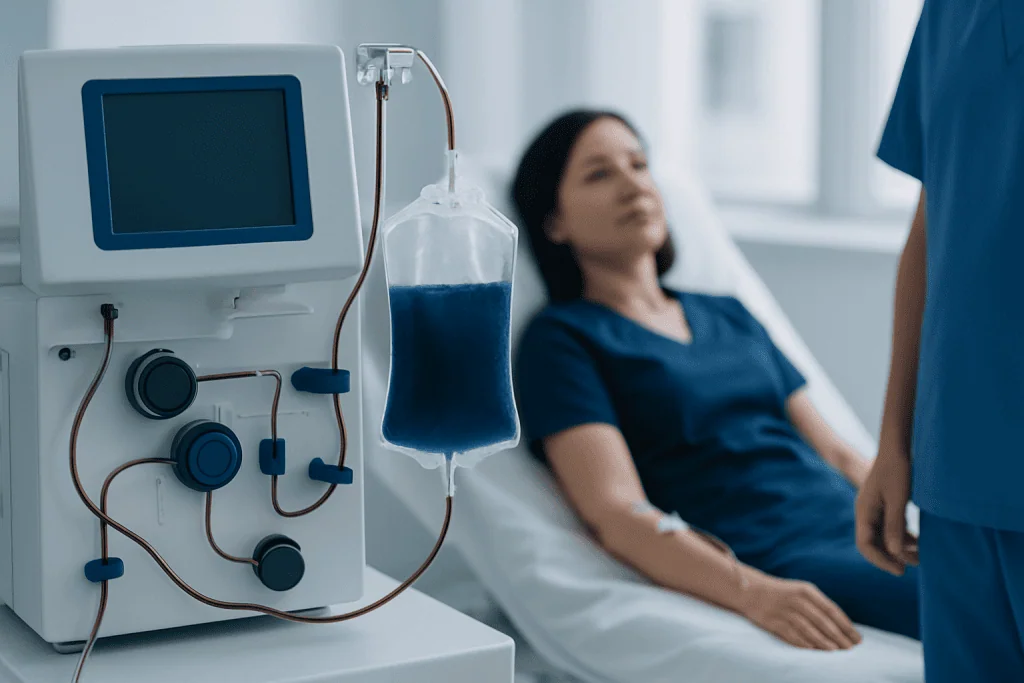
Blood clotting is a carefully regulated process. Platelets gather at an injured blood vessel, while clotting factors in plasma activate one another in a sequence that produces fibrin, a protein that strengthens the clot. Liver disease, severe infection, major trauma, certain medicines, inherited conditions, or large-volume blood loss can disrupt this system.
FFP provides a range of clotting factors at the same time. This can help correct a broad clotting-factor deficiency while doctors address its cause. Laboratory tests such as prothrombin time (PT), international normalized ratio (INR), activated partial thromboplastin time (aPTT), fibrinogen level, platelet count, and liver tests may help guide decisions, but results are interpreted alongside the person’s condition rather than in isolation.
Plasma is different from other transfusion components. Red blood cells carry oxygen, platelets support the first stage of clot formation, and cryoprecipitate is concentrated in fibrinogen and certain other proteins. In some situations, a concentrated clotting-factor product may be more appropriate than FFP because it can correct a specific deficiency with less fluid. The most suitable option depends on the medical situation.
When Is Fresh Frozen Plasma Used?

Clinicians may use FFP for active, clinically significant bleeding when tests and the overall situation suggest a deficiency of multiple clotting factors. Examples can include major bleeding related to severe liver disease, disseminated intravascular coagulation (DIC), major trauma, or complications around surgery. It may also be part of a structured massive-transfusion protocol for severe hemorrhage, alongside red blood cells, platelets, and other treatments.
FFP can be considered before an urgent invasive procedure when a person has a meaningful clotting-factor deficiency and there is concern for bleeding. It may be used to reverse the effect of certain anticoagulant medicines when a more targeted reversal treatment is unavailable or unsuitable. For some rare conditions, including thrombotic thrombocytopenic purpura, plasma exchange using donor plasma is a specialized and important treatment.
Not every abnormal clotting test requires plasma. In people who are not bleeding and are not having a high-risk procedure, a mildly prolonged INR or PT often does not improve meaningfully with FFP and may expose them to unnecessary risk. FFP is also not used simply to increase blood volume, improve nutrition, or treat low albumin. Doctors look for the reason behind an abnormal result and use the least intensive effective treatment.
- Active major bleeding with multiple clotting-factor deficiencies
- Urgent surgery or procedures when a significant deficiency cannot be corrected in another way
- Severe bleeding during trauma or obstetric emergencies as part of a coordinated transfusion plan
- Plasma exchange for selected conditions under specialist care
What Happens During a Plasma Transfusion?
Before transfusion, a healthcare professional confirms the patient’s identity, reviews the reason for treatment, and checks blood-group compatibility. Plasma must be compatible with the recipient’s red blood cells because it contains antibodies that could react with incompatible cells. The plasma is thawed under controlled conditions and administered through an intravenous line.
The transfusion itself commonly takes place over a period determined by the clinical urgency, the volume prescribed, and the patient’s heart and kidney function. A nurse or other trained professional checks vital signs and watches for symptoms such as itching, rash, fever, chills, chest discomfort, or breathing changes. Patients should report any new or unusual symptom immediately, even if it seems minor.
Doctors may repeat clotting tests and assess whether bleeding is slowing after transfusion. However, the goal is not always to make every laboratory value normal. The more important goals are controlling bleeding, supporting a safe procedure, and treating the underlying condition. Additional treatments may include vitamin K, medication changes, surgery or interventional procedures, red blood cells, platelets, fibrinogen replacement, or treatment of infection or liver disease.
Risks and Safety of Fresh Frozen Plasma
Blood services use careful donor screening, testing, processing, storage, and traceability procedures to make plasma transfusion as safe as possible. The risk of transmitting an infection is very low, but no transfusion can be considered entirely risk-free. The care team balances these small risks against the potential benefit of controlling serious bleeding or preventing it during an urgent procedure.
Some people develop mild reactions, such as hives, itching, flushing, fever, or chills. These are usually recognized promptly and managed by pausing the transfusion and providing appropriate treatment. A more serious allergic reaction is uncommon but requires urgent assessment. People should tell the team about previous transfusion reactions, known allergies, pregnancy history, and any relevant medical conditions.
Because FFP adds fluid to the bloodstream, transfusion-associated circulatory overload can occur, particularly in older adults and people with heart failure, kidney disease, or reduced fluid tolerance. Rarely, a serious lung reaction called transfusion-related acute lung injury may cause sudden breathing difficulty. During rapid or large-volume transfusion, changes in calcium levels and body temperature may also need monitoring. These risks are why plasma is given only when the expected benefit is clear.
Questions Patients Can Ask and How to Prepare
When circumstances allow, patients or family members may wish to ask why FFP is recommended, what outcome the team expects, whether another blood product or treatment could be suitable, and how the response will be monitored. In an emergency, treatment may need to begin quickly to protect the patient’s health, but clinicians should explain the plan as soon as it is practical to do so.
Patients can help by providing an accurate medication list, including blood thinners, antiplatelet medicines, supplements, and herbal products. They should also mention past transfusions, previous reactions, bleeding or clotting disorders, liver or kidney disease, heart problems, and pregnancy history. This information supports safer transfusion planning.
There is no special diet or home preparation that replaces plasma when urgent clotting-factor support is needed. After a planned transfusion, patients should follow the care team’s instructions about observation, follow-up blood tests, medication changes, and management of the condition that led to treatment. Acibadem International’s multidisciplinary specialists and JCI-accredited hospitals diagnose and treat bleeding and clotting concerns for international patients when specialist assessment is needed.
When to Seek Medical Care
Urgent medical assessment is important for heavy or uncontrolled bleeding, vomiting blood, coughing blood, black or bloody stools, a severe headache after head injury, fainting, confusion, or signs of shock such as cold clammy skin and marked weakness. Emergency care is also needed for unexpected significant bleeding in a person taking anticoagulant medication, especially after a fall or injury.
After receiving plasma or any blood component, patients should tell a healthcare professional immediately if they develop shortness of breath, chest tightness, wheezing, swelling of the lips or face, widespread rash, fever, shaking chills, back pain, dark urine, or a sudden feeling of being unwell. These symptoms can have several causes, but they need prompt evaluation during or soon after transfusion.
Less urgent medical advice is appropriate for easy bruising, frequent nosebleeds, unusually heavy menstrual bleeding, persistent fatigue with signs of bleeding, or repeated abnormal clotting tests. A doctor can determine whether testing, medication review, liver assessment, or referral to a hematology specialist is appropriate.
Frequently asked questions
Is fresh frozen plasma the same as blood?
Fresh frozen plasma is one component of donated blood. It is the liquid portion and contains clotting factors and proteins, while red blood cells and platelets are separated into different components. A person may receive plasma alone or together with other blood components depending on the reason for treatment.
Why would someone need fresh frozen plasma?
A person may need FFP when they have important bleeding or are at substantial risk of bleeding because multiple clotting factors are low. Common clinical settings include severe liver-related clotting problems, major trauma, DIC, or an urgent procedure. It is not usually given for a mildly abnormal blood test when there is no bleeding.
How long does a fresh frozen plasma transfusion take?
The timing varies according to the volume required, urgency, and the person’s heart and kidney function. Plasma must first be thawed safely, and the infusion rate is selected by the medical team. Patients are monitored during and after the transfusion.
What are the side effects of fresh frozen plasma?
Possible side effects include mild fever, chills, itching, hives, or rash. Less commonly, plasma can cause fluid overload, a significant allergic reaction, or a serious lung complication. Staff monitor closely because prompt recognition and treatment of a reaction are important.
Does fresh frozen plasma raise hemoglobin?
No. FFP does not provide a meaningful amount of red blood cells, so it is not used to raise hemoglobin or improve oxygen-carrying capacity. If blood loss has caused anemia, red blood cell transfusion may be considered separately when clinically appropriate.
Can fresh frozen plasma be refused?
When a person has decision-making capacity, they can generally discuss and accept or decline recommended transfusion treatment. The care team should explain the expected benefits, possible risks, alternatives, and consequences of not receiving it. In life-threatening emergencies, local laws and the patient’s previously stated wishes may guide decisions if the person cannot communicate.
References
- World Health Organization
- AABB
- National Heart, Lung, and Blood Institute
- National Health Service
- International Society of Blood Transfusion
This article is for general information only and is not a substitute for professional medical advice. Please consult a qualified doctor about your individual situation.
Explore treatments in Turkey — costs, top hospitals & a free quote
JCI-accredited · board-certified surgeons · reply within 24h
Add us as a Preferred Source to see more of our trusted health content across Google Search, AI Overviews and Discover.