Facelift Rhytidectomy: Candidacy, Procedure Steps, and Recovery Timeline

A facelift rhytidectomy improves sagging facial and neck tissues but does not stop normal skin aging. The best candidates are generally healthy non-smokers with realistic expectations and noticeable facial laxity.
Key Takeaways
- A facelift rhytidectomy improves sagging facial and neck tissues but does not stop normal skin aging.
- The best candidates are generally healthy non-smokers with realistic expectations and noticeable facial laxity.
- Modern facelifts commonly address deeper support layers, not skin alone, for a more natural-looking result.
- Most visible bruising and swelling improve within two to four weeks, while subtle swelling can take several months to settle.
- As with any surgery, facelift procedures can cause bleeding, infection, scarring, nerve injury and anesthesia-related complications.
Facelift rhytidectomy is a facial rejuvenation operation that repositions deeper facial tissues and removes or redistributes excess skin to improve sagging of the midface, jawline and neck. It is an elective procedure best considered after a consultation with a qualified plastic surgeon, who can assess facial anatomy, health and realistic goals.
Overview: What Is a Facelift Rhytidectomy?
A facelift rhytidectomy is an operation designed to improve visible sagging in the lower face, cheeks, jawline and, in many cases, the neck. It works by lifting and securing underlying tissues, often called the superficial musculoaponeurotic system (SMAS), then carefully redraping the skin. Excess skin may be removed, but a well-planned facelift is not simply a skin-tightening operation.
The procedure can soften jowls, improve loss of jawline definition and reduce loose skin or banding in the neck. It does not remove every facial line, change skin texture, lift the eyebrows, or correct eyelid changes. Depending on a person’s concerns, a surgeon may discuss additional procedures such as neck lift surgery, eyelid surgery, brow lifting, fat grafting or non-surgical skin treatments.
Results are intended to look refreshed rather than altered. A facelift cannot halt the aging process, but its improvement in facial contour can be long-lasting. The degree and duration of benefit vary with genetics, skin quality, sun exposure, weight changes and lifestyle factors.
Who May Be a Candidate?

Facelift candidacy is based more on facial anatomy, tissue laxity and overall health than on a specific age. People often seek surgery when they notice jowls, descent of the cheeks, deep folds around the lower face, loose neck skin or loss of a defined jawline. Some people have these changes earlier because of inherited facial structure, substantial weight loss or sun-related skin aging.
Suitable candidates are generally in good physical and emotional health, understand the limits of surgery and have goals that are personally meaningful and realistic. A consultation should include a review of medical conditions, previous facial operations or injections, allergies, medications and supplements. Blood-thinning medicines, certain herbal products and some health conditions may require adjustment or specialist clearance before surgery.
Smoking and nicotine exposure can significantly impair blood flow to healing skin and raise the risk of wound-healing problems. A surgeon commonly asks patients to stop smoking, vaping and nicotine replacement products well before and after surgery. People with uncontrolled medical conditions, active infection, unrealistic expectations or an inability to follow recovery instructions may be advised to delay surgery or consider alternatives.
- Good candidates have facial and neck laxity that surgery can meaningfully address.
- They can arrange support during the first stage of recovery.
- They accept that scars are permanent, although they are usually positioned discreetly.
- They understand that symmetry and complete removal of wrinkles cannot be guaranteed.
How the Procedure Works: Planning to Completion
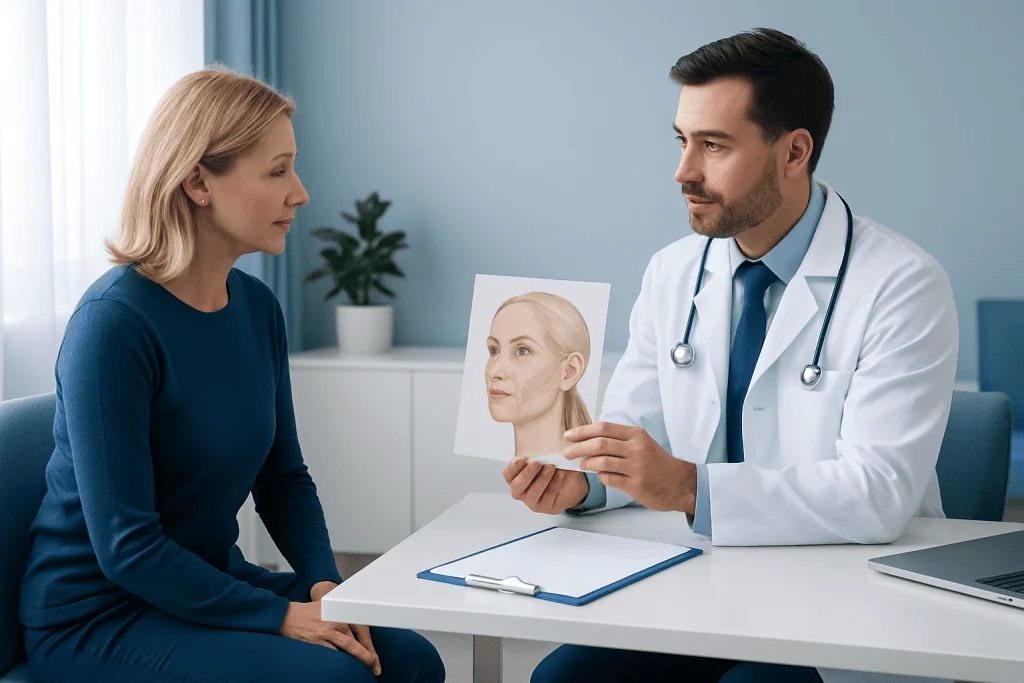
Before surgery, the plastic surgeon examines skin elasticity, facial volume, bone structure, hairline position, neck anatomy and the pattern of facial aging. Standardized photographs may be taken for planning. The surgeon explains the recommended technique, incision placement, anesthesia plan, expected scars and whether a neck lift or other procedure could help achieve a balanced result.
Facelift rhytidectomy is usually performed in an operating room under general anesthesia or, in selected cases, local anesthesia with sedation. The length of surgery varies according to the technique and whether other procedures are performed. Incisions are commonly placed within or around the ear contours and may extend into the hair-bearing scalp; a neck incision under the chin may be used when the neck requires direct treatment.
After making the incisions, the surgeon gently lifts the skin and adjusts the deeper support layer. Depending on the individual plan, the SMAS may be lifted, tightened or repositioned, and deeper neck structures may be addressed. Fat can be removed, repositioned or added in selected areas. The skin is then laid back without excessive tension, and carefully measured excess is removed before the incisions are closed.
Small drains may occasionally be placed to reduce fluid collection, although this is not necessary in every case. A supportive dressing is usually applied. Patients are monitored as anesthesia wears off and may go home the same day or stay overnight, depending on their health, the extent of surgery and local clinical practice.
Recovery Timeline and Aftercare
Recovery after a facelift is gradual. In the first few days, swelling, bruising, tightness, numbness and mild to moderate discomfort are common. Prescribed or recommended pain relief, head elevation and cool compresses used as directed may improve comfort. Dressings are typically checked or changed at an early follow-up appointment, and any drains are usually removed within the first few days.
During the first one to two weeks, bruising and swelling generally become more noticeable before they begin to improve. Patients should avoid bending, heavy lifting, strenuous exercise and activities that raise blood pressure, because these may increase swelling or bleeding risk. Incisions need gentle care, and hair washing, showering and skin-care routines should follow the surgical team’s instructions.
Many people feel comfortable returning to desk-based work and limited social activities after about two to three weeks, although this differs between individuals. Makeup may help conceal remaining discoloration once the surgeon confirms that it is safe to use. Exercise is resumed in stages, not all at once. Contact sports and activities that could injure the face may require a longer pause.
Most obvious swelling settles over several weeks, but subtle swelling, firmness and altered sensation can continue for several months. Scar maturation also takes time; scars may initially look pink or firm before gradually fading. Keeping follow-up appointments allows the surgeon to monitor healing and provide individualized guidance.
Benefits, Limits and Possible Risks
The main benefit of facelift surgery is improved contour of the lower face and neck. When deeper tissues are appropriately repositioned, the jawline may appear smoother and the cheeks may look more supported. Many patients value that surgical correction can address laxity that creams, injectable treatments and energy-based devices cannot fully correct.
However, a facelift has clear limits. Fine surface wrinkles, uneven pigmentation, enlarged pores and sun damage may persist and can require separate skin-focused care. Facial volume loss may also need a different approach, such as fat grafting or carefully selected fillers. The outcome should be judged after healing has progressed, rather than during the early swollen period.
All operations carry risks. Potential facelift complications include bleeding under the skin (hematoma), infection, delayed wound healing, fluid collection, unfavorable or widened scars, temporary or rarely persistent changes in sensation, hairline changes, skin loss, asymmetry and injury to facial nerve branches. Anesthesia-related complications, blood clots and medication reactions are also possible, although teams take precautions to reduce these risks.
Prompt recognition of a complication is important. Choosing a properly trained plastic surgeon, honestly sharing medical information, avoiding nicotine and following aftercare instructions can help lower risk. A surgeon should explain which risks are more relevant to the individual patient and how they would be managed if they occur.
Preparing for Surgery and Supporting Results
Preparation begins with a detailed surgical consultation. Patients should disclose all medicines, vitamins, supplements and recreational substances, as some can affect bleeding, anesthesia or wound healing. The care team may request medical testing or clearance from another clinician when appropriate. It is important not to stop prescribed medication unless the prescribing clinician and surgical team advise it.
Practical planning can make recovery easier. Patients should arrange transport home, support from a responsible adult during the initial recovery period, easy-to-prepare meals and a comfortable resting area where the head can remain elevated. Loose, front-opening clothing is useful because it avoids pulling garments over the face. Following the team’s instructions about fasting, bathing and medication use on the day of surgery is essential.
Long-term skin protection supports the appearance of surgical results. Daily broad-spectrum sunscreen, avoiding tobacco, maintaining a stable weight, balanced nutrition and good sleep can all benefit skin health. These measures do not replace surgery, but they may help reduce avoidable skin aging and support overall healing.
Acibadem International’s multidisciplinary specialists and JCI-accredited hospitals assess and treat international patients considering facelift rhytidectomy, with planning tailored to individual health needs and recovery arrangements.
When to Seek Medical Care
Before pursuing cosmetic surgery, a person should seek an in-person assessment from a qualified plastic surgeon if facial aging changes are causing concern or if they would like to understand whether surgery is appropriate. A consultation is also important for anyone with a history of facial paralysis, prior facial surgery, bleeding problems, poor wound healing, autoimmune disease or significant medical conditions.
After facelift surgery, the surgical team should be contacted urgently for rapidly increasing swelling, severe or worsening pain on one side of the face or neck, persistent bleeding, fever, spreading redness, foul-smelling drainage, shortness of breath or chest pain. These symptoms may indicate a complication that needs timely evaluation.
Patients should also contact their surgeon if an incision opens, a dressing becomes soaked, new facial weakness occurs, or swelling does not follow the expected recovery pattern. It is safer to ask the surgical team about a concerning symptom than to wait or attempt to manage it independently.
Frequently asked questions
What is the difference between a facelift and a neck lift?
A facelift primarily improves laxity in the cheeks, lower face and jawline, although it may include some neck treatment. A neck lift focuses more specifically on loose neck skin, muscle banding and fat beneath the chin. Many patients benefit from a combined approach when both the jawline and neck are affected.
How long does facelift rhytidectomy recovery take?
Most people need around two to three weeks before they feel ready for many social or desk-based work activities. Bruising and more obvious swelling usually improve during this period, but subtle swelling and numbness can continue for several months. Healing time varies according to the procedure, individual health and whether other surgeries were performed.
Will a facelift make someone look unnatural?
A carefully planned facelift aims to restore support and contour without an overly pulled appearance. Natural-looking results depend on appropriate technique, conservative skin tension and treatment that matches the person’s facial anatomy. Discussing desired changes and reviewing realistic expectations with the surgeon is an important part of planning.
At what age can someone have a facelift?
There is no single correct age for facelift surgery. Candidates are assessed according to tissue laxity, skin quality, health status and personal goals rather than age alone. Some people consider surgery in midlife, while others benefit later when they remain healthy enough for an elective procedure.
Are facelift scars visible?
Facelift incisions create scars, but surgeons usually place them in natural contours around the ears and within the hairline where possible. Scars are commonly pink or firm in the early months and then mature gradually. Individual scar appearance depends on skin type, healing, incision care and genetics.
How long do facelift results last?
A facelift does not stop aging, but the improvement in facial and neck contour is generally long-lasting. Skin and deeper tissues will continue to change naturally over time, and lifestyle factors such as smoking, sun exposure and major weight changes can affect the longevity of results. A surgeon can explain what is realistic for an individual face and technique.
References
- American Society of Plastic Surgeons
- American Society for Aesthetic Plastic Surgery
- Mayo Clinic
- U.S. Food and Drug Administration
- National Health Service
This article is for general information only and is not a substitute for professional medical advice. Please consult a qualified doctor about your individual situation.
Explore treatments in Turkey — costs, top hospitals & a free quote
JCI-accredited · board-certified surgeons · reply within 24h
Add us as a Preferred Source to see more of our trusted health content across Google Search, AI Overviews and Discover.