Dislocated Jaw: A Complete Medical Overview

A dislocated jaw usually causes an inability to close the mouth, jaw pain, drooling, and trouble speaking or swallowing. Wide opening of the mouth, such as during yawning or dental treatment, can trigger a jaw dislocation, especially in people with previous episodes.
Key Takeaways
- A dislocated jaw usually causes an inability to close the mouth, jaw pain, drooling, and trouble speaking or swallowing.
- Wide opening of the mouth, such as during yawning or dental treatment, can trigger a jaw dislocation, especially in people with previous episodes.
- A clinician should reduce, or reposition, a dislocated jaw; people should not attempt to force it back themselves.
- Pain control, a soft-food diet, and avoiding wide mouth opening support recovery after treatment.
- Repeated jaw dislocations may need evaluation by an oral and maxillofacial surgeon or TMJ specialist.
A dislocated jaw is a medical condition in which the lower jawbone moves out of its normal position at one or both temporomandibular joints (TMJs). It commonly leaves the mouth stuck open and requires prompt assessment by a healthcare professional to safely return the joint to position.
What Is a Dislocated Jaw?
A dislocated jaw occurs when the rounded upper end of the lower jawbone, called the mandibular condyle, moves out of its normal position in the temporomandibular joint (TMJ). The TMJs are the small joints located just in front of each ear. They allow the lower jaw to open, close, slide, and move during speaking and chewing.
Most jaw dislocations are anterior dislocations. This means the jaw moves forward beyond a bony part of the joint called the articular eminence and becomes trapped there. The mouth may remain open, and the person may be unable to bring the teeth together. A dislocation can affect one side or both sides of the jaw; both-sided dislocations are more common.
A jaw dislocation is different from a jaw fracture. A fracture is a break in the bone, while a dislocation involves the joint surfaces being out of alignment. Both may follow trauma and can cause pain and difficulty moving the jaw, so medical assessment is important when the cause is an injury.
What Does a Dislocated Jaw Feel Like?
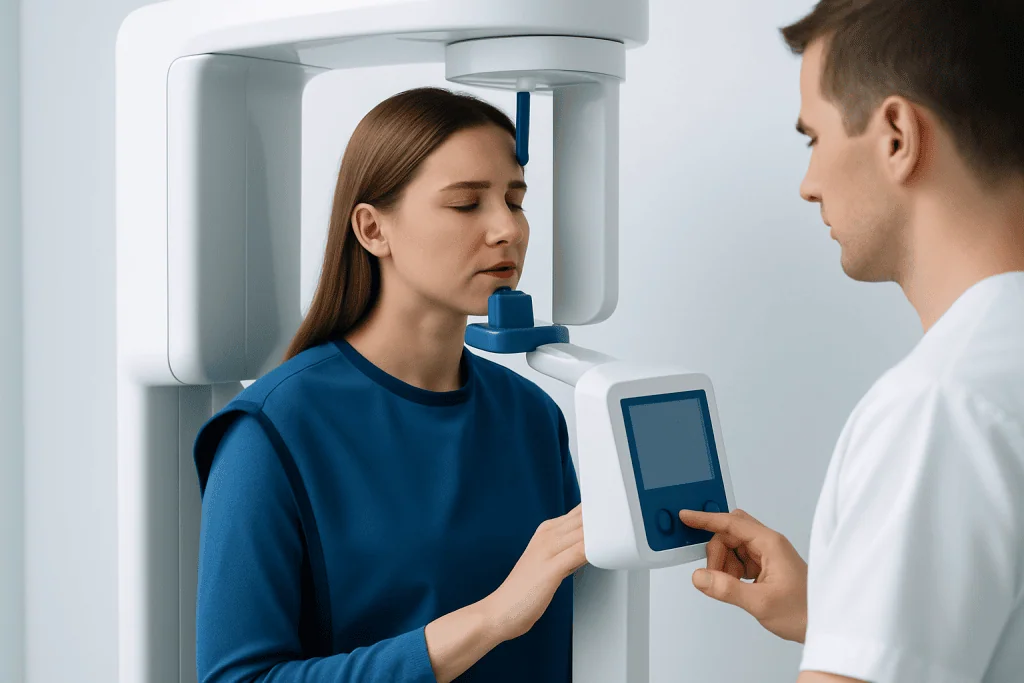
The most recognizable sign is a mouth that is locked open or nearly open. A person may feel sudden pain in front of one or both ears and may notice that the lower jaw looks pushed forward or shifted to one side. The bite may no longer fit together normally.
Because normal jaw movement is disrupted, speaking clearly, chewing, swallowing, and controlling saliva can become difficult. Drooling is common. The muscles around the jaw may tighten or spasm, which can increase discomfort and make it harder to close the mouth.
Symptoms can vary according to the direction and extent of the dislocation. A one-sided dislocation may make the chin point toward the opposite side. Swelling, bruising, bleeding, numbness, loose teeth, or severe pain after a blow to the face may suggest an associated injury, including a fracture, and should be evaluated urgently.
- Inability to close the mouth or bring the teeth together
- Sudden jaw or ear-area pain
- A visibly forward, crooked, or unusual jaw position
- Difficulty talking, chewing, swallowing, or managing saliva
- Muscle spasm and tenderness around the cheeks or temples
Why Does Jaw Dislocation Happen?
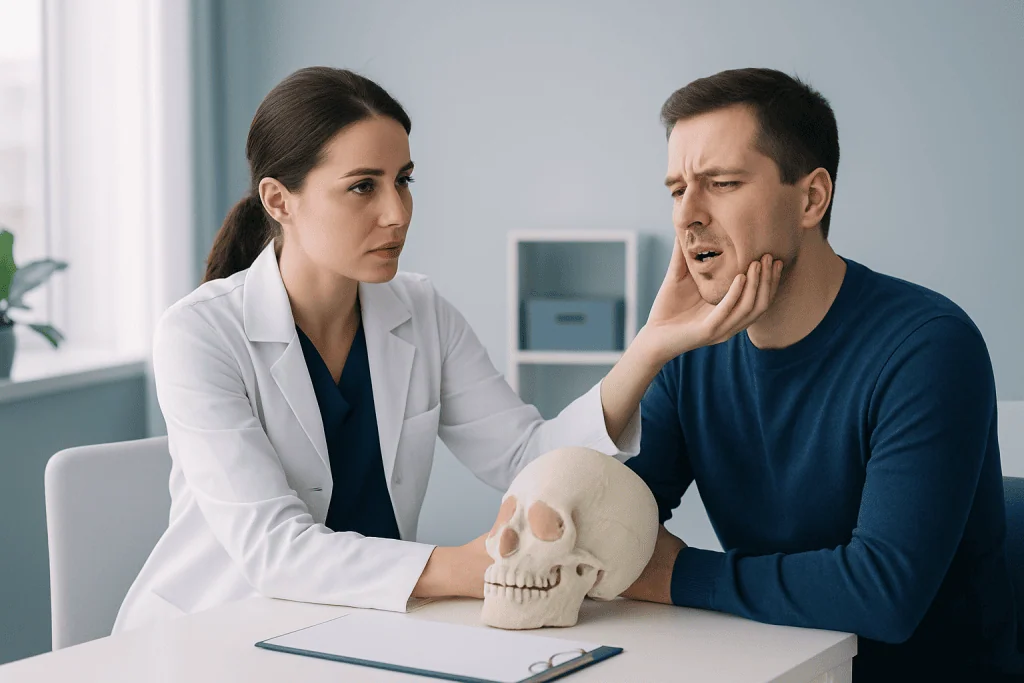
A dislocated jaw can happen when the mouth opens very wide. Common examples include a large yawn, biting into a large piece of food, singing, laughing, vomiting, or prolonged dental procedures. In these situations, the lower jaw may move farther forward than the joint can control.
Trauma can also cause a dislocation. A fall, a sports injury, a physical assault, or a road traffic accident may force the jaw out of position. When trauma is involved, clinicians look carefully for facial injuries, tooth damage, and fractures of the jaw or nearby bones.
Some people have a higher chance of recurrent dislocation. Risk factors include a previous jaw dislocation, looser joint tissues, an unusually shallow joint shape, and some connective-tissue conditions that affect ligament strength. Certain neurological conditions or medications that can cause involuntary facial and jaw movements may also contribute. Temporomandibular disorders can cause pain and limited jaw function, but they do not always lead to dislocation.
A jaw that briefly catches and then returns to normal may be a subluxation rather than a complete dislocation. Although it may settle without treatment, recurring episodes should still be discussed with a doctor or dentist because they can indicate joint instability.
How Is a Dislocated Jaw Diagnosed?
Healthcare professionals can often recognize a dislocated jaw from the symptoms, the appearance of the jaw, and a physical examination. They will ask what happened before symptoms began, whether there was an injury, and whether the person has had similar episodes in the past. The clinician may gently assess jaw position, facial symmetry, sensation, teeth, and the ability to move the jaw.
Imaging is not always needed when the cause is clear and there are no signs of trauma. However, X-rays, computed tomography (CT), or other imaging may be used when a fracture is possible, the injury was significant, the diagnosis is uncertain, or the jaw does not return to its usual position after treatment. Imaging can help identify the type of dislocation and guide safe care.
It is important not to try to diagnose a locked jaw at home. Conditions such as muscle spasm, severe TMJ inflammation, infection, dental problems, or fractures can also restrict jaw movement. A qualified clinician can distinguish these conditions and recommend the appropriate treatment.
Treatment: Safely Returning the Jaw to Position
A confirmed dislocated jaw should be treated by a trained healthcare professional, often in an emergency department, dental service, or oral and maxillofacial surgery setting. The main treatment is called reduction: a controlled technique used to guide the jaw back into its normal joint position. This usually provides rapid relief once the joint is correctly aligned.
Depending on pain, anxiety, muscle spasm, and the complexity of the dislocation, treatment may include pain-relieving medicine, a muscle relaxant, local anesthesia, or procedural sedation. The chosen approach is individualized. In a simple recent dislocation, reduction may be performed without surgery; repeated, longstanding, or complex cases may require specialist management.
After reduction, the clinician may check the bite and jaw movement and may arrange imaging if needed. A supportive bandage or other temporary restriction may occasionally be used, but advice differs according to the individual situation. Surgery is uncommon for a first uncomplicated episode, yet it may be considered for persistent or recurrent dislocations that do not respond to conservative measures.
People should not attempt to push, pull, or force a dislocated jaw back into place themselves. This can worsen pain, damage teeth or soft tissues, or miss a fracture. Until medical care is available, keeping the jaw supported with a hand or soft bandage and avoiding food or drink can be helpful if swallowing is difficult.
Recovery, Prevention and Everyday Self-Care
Following successful reduction, the jaw can remain sore and the surrounding muscles may feel tired for several days. A clinician may recommend a soft diet for a period of time, with foods such as soups, yogurt, mashed vegetables, eggs, or soft grains. Food should be cut into small pieces, and chewing gum, hard foods, and very chewy foods should be avoided until recovery is complete.
To lower the risk of another episode, it is usually helpful to avoid opening the mouth widely while healing. When yawning, a person can support the chin with a hand and try to limit the opening. They should take care during dental visits and tell the dental team about a past jaw dislocation so breaks and jaw support can be considered.
Use pain medicines only as advised by a healthcare professional or according to the product instructions when appropriate. Cold packs may help with early swelling or soreness, while gentle heat can sometimes ease muscle tightness later in recovery if recommended. Exercises should not be started independently after an acute dislocation; a clinician, dentist, or physiotherapist can advise whether jaw rehabilitation is suitable.
For people with repeated episodes, assessment by an oral and maxillofacial surgeon, dentist with TMJ expertise, or other relevant specialist can help identify contributing factors. Acibadem International’s multidisciplinary specialists and JCI-accredited hospitals diagnose and treat jaw and facial conditions for international patients.
When to Seek Medical Care
Urgent medical assessment is needed when the mouth is stuck open, the jaw appears out of place, or a person cannot close their teeth together after yawning, eating, dental treatment, or an injury. A dislocated jaw generally does not correct safely through home treatment, and early care can reduce discomfort and muscle spasm.
Emergency care is particularly important after a fall, collision, sports injury, or blow to the face. Seek immediate help for trouble breathing, inability to swallow saliva, heavy bleeding, severe swelling, loss of consciousness, confusion, new facial numbness, or severe pain. These symptoms may point to a more serious injury that needs prompt evaluation.
Even after the jaw has been treated, medical or dental follow-up is advisable if pain persists, the bite feels different, jaw opening remains limited, teeth feel loose, or dislocations recur. Ongoing symptoms deserve assessment rather than being managed by repeatedly forcing or manipulating the jaw.
Frequently asked questions
Can a dislocated jaw go back into place on its own?
A partial slipping of the jaw joint may occasionally return to normal on its own, but a complete dislocation often leaves the mouth locked open and needs professional treatment. A person should not try to force the jaw back because this may cause further injury. Prompt clinical assessment is the safest approach.
Can someone talk with a dislocated jaw?
They may be able to make sounds or speak, but speech is often unclear because the jaw cannot move normally. Drooling and difficulty swallowing may also occur. If breathing or swallowing saliva is difficult, emergency care is needed.
What should someone do while waiting for care for a dislocated jaw?
They should avoid eating, drinking, and attempting to close or manipulate the jaw. Supporting the jaw gently with a hand or soft cloth may improve comfort during travel. Medical care should be sought urgently, especially if the dislocation followed an injury.
How long does recovery take after a jaw dislocation?
Many people feel noticeably better after the jaw is returned to position, but tenderness and muscle fatigue can continue for days. The recovery period varies with the cause, whether there was trauma, and whether dislocations have happened before. Following advice about a soft diet and limiting wide opening can support healing.
Does a dislocated jaw require surgery?
Most first-time, uncomplicated jaw dislocations can be treated without surgery by manually returning the joint to position. Surgery may be considered when dislocations recur frequently, cannot be reduced with standard methods, or are associated with structural problems or injury. A specialist can explain the options in an individual case.
Can jaw dislocation happen again?
Yes. A previous dislocation can increase the chance of recurrence because joint tissues may remain more lax or unstable. People who have repeated episodes should arrange specialist evaluation to discuss prevention and any appropriate long-term treatment.
References
- American Association of Oral and Maxillofacial Surgeons
- Merck Manual Consumer Version
- National Institute of Dental and Craniofacial Research
- American Dental Association
This article is for general information only and is not a substitute for professional medical advice. Please consult a qualified doctor about your individual situation.
Joint and spine care in Turkey — expert assessment & treatment
JCI-accredited · board-certified surgeons · reply within 24h
Add us as a Preferred Source to see more of our trusted health content across Google Search, AI Overviews and Discover.

More from the Health Library



Related Specialists
Prof. Dr. Recep Kurnaz
Orthopedic Surgery & Traumatology
Dt. İdil Bavbek Karakaya
Dentistry
Dr. Özlem Türkcanoğlu
Emergency Service
Assoc. Prof. Dr. Özge Vural Topuz
Nuclear Medicine