

Large Pores: A Complete Medical Overview

Pore size is largely influenced by genetics, skin oil production, age and sun exposure. Pores do not open and close, but their appearance can change when they are filled with oil, dead skin cells or debris.
Key Takeaways
- Pore size is largely influenced by genetics, skin oil production, age and sun exposure.
- Pores do not open and close, but their appearance can change when they are filled with oil, dead skin cells or debris.
- Gentle cleansing, daily sunscreen and suitable topical ingredients can improve the look of enlarged pores over time.
- Acne, blackheads and reduced skin firmness can make large pores more visible.
- A dermatologist can assess persistent texture concerns and discuss evidence-based procedures when appropriate.
Large pores are visible openings of hair follicles and oil glands, most often noticed on the nose, cheeks, forehead and chin. They cannot be permanently closed, but consistent skin care and selected dermatology treatments may make them less noticeable and improve overall skin texture.
What Are Large Pores?
Large pores are a common skin-texture concern. Pores are tiny openings in the skin that contain hair follicles and, in many areas, sebaceous glands that produce sebum, the skin’s natural oil. Sebum supports the skin barrier, but when pores are naturally wider or become more noticeable, the skin may appear uneven, shiny, or textured.
People often notice enlarged pores in the central face, especially the nose, forehead, chin, and inner cheeks. These areas have a higher concentration of oil glands. Large pores are not usually a medical problem, and they do not mean that the skin is unclean. However, they may coexist with blackheads, acne, oily skin, or signs of sun-related skin aging.
Pores cannot physically open or close like doors. Their visibility can nevertheless vary. Oil, dead skin cells, sunscreen, makeup, and environmental particles can collect within a pore and make it look wider. Changes in collagen and elastic fibers around follicles can also make pores appear more prominent over time.
Why Pores Look Larger
Genetics is one of the strongest influences on pore size. Some people naturally have more active sebaceous glands or follicles that are more visible. Skin type also matters: oily and combination skin tends to make pores more apparent because higher levels of sebum can enlarge the appearance of the follicular opening.
Blackheads may contribute as well. A blackhead forms when oil and dead skin cells block a pore; the exposed material darkens when it contacts air. It is not caused by dirt. Repeated congestion can make the affected pore look stretched. Inflammatory acne can further affect texture, particularly when breakouts are picked or squeezed.
Age and cumulative ultraviolet exposure are other important factors. Collagen and elastin provide supportive structure to the skin. As these proteins gradually decline with age, and as sun damage accelerates this process, skin may become less firm around pores. This can make pores seem more oval or enlarged, particularly on the cheeks.
- Higher sebum production
- Family tendency and skin type
- Blackheads and recurrent acne
- Sun exposure and reduced skin elasticity
- Heavy or unsuitable cosmetic products that contribute to congestion
Large Pores, Acne, and Other Skin Changes
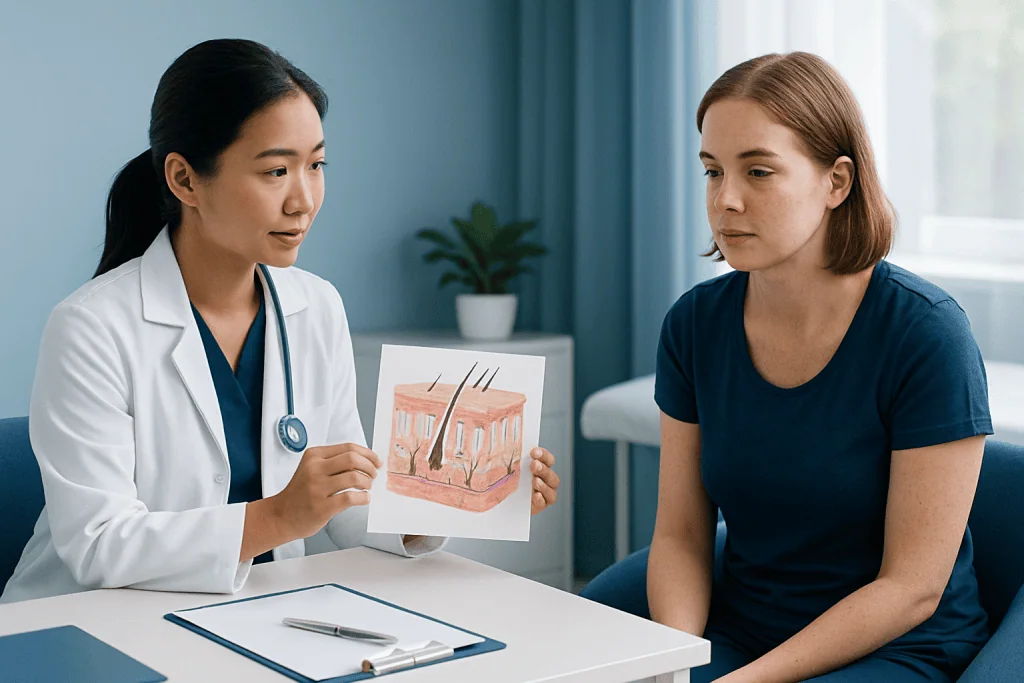
Large pores are commonly associated with acne-prone skin, but they are not the same as acne. Acne is an inflammatory skin condition that may cause blackheads, whiteheads, papules, pustules, nodules, or cysts. When a pore becomes blocked, it may develop into a comedone and, in some cases, become inflamed.
Some skin findings can resemble enlarged pores. Sebaceous filaments, for example, are normal structures that line pores and help move sebum to the skin surface. They often appear as fine gray, yellowish, or skin-colored dots on the nose and chin. Unlike blackheads, they are not plugs that can be permanently removed, and they generally return after extraction.
Very deep pitted marks, persistent roughness, redness, or areas of altered pigmentation may point to acne scarring, rosacea, sun damage, or another dermatologic issue rather than simple pore visibility. A clinical assessment is useful when there is uncertainty, particularly if skin changes are new, progressive, or causing discomfort.
A Practical Skin Care Approach
A simple, consistent routine is usually more helpful than frequent product changes or aggressive scrubbing. Cleansing the face gently once or twice daily, and after heavy sweating, can remove excess oil, makeup, and sunscreen. Harsh soaps, alcohol-heavy toners, and repeated exfoliation can irritate the skin barrier and may lead to more dryness, redness, or oiliness in response.
For people with oily or congestion-prone skin, products labeled non-comedogenic may be useful. Salicylic acid is a beta hydroxy acid that can help clear oil and dead cells from inside pores. Retinoids, including prescription topical retinoids and some over-the-counter retinol products, can support skin-cell turnover and may improve comedones and texture gradually. These ingredients can cause irritation at first, so they are generally introduced slowly and used according to professional advice or product instructions.
Daily broad-spectrum sunscreen is an important part of pore care. Sun protection helps limit ultraviolet damage that can reduce skin firmness and worsen uneven texture. A moisturizer remains useful even for oily skin; choosing a lightweight, non-comedogenic formula can help maintain the skin barrier without adding unnecessary heaviness.
- Use a mild cleanser and avoid scrubbing or cleansing brushes that irritate the skin.
- Remove makeup before sleeping, using gentle products.
- Choose non-comedogenic sunscreen, moisturizer, and makeup where possible.
- Introduce exfoliating acids or retinoids one at a time.
- Avoid squeezing blackheads or using sharp home extraction tools.
Dermatology Treatments for Enlarged Pores
When a home routine does not provide the desired improvement, a dermatologist can identify the main contributors to visible pores, such as excess oil, comedones, acne, scarring, or photoaging. Treatment is individualized according to skin type, sensitivity, acne activity, pigmentation risk, and a person’s goals. Improvement is generally gradual rather than immediate.
Medical options may include prescription retinoids, treatment for active acne, and professionally performed chemical peels. Certain light- and energy-based procedures, including selected laser treatments and radiofrequency-based microneedling, may support collagen remodeling and improve skin texture in suitable candidates. Microneedling may also be considered in some cases, especially where textural acne scarring is present.
Professional extraction can be appropriate for some blackheads, but it does not change a person’s underlying pore size. Procedures should be performed by qualified clinicians who can select safe settings and aftercare for the individual’s skin tone and condition. People prone to dark marks after inflammation, active breakouts, eczema, or a history of abnormal scarring should discuss these factors before undergoing a procedure.
No treatment can permanently eliminate pores. The realistic goal is to reduce their visibility, control congestion, support skin quality, and maintain results with gentle long-term care.
Prevention and Everyday Self-Care
Although inherited pore size cannot be changed, daily habits can help prevent pores from becoming more noticeable. Consistent sun protection is especially valuable because ultraviolet exposure contributes to premature loss of collagen and uneven skin texture. Wearing a broad-spectrum sunscreen, seeking shade when practical, and using protective clothing can support long-term skin health.
Cosmetics do not need to be avoided altogether. Instead, it can help to select products that suit the person’s skin type and remove them thoroughly at the end of the day. Thick oils or highly occlusive products may be comfortable for very dry skin but may not suit someone who develops frequent blackheads. Changing one product at a time makes it easier to identify whether it is causing irritation or congestion.
Diet, stress, and sleep can influence acne in some people, but they do not directly determine pore size. A balanced diet, adequate sleep, and stress-management practices support general health and may be useful as part of acne care. There is no reliable evidence that pore strips, ice, steaming, or harsh DIY remedies can permanently shrink pores; some may cause irritation or broken capillaries.
When to Seek Medical Care
Large pores alone usually do not require medical care. It is sensible to see a dermatologist or qualified healthcare professional if there are persistent blackheads or acne, painful or deep breakouts, scarring, marked redness, itching, burning, or a sudden change in the skin. Early treatment for inflammatory acne can help reduce the risk of lasting scars.
Professional advice is also helpful before starting stronger exfoliating products, retinoids, or in-office treatments, particularly during pregnancy, while breastfeeding, or when living with eczema, rosacea, a pigment disorder, or very sensitive skin. A clinician can recommend an approach that balances effectiveness with protection of the skin barrier.
For international patients seeking assessment of acne, skin texture, or other dermatologic concerns, Acibadem International’s multidisciplinary specialists and JCI-accredited hospitals can provide diagnostic evaluation and treatment planning. The most suitable option depends on the individual’s skin findings, medical history, and expectations.
Frequently asked questions
Can large pores be permanently closed?
No. Pores are natural openings in the skin and cannot be permanently closed or removed. Skin care and dermatology treatments may reduce how visible they appear by controlling oil, clearing congestion, and improving surrounding skin texture.
Why are my pores large on my nose?
The nose contains many sebaceous glands, so it commonly produces more oil than other facial areas. Sebaceous filaments and blackheads can also make nasal pores more noticeable. This is usually a normal feature of the skin.
Does oily skin cause large pores?
Oily skin does not necessarily create larger pores, but extra sebum can make existing pores appear more prominent. Oil may combine with dead skin cells and form congestion, which can further emphasize pore openings.
Can salicylic acid help with large pores?
Salicylic acid can help reduce the appearance of pores that look enlarged because of oil and dead-cell buildup. It works within the pore lining and may be useful for blackheads and oily, acne-prone skin. It should be introduced gradually to reduce the chance of irritation.
Are pore strips harmful?
Pore strips may temporarily remove surface debris and some blackheads, but they do not shrink pores or prevent them from returning. Frequent use can irritate sensitive skin, so they should not replace gentle cleansing and appropriate acne care.
Which treatment works best for enlarged pores?
The best approach depends on whether oiliness, blackheads, acne, loss of firmness, or scarring is the main cause of visible pores. A dermatologist may recommend topical treatment, peels, microneedling, laser-based procedures, or another option after examining the skin. Results vary, and ongoing skin care is usually needed to maintain improvement.
References
- American Academy of Dermatology Association
- American Academy of Dermatology
- National Institute of Arthritis and Musculoskeletal and Skin Diseases
- Mayo Clinic
- British Association of Dermatologists
This article is for general information only and is not a substitute for professional medical advice. Please consult a qualified doctor about your individual situation.
Hair transplant in Turkey — costs, graft counts & a free assessment
JCI-accredited · board-certified surgeons · reply within 24h
Add us as a Preferred Source to see more of our trusted health content across Google Search, AI Overviews and Discover.

More from the Health Library



Related Specialists
Dr. Mukhtar Shahgaldıyev
Physical Medicine & Rehabilitation
Dr. Sünkar Kaya Bayrak
Anesthesiology
Büşra Zeybek
Physical Medicine & Rehabilitation
Dr. Fatih Kaya
General Surgery