Prurigo of Pregnancy: What Is Normal, What Is Not, and When to Seek Care

Prurigo of pregnancy causes itchy small bumps and is usually a benign pregnancy-related skin condition. It commonly affects the arms, legs, shoulders, abdomen, or upper back and may leave scratch marks or temporary darker marks.
Key Takeaways
- Prurigo of pregnancy causes itchy small bumps and is usually a benign pregnancy-related skin condition.
- It commonly affects the arms, legs, shoulders, abdomen, or upper back and may leave scratch marks or temporary darker marks.
- Severe itch without a visible rash, especially on the palms or soles, needs medical assessment to exclude intrahepatic cholestasis of pregnancy.
- Gentle skin care, moisturizers, and clinician-approved topical treatments can help control symptoms.
- Symptoms often improve after birth, although skin discoloration from scratching can take longer to fade.
Prurigo of pregnancy is an intensely itchy skin eruption that can occur during pregnancy, often causing small raised bumps and scratch marks on the arms, legs, or trunk. It is usually not dangerous to the pregnant person or baby, but new or severe itching in pregnancy should be discussed with a clinician because some other causes need prompt testing and care.
What Is Prurigo of Pregnancy?
Prurigo of pregnancy is a term used for a very itchy rash that develops during pregnancy. It usually appears as small, firm, raised bumps called papules, often with scratch marks because the itch can be persistent. In many modern classifications, this pattern may be included within atopic eruption of pregnancy, a group of common, generally harmless inflammatory skin conditions associated with pregnancy.
The condition is uncomfortable, but it is not usually linked with harm to fetal growth or pregnancy outcome. Still, itching is a symptom rather than a diagnosis. A clinician should assess a new rash or significant itch during pregnancy to distinguish prurigo from eczema, infections, medication reactions, and pregnancy-specific liver conditions.
Prurigo of pregnancy may start at different points in pregnancy, including the first or second trimester. It may also occur later. The appearance, location, intensity of itch, personal history of eczema or allergies, and any other symptoms all help guide diagnosis.
What Does the Rash Look and Feel Like?
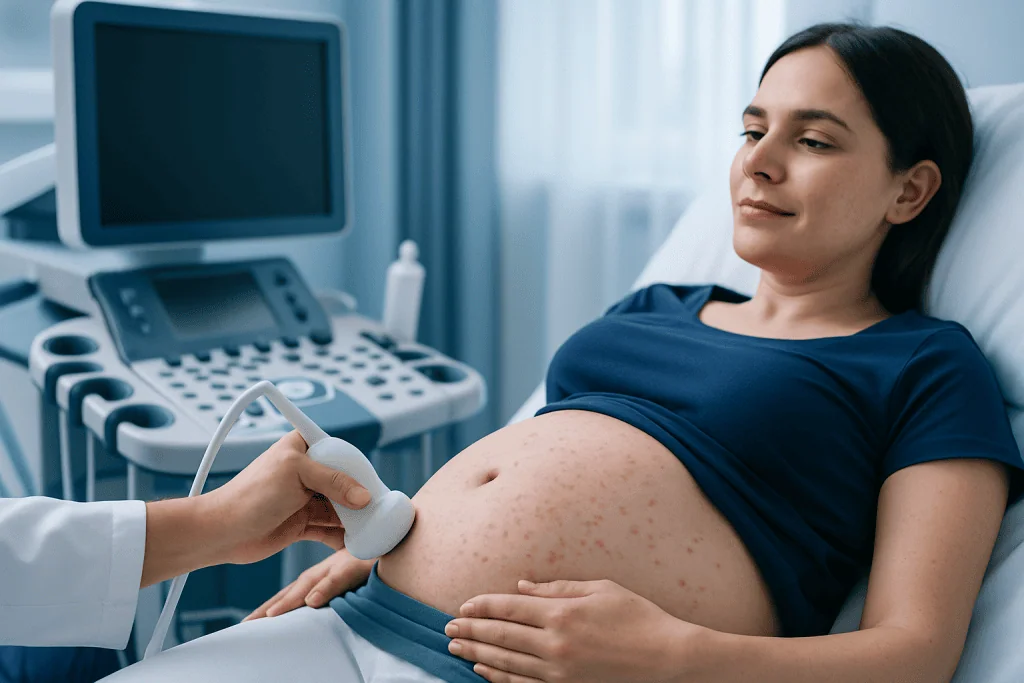
The main symptom is itch, which may be mild for some people and disruptive for others. The rash often consists of small red, skin-colored, or darker raised bumps. Repeated scratching can make the skin thickened, sore, scabbed, or more deeply pigmented, particularly in people with medium to dark skin tones.
Prurigo commonly affects the outer surfaces of the arms and legs, shoulders, upper back, buttocks, or abdomen. Unlike some other pregnancy rashes, it may occur away from stretch marks. The pattern can be uneven or widespread, and the appearance may change over time as individual bumps are scratched and heal.
Symptoms that are less typical for simple prurigo include blistering, painful skin, fever, yellowing of the eyes or skin, pale stools, dark urine, or itch that is most intense on the palms and soles without an obvious rash. These features do not necessarily mean there is a serious problem, but they need timely medical review.
- Small, intensely itchy papules or scratch-like bumps
- Excoriations, scabs, or thickened areas from scratching
- Sleep disturbance or difficulty concentrating because of itch
- Temporary dark or light marks after the bumps heal
Why Does Prurigo of Pregnancy Happen?

The exact cause is not fully understood. Pregnancy changes the immune system, hormones, skin barrier, and circulation, and these changes can influence inflammatory skin conditions. Prurigo may be more likely in someone with a personal or family tendency toward eczema, asthma, hay fever, or sensitive skin, although it can occur without any of these.
Heat, sweating, dry air, fragranced products, rough fabrics, and scratching can aggravate itch. These factors do not cause prurigo on their own, but avoiding triggers may reduce discomfort. It is not considered contagious, and it is not caused by poor hygiene.
Other itchy conditions can overlap with or resemble prurigo. These include atopic dermatitis, contact dermatitis from a product or fabric, scabies, folliculitis, urticaria, and pregnancy-specific eruptions such as polymorphic eruption of pregnancy. A healthcare professional may also consider whether a medicine, supplement, or underlying medical condition is contributing to the rash.
Intrahepatic cholestasis of pregnancy is especially important to exclude when itch is generalized, severe, worse at night, or concentrated on the palms and soles with little or no primary rash. This liver-related condition requires different monitoring and management from prurigo of pregnancy.
How Is It Diagnosed?
Diagnosis is usually based on a careful discussion and skin examination. A clinician will ask when the itch began, where it is located, whether a rash appeared before scratching, how sleep is affected, and whether there are symptoms such as jaundice, abdominal pain, fever, or changes in urine or stool color. They may also ask about eczema, allergies, new skin products, medications, and household contacts with itching.
There is no single test that confirms prurigo of pregnancy. If the symptoms and skin findings are typical and there are no warning signs, testing may not be needed. However, blood tests that assess liver function and bile acids may be recommended when cholestasis is a possibility. Testing may be repeated if concerning itch persists or changes over time.
In uncertain cases, a dermatologist may examine the skin more closely or arrange tests to look for infection, scabies, allergy-related dermatitis, or another inflammatory condition. A skin biopsy is rarely needed, but it can be helpful if there are blisters, an unusual rash pattern, or concern for an autoimmune blistering disease of pregnancy.
Treatment Options During Pregnancy
Treatment aims to calm itch, protect the skin barrier, reduce scratching, and support sleep. The safest plan depends on the severity of symptoms, the stage of pregnancy, the areas involved, and a person’s medical history. A midwife, obstetric clinician, family doctor, dermatologist, or a combination of these professionals can help create an appropriate plan.
Regular use of a bland, fragrance-free moisturizer is often a useful first step. Cool compresses, short lukewarm showers, loose cotton clothing, and keeping nails short can also reduce irritation and skin damage. Some people benefit from soothing preparations, although products containing fragrance, essential oils, or multiple active ingredients may irritate sensitive skin.
A clinician may recommend a topical corticosteroid of suitable strength for limited periods to settle inflammation. They may also advise an oral antihistamine that is considered appropriate in pregnancy, particularly if itch is affecting sleep. Medication choices should be reviewed by the pregnancy care team rather than started independently, including over-the-counter creams, herbal products, and supplements.
When symptoms are extensive, severe, or not improving, dermatology input can be valuable. Treatment should also address secondary infection if scratched areas become increasingly painful, warm, swollen, or produce pus. Most people can manage prurigo without invasive procedures, and symptoms commonly improve after delivery.
Daily Skin Care and Ways to Reduce Itch
Consistent, gentle skin care can make a meaningful difference. Applying moisturizer soon after bathing, while the skin is still slightly damp, helps reduce water loss from the skin. Thick creams or ointments are often more protective than lotions, especially when the skin is dry or repeatedly scratched.
Bathing or showering in lukewarm rather than hot water may prevent worsening itch. Mild, fragrance-free cleansers should be used only where needed, and the skin can be patted dry rather than rubbed. Loose, breathable layers may help prevent overheating, while soft fabrics can reduce friction on affected areas.
It can be helpful to keep a simple record of symptoms, including the date of onset, body areas affected, new products, and whether the itch is interfering with sleep. This information can help the care team identify changes that need reassessment. Trying to replace scratching with pressing a cool cloth against the skin may also reduce skin injury.
After birth, the active rash often settles over days to weeks. Scratch marks and post-inflammatory color changes can take longer to improve. If the rash continues, worsens, or first appears after delivery, medical review remains appropriate because another skin condition may be present.
When to Seek Medical Care
Any new significant itch during pregnancy is worth mentioning to the maternity care team, especially if it persists for more than a few days, spreads, disrupts sleep, or is accompanied by a rash. Early assessment can confirm whether the pattern is consistent with prurigo and can provide safe symptom relief.
Urgent same-day advice is important for severe itch with no clear rash, itch on the palms of the hands or soles of the feet, yellowing of the skin or eyes, dark urine, pale stools, or feeling generally unwell. These symptoms can occur with intrahepatic cholestasis of pregnancy and may require blood tests and obstetric monitoring.
Prompt assessment is also advisable for blisters, skin pain, fever, rapidly spreading redness, swelling, pus, or signs of an allergic reaction such as facial swelling or difficulty breathing. These symptoms are not typical of uncomplicated prurigo and need a different evaluation.
For international patients, Acibadem International’s multidisciplinary obstetric, dermatology, and laboratory teams at JCI-accredited hospitals can assess pregnancy-related itching and coordinate care when needed. The right next step is to contact a qualified healthcare professional or maternity unit for individualized advice.
Frequently asked questions
Is prurigo of pregnancy dangerous for the baby?
Prurigo of pregnancy is generally considered a benign condition and is not usually associated with harm to the baby. However, it is important to confirm the cause of itching because some other pregnancy-related conditions, particularly intrahepatic cholestasis of pregnancy, need closer monitoring.
Can prurigo of pregnancy happen in the first trimester?
Yes. It can begin early in pregnancy, although timing varies from person to person. An itchy rash at any stage of pregnancy should be assessed, particularly if it is persistent, severe, or changing.
How can prurigo of pregnancy be distinguished from cholestasis?
Prurigo typically causes visible itchy bumps and scratch marks. Cholestasis often causes intense generalized itching with little or no primary rash and may be particularly noticeable on the palms and soles. A clinician can use symptoms and blood tests, including bile acid testing when appropriate, to tell these conditions apart.
Will prurigo of pregnancy go away after delivery?
For many people, the active itch and rash improve after birth. Areas that were repeatedly scratched may remain darker, lighter, or slightly thickened for a while, but these changes often fade gradually. Persistent symptoms should be reviewed by a healthcare professional.
Are steroid creams safe for prurigo of pregnancy?
Some topical corticosteroids can be used during pregnancy when prescribed appropriately. The best strength, amount, and duration depend on the severity and location of the rash. A pregnant person should discuss treatment with their maternity clinician, dermatologist, or pharmacist before using medicated creams.
Does prurigo of pregnancy mean the person has allergies?
Not necessarily. Some affected people have a history of eczema, asthma, or hay fever, but many do not. Pregnancy-related immune and skin-barrier changes may contribute even when there is no known allergy history.
References
- American College of Obstetricians and Gynecologists
- American Academy of Dermatology Association
- Royal College of Obstetricians and Gynaecologists
- National Health Service
- Merck Manual Professional Edition
This article is for general information only and is not a substitute for professional medical advice. Please consult a qualified doctor about your individual situation.
Explore treatments in Turkey — costs, top hospitals & a free quote
JCI-accredited · board-certified surgeons · reply within 24h
Add us as a Preferred Source to see more of our trusted health content across Google Search, AI Overviews and Discover.

More from the Health Library



Related Specialists

Fzt. Ali Furkan Gürler
Physical Medicine & Rehabilitation
Dr. Aysel Mammadova
Internal Medicine
Psk. Deniz Keskin
Psychology
Dt. Özge Ceren Şeker
Oral & Dental Health