Splitting the Tongue: An Evidence-Based Guide for Patients

Tongue splitting is an elective, permanent procedure rather than a medically necessary treatment in most cases. The tongue has a rich blood supply, making uncontrolled bleeding one of the most urgent potential complications.
Key Takeaways
- Tongue splitting is an elective, permanent procedure rather than a medically necessary treatment in most cases.
- The tongue has a rich blood supply, making uncontrolled bleeding one of the most urgent potential complications.
- Infection, wound separation, pain, swelling, altered sensation and speech changes can occur during or after healing.
- A split tongue is different from a fissured tongue, a usually harmless natural pattern of grooves on the tongue.
- Persistent bleeding, breathing difficulty, fever, worsening swelling or trouble swallowing require urgent medical care.
Splitting the tongue, also called tongue splitting or tongue bifurcation, is a permanent body-modification procedure that divides the tongue into two parts. It carries important risks, including heavy bleeding, infection, nerve injury and changes in speech or swallowing, so medical assessment is important if complications develop.
What does splitting the tongue mean?
Splitting the tongue is a form of body modification in which the front portion of the tongue is divided to create two separate tips. It is also called tongue bifurcation or a split tongue. For most people, it is an elective and permanent change in appearance rather than a procedure performed for medical benefit.
The tongue is a highly mobile muscle with a dense network of blood vessels, nerves and sensory structures. Because it plays a central role in speaking, chewing, tasting and swallowing, an injury or procedure affecting it can influence everyday activities while healing and, in some cases, longer term.
It is important not to confuse tongue splitting with a fissured tongue. A fissured tongue has grooves or folds on its upper surface and is commonly harmless, although food debris can collect in deeper grooves. A fissured tongue does not mean that the tongue has been intentionally or traumatically divided.
Why a split tongue needs careful medical consideration
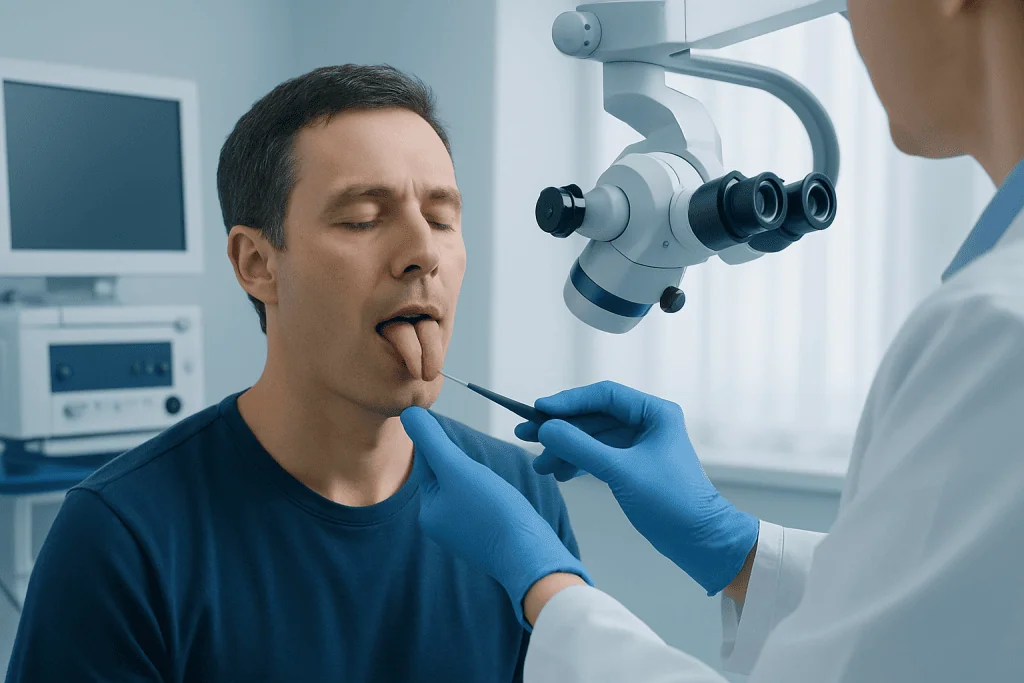
Any procedure that cuts tongue tissue can lead to significant bleeding. The tongue receives blood from branches of the lingual arteries, and bleeding inside the mouth can be difficult for a person to judge or control. Blood or swelling may also interfere with swallowing and, rarely, breathing.
The mouth contains many normal bacteria. An open wound in this environment can become infected, particularly if aftercare is inadequate or if a person has conditions that affect immune function or wound healing. Pain and swelling are common after tongue injury, but worsening symptoms should not simply be assumed to be part of healing.
There may also be functional concerns. Changes in sensation, tongue movement, pronunciation, saliva control and comfort during eating may be temporary, but some effects can persist. Individual outcomes are not fully predictable because they depend on the extent of tissue injury, healing, scarring and a person’s anatomy.
Possible risks and complications

Complications can occur immediately or later in the healing period. The most urgent early concern is bleeding that does not stop, rapidly enlarging swelling, or any difficulty managing saliva or breathing. These symptoms need prompt emergency evaluation rather than home treatment.
Other possible complications include infection, delayed wound healing, separation of wound edges, scar formation, persistent pain, numbness or tingling, and altered taste. Trauma to the teeth or gums may occur if the tongue is unintentionally bitten while numb, swollen or difficult to control.
Speech changes may include difficulty making certain sounds, especially while swelling is present. Some people also notice changes in chewing or swallowing. Emotional adjustment matters as well: a permanent body change may bring satisfaction for some people and regret or distress for others, so thoughtful decision-making and support are valuable.
- Heavy or recurrent bleeding
- Increasing pain, redness, warmth or pus-like discharge
- Fever or feeling generally unwell
- Swelling that affects speech, swallowing or breathing
- Persistent altered sensation, movement or taste
Health factors that can increase risk
Some health conditions and medicines can increase the likelihood of bleeding, infection or slow healing. These include bleeding disorders, liver disease, poorly controlled diabetes, immune-system conditions, and medicines that affect blood clotting. A history of severe allergies, including reactions to anaesthetics or antibiotics, is also clinically relevant.
Tobacco and nicotine products can impair circulation and healing. Heavy alcohol use may contribute to bleeding risk and make careful wound care more difficult. Poor oral health, untreated gum disease, dental infection or mouth ulcers can increase the bacterial burden around an oral wound.
Before any elective oral procedure is considered, a qualified clinician should review the person’s medical history, medicines, allergies and oral health. This is not only a safety step; it can help identify reasons to postpone an elective procedure or consider alternatives that do not involve injury to the tongue.
Assessment and treatment of complications
Doctors diagnose complications through a history and examination of the tongue, mouth, teeth and throat. They may ask when symptoms began, whether there has been bleeding or fever, what medicines are being taken, and whether swallowing or breathing has changed. Blood tests or imaging are not always required, but may be used when bleeding, deep infection or another concern is suspected.
Treatment depends on the problem identified. A clinician may control bleeding, clean and assess the wound, address dehydration or pain, and prescribe treatment if an infection is diagnosed. Deep wounds, major tissue separation, abscesses, nerve concerns or functional problems may require assessment by oral and maxillofacial surgery, ear, nose and throat specialists, or other relevant clinicians.
People should avoid attempting to repair, cut, cauterize or re-open a tongue wound themselves. Self-treatment can worsen bleeding, introduce infection and make later repair more difficult. If a person is worried about the appearance or healing of a split tongue, a medical assessment is the safest next step.
Supportive care after a tongue injury or procedure
After evaluation by a clinician, careful oral hygiene and hydration can support recovery. A healthcare professional may advise gentle mouth cleaning, appropriate foods and fluids, and ways to avoid irritating the wound. Soft foods may be more comfortable temporarily, while very hot, spicy, acidic or sharp foods can cause discomfort in an irritated mouth.
It is generally sensible to avoid smoking, vaping, alcohol and activities that could traumatize the tongue while it heals. People should also take care when chewing, as reduced sensation or swelling may make accidental biting more likely. Medications should be used only as directed by a qualified clinician, particularly for anyone taking medicines that affect bleeding.
Healing should show a gradual overall improvement. Increasing swelling, new bleeding, worsening pain after initial improvement, foul taste, discharge, fever or difficulty eating and drinking are not signs to ignore. Follow-up with the treating clinician or a dental or medical professional can help address concerns early.
When to seek medical care
Emergency medical care is needed for trouble breathing, inability to swallow saliva, uncontrolled bleeding, fainting, rapidly increasing tongue or neck swelling, or signs of a severe allergic reaction. These symptoms can become serious quickly because the mouth and airway are closely connected.
Urgent same-day medical advice is appropriate for fever, pus-like drainage, worsening redness, severe pain, a bad smell from the wound, persistent numbness, or difficulty drinking enough fluids. A doctor should also assess any mouth wound that is deep, gaping, caused by a dirty object or associated with a broken tooth.
For planned care, a dentist, oral and maxillofacial surgeon, or ear, nose and throat specialist can discuss oral health and potential risks. Acibadem International’s multidisciplinary specialists and JCI-accredited hospitals assess and treat oral and tongue-related concerns for international patients when medically appropriate.
Frequently asked questions
Is splitting the tongue medically safe?
Splitting the tongue involves meaningful medical risks because the tongue contains many blood vessels and nerves and is constantly exposed to oral bacteria. Safety cannot be guaranteed, and complications can include bleeding, infection, scarring, altered sensation and functional changes. A qualified clinician can assess individual health factors that may further increase risk.
Can a split tongue affect speech?
It can. Swelling and pain commonly affect speech during healing, and some people may have longer-lasting changes in pronunciation or tongue control. The degree of change varies and cannot be predicted reliably before an injury or procedure.
How long does tongue split healing take?
Initial swelling and discomfort may improve over days to weeks, but complete tissue healing and scar maturation can take longer. Recovery differs depending on the wound, overall health, oral hygiene and whether complications occur. Persistent or worsening symptoms should be reviewed by a healthcare professional.
Can a split tongue be reversed?
Repair may sometimes be considered by an experienced surgeon, but it may not fully restore the tongue's original appearance, sensation or function. Scar tissue and the amount of tissue involved can affect the options. Anyone considering revision should have an individual assessment with an appropriate specialist.
What is the difference between a split tongue and a fissured tongue?
A split tongue is a division of the tongue into two portions, often due to body modification or injury. A fissured tongue consists of grooves on the upper surface and is usually a benign variation. A dentist or doctor can help distinguish between them if there is uncertainty.
When is bleeding from the tongue an emergency?
Bleeding is an emergency if it is heavy, does not stop with direct pressure, returns repeatedly, or occurs with dizziness, weakness, increasing swelling, trouble swallowing or breathing difficulty. Emergency services should be contacted immediately in these situations. Do not place objects or substances into the wound in an attempt to stop severe bleeding.
References
- American Dental Association
- American Association of Oral and Maxillofacial Surgeons
- National Health Service
- Merck Manual Consumer Version
This article is for general information only and is not a substitute for professional medical advice. Please consult a qualified doctor about your individual situation.
Explore treatments in Turkey — costs, top hospitals & a free quote
JCI-accredited · board-certified surgeons · reply within 24h
Add us as a Preferred Source to see more of our trusted health content across Google Search, AI Overviews and Discover.

More from the Health Library



Related Specialists

Prof. Dr. Hülya Hamzaoğlu
Gastroenterology
Prof. Dr. Tevfik Fikret Çermik
Nuclear Medicine
Dr. Levent Şener
Neurosurgery
Dr. Özlem Karaahmet
Gynecology & Obstetrics