Bends: What Patients Need to Know

Bends is another name for decompression sickness, a condition related to rapid pressure reduction. It most often affects divers but can also occur after work in pressurized environments or, rarely, high-altitude exposure.
Key Takeaways
- Bends is another name for decompression sickness, a condition related to rapid pressure reduction.
- It most often affects divers but can also occur after work in pressurized environments or, rarely, high-altitude exposure.
- Joint pain, tingling, weakness, dizziness, breathing symptoms, and unusual fatigue can be warning signs.
- Symptoms may begin soon after surfacing but can occasionally develop later.
- Emergency oxygen, fluids, and recompression in a hyperbaric chamber are key treatments when decompression sickness is suspected.
- Safe ascent practices, appropriate dive planning, and avoiding diving when unwell help lower risk.
Bends, also called decompression sickness, is a potentially serious condition that can occur when a person moves too quickly from high pressure to lower pressure, most commonly after scuba diving. Prompt medical assessment is important because early treatment can reduce the risk of lasting problems.
What are the bends?
The bends is a common name for decompression sickness, an illness caused by a rapid decrease in surrounding pressure. It is most closely associated with scuba diving, especially when a diver ascends too quickly or does not follow planned decompression stops. The condition occurs because gases dissolved in the blood and tissues, mainly nitrogen, can come out of solution and form bubbles.
These bubbles may affect joints, muscles, skin, the lungs, the brain, spinal cord, or circulation. Symptoms range from mild joint discomfort to neurological or breathing problems, so suspected bends should always be taken seriously. It is not possible to confirm or rule out decompression sickness based on pain severity alone.
The term “bends” came from the bent posture some affected workers adopted because of severe joint or abdominal pain. Today, clinicians usually use the term decompression sickness, or DCS. It is one form of decompression illness; another pressure-related emergency, arterial gas embolism, can occur when gas enters the bloodstream after lung overexpansion during ascent.
How pressure changes lead to decompression sickness
At depth, water pressure is greater than at the surface. Breathing compressed air or other diving gas under this pressure allows more nitrogen to dissolve into body tissues. During a slow, controlled ascent, the body gradually removes this nitrogen through the lungs.
If pressure falls too quickly, nitrogen may form bubbles before it can be safely exhaled. This process is somewhat similar to bubbles appearing when a carbonated drink is opened, although the effects in the body are more complex. Bubbles can stretch tissues, block small blood vessels, and trigger inflammation.
Risk depends on more than a single ascent. A person’s depth, time underwater, repeated dives, gas mixture, ascent profile, physical condition, and activities after diving can all influence risk. Decompression sickness can occur even when a diver has followed a dive computer or table, although this is less common.
Symptoms of the bends

Symptoms often develop within hours of surfacing, but they may occur later, particularly after repeated or deeper dives. Many people first notice unexplained fatigue, aching, or pain around a shoulder, elbow, wrist, hip, knee, or ankle. The pain may feel deep, persistent, or worsen with movement, but it can vary widely.
Other possible symptoms include itching, a blotchy or marbled rash, numbness, tingling, weakness, poor coordination, dizziness, headache, confusion, changes in vision, or difficulty controlling the bladder or bowels. Neurological symptoms can indicate involvement of the brain or spinal cord and require emergency care.
Chest pain, coughing, shortness of breath, or marked fatigue may indicate that the lungs or circulation are affected. These signs can overlap with other conditions, including cardiac or respiratory emergencies. After diving or another pressure exposure, any new or unusual symptom should be reported promptly to an emergency clinician and, where available, a diving medicine specialist.
- Muscle or joint pain after a dive
- Tingling, numbness, weakness, or balance difficulty
- Unusual rash, itching, or extreme tiredness
- Breathing difficulty, chest symptoms, collapse, or confusion
Who is at risk and what can increase risk?
Scuba divers are the group most commonly affected by the bends. However, decompression sickness can also occur in people who work in pressurized environments, such as caissons or tunnels, and rarely in aviation or altitude settings involving major pressure changes.
Important diving-related risk factors include deep or long dives, rapid ascent, missed decompression stops, repeated dives over several days, and flying or traveling to high altitude too soon after diving. Equipment problems, poor buoyancy control, or an emergency ascent can also increase risk.
Dehydration, alcohol use, exhaustion, cold exposure, illness, and strenuous exercise close to or after diving may contribute to risk. Older age and higher body fat have also been associated with increased risk in some circumstances. A personal tendency to develop symptoms does not mean someone should self-diagnose; a clinician can help assess individual risk and fitness to dive.
How the bends is diagnosed
Decompression sickness is mainly a clinical diagnosis. A doctor considers the person’s symptoms together with a detailed history of recent diving or pressure exposure, including depths, bottom times, ascent rate, decompression stops, repetitive dives, breathing gas, and travel after the dive.
There is no single blood test or scan that reliably excludes the bends. Tests such as blood work, electrocardiography, chest imaging, or brain and spinal imaging may be used to assess complications or rule out other causes of symptoms. Normal test results do not necessarily rule out decompression sickness.
It is helpful for the affected person or a dive companion to preserve information from the dive computer and provide it to the clinical team. Medical staff may also contact a specialist diving medicine service for advice. Assessment should not be delayed while searching for records, completing paperwork, or waiting to see whether symptoms settle.
Treatment and recovery
Suspected decompression sickness is treated as a medical emergency. Initial care may include giving high-concentration oxygen, keeping the person resting in a safe position, maintaining warmth, and providing fluids when appropriate. People should not return to the water or attempt to “treat” symptoms with another dive.
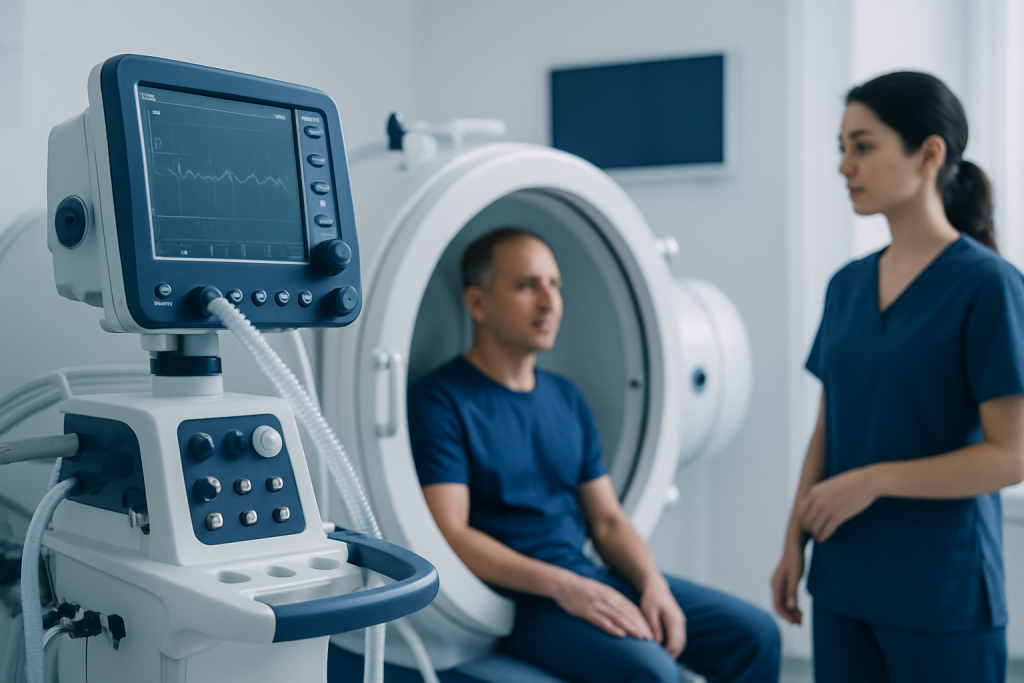
The definitive treatment for many cases is recompression, usually delivered in a hyperbaric chamber under specialist supervision. In hyperbaric treatment, pressure is carefully increased while the patient breathes oxygen, helping reduce bubble size and supporting the removal of inert gas from tissues. The number and type of sessions depend on the symptoms and response to treatment.
Recovery varies. Some people improve quickly, while others need further treatment, observation, rehabilitation, or follow-up for neurological, joint, or lung symptoms. A clinician experienced in dive medicine should advise when, or whether, it is safe to dive again. Acibadem International’s multidisciplinary specialists and JCI-accredited hospitals support diagnosis and treatment for international patients who need coordinated medical care.
Prevention and self-care after diving
The most effective prevention is careful dive planning and a slow, controlled ascent. Divers should use appropriately maintained equipment, follow conservative limits from their training organization and dive computer, complete recommended safety or decompression stops, and avoid exceeding their experience level.
Good preparation also matters. Staying hydrated, avoiding alcohol before diving, allowing adequate rest, and postponing dives when ill or congested can support safer diving. Divers should discuss medications, chronic health conditions, previous decompression illness, and fitness to dive with a qualified doctor or dive medicine professional.
After diving, it is important to follow recognized guidance on waiting before flying or going to altitude. The appropriate interval depends on the dive profile and whether dives were repeated or required decompression stops. Light activity may be reasonable for some people, but strenuous exertion, hot baths, and dehydration immediately after diving are best avoided unless a dive professional advises otherwise.
When to seek medical care
Anyone who develops joint pain, tingling, weakness, dizziness, unusual fatigue, rash, breathing symptoms, or confusion after diving should seek urgent medical advice and clearly state that they have recently dived. Symptoms should not be dismissed as normal exertion, seasickness, anxiety, or minor injury without assessment.
Emergency services should be contacted immediately for chest pain, shortness of breath, fainting, severe weakness, new trouble walking, vision changes, speech difficulty, confusion, seizures, or loss of bladder or bowel control. If oxygen is available and trained personnel can administer it safely, it may be given while emergency care is arranged.
A person with suspected bends should not fly, travel to altitude, drive themselves if symptoms affect alertness or coordination, or re-enter the water. Even if symptoms improve, medical review remains important because delayed or recurring symptoms can occur and appropriate follow-up helps guide a safe recovery.
Frequently asked questions
Can the bends happen after a shallow dive?
Yes. Decompression sickness is more likely after deeper, longer, or repeated dives, but it can occasionally occur after relatively shallow dives. Individual factors and the full ascent profile also matter, so symptoms after any dive deserve medical attention.
How soon do bends symptoms start?
Symptoms commonly begin within the first few hours after surfacing. However, they can sometimes develop later, particularly after multiple dives or subsequent altitude exposure such as flying. Any new symptom after diving should be assessed in context.
Can a person get bends from flying?
Flying alone does not usually cause decompression sickness in healthy passengers. The concern is greatest when someone flies too soon after diving, because cabin pressure is lower than sea-level pressure and can promote bubble formation from remaining dissolved nitrogen.
Is the bends always painful?
No. Joint or limb pain is a well-known symptom, but some people mainly experience fatigue, tingling, skin changes, dizziness, weakness, or breathing symptoms. A lack of severe pain does not rule out a significant problem.
What should a diver do if they suspect bends?
They should stop diving, seek urgent medical help, and tell clinicians about the recent dive profile. Emergency oxygen may be helpful when available and administered safely, but it does not replace assessment and possible hyperbaric treatment.
Can someone dive again after decompression sickness?
Some people can return to diving after full recovery, but the decision should be individualized. A doctor with expertise in diving medicine should review the event, treatment response, possible contributing factors, and any ongoing symptoms before clearance is considered.
References
- Divers Alert Network
- Undersea and Hyperbaric Medical Society
- U.S. Centers for Disease Control and Prevention
- Merck Manual Consumer Version
- National Health Service
This article is for general information only and is not a substitute for professional medical advice. Please consult a qualified doctor about your individual situation.
Explore treatments in Turkey — costs, top hospitals & a free quote
JCI-accredited · board-certified surgeons · reply within 24h
Add us as a Preferred Source to see more of our trusted health content across Google Search, AI Overviews and Discover.
Check your numbers in seconds
BMI, calories, due date, blood pressure and 30+ more clinical calculators — free, instant, doctor-reviewed ranges.

More from the Health Library

Bumps on the Head of the Penus: What Patients Need to Know

Life Support: What Patients Need to Know
Jaw Is Wired Shut: What Patients Need to Know

Dermoid Cyst — Explained by Medical Evidence, Not Myths

Marasmus: An Evidence-Based Guide for Patients