Dermoid Cyst — Explained by Medical Evidence, Not Myths

A dermoid cyst is commonly present from birth, even if it is not noticed until later in life. Most dermoid cysts are benign, but their location can still make them important to assess.
Key Takeaways
- A dermoid cyst is commonly present from birth, even if it is not noticed until later in life.
- Most dermoid cysts are benign, but their location can still make them important to assess.
- Symptoms depend on where the cyst is located, such as the ovary, skin around the eye, or deeper tissues.
- Imaging tests such as ultrasound, CT, or MRI help confirm the diagnosis and guide treatment.
- Treatment often involves observation or planned surgery, especially if the cyst grows, causes pain, or risks complications.
A dermoid cyst is usually a benign, slow-growing sac made of tissues that became trapped during early development, often containing skin, hair, oil glands, or fat. Many cause no symptoms at first, but some need medical evaluation or surgical removal depending on their size, location, and effect on nearby structures.
Overview: what a dermoid cyst is
A dermoid cyst is a type of growth that usually forms before birth when cells that normally develop into skin and related tissues become trapped in the wrong place. Because of this, the cyst may contain material such as skin, hair follicles, sweat glands, oil glands, fat, or sometimes other mature tissues. In medical terms, many dermoid cysts are classified as mature cystic lesions and are most often benign.
Although dermoid cysts begin early in development, they may stay small for years and only be found later in childhood or adulthood. Some are visible under the skin, especially near the eyebrow or scalp. Others are discovered inside the body, most commonly in an ovary, during an exam or imaging test done for pain, swelling, or an unrelated reason.
A key point is that “benign” does not always mean “ignore it.” A dermoid cyst may still cause pressure, discomfort, cosmetic concerns, inflammation, or complications related to its location. The best approach depends on where the cyst is, how large it is, whether it is changing, and whether it is affecting nearby organs or tissues.
Where dermoid cysts can occur
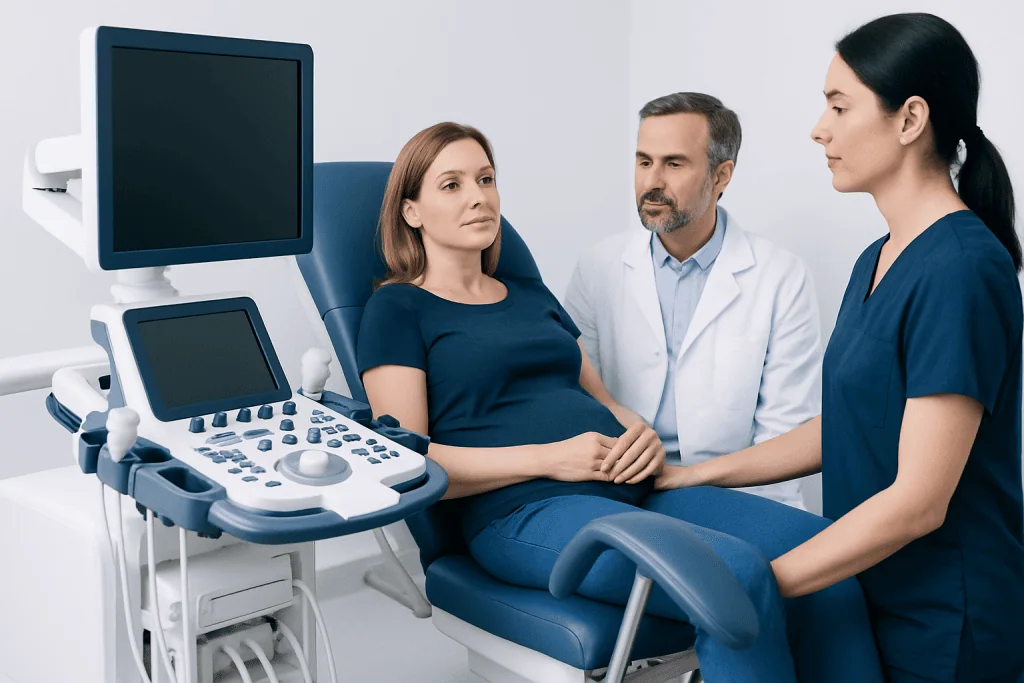
Dermoid cysts can form in several parts of the body. One of the most familiar locations is under the skin of the face or scalp, particularly near the outer part of the eyebrow. These are often noticed as soft, rounded lumps that grow slowly over time. In children, they may be detected during routine care or after a parent notices an asymmetry.
Another common location is the ovary. An ovarian dermoid cyst is also called a mature cystic teratoma. It can contain fat, hair, and other mature tissues, and it may be found during a pelvic ultrasound. Some ovarian dermoid cysts are completely silent, while others cause pelvic pain, fullness, or sudden symptoms if a complication such as twisting occurs. Related ovarian conditions are often evaluated alongside ovarian cysts.
Less commonly, dermoid cysts can occur in deeper areas such as the spine, brain, nasal region, or floor of the mouth. These are much less common than skin or ovarian dermoid cysts, but they can require specialized evaluation because symptoms may relate to pressure on nearby structures. The exact location strongly influences both diagnosis and treatment planning.
Symptoms and possible complications
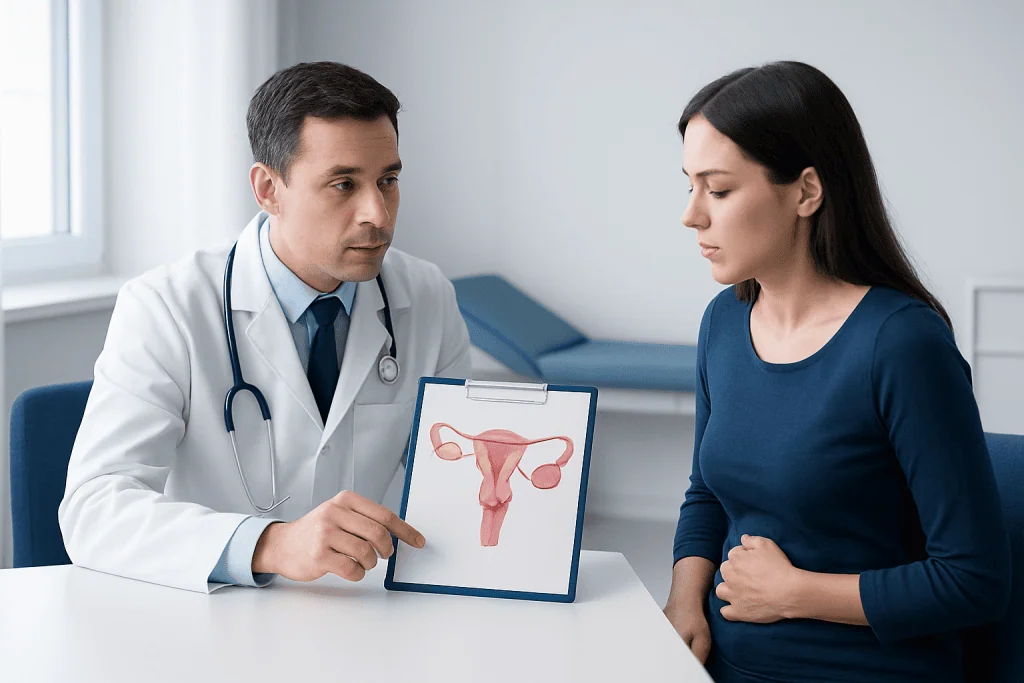
Many dermoid cysts do not cause symptoms at first. A superficial cyst may simply appear as a painless, slow-growing lump under the skin. The skin over it is often normal, and the lump may feel smooth and mobile. In some cases, there is mild tenderness if the cyst becomes irritated or inflamed.
Symptoms are more likely when a dermoid cyst becomes larger or is located in a sensitive area. Ovarian dermoid cysts may cause one-sided pelvic pain, abdominal fullness, bloating, pressure, or discomfort during movement. A cyst near the eye can affect appearance and, in rare cases, deeper extension may involve structures around the orbit that need careful assessment.
Possible complications depend on the location. Ovarian dermoid cysts can sometimes twist the ovary, a painful emergency called torsion. Less commonly, a cyst may rupture, leading to inflammation. Infections are not common but can occur. Rarely, certain dermoid cysts may be associated with changes that require a more detailed pathology review after removal, which is one reason doctors may recommend planned follow-up or surgery.
- Visible lump under the skin
- Pelvic or abdominal pain
- Pressure, fullness, or swelling
- Tenderness or inflammation
- Sudden severe pain, which needs urgent medical attention
Causes and risk factors
Dermoid cysts are not caused by poor hygiene, diet, stress, or injury. They usually arise from developmental tissue cells that become misplaced during early embryonic growth. This explains why they can contain mature tissues such as skin, hair, and glands. In most cases, they are congenital, meaning present from birth, even if they are discovered much later.
There is usually nothing a person did to cause a dermoid cyst, and there is often no clear way to prevent one from forming. Most appear sporadically rather than running strongly in families. The main “risk factor” is really the anatomic location where these trapped cells remained during development.
Age can influence when a dermoid cyst is found. Skin dermoid cysts are often noticed in infancy or childhood, while ovarian dermoid cysts are commonly diagnosed during reproductive years because pelvic imaging is more likely at that stage of life. Even so, discovery at a later age does not mean the cyst is new; it may simply have grown slowly or only recently caused symptoms.
How doctors diagnose a dermoid cyst
Diagnosis begins with a medical history and physical examination. A clinician will ask when the lump or pain began, whether it is changing, and whether there are symptoms such as tenderness, pressure, fever, or sudden severe pain. The exam helps assess size, mobility, and whether nearby tissues may be involved.
Imaging is often the next step. Ultrasound is commonly used for ovarian and some soft-tissue cysts because it is widely available and does not use radiation. CT or MRI may be recommended when the cyst is in a deeper or more complex area, or when doctors need a clearer view of its relationship to surrounding structures. Imaging can suggest a dermoid cyst by showing features such as fat or other characteristic components.
In many cases, the definite diagnosis is confirmed after surgical removal, when the tissue is examined by a pathologist. This helps distinguish a dermoid cyst from other lumps or cystic masses. Depending on the location, evaluation may involve different specialists, such as gynecology, general surgery, pediatrics, ophthalmology, or neurosurgery. For ovarian lesions, assessment may be part of broader gynecology care, and imaging findings may overlap with other ovarian masses that need careful evaluation.
Treatment options and when surgery is considered
Treatment depends on the cyst’s size, location, symptoms, and risk of complications. Small, symptom-free dermoid cysts may sometimes be monitored with periodic follow-up, especially if surgery is not immediately necessary. Monitoring is chosen carefully and is more appropriate in some situations than others, based on specialist advice.
Surgery is often recommended when the cyst is growing, causing pain, affecting appearance, pressing on nearby structures, or carrying a meaningful risk of torsion, rupture, or other problems. The goal is usually complete removal of the cyst while protecting surrounding tissue. For skin or soft-tissue dermoid cysts, this is often a planned procedure. For ovarian dermoid cysts, minimally invasive approaches may be possible depending on the case, including laparoscopic surgery.
Doctors generally avoid trying to drain or squeeze a dermoid cyst because that does not remove the lining and may increase irritation, infection risk, or recurrence. If the cyst is in a complex area such as around the eye, spine, or brain, treatment planning may involve highly specialized imaging and surgery. In selected patients with ovarian involvement, care may involve ovarian cyst surgery to relieve symptoms and reduce future complications.
After removal, the tissue is usually sent for pathology review. Recovery depends on the cyst’s location and the type of procedure performed. Most patients benefit from clear follow-up instructions about wound care, activity, warning signs, and when to return for reassessment.
Prevention, self-care, and living with a dermoid cyst
Because dermoid cysts usually form during early development, there is no proven way to prevent them. Self-care focuses instead on observation, symptom awareness, and avoiding actions that could irritate the area. A person who has been told they have a dermoid cyst should follow the monitoring plan recommended by their doctor.
For superficial cysts, it is best not to squeeze, puncture, or try home remedies. This can inflame the area, increase infection risk, and make later removal more difficult. If the cyst is on the skin and becomes red, warm, painful, or starts draining, medical advice is important.
For ovarian dermoid cysts, self-care includes paying attention to new pelvic pain, bloating, or sudden worsening symptoms. Any sudden severe one-sided pelvic pain, especially with nausea or vomiting, should be treated as urgent because it may signal torsion. Near the end of the care journey, some patients seek evaluation in centers that coordinate imaging, surgery, and pathology; Acibadem International’s multidisciplinary specialists in JCI-accredited hospitals diagnose and treat dermoid cysts for international patients when needed.
When to seek medical care
Medical evaluation is appropriate for any new lump that persists, slowly enlarges, or causes discomfort. A doctor should also assess a cyst near the eye, nose, mouth, or spine because these areas may need more specialized imaging and treatment planning. Even when a dermoid cyst is likely benign, proper assessment helps confirm the diagnosis and rule out other causes.
Urgent care is needed if there is sudden severe pain, rapid swelling, fever, redness, vomiting, or signs that the cyst may have ruptured or twisted an organ such as the ovary. These symptoms do not always mean a serious complication is present, but they should not be ignored. Prompt assessment can help protect nearby tissue and guide timely treatment.
Patients should also return for follow-up if an already diagnosed dermoid cyst changes in size, becomes more painful, or starts causing pressure symptoms. A qualified doctor can explain whether monitoring is still reasonable or whether removal has become the safer option.
Frequently asked questions
Is a dermoid cyst cancer?
Most dermoid cysts are benign, which means they are not cancer. However, doctors may still recommend follow-up or removal because the cyst can grow, cause symptoms, or create complications related to its location. A final tissue diagnosis is often confirmed after surgical removal.
Can a dermoid cyst go away on its own?
A dermoid cyst usually does not disappear on its own because it has a defined lining and contains mature tissue. Some may remain stable for a long time, while others slowly enlarge. A doctor can advise whether observation or removal is the better approach.
What does a dermoid cyst feel like?
A dermoid cyst under the skin often feels like a smooth, rounded lump that moves slightly and is usually painless. If it becomes inflamed or presses on nearby tissue, it may feel tender or uncomfortable. Internal dermoid cysts, such as those in the ovary, may cause pressure or pain rather than a visible lump.
Do all dermoid cysts need surgery?
Not always. Some small, symptom-free dermoid cysts can be monitored, depending on their size and location. Surgery is more likely to be recommended if the cyst is growing, painful, cosmetically concerning, or at risk of causing complications.
Can a dermoid cyst affect fertility?
An ovarian dermoid cyst does not automatically mean infertility. Many people with an ovarian dermoid cyst can still conceive, but large cysts or complications such as ovarian torsion may affect ovarian health. A gynecologist can explain the likely impact and the safest treatment plan for an individual case.
Is it safe to pop or drain a dermoid cyst at home?
No. Trying to pop, drain, or squeeze a dermoid cyst at home is not safe and usually does not solve the problem because the cyst lining remains in place. It can also cause inflammation, infection, or scarring and may complicate later treatment.
References
- National Health Service
- American College of Obstetricians and Gynecologists
- National Institute of Neurological Disorders and Stroke
- Merck Manual
- Cleveland Clinic
This article is for general information only and is not a substitute for professional medical advice. Please consult a qualified doctor about your individual situation.
Hair transplant in Turkey — costs, graft counts & a free assessment
JCI-accredited · board-certified surgeons · reply within 24h
Add us as a Preferred Source to see more of our trusted health content across Google Search, AI Overviews and Discover.

More from the Health Library



Related Specialists
Dr. İsmail Demirel
Intensive Care
Dr. Lerzan Dogan
Anesthesiology
Dr. Mustafa Mutlu
Inpatient Clinic Physicians Clinical Service
Asst. Prof. Dr. Mehmet Erdem Yıldız
Radiology