Urachal Cyst: What Patients Need to Know

A urachal cyst develops from incomplete closure of the urachus, a fetal connection between the bladder and umbilical cord. Some urachal cysts remain silent and are found incidentally during imaging for another reason.
Key Takeaways
- A urachal cyst develops from incomplete closure of the urachus, a fetal connection between the bladder and umbilical cord.
- Some urachal cysts remain silent and are found incidentally during imaging for another reason.
- Pain below the navel, fever, a tender lump, urinary symptoms, or belly-button drainage may suggest infection.
- Ultrasound and CT or MRI scans can help identify a urachal cyst and rule out other causes of symptoms.
- Infected, symptomatic, recurrent, or suspicious urachal cysts are often treated with antibiotics and surgical removal.
A urachal cyst is an uncommon pocket of fluid or tissue that remains from a structure normally present before birth. Many cause no symptoms, but infection can lead to lower abdominal pain, fever, or drainage from the belly button and may require medical treatment.
What Is a Urachal Cyst?
A urachal cyst is a small enclosed sac that forms along the urachus, a temporary tube-like structure present during fetal development. Before birth, the urachus connects the developing bladder to the umbilical cord. It normally closes and becomes a thin fibrous band called the median umbilical ligament.
If part of the urachus does not close completely, a urachal remnant can remain. A cyst develops when the middle part stays open while both ends close, allowing fluid or debris to collect inside. Urachal cysts can occur in children or adults, although they are often recognized only after symptoms develop or an imaging test is performed for another concern.
Most urachal cysts are benign, meaning they are not cancer. However, because symptoms can overlap with infections of the skin, bladder, bowel, or other abdominal structures, a proper medical assessment is important. A clinician can determine whether a urachal remnant is likely to be causing symptoms and whether monitoring or treatment is appropriate.
How a Urachal Cyst May Feel

A urachal cyst may cause no symptoms at all. In this situation, it may be found incidentally on an ultrasound, CT scan, or MRI performed for abdominal discomfort, urinary symptoms, or another unrelated reason.
Symptoms are more likely when the cyst becomes infected or inflamed. Discomfort is commonly felt in the midline of the lower abdomen, between the belly button and the bladder. The area may feel tender, swollen, or firm. Some people develop fever, tiredness, nausea, or reduced appetite when infection is present.
If a connection develops between the cyst and the belly button, fluid, pus, or occasionally blood may drain from the navel. If the remnant communicates with the bladder, urinary frequency, burning during urination, cloudy urine, blood in the urine, or repeated urinary infections may occur. These symptoms do not always mean a urachal cyst is present, but they should be evaluated.
- Lower central abdominal or pelvic pain
- Redness, swelling, or a lump near the navel
- Fever or feeling generally unwell
- Drainage, odor, or bleeding from the belly button
- Urinary discomfort, frequent urination, or blood in the urine
Why Urachal Cysts Develop and Become Infected
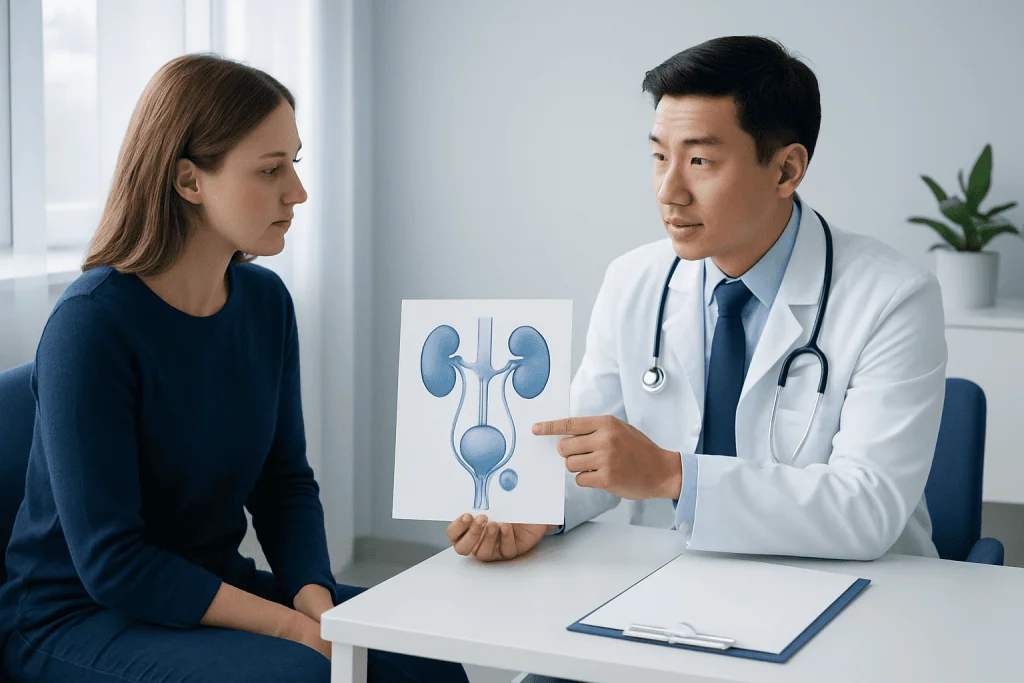
A urachal cyst is congenital, which means the underlying urachal remnant is present from birth. It is not caused by poor hygiene, diet, exercise, or a person’s everyday activities. In many people, the remnant stays unnoticed throughout life.
Symptoms can begin if bacteria enter the cyst and cause infection. This may occur through the belly button, from nearby tissues, or less commonly through a connection with the bladder. Once infected, the closed cyst can fill with inflammatory fluid or pus, creating pressure and tenderness.
There is no reliable way to predict which urachal remnants will become symptomatic. Previous infections, ongoing drainage from the navel, and a known remnant may increase the need for follow-up with a urologist or surgeon. In adults, clinicians also consider other possible explanations for a mass or symptoms in this area, including bladder, bowel, skin, and gynecologic conditions where relevant.
Rarely, cancer can arise in tissue related to a urachal remnant, most often in adults. This is uncommon, and having a urachal cyst does not mean a person has cancer. Still, blood in the urine, an unexplained mass, persistent symptoms, or unusual imaging findings should be assessed promptly and carefully.
How Doctors Diagnose a Urachal Cyst
Diagnosis begins with a medical history and physical examination. A clinician may ask about the timing of pain, fever, navel drainage, urinary symptoms, past urinary infections, and any prior abdominal surgery. The abdomen and umbilical area are examined for tenderness, redness, swelling, or discharge.
Imaging is usually needed to confirm the diagnosis and understand the cyst’s location in relation to the bladder and abdominal wall. Ultrasound is often a useful first test, particularly in children. CT scanning can provide detailed images when infection, an abscess, a mass, or another abdominal condition is suspected. MRI may also be used in selected cases when further tissue detail is helpful.
Urine testing can look for blood, bacteria, or signs of urinary infection. Blood tests may be performed if fever or systemic infection is suspected. If there is drainage from the belly button, a sample may sometimes be tested to identify bacteria and guide antibiotic treatment.
In some adults, a urologist may recommend cystoscopy, a procedure that uses a thin camera to inspect the inside of the bladder. This can be helpful when imaging suggests that the urachal remnant is close to or connected with the bladder, or when there is unexplained blood in the urine.
Treatment Options and Recovery
Treatment depends on symptoms, imaging findings, age, and whether infection is present. A small urachal cyst found incidentally may sometimes be monitored, particularly if it is not causing symptoms and imaging does not raise concern. The follow-up plan should be individualized by the treating clinician.
An infected urachal cyst generally needs prompt treatment. This may include antibiotics to control infection, along with pain relief, fluids, and monitoring. If there is a large collection of pus or an abscess, drainage may be needed. Drainage can be performed with an image-guided needle or through a surgical approach, depending on the location and severity of infection.
For symptomatic, recurrently infected, or concerning urachal cysts, surgery to remove the urachal remnant is commonly recommended. The procedure may be performed using minimally invasive laparoscopic or robotic techniques in appropriate cases, or through open surgery when needed. If the cyst attaches to the top of the bladder, a small portion of the bladder dome may also need to be removed to achieve complete treatment.
When infection is significant, surgery may be delayed until antibiotics and, when necessary, drainage have controlled the acute inflammation. Recovery varies with the procedure and a person’s overall health. The surgical team will explain wound care, activity limits, follow-up appointments, and signs that require earlier review.
Self-Care and Practical Steps While Awaiting Assessment
A suspected urachal cyst should not be squeezed, punctured, or treated by attempting to drain the belly button at home. These actions can worsen irritation, introduce bacteria, and delay appropriate care. Keeping the skin around the navel clean and dry is reasonable, but strong antiseptics or unprescribed creams should be avoided unless advised by a clinician.
People with mild discomfort should arrange a medical review rather than assuming the problem is a simple skin infection. Recording symptoms can be useful, including when pain began, whether fever occurs, changes in urinary habits, and the color or amount of any drainage. This information can help guide evaluation.
There is no proven lifestyle measure that prevents a congenital urachal remnant from causing symptoms. General measures that support health, such as drinking adequate fluids when medically appropriate, not smoking, and seeking care for urinary symptoms, may still be beneficial. Antibiotics should only be taken when prescribed, as the choice of medicine should reflect the suspected infection and individual medical circumstances.
For international patients, Acibadem International’s multidisciplinary specialists and JCI-accredited hospitals can assess urachal conditions with coordinated urology, imaging, surgical, and pathology services when treatment is needed.
When to Seek Medical Care
Medical care should be arranged promptly for new or persistent lower abdominal pain, swelling near the navel, discharge from the belly button, repeated urinary symptoms, or a known urachal cyst that begins causing discomfort. These symptoms may result from several conditions, and timely assessment helps identify the cause.
Urgent medical attention is important if there is fever with worsening abdominal pain, spreading redness around the navel, vomiting, inability to pass urine, marked weakness, or a rapidly enlarging tender lump. These can be signs of a significant infection or abscess that may need antibiotics, imaging, or drainage without delay.
Visible blood in the urine should always be discussed with a healthcare professional, particularly in adults or when it recurs. Although many causes are not serious, evaluation is needed to identify urinary tract infection, stones, bladder conditions, or less common causes related to a urachal remnant.
Frequently asked questions
Is a urachal cyst cancer?
Most urachal cysts are benign and are not cancer. Cancer arising from urachal tissue is rare, but clinicians may recommend further tests or removal when imaging findings, blood in the urine, age, or persistent symptoms raise concern.
Can a urachal cyst go away on its own?
Some urachal remnants do not cause symptoms and may never need treatment. However, an established cyst may persist, and an infected or symptomatic cyst usually needs medical evaluation and may require antibiotics, drainage, or surgical removal.
What does an infected urachal cyst feel like?
An infected urachal cyst can cause pain or tenderness below the belly button, fever, redness, swelling, and sometimes drainage from the navel. Some people also have urinary symptoms, nausea, or feel generally unwell.
How is a urachal cyst different from a urinary tract infection?
A urinary tract infection mainly affects the bladder, urethra, or kidneys and often causes burning urination, urgency, or frequent urination. A urachal cyst is a structural remnant between the bladder and navel, although it can become infected and sometimes produce similar urinary symptoms.
Do all urachal cysts need surgery?
No. Management depends on symptoms, infection, imaging findings, and individual risk factors. Surgery is more commonly considered for cysts that are infected, recurrent, causing symptoms, communicating with the bladder or navel, or have concerning features.
Can adults develop a urachal cyst?
The urachal remnant is present from birth, so the cyst does not newly form in the usual sense during adulthood. However, it may first become noticeable in adulthood after infection, inflammation, or incidental detection on imaging.
References
- National Institutes of Health
- Urology Care Foundation
- American Urological Association
- Merck Manual Consumer Version
- Radiological Society of North America
This article is for general information only and is not a substitute for professional medical advice. Please consult a qualified doctor about your individual situation.
Joint and spine care in Turkey — expert assessment & treatment
JCI-accredited · board-certified surgeons · reply within 24h
Add us as a Preferred Source to see more of our trusted health content across Google Search, AI Overviews and Discover.