Elevated PSA — Explained by Medical Evidence, Not Myths

An elevated PSA is a test result, not proof of prostate cancer. Benign prostate enlargement, inflammation, infection, recent ejaculation, and urinary procedures can raise PSA.
Key Takeaways
- An elevated PSA is a test result, not proof of prostate cancer.
- Benign prostate enlargement, inflammation, infection, recent ejaculation, and urinary procedures can raise PSA.
- A repeat PSA test is often appropriate before deciding on imaging or biopsy.
- PSA trends over time and the percentage of free PSA can help clinicians assess risk.
- Modern evaluation may include prostate MRI to help determine whether a biopsy is needed.
- Urgent assessment is needed for fever with urinary symptoms, inability to urinate, or severe pelvic pain.
An elevated PSA result means that the level of prostate-specific antigen in the blood is higher than expected for an individual, but it is not a diagnosis of prostate cancer. PSA can rise for several common, non-cancerous reasons, so the result should be interpreted alongside age, symptoms, medical history, examination findings, and, when appropriate, further testing.
Elevated PSA: the evidence-based meaning
An elevated PSA means that a blood test has found more prostate-specific antigen (PSA) than expected. PSA is a protein made by cells in the prostate, a small gland below the bladder that contributes fluid to semen. Although PSA is often discussed in relation to prostate cancer, it is not a cancer-specific marker. A raised result needs thoughtful interpretation rather than an immediate conclusion.
PSA naturally varies between individuals and can change over time. Laboratories may use a general reference threshold, but there is no single PSA value that can reliably confirm or rule out prostate cancer. Age, prostate size, use of certain medicines, recent activities, previous PSA results, family history, and ethnic background can all influence how a clinician interprets the result.
For many people, the most appropriate next step is to repeat the test under suitable conditions and discuss the result with a urologist or primary care doctor. This approach can prevent unnecessary worry and helps ensure that any further tests are based on a person’s overall level of risk.
Why PSA levels can be high
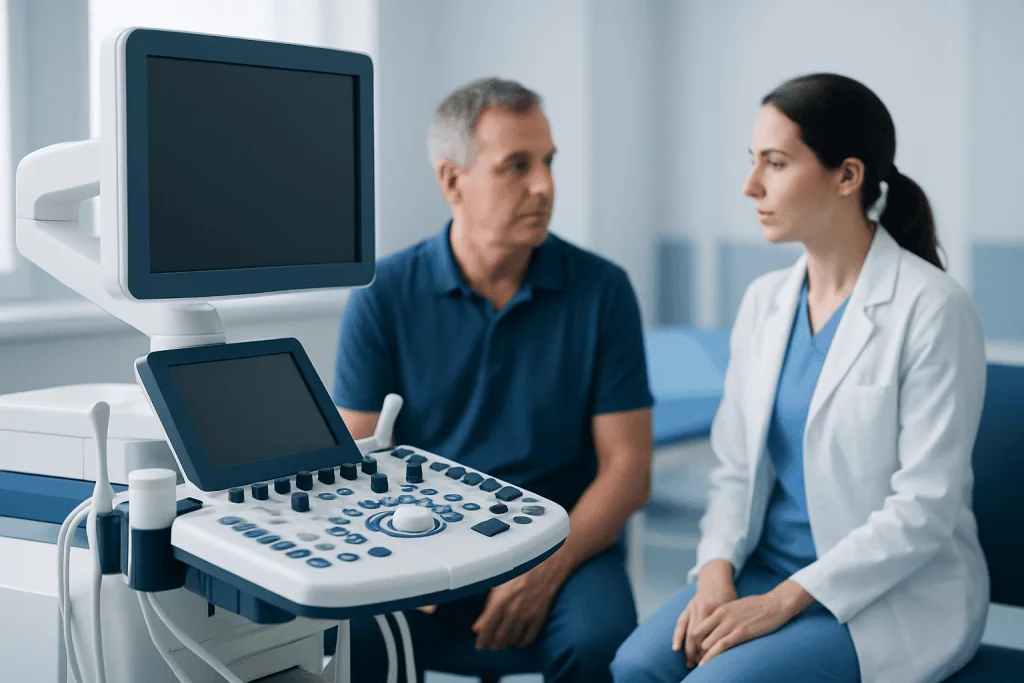
Prostate cancer is one possible cause of elevated PSA, but it is not the most common explanation for every raised result. Benign prostatic hyperplasia (BPH), also called an enlarged prostate, becomes more common with age and can increase PSA because there is more prostate tissue producing the protein. BPH may also cause a slow urinary stream, frequent urination, or waking at night to urinate, although some people have no symptoms.
Inflammation of the prostate, known as prostatitis, and urinary tract infections can raise PSA temporarily. These conditions may cause burning during urination, pelvic discomfort, urinary urgency, fever, or chills, but prostatitis can sometimes occur without clear symptoms. PSA testing is usually delayed until infection or significant inflammation has been assessed and treated, because testing during this period may be difficult to interpret.
PSA may also rise temporarily after ejaculation, vigorous cycling, prostate examination or massage, urinary catheterization, cystoscopy, urinary retention, and recent prostate biopsy. Not every influence has the same effect in every person. Before retesting, a clinician may advise avoiding ejaculation and activities that put pressure on the prostate for a short period, while following the laboratory’s or clinician’s instructions.
- Age-related prostate enlargement
- Prostate inflammation or urinary infection
- Recent ejaculation, cycling, or prostate procedures
- Urinary retention
- Prostate cancer
PSA myths that can lead to unnecessary concern

A common myth is that an elevated PSA automatically means cancer. In reality, many people with a raised PSA do not have prostate cancer, and some people with prostate cancer have PSA levels that are not markedly high. PSA is therefore best viewed as a risk signal that may indicate a need for closer assessment, not as a stand-alone diagnostic answer.
Another misconception is that one isolated number is more important than the overall pattern. A clinician may compare the current result with previous values to understand whether PSA is stable, fluctuating, or rising persistently. However, a faster rise alone does not diagnose cancer and should not be used in isolation to make decisions about biopsy.
It is also inaccurate to assume that urinary symptoms indicate cancer. Symptoms such as frequent urination or reduced urine flow are often related to benign enlargement or other non-cancerous conditions. Conversely, early prostate cancer often causes no symptoms. This is why shared decision-making about PSA testing and appropriate follow-up are important.
How clinicians assess an elevated PSA
Evaluation begins with a discussion of health history. The clinician may ask about urinary symptoms, infections, medications, recent procedures, family history of prostate or related cancers, and prior PSA values. Medicines that affect hormone levels or shrink the prostate can lower PSA readings, so it is important to report all prescribed medicines and supplements.
A digital rectal examination may be offered. During this brief examination, a clinician gently feels the prostate through the rectum to assess its size, shape, and texture. The examination cannot diagnose cancer on its own, but an area that feels firm, irregular, or asymmetric may influence the next steps.
A repeat PSA test is frequently considered, particularly when there is a possible temporary cause of elevation. Depending on the situation, clinicians may also use additional blood-test measures, such as free PSA or PSA density, which relates PSA to prostate volume. These tools can refine risk estimates but do not replace clinical judgment.
Multiparametric MRI of the prostate is increasingly used before a first biopsy in many settings. MRI can identify areas that may need closer evaluation and can help guide targeted biopsy if one is recommended. A biopsy is the only test that can confirm prostate cancer, but it is not necessary for every person with an elevated PSA.
What treatment or follow-up may involve
There is no single treatment for elevated PSA itself because PSA is a marker rather than a disease. Follow-up depends on the suspected cause. If the level appears to be affected by infection, inflammation, or a recent temporary trigger, the clinician may recommend treating or resolving that issue and repeating PSA after an appropriate interval.
If benign prostate enlargement is causing bothersome urinary symptoms, management may include monitoring, lifestyle adjustments, medicines, or procedures depending on symptom severity, prostate size, and personal preferences. Treatment decisions should focus on symptoms and quality of life rather than PSA alone.
When MRI, examination findings, PSA pattern, or other risk factors suggest a meaningful possibility of cancer, a urologist may recommend prostate biopsy. If cancer is found, the care team will discuss its grade, stage, likely behavior, and options. These can range from active surveillance for selected low-risk cancers to surgery, radiotherapy, hormone treatment, or other approaches when indicated.
For international patients, Acibadem International’s multidisciplinary specialists and JCI-accredited hospitals can assess elevated PSA and coordinate appropriate urology, imaging, pathology, and oncology care when needed.
Preparing for a repeat PSA test and supporting prostate health
Patients should ask the ordering clinician how to prepare for a repeat PSA test, particularly if the first result was unexpected. In many cases, it may be sensible to avoid ejaculation and vigorous cycling for a short time before testing, and to avoid testing during an active urinary infection. A person should not stop prescribed medication unless their clinician specifically advises this.
Keeping a record of PSA results, test dates, infections, procedures, and urinary symptoms can make follow-up more accurate. The same laboratory may be preferred for serial tests when practical, since methods can differ slightly between laboratories. People should tell their clinician if they have had urinary retention, catheter use, a recent biopsy, or new urinary symptoms.
General measures that support health include regular physical activity, a balanced eating pattern rich in vegetables, fruits, whole grains, and healthy protein sources, maintaining a weight that is appropriate for the individual, and avoiding tobacco. These habits support overall wellbeing but cannot guarantee prevention of prostate cancer or normalize a PSA result. They should not delay recommended medical evaluation.
When to seek medical care
A person with an elevated PSA should arrange a non-urgent appointment with the clinician who ordered the test or with a urologist, even if they feel well. This allows the result to be reviewed in context and gives time to decide whether repeat testing, examination, MRI, or another approach is appropriate. It is particularly important to seek advice promptly if there is a strong family history of prostate cancer or a known inherited cancer-risk gene.
More urgent medical assessment is appropriate for fever or chills with painful urination, severe pelvic or lower abdominal pain, visible blood in the urine, or inability to pass urine. These symptoms may indicate infection, urinary retention, or another condition requiring timely treatment. They do not necessarily mean cancer, but they should not be managed by waiting alone.
New bone pain, unexplained weight loss, or persistent fatigue should also be discussed with a doctor, especially in someone with a persistently elevated PSA. These symptoms are common and can have many causes, but a clinician can determine whether they need further investigation.
Frequently asked questions
What PSA level is considered elevated?
There is no single PSA number that is considered abnormal for everyone. Interpretation depends on age, prostate size, previous results, laboratory method, medicines, and individual risk factors. A clinician will consider the full clinical picture rather than relying on one cut-off value.
Can an elevated PSA go back to normal?
Yes. PSA can fall when a temporary cause, such as inflammation, infection, urinary retention, recent ejaculation, or a procedure affecting the prostate, resolves. This is one reason a repeat test is commonly considered before more invasive investigations.
Should a person with high PSA avoid sex or cycling?
Ejaculation and cycling may temporarily affect PSA in some people. A clinician may recommend avoiding these activities for a short period before a repeat test to improve the reliability of the result. This is preparation for testing, not a treatment for elevated PSA.
Does an elevated PSA mean a biopsy is necessary?
Not always. Many people first have a repeat PSA test, clinical assessment, and sometimes additional tests or prostate MRI. Biopsy is generally considered when the overall findings suggest that the chance of clinically significant cancer is high enough to justify it.
Can prostatitis cause a high PSA without symptoms?
Yes. Prostate inflammation can occasionally increase PSA even when symptoms are mild or absent. A clinician will assess whether infection or inflammation is likely and decide whether testing should be repeated after an appropriate interval.
Can diet lower PSA quickly?
No specific food or supplement has been shown to safely and reliably lower PSA quickly in a way that replaces medical evaluation. A balanced diet and healthy lifestyle support general health, but a raised PSA should still be reviewed by a qualified clinician.
References
- American Urological Association
- European Association of Urology
- National Cancer Institute
- National Health Service
- Prostate Cancer Foundation
This article is for general information only and is not a substitute for professional medical advice. Please consult a qualified doctor about your individual situation.
Oncology care in Turkey — second opinion and treatment plan
JCI-accredited · board-certified surgeons · reply within 24h
Add us as a Preferred Source to see more of our trusted health content across Google Search, AI Overviews and Discover.

More from the Health Library



Related Specialists

Fzt. Alperen Mustafa Oğuz
Physical Medicine & Rehabilitation
Fzt. Gönül Zervent
Physical Medicine & Rehabilitation
Prof. Dr. İbrahim Kaya
Orthopedic Surgery & Traumatology
Prof. Dr. Özlem Şahin
Ophthalmology