Indoor Rowing for Weight Loss: What Patients Need to Know
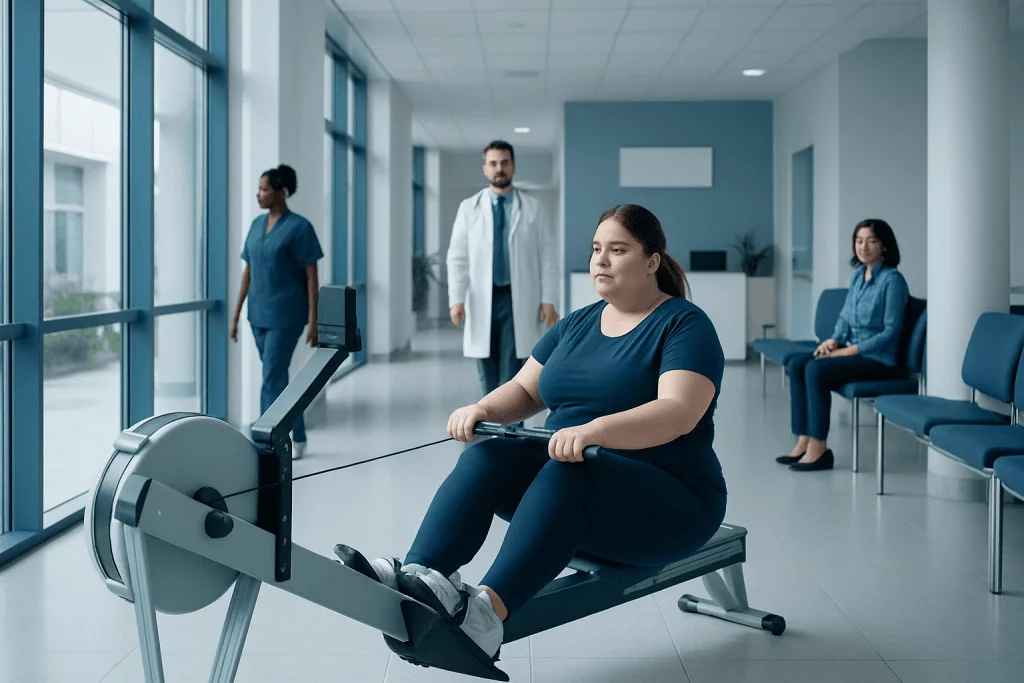
Indoor rowing may support weight loss by increasing energy use and improving cardiovascular fitness. Weight loss occurs when long-term energy intake is lower than energy expenditure; exercise is one part of this process.
Key Takeaways
- Indoor rowing may support weight loss by increasing energy use and improving cardiovascular fitness.
- Weight loss occurs when long-term energy intake is lower than energy expenditure; exercise is one part of this process.
- Good rowing technique starts with a strong leg drive and helps reduce unnecessary strain on the back, neck, and arms.
- Beginners should progress gradually by prioritizing consistency, comfortable intensity, and rest days.
- People with heart symptoms, significant joint or back pain, or certain health conditions should seek medical advice before starting vigorous exercise.
Indoor rowing can be an effective, low-impact addition to a weight-loss plan because it combines aerobic exercise with work from many major muscle groups. Results depend most on regular training, a sustainable calorie deficit, recovery, and an approach that suits the person’s health, fitness level, and preferences.
Indoor rowing and weight loss: the practical answer
Indoor rowing for weight loss can be useful because it is a whole-body form of exercise that can raise heart rate while placing relatively little impact on the hips, knees, and ankles. When performed regularly, it may help a person increase daily energy expenditure, improve fitness, and preserve or build muscle alongside a balanced eating pattern.
However, no rowing machine workout causes weight loss by itself. Body weight changes over time when a person consistently uses more energy than they consume, often called a calorie deficit. Food choices, sleep, stress, medications, medical conditions, everyday movement, and exercise habits can all influence this balance.
Rowing is often easier to continue than high-impact activities for people who dislike running or experience discomfort with repeated jumping. The most effective plan is not necessarily the hardest session; it is a routine that can be done safely and consistently for months rather than days.
Why a rowing machine can support healthy weight management
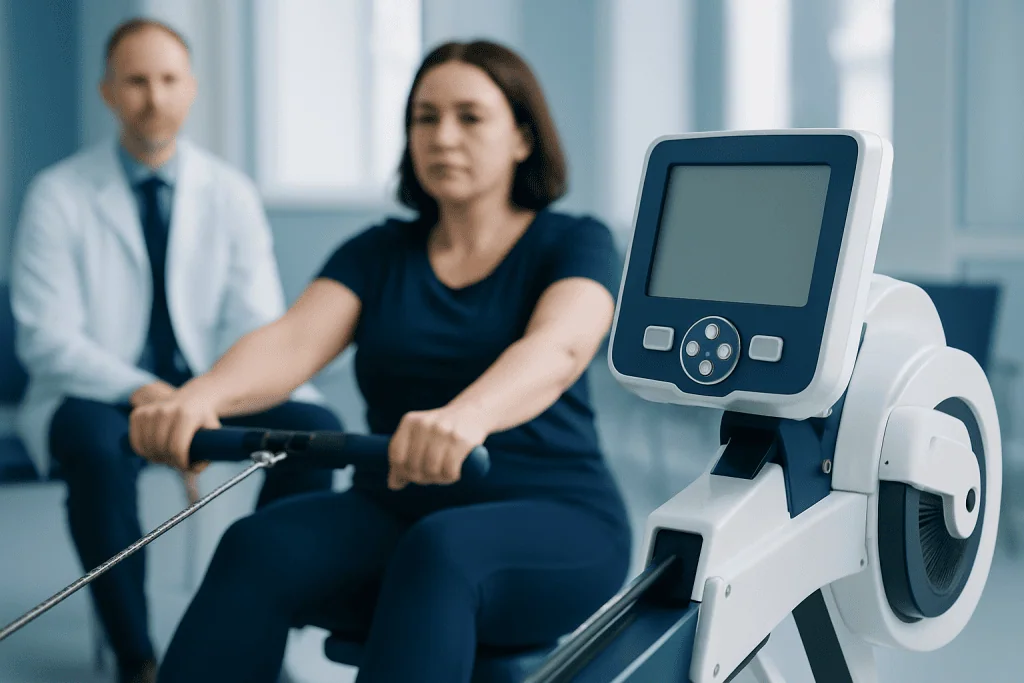
A rowing stroke involves the legs, hips, trunk, back, shoulders, and arms. This coordinated movement makes rowing both an aerobic activity and a resistance-based movement. At an appropriate intensity, it can improve heart and lung fitness while challenging large muscle groups.
Energy use during rowing varies considerably. It is affected by body size, rowing pace, resistance setting, stroke technique, workout duration, age, fitness level, and the type of rowing machine. Rather than focusing on the calorie number displayed by a machine, which is an estimate, people may find it more helpful to track workout time, perceived effort, and gradual improvements in distance or pace.
Regular exercise also has benefits beyond the number on the scale. It can support blood pressure, blood sugar regulation, mood, sleep quality, mobility, and physical function. A person may notice improved fitness or waist measurement before seeing a substantial change in body weight.
- Low impact: The feet remain supported on footplates, reducing repetitive impact compared with running.
- Efficient movement: Many major muscle groups work together in each stroke.
- Adaptable intensity: Sessions can be easy and steady, interval-based, or focused on technique.
- Convenient tracking: Most machines display time, stroke rate, distance, and pace.
How to start indoor rowing safely

For someone new to exercise or new to rowing, beginning with short, comfortable sessions is usually more appropriate than starting with demanding intervals. A practical starting point may be a few sessions each week at an effort where the person can still speak in short sentences. Duration and intensity can then increase gradually as comfort and fitness improve.
Technique is important for both comfort and effectiveness. The rowing stroke generally follows this sequence: push first through the legs, then lean back slightly from the hips, and finally draw the handle toward the lower ribs. On the return, the arms straighten first, the body pivots forward from the hips, and the knees bend last. This sequence helps the legs, rather than the arms or lower back, produce most of the power.
It is helpful to keep the spine comfortably neutral, shoulders relaxed, and grip light. The resistance or damper setting does not need to be high for a workout to be effective. Excessive resistance may encourage poor form and can make the stroke feel unnecessarily stressful, especially for the lower back.
Warming up with several minutes of easy rowing and mobility work can prepare the body for training. A cool-down at an easy pace may help the person transition after exercise, although it does not need to be lengthy. Hydration, suitable clothing, and supportive footwear or secure bare feet on the footplates can also improve comfort.
Building a rowing routine that supports weight loss
A sustainable rowing plan usually includes a mix of easier steady sessions and, once a foundation has developed, some higher-effort work. Easy and moderate rowing can help build aerobic capacity and total activity volume. Short intervals can be time-efficient, but they are more demanding and are best introduced gradually.
For example, a beginner might focus on steady rowing at a manageable pace, with rest days between sessions when needed. As endurance improves, the person may add a little time, include brief periods of faster rowing, or increase the number of weekly sessions. Changes should be gradual enough that muscle soreness, fatigue, and joint discomfort remain manageable.
Most adults benefit from combining aerobic activity with muscle-strengthening exercises on at least two days per week. Although rowing works many muscles, it may not address every movement pattern fully. Simple strength exercises for the legs, chest, back, core, and balance can complement rowing and support long-term function.
Nutrition remains central to weight management. Regular meals that include vegetables or fruit, high-fiber carbohydrates, protein-rich foods, and unsaturated fats can help support fullness and recovery. Extreme restriction is rarely sustainable and may reduce energy for exercise. A registered dietitian or doctor can provide individualized guidance, particularly for people with diabetes, digestive conditions, or a history of disordered eating.
Choosing intensity and tracking progress
Perceived effort is a useful way to guide exercise without relying only on machine settings. During light activity, breathing is easy and conversation is comfortable. At moderate intensity, breathing becomes deeper but a person can still talk in sentences. Vigorous exercise makes conversation difficult and should be approached carefully, especially by those returning to exercise after a long break.
Heart-rate monitors can be useful for some people, but they are not essential. Medications, including some medicines used for blood pressure or heart conditions, can affect heart rate response. In these situations, perceived effort and symptoms may be more reliable guides than a target heart-rate number alone.
Weight can fluctuate from day to day because of fluid balance, food intake, hormones, and bowel habits. Progress is therefore better assessed over several weeks. Helpful measures can include how often sessions are completed, distance covered at a comfortable pace, energy levels, sleep, waist measurement, clothing fit, and changes in strength or mobility.
If progress feels slow, it may be useful to review the overall routine rather than simply making rowing sessions harder. Increasing everyday walking, planning balanced meals, reducing long periods of sitting, and protecting sleep may all help. A clinician can also assess whether a health condition or medication may be affecting weight change.
Common mistakes and ways to avoid injury
A frequent technique error is pulling hard with the arms before driving with the legs. This can fatigue the shoulders and forearms quickly while limiting the contribution from the strongest muscles. Another common problem is rounding the lower back or overreaching at the front of the stroke. Maintaining a controlled hip hinge and a relaxed, upright posture can reduce strain.
Doing too much too soon is another avoidable setback. New exercisers may feel motivated to perform long or high-intensity workouts immediately, but tissues need time to adapt. Persistent soreness, worsening performance, poor sleep, or unusual fatigue may indicate a need to reduce training load and prioritize recovery.
People with previous low-back, hip, knee, shoulder, or wrist injuries may still be able to row, but individual adjustments may be needed. These can include lowering intensity, shortening the stroke, using a slower stroke rate, or working with a physiotherapist or qualified exercise professional to refine technique.
Exercise should not cause sharp pain, chest discomfort, marked dizziness, or a feeling of faintness. Stopping the activity when these symptoms occur is appropriate. Pain that persists after exercise or recurs with rowing should be assessed rather than pushed through.
When to seek medical care
Medical advice is sensible before beginning a vigorous indoor rowing program for people with known heart, lung, kidney, or metabolic disease; uncontrolled high blood pressure; significant arthritis; recent surgery; or a history of exercise-related symptoms. It is also advisable for those who have been inactive for a long time and have multiple cardiovascular risk factors.
A person should stop exercising and seek urgent medical care for chest pain or pressure, severe shortness of breath, fainting, sudden weakness, or a fast or irregular heartbeat accompanied by feeling unwell. These symptoms are not expected effects of a routine workout and should be evaluated promptly.
Non-urgent assessment is appropriate for ongoing back, hip, knee, shoulder, or wrist pain; symptoms that steadily worsen with exercise; or fatigue that does not improve with rest. A doctor can help identify contributing factors and advise on a safe return to activity.
Acibadem International’s multidisciplinary specialists and JCI-accredited hospitals can assess exercise-related concerns and support individualized weight-management plans for international patients. The right plan should be based on medical history, current symptoms, physical capacity, and personal goals.
Frequently asked questions
Is indoor rowing good for weight loss?
Indoor rowing can support weight loss because it increases energy use and can improve cardiovascular fitness. It works best as part of a sustainable plan that also includes balanced nutrition, adequate sleep, and regular movement outside workouts. Individual results vary based on the overall energy balance and health factors.
How often should a beginner row for weight loss?
A beginner can start with short, manageable sessions several times per week and build gradually. Rest days may be useful while the muscles and joints adapt to a new activity. The most important goal is consistency with a level of exercise that feels safe and sustainable.
Does rowing burn more calories than walking or cycling?
Calorie expenditure depends on exercise intensity, duration, body size, fitness level, and technique. Vigorous rowing may use more energy per minute than gentle walking, but a person can often walk for longer or more frequently. The best activity is one that can be performed regularly without pain or excessive fatigue.
Can indoor rowing reduce belly fat?
Rowing cannot selectively burn fat from the abdomen or any other body area. As overall body fat decreases through a sustained calorie deficit, abdominal fat may decrease as part of that process. Strength training, aerobic activity, nutrition, sleep, and stress management can all support overall health and weight management.
Is a rowing machine safe for people with back pain?
Some people with back pain can row comfortably, but others may find the repeated hip and trunk movement aggravates symptoms. Proper technique, a gradual progression, and an appropriate resistance setting are important. Anyone with persistent, severe, or radiating back pain should seek advice from a qualified clinician before continuing.
Should rowing workouts be high intensity to lose weight?
No. Moderate, steady rowing can contribute meaningfully to weekly activity and may be easier to recover from and maintain. Higher-intensity intervals can be added later for people who tolerate them well, but they are not required for weight loss. A mix of comfortable activity and occasional challenge is often more sustainable than frequent maximal effort.
References
- World Health Organization
- Centers for Disease Control and Prevention
- American College of Sports Medicine
- National Institute of Diabetes and Digestive and Kidney Diseases
- American Heart Association
This article is for general information only and is not a substitute for professional medical advice. Please consult a qualified doctor about your individual situation.
Medical weight-loss options in Turkey — costs & eligibility
JCI-accredited · board-certified surgeons · reply within 24h
Add us as a Preferred Source to see more of our trusted health content across Google Search, AI Overviews and Discover.
Check your numbers in seconds
BMI, calories, due date, blood pressure and 30+ more clinical calculators — free, instant, doctor-reviewed ranges.

More from the Health Library



Related Specialists

Prof. Dr. Fuat Demirkıran
Gynecology & Obstetrics
Dyt. Ayşe Mürüvvet Alanyalı
Nutrition & Diet
Fzt. Ece Nur Sonuk
Physical Medicine & Rehabilitation
Assoc. Prof. Dr. Mine Yavuz Taşlıpınar
Clinical Laboratory