Laryngeal Nerve — Explained by Medical Evidence, Not Myths

The laryngeal nerves are branches of the vagus nerve that control key muscles and sensation in the voice box. The recurrent laryngeal nerve moves most vocal fold muscles, while the superior laryngeal nerve helps with pitch and airway sensation.
Key Takeaways
- The laryngeal nerves are branches of the vagus nerve that control key muscles and sensation in the voice box.
- The recurrent laryngeal nerve moves most vocal fold muscles, while the superior laryngeal nerve helps with pitch and airway sensation.
- Hoarseness is common and often temporary, but persistent voice changes should be assessed by a qualified clinician.
- Nerve problems may result from surgery, inflammation, viral illness, tumors, injury or an unknown cause.
- Sudden breathing difficulty, noisy breathing or choking requires urgent medical assessment.
The laryngeal nerve is a group of nerves that helps a person speak, breathe safely and protect the airway during swallowing. Problems affecting these nerves may change the voice, cough strength, swallowing comfort or breathing, but many causes can be evaluated and treated effectively.
Laryngeal nerve: what it is and why it matters
The laryngeal nerve refers to important branches of the vagus nerve that serve the larynx, also called the voice box. These nerves allow the vocal folds to open for breathing, come together for speaking, and close at the right time to help protect the airway during swallowing. They also provide sensation in parts of the throat, supporting the cough reflex when food, drink or other material approaches the airway.
Although people may refer to a single “laryngeal nerve,” there are two main nerve branches on each side of the neck: the superior laryngeal nerve and the recurrent laryngeal nerve. Their roles overlap but are not identical. Changes in either nerve can affect the voice or swallowing, while more significant problems involving both sides may affect breathing.
A laryngeal nerve problem does not always mean permanent damage. Nerves can be temporarily affected by inflammation, pressure, stretching or irritation. A careful assessment is important because similar symptoms can also arise from reflux, vocal strain, allergy, infection, thyroid conditions, lung disease, or disorders affecting the brain and muscles.
The two main laryngeal nerve branches
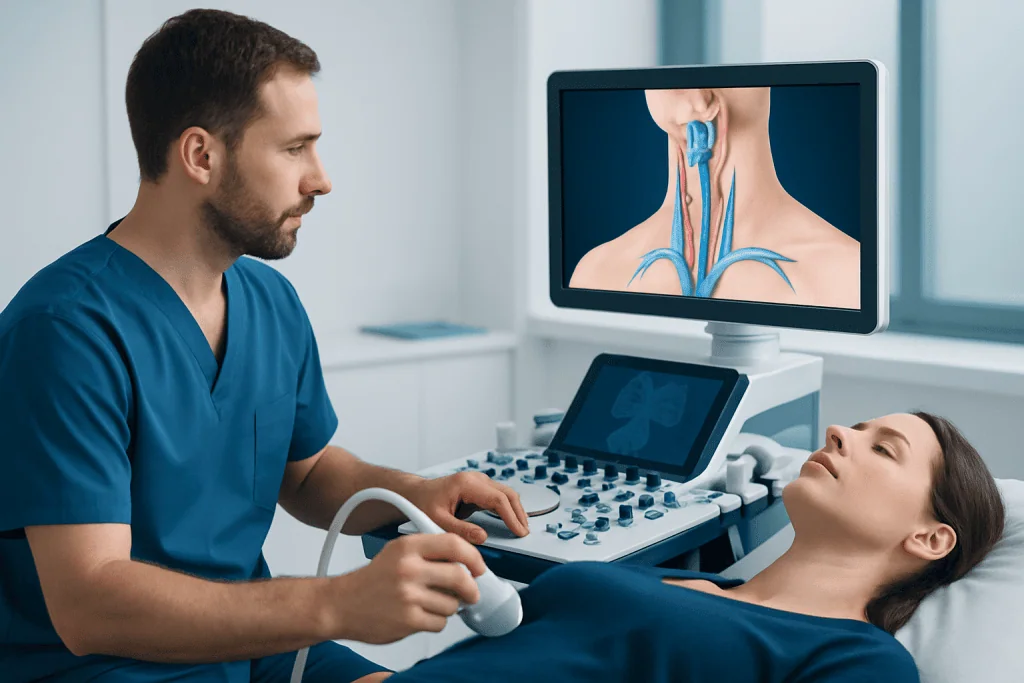
The superior laryngeal nerve divides into internal and external branches. The internal branch provides sensation above the vocal folds. This sensation helps trigger a protective cough if material enters the upper airway. Reduced sensation may make it easier for small amounts of food or liquid to enter the airway without causing a strong cough, sometimes called silent aspiration.
The external branch of the superior laryngeal nerve controls the cricothyroid muscle. This muscle adjusts vocal fold tension and is especially important for raising pitch and producing a clear, controlled voice. Injury may cause vocal fatigue, reduced vocal range, trouble projecting the voice, or difficulty reaching higher notes. These changes can be particularly noticeable for singers, teachers and others who use their voice extensively.
The recurrent laryngeal nerve supplies nearly all of the other muscles that move the vocal folds. It also provides sensation below the vocal folds. Its path is different on each side: the right nerve loops around the subclavian artery, while the left loops lower in the chest around the arch of the aorta before traveling upward to the larynx. This longer route means that conditions in the neck or chest can occasionally affect the nerve.
How laryngeal nerve problems can feel

Symptoms depend on which nerve is affected, whether one or both sides are involved, and how much vocal fold movement remains. A one-sided recurrent laryngeal nerve weakness often causes hoarseness, a breathy or weak voice, reduced volume, vocal tiredness, and difficulty speaking for long periods. Some people notice an ineffective cough or need extra effort to be heard in a noisy setting.
Swallowing symptoms may include coughing with drinks, a feeling that food is sticking, repeated throat clearing, or chest infections related to aspiration in more severe cases. However, swallowing difficulties have many possible causes. A clinician may recommend a specific swallowing assessment rather than assuming that the laryngeal nerve is responsible.
When both recurrent laryngeal nerves are significantly affected, the vocal folds may not open sufficiently during breathing. This can lead to shortness of breath, especially during activity, and a high-pitched or harsh sound while breathing in, called stridor. Bilateral vocal fold immobility is less common than one-sided weakness but needs prompt specialist evaluation because airway safety is the priority.
- Hoarseness or breathiness lasting longer than several weeks
- Loss of vocal range or difficulty controlling pitch
- Weak cough, frequent throat clearing or coughing while drinking
- Breathlessness, noisy breathing or reduced exercise tolerance
- Voice changes after neck, chest or heart surgery
Causes and risk factors: beyond common myths
A common myth is that hoarseness always means a damaged laryngeal nerve. In reality, short-term hoarseness is often related to a respiratory infection, voice overuse, dehydration or irritation. A laryngeal nerve disorder is one possible explanation, but it requires examination of the vocal folds and consideration of the person’s wider medical history.
Neck surgery, particularly surgery involving the thyroid, parathyroid glands, cervical spine or major blood vessels, can affect the recurrent or superior laryngeal nerve because of their close anatomical relationship to these structures. Surgery in the chest, heart or upper lung region may also affect the recurrent laryngeal nerve, particularly on the left side. During appropriate procedures, surgeons use careful anatomical techniques and may use nerve monitoring in selected situations, but no surgical approach can remove every risk.
Other possible causes include viral inflammation, trauma, prolonged pressure from a breathing tube, tumors affecting the neck or chest, enlarged structures near the nerve pathway, and neurological conditions. In some people, no cause is found after a complete evaluation; this may be described as idiopathic vocal fold paralysis. The word idiopathic means the cause is not identified, not that symptoms are imagined or unimportant.
How doctors assess the laryngeal nerve
An ear, nose and throat specialist usually begins by asking about the timing of symptoms, recent infections, surgery, intubation, voice demands, swallowing difficulties, smoking exposure and other health conditions. The clinician also listens to the voice and checks for symptoms that could suggest airway compromise or aspiration.
The main test is laryngoscopy, in which a thin flexible camera is passed gently through the nose or a rigid camera is used through the mouth to view the larynx. This allows the clinician to see whether the vocal folds are moving normally and whether there are other causes of voice change, such as swelling, lesions or muscle tension. Videostroboscopy may be used to evaluate the fine vibration of the vocal folds during sound production.
If a vocal fold is not moving normally, further testing may be recommended based on the clinical situation. This can include imaging of the neck and chest to examine the nerve’s course, swallowing studies when aspiration is suspected, and laryngeal electromyography in selected cases. Electromyography measures electrical activity in laryngeal muscles and may help distinguish nerve weakness from joint fixation or other movement problems. Diagnosis should be individualized; not every person needs every test.
Treatment and recovery options
Treatment focuses on the cause, the person’s symptoms and the degree of airway or swallowing risk. If a reversible cause is identified, such as inflammation or pressure from a treatable condition, addressing that cause is central. When recovery is possible, the care team may monitor vocal fold movement over time while supporting voice and swallowing function.
Voice therapy with a speech-language pathologist is often a valuable part of care. Therapy can help a person use the available voice more efficiently, reduce strain and improve breath support. It is not simply “resting the voice.” Complete voice rest is not routinely the answer to ongoing nerve-related voice symptoms, and a personalized plan is safer than trying forceful vocal exercises or whispering, which may sometimes increase strain.
For persistent one-sided vocal fold paralysis that causes significant breathiness, aspiration or communication difficulty, procedures may improve vocal fold closure. These can include temporary injection augmentation, longer-lasting medialization procedures, or selected nerve reinnervation techniques. The choice depends on the likely chance of nerve recovery, the person’s health, voice needs and laryngeal findings. When both sides are affected, treatment prioritizes a safe airway while aiming to preserve voice and swallowing as much as possible.
Acibadem International’s multidisciplinary specialists in JCI-accredited hospitals can assess voice, swallowing and airway concerns for international patients, coordinating ENT, speech-language and other relevant care when needed.
Protecting the voice and supporting daily life
Healthy voice habits cannot repair a severed nerve, but they can reduce avoidable irritation and help a person make the most of their voice while being assessed or treated. Regular hydration, adequate sleep, avoiding smoking and secondhand smoke, and limiting repeated shouting are sensible measures. People who use their voice professionally may benefit from advice tailored to their work demands.
Frequent throat clearing can irritate the vocal folds. Taking a sip of water, swallowing, or using a gentle, controlled cough may be more comfortable alternatives when appropriate. Reflux symptoms, nasal allergies and chronic cough can also aggravate the larynx, so these should be discussed with a clinician rather than treated with long-term self-medication.
For swallowing concerns, it is important not to make major diet changes without guidance. A swallowing specialist may recommend posture changes, food or fluid texture adjustments, and targeted exercises when these are appropriate. These recommendations should be individualized, especially for older adults and people with neurological conditions, because an unsuitable strategy can increase the risk of poor nutrition or aspiration.
When to seek medical care
Medical care should be arranged for hoarseness, a weak voice or swallowing difficulty that persists beyond a few weeks, returns repeatedly, or starts after surgery involving the neck, chest or heart. Earlier assessment is sensible for people with a history of smoking, head and neck cancer, neurological disease, or unexplained weight loss. Persistent symptoms should not be assumed to be simple laryngitis.
Urgent medical assessment is needed for trouble breathing, noisy high-pitched breathing, rapidly worsening shortness of breath, repeated choking, or an inability to clear secretions. These symptoms can indicate an airway or swallowing safety concern. Emergency services should be contacted if breathing is severely difficult or symptoms are escalating quickly.
Most voice changes are not emergencies, and many have treatable causes. Prompt evaluation helps clarify whether the laryngeal nerve is involved, identify conditions that need attention, and develop a plan that supports communication, swallowing and safe breathing.
Frequently asked questions
Is the laryngeal nerve the same as the recurrent laryngeal nerve?
No. The recurrent laryngeal nerve is one of the main laryngeal nerve branches. The superior laryngeal nerve is the other main branch, and it has important roles in sensation and pitch control.
Can laryngeal nerve damage heal on its own?
Some nerve injuries improve over time, particularly when the nerve has been stretched, inflamed or temporarily affected rather than permanently damaged. Recovery varies widely, so follow-up with an ENT specialist is important. Voice therapy or temporary procedures may help manage symptoms during recovery.
Does hoarseness always mean vocal cord paralysis?
No. Hoarseness is commonly caused by infections, vocal overuse, reflux, allergies and benign vocal fold conditions. Vocal fold paralysis is one possible cause and requires laryngeal examination for diagnosis.
Why can thyroid surgery affect the laryngeal nerve?
The recurrent and superior laryngeal nerves run close to the thyroid gland. Their location means they can be affected by swelling, stretching or injury during thyroid-related procedures, although surgeons take specific steps to identify and protect these nerves.
Can a person speak with one paralyzed vocal fold?
Yes. Many people can speak when one vocal fold is weak or immobile, but the voice may sound breathy, soft or tired. Voice therapy and, when needed, procedures that improve vocal fold closure can often improve communication.
What is the difference between a weak voice and a dangerous breathing problem?
A weak or hoarse voice is often uncomfortable but is not usually an emergency. Difficulty breathing, noisy breathing, rapidly worsening shortness of breath, or repeated choking needs urgent medical evaluation because it may affect airway safety.
References
- American Academy of Otolaryngology–Head and Neck Surgery
- National Institute on Deafness and Other Communication Disorders
- American Speech-Language-Hearing Association
- Merck Manual Consumer Version
- Cleveland Clinic
This article is for general information only and is not a substitute for professional medical advice. Please consult a qualified doctor about your individual situation.
Explore treatments in Turkey — costs, top hospitals & a free quote
JCI-accredited · board-certified surgeons · reply within 24h
Add us as a Preferred Source to see more of our trusted health content across Google Search, AI Overviews and Discover.