Boerhaave’s Disease: Symptoms, Causes, and Treatment Options

Boerhaave's disease is a spontaneous, full-thickness tear in the wall of the esophagus. Sudden chest or upper abdominal pain after forceful vomiting is an important warning sign.
Key Takeaways
- Boerhaave's disease is a spontaneous, full-thickness tear in the wall of the esophagus.
- Sudden chest or upper abdominal pain after forceful vomiting is an important warning sign.
- CT imaging and contrast swallow studies can help doctors confirm the tear and identify leakage.
- Treatment may include intravenous fluids, antibiotics, drainage, endoscopic therapy, or surgery.
- Fast assessment in an emergency department is essential; symptoms should never be managed at home.
Boerhaave's disease, also called Boerhaave syndrome, is a full-thickness rupture of the esophagus that most often occurs after severe vomiting or retching. It is a medical emergency because digestive contents can leak into the chest, but prompt specialist treatment can greatly improve outcomes.
Overview: What Is Boerhaave's Disease?
Boerhaave’s disease is a rare but serious condition in which the esophagus develops a tear through all layers of its wall. The esophagus is the muscular tube that carries food and fluids from the mouth to the stomach. The condition is also known as Boerhaave syndrome or spontaneous esophageal rupture.
The tear most commonly occurs in the lower part of the esophagus after a sudden, major increase in pressure inside it, usually during forceful vomiting or retching. When the wall ruptures, saliva, stomach contents, bacteria, and air may escape into the tissues around the esophagus and the chest cavity. This can cause severe inflammation and infection, which is why immediate medical assessment is important.
Boerhaave’s disease differs from a Mallory-Weiss tear. A Mallory-Weiss tear usually affects only the inner lining near the junction of the esophagus and stomach and commonly causes bleeding. In contrast, Boerhaave’s disease is a deeper, full-thickness rupture and can lead to leakage outside the esophagus.
Symptoms and Early Warning Signs
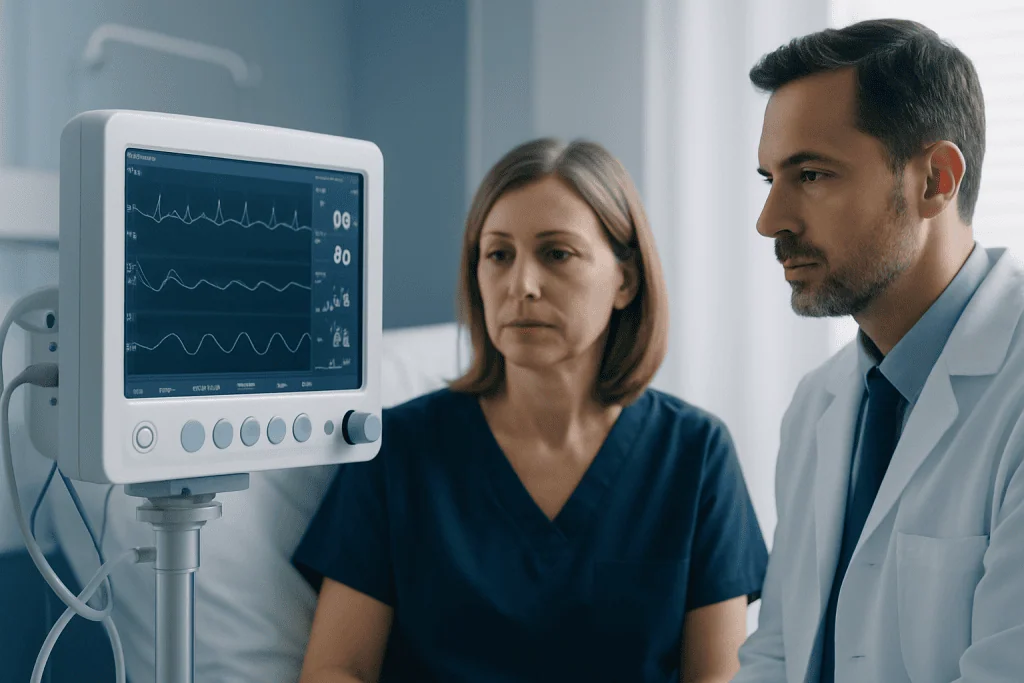
Symptoms often begin suddenly after repeated vomiting, severe retching, or straining. Severe pain in the chest is common and may spread to the back, shoulder, neck, or upper abdomen. Pain can be mistaken for a heart, lung, stomach, or muscle problem, so the connection with recent vomiting is a helpful clue for clinicians.
Not every person has the same symptom pattern. Some people may have shortness of breath, painful swallowing, difficulty swallowing, fever, sweating, rapid heartbeat, nausea, or an unwell feeling. As leaking material irritates the chest, breathing may become difficult and the person may appear increasingly unwell.
Less commonly, air trapped under the skin can cause swelling or a crackling sensation in the neck or chest. This is called subcutaneous emphysema. The classic combination of vomiting, chest pain, and air under the skin is not present in everyone, so doctors consider Boerhaave’s disease whenever concerning chest or upper abdominal pain follows forceful vomiting.
How a Rupture Can Occur
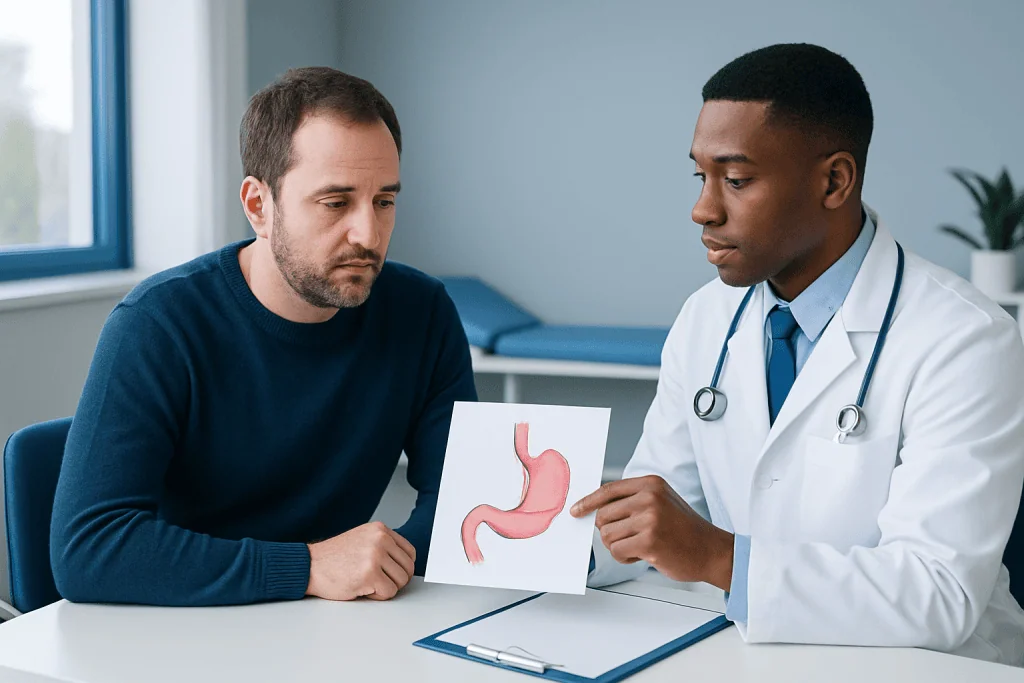
The usual trigger is forceful vomiting or retching against a closed upper esophageal muscle. This rapidly raises pressure inside the esophagus while pressure in the chest is lower, placing strain on the esophageal wall. Heavy straining, coughing, seizures, childbirth, weightlifting, or swallowing a large amount of air may rarely create similar pressure changes.
Episodes of severe vomiting can occur for many reasons, including stomach infections, alcohol intoxication, food poisoning, pregnancy-related nausea, some medications, and gastrointestinal conditions. Boerhaave’s disease is not usually caused by an everyday episode of mild nausea or vomiting; it is an uncommon complication of intense retching.
It is important to distinguish spontaneous rupture from other forms of esophageal perforation. Medical procedures involving the esophagus, swallowed foreign objects, caustic substances, trauma, tumors, or severe inflammation can also create a perforation. These conditions may need similar urgent evaluation, but the cause and treatment plan can differ.
How Doctors Diagnose Boerhaave's Disease
Diagnosis begins with urgent clinical assessment. The medical team asks about vomiting, pain, swallowing problems, recent procedures, injuries, medications, and other health conditions. They check breathing, blood pressure, heart rate, temperature, oxygen levels, and signs of infection or shock. Blood tests can show inflammation, dehydration, or organ stress, although they cannot confirm the diagnosis alone.
Imaging is central to diagnosis. A chest X-ray may show air or fluid in unusual areas, but a CT scan of the chest and upper abdomen, often with contrast, is commonly used to identify a tear and show any air, fluid, or infection around the esophagus. A water-soluble contrast swallow study may also show whether contrast leaks from the esophagus.
Endoscopy, which uses a flexible camera to look inside the esophagus, may be useful in selected cases. However, it is performed carefully because introducing air or instruments can sometimes worsen a known or suspected injury. A team involving emergency medicine, gastroenterology, radiology, thoracic surgery, and critical care specialists often works together to decide the safest next steps.
Treatment Options and Hospital Care
Treatment starts immediately when Boerhaave’s disease is suspected. Patients are usually admitted to hospital and are asked not to eat or drink so that further leakage is limited. Care may include intravenous fluids, pain relief, oxygen when needed, medicines to reduce stomach acid, and broad-spectrum intravenous antibiotics to treat or prevent serious infection.
The most appropriate treatment depends on the location and size of the rupture, how long it has been present, the amount of leakage, whether infection has developed, and the person’s overall stability. If fluid or infected material has collected around the lungs or in the chest, doctors may place drains to remove it. Nutritional support may be given through a feeding tube positioned beyond the affected area or through intravenous nutrition while healing takes place.
Many people need a procedure to close or control the leak. Options can include surgical repair, cleaning of infected tissue, and drainage. In selected patients with a contained leak and early diagnosis, endoscopic approaches such as clips, suturing devices, vacuum therapy, or a temporary covered stent may be considered. Non-operative management is reserved for carefully selected stable patients and requires close specialist monitoring.
After initial treatment, repeat scans or contrast studies may be used to check healing before normal eating and drinking resume. Recovery varies considerably. It may involve a period in hospital, gradual reintroduction of nutrition, treatment for any infection, and follow-up with the specialist team.
Reducing Risk and Supporting Recovery
Because Boerhaave’s disease is rare and often follows an unexpected episode of severe vomiting, it cannot always be prevented. The most practical protective step is to seek medical advice for persistent or severe vomiting, especially when a person cannot keep fluids down, has severe pain, shows signs of dehydration, or has blood in the vomit.
People with a history of heavy alcohol use, eating disorders, recurrent vomiting, or digestive conditions should discuss appropriate support with a qualified healthcare professional. Treating the underlying reason for recurrent vomiting may reduce the chance of complications. Alcohol reduction, hydration, and early treatment for severe nausea can be helpful in the right circumstances, but they do not replace emergency care for chest pain after retching.
Following treatment, the care team may recommend temporary dietary changes and follow-up testing. Patients should follow advice about eating, activity, medications, wound care if surgery was performed, and return appointments. New fever, increasing pain, worsening breathlessness, or difficulty swallowing during recovery should be reported urgently.
When to Seek Medical Care
Emergency medical care is needed immediately for severe chest, back, neck, or upper abdominal pain that develops after forceful vomiting or retching. Shortness of breath, fever, fainting, confusion, rapid heartbeat, painful swallowing, or a person becoming suddenly very unwell are additional reasons to call emergency services or go to the nearest emergency department.
A person should not try to manage suspected Boerhaave’s disease at home with food, drinks, antacids, or over-the-counter pain medicines. It is safer not to eat or drink until assessed by a medical professional, unless emergency personnel provide different instructions. Prompt diagnosis helps specialists limit leakage, control infection, and select the most suitable treatment.
For international patients who need planned follow-up or specialist evaluation after emergency stabilization, Acibadem International’s multidisciplinary specialists and JCI-accredited hospitals can diagnose and treat complex esophageal conditions. Immediate symptoms, however, should always be evaluated at the closest emergency department without delay.
Frequently asked questions
Is Boerhaave's disease the same as an esophageal perforation?
Boerhaave's disease is one type of esophageal perforation. It specifically describes a spontaneous, full-thickness rupture that usually happens after forceful vomiting or retching. Other perforations may result from medical procedures, trauma, swallowed objects, or disease affecting the esophagus.
Can Boerhaave's disease happen without vomiting?
Yes, but this is less common. Severe straining, intense coughing, seizures, or other events that sharply raise pressure inside the esophagus may occasionally contribute. Doctors may also investigate other causes of esophageal perforation when vomiting has not occurred.
How quickly do symptoms of Boerhaave's disease appear?
Symptoms often begin immediately or soon after forceful vomiting, particularly chest or upper abdominal pain. However, the presentation can vary, and some symptoms may become more noticeable as inflammation or infection develops. Any severe pain after vomiting needs urgent medical assessment.
Can Boerhaave's disease heal without surgery?
Some carefully selected patients with a small, contained leak and no severe infection may be treated without open surgery. This still requires hospital admission, intravenous treatment, close imaging follow-up, and specialist supervision. Many cases require endoscopic treatment, drainage, surgery, or a combination of these approaches.
What is the difference between Boerhaave's disease and a heart attack?
Both conditions can cause sudden, severe chest pain and require emergency evaluation. Boerhaave's disease is more likely to follow severe vomiting or retching and may include painful swallowing or breathing difficulty. Symptoms alone cannot reliably tell these conditions apart, so emergency testing is necessary.
What should someone do if chest pain starts after vomiting?
They should seek emergency medical care immediately, especially if pain is severe, persistent, or accompanied by breathlessness, fever, weakness, or difficulty swallowing. They should avoid eating and drinking while waiting for assessment unless instructed otherwise by emergency professionals. Early evaluation is the safest approach.
References
- Merck Manual Professional Edition
- National Institute of Diabetes and Digestive and Kidney Diseases
- American College of Gastroenterology
- Society of American Gastrointestinal and Endoscopic Surgeons
- European Society of Gastrointestinal Endoscopy
This article is for general information only and is not a substitute for professional medical advice. Please consult a qualified doctor about your individual situation.
Persistent digestive symptoms? Get evaluated in Turkey
JCI-accredited · board-certified surgeons · reply within 24h
Add us as a Preferred Source to see more of our trusted health content across Google Search, AI Overviews and Discover.
Check your numbers in seconds
BMI, calories, due date, blood pressure and 30+ more clinical calculators — free, instant, doctor-reviewed ranges.