Peak Expiratory Flow: A Complete Medical Overview

Peak expiratory flow (PEF) is a quick measurement of how fast air can be exhaled forcefully from the lungs. A peak flow meter is most often used to monitor asthma, but it does not diagnose asthma on its own.
Key Takeaways
- Peak expiratory flow (PEF) is a quick measurement of how fast air can be exhaled forcefully from the lungs.
- A peak flow meter is most often used to monitor asthma, but it does not diagnose asthma on its own.
- Personal best values and trends are generally more useful than comparing a result with another person's number.
- Correct, consistent technique is essential because effort, timing, illness, and device differences can affect results.
- A low reading together with significant breathing symptoms needs prompt medical assessment, even if a person has an asthma action plan.
Peak expiratory flow is the fastest speed at which a person can forcefully breathe out after taking a full breath in. Measured with a handheld peak flow meter, it can help identify day-to-day changes in airway narrowing and support an individualized asthma management plan.
Overview: what peak expiratory flow measures
Peak expiratory flow, often shortened to PEF or peak flow, is the maximum speed of airflow during a forceful exhalation. To measure it, a person takes the deepest breath possible and then blows out once, as hard and as fast as possible, into a small handheld device called a peak flow meter. The device displays a number, commonly expressed in liters per minute.
PEF reflects how open the larger airways are at that moment. When airways become narrowed, inflamed, or filled with mucus, air may leave the lungs less quickly and peak flow can fall. For this reason, regular readings can provide an early sign of worsening airway obstruction for some people with asthma, sometimes before they notice clear symptoms.
A peak flow reading is one piece of respiratory assessment rather than a complete lung test. It does not show why airflow is reduced, distinguish every lung condition, or replace a clinical review. Spirometry, which is performed with more detailed equipment, provides additional measurements and is commonly used to help diagnose and assess respiratory disease.
How peak flow monitoring can be useful
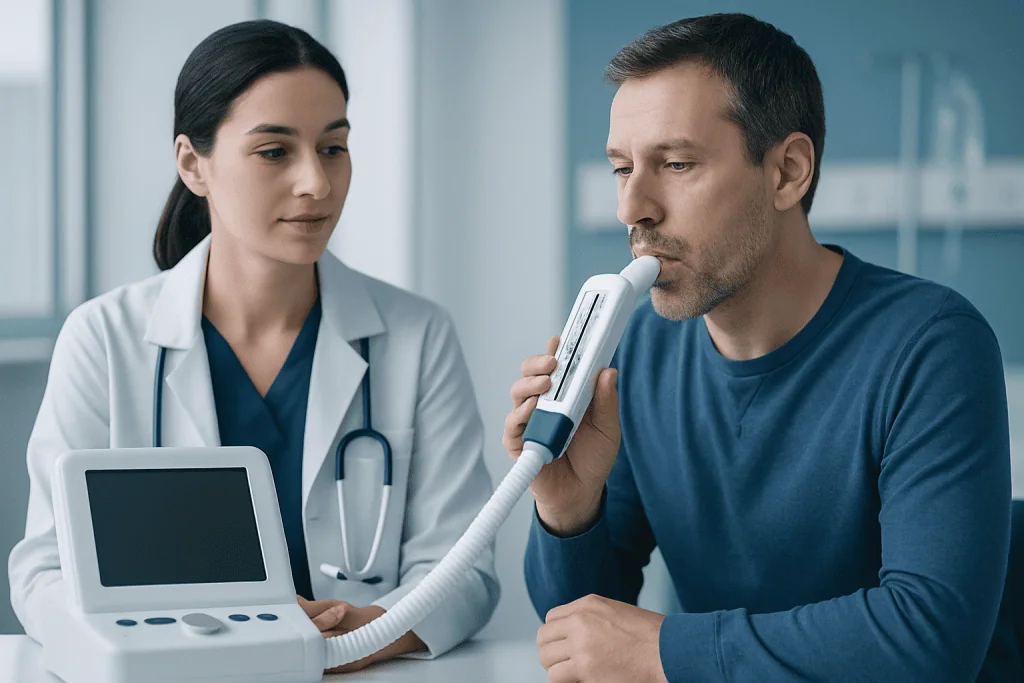
Peak flow monitoring is most useful when a clinician has recommended it as part of a written asthma action plan. Asthma symptoms and airway narrowing can vary over hours or days. Recording readings at regular times may reveal patterns related to respiratory infections, allergens, smoke exposure, exercise, work exposures, weather changes, or missed controller medication.
For some people, monitoring helps show whether asthma treatment is keeping airways stable. It may also help guide the steps already agreed in an action plan, such as when to use prescribed reliever medicine or when to contact a healthcare professional. The plan should be individualized; people should not independently start, stop, or alter prescription medicines based only on a peak flow number.
Peak flow monitoring is not necessary for every person with asthma. Some people can manage effectively by tracking symptoms and following a clinician-guided treatment plan. It may be less reliable in young children or in anyone who cannot create a consistent forceful exhalation. A doctor can advise whether home monitoring is likely to be helpful and how often to measure.
Understanding personal best, predicted values and zones

The most meaningful comparison is often a person’s personal best peak flow. This is the highest reading they can achieve during a period when their respiratory condition is well controlled, using correct technique and the same meter. A clinician may ask a person to measure peak flow at set times over two or more weeks to establish this baseline.
Predicted peak flow values are population-based estimates calculated from factors such as age, height, sex, and sometimes ethnicity. They can provide context, but they do not define what is normal or safe for one individual. Natural lung capacity differs substantially between people, so a value below a predicted number does not by itself confirm a diagnosis or indicate an emergency.
Many asthma action plans use a traffic-light system based on percentages of personal best. The green zone generally represents stable control, the yellow zone suggests caution and a need to follow the plan, and the red zone indicates a potentially serious decline requiring urgent action. The exact cutoffs and instructions vary, so people should use the limits supplied by their own clinician rather than relying on a generic chart.
- Trend matters: a persistent downward pattern can be important even when a reading has not reached a designated zone.
- Symptoms matter: wheezing, cough, chest tightness, and breathlessness may require attention despite a usual-looking reading.
- Context matters: a respiratory infection, allergen exposure, or poor inhaler technique may contribute to changes.
How to perform a peak flow test correctly
Using the same meter each time supports more consistent tracking. Before testing, the person should make sure the indicator is set to the bottom of the scale, stand or sit upright according to the device instructions, and take a full deep breath. They should close their lips tightly around the mouthpiece and blow out in one short, sharp burst as hard and fast as possible. It is the speed of the blow, not the length of exhalation, that is being measured.
The test is usually repeated three times. Each attempt should begin with the marker reset. The highest of the three readings, rather than an average, is recorded along with the date, time, symptoms, possible triggers, and any relevant medicines taken. Keeping these details in a paper diary, phone note, or app can make patterns easier to discuss at appointments.
Technique can substantially affect the result. A weak start, air leaking around the mouthpiece, coughing during the blow, bending forward, or failing to inhale fully may produce a falsely low reading. Readings should be taken at the times agreed in the action plan, often in the morning and evening, and potentially before and after a prescribed bronchodilator when instructed by a clinician.
What can cause peak flow readings to change
In asthma, a fall in peak flow may occur when airway muscles tighten, airway lining becomes inflamed, or mucus increases. Common contributors include viral respiratory illnesses, pollen or other allergens, tobacco smoke, air pollution, cold air, exercise, stress, and exposure to irritants at home or work. Not every decrease means asthma is worsening, but repeated changes deserve attention.
Readings normally vary across the day and are often lower in the early morning. The amount of variation that is expected differs between individuals. A clinician may calculate daily variability from a diary when investigating possible asthma or reviewing control, but a person should not try to interpret a single isolated result without considering symptoms and their individualized plan.
Other factors can influence PEF, including poor effort, fatigue, pain, recent use of a bronchodilator, and differences between meters. Peak flow meters are designed for repeat monitoring rather than comparison between devices; a person should ideally continue with one device. If a meter is damaged, difficult to use, or produces unexpected results, its technique and function should be reviewed with a healthcare professional.
Limits of peak flow testing and the role of medical assessment
Peak flow meters are practical tools, but they have important limits. Some people, particularly those with severe asthma, may under-perceive symptoms or have readings that do not fully reflect the seriousness of an attack. Conversely, anxiety, vocal cord problems, respiratory infections, and poor technique can cause breathing symptoms or low readings for reasons that a peak flow meter cannot identify.
Peak flow is not a stand-alone diagnostic test for asthma, chronic obstructive pulmonary disease (COPD), or other lung disorders. Diagnosis usually involves a medical history, symptom pattern, physical examination, and objective breathing tests such as spirometry. A clinician may also consider allergy assessment, chest imaging, or other tests when appropriate.
Regular review is valuable for anyone using a peak flow meter. A doctor or respiratory clinician can check inhaler technique, confirm that the personal best and action-plan zones remain appropriate, and consider whether treatment needs adjustment. Acibadem International’s multidisciplinary specialists and JCI-accredited hospitals assess and treat respiratory conditions for international patients.
When to seek medical care
A person should arrange a medical review if peak flow readings are repeatedly lower than usual, if symptoms are becoming more frequent, if night-time cough or breathlessness is occurring, or if usual prescribed treatment is not providing the expected relief. A review is also appropriate when someone needs to use reliever medicine more often than their clinician has advised, or when they are unsure how to use their action plan.
Urgent medical care is needed for severe or rapidly worsening breathlessness, difficulty speaking in full sentences, bluish or gray lips or face, marked drowsiness or confusion, chest pain, or a peak flow reading in the red zone of an individual’s asthma plan. A person should follow their emergency instructions and seek local emergency help without waiting for repeated measurements if symptoms are severe.
Peak flow numbers should never override how a person feels. Someone with significant breathing difficulty should seek urgent help even if they do not have a meter, cannot perform the test well, or obtain a reading that seems less concerning. Early assessment can help clinicians identify the cause and provide appropriate treatment.
Frequently asked questions
What is a normal peak expiratory flow reading?
There is no single normal peak flow reading for every adult or child. Values vary with body size, age, sex, lung health, device type, and testing technique. For people monitoring asthma, their own personal best and the pattern of readings over time are usually more useful than a general reference number.
Is peak expiratory flow the same as spirometry?
No. Peak flow measures the fastest speed of a forceful exhalation using a simple handheld meter. Spirometry is a more detailed breathing test performed with specialized equipment and measures several aspects of lung function, including the volume exhaled in the first second.
How often should peak flow be measured?
The schedule should follow the person's clinician-guided asthma action plan. Some people measure in the morning and evening, while others monitor only during symptoms, treatment changes, or periods of poor control. Measurements are most useful when taken consistently at the agreed times and recorded with symptoms.
Why is the highest of three peak flow readings recorded?
Peak flow depends on a quick, forceful effort, and the first attempt may not be the strongest. Taking three attempts gives the person an opportunity to achieve their best effort. The highest reading is generally used because it is most likely to represent their maximum airflow at that time.
Can a low peak flow reading occur without feeling short of breath?
Yes. Some people notice a reduction in peak flow before they feel obvious asthma symptoms, which is one reason monitoring may be useful. A lower-than-usual reading should be considered alongside the person's action plan, recent triggers, and symptoms, and persistent changes should be discussed with a clinician.
Can peak flow testing diagnose asthma?
Peak flow results can support the assessment of asthma by showing variable airflow limitation over time, but they cannot diagnose asthma alone. A clinician considers symptoms, medical history, examination findings, and formal lung-function testing where appropriate. Other conditions can also cause respiratory symptoms or altered readings.
References
- Global Initiative for Asthma
- American Lung Association
- National Heart, Lung, and Blood Institute
- Asthma + Lung UK
- National Health Service
This article is for general information only and is not a substitute for professional medical advice. Please consult a qualified doctor about your individual situation.
Explore treatments in Turkey — costs, top hospitals & a free quote
JCI-accredited · board-certified surgeons · reply within 24h
Add us as a Preferred Source to see more of our trusted health content across Google Search, AI Overviews and Discover.

More from the Health Library



Related Specialists

Assoc. Prof. Dr. Altuğ Yücekul
Orthopedic Surgery & Traumatology
Dr. Aynur Göksel
Physical Medicine & Rehabilitation
Dr. Hande Bolat
Emergency Service
Dr. Leila Mohammadi
Emergency Service