How Can You Tell If a Condom Breaks? Causes, Explanations, and Next Steps
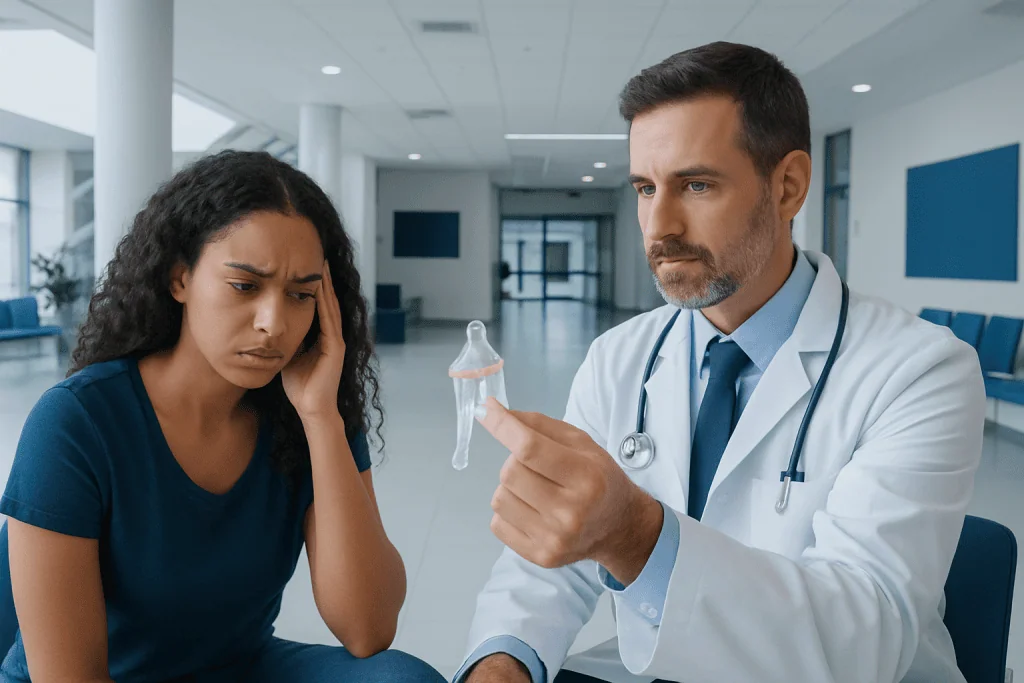
A broken condom may have a visible tear, missing tip, leakage, or may slip off and remain inside the vagina or rectum. Condoms can break because of friction, incorrect fit, expired or damaged material, improper storage, or using oil-based lubricants with latex.
Key Takeaways
- A broken condom may have a visible tear, missing tip, leakage, or may slip off and remain inside the vagina or rectum.
- Condoms can break because of friction, incorrect fit, expired or damaged material, improper storage, or using oil-based lubricants with latex.
- After a possible break, stop sexual activity, remove the condom carefully, and consider emergency contraception or STI testing based on the situation.
- Symptoms cannot reliably show whether an STI was transmitted; testing is the dependable way to check.
- Urgent medical advice may be appropriate after possible exposure to HIV, sexual assault, severe pain, or a condom that cannot be removed.
A condom break is often noticeable as a tear, split, leakage, sudden change in sensation, or a condom that slips off during sex. Although this can be worrying, it does not always lead to pregnancy or infection; prompt, practical steps can reduce risks and help a person decide whether medical advice is needed.
How can you tell if a condom breaks?
Most condom breaks are harmless in the immediate sense: they do not cause an injury and may not result in pregnancy or a sexually transmitted infection (STI). A person can often tell a condom has broken by seeing a tear or split, noticing semen leaking, feeling a sudden loss of tension or protection, or finding that the condom has slipped off during sex.
Sometimes the break is small and is only noticed afterwards. After sex, hold the condom at the open end before withdrawal, then inspect it in good light for holes, tears, a split at the side or tip, or missing material. A condom that is still intact but has slipped off, rolled up, or remained in the vagina or rectum should also be treated as a possible contraceptive or STI-protection failure.
It is understandable to feel anxious after this happens. The next steps depend on the type of sex, whether semen or other sexual fluids may have entered the vagina, rectum, or mouth, the possibility of pregnancy, and each partner’s known or unknown STI status.
Signs of condom breakage or slipping

A condom may fail in more than one way. A complete rupture is usually easy to identify, while a small tear may be less obvious. Checking the condom after every use can help identify a problem before it is discarded.
- Visible damage: a hole, split, tear, crack, or shredded area in the condom.
- Leakage: semen or vaginal fluids seen outside the condom or at its base when this was not expected.
- A missing reservoir tip: the tip may be torn or absent after ejaculation.
- Slipping: the condom comes off during sex, is left inside the vagina or rectum, or is loose and bunched at the base.
- A sudden change during sex: either partner may notice reduced tightness, increased friction, or a change in sensation. Sensation alone is not a reliable test, but it can prompt a check.
Do not rely on symptoms afterwards to determine whether protection failed. Pregnancy symptoms do not occur immediately, and many STIs cause no symptoms at first. Inspection of the condom and timely discussion with a healthcare professional are more useful than waiting for symptoms.
Why condoms break

Condoms are highly effective barriers when used correctly and consistently, but they can tear or slip when the material is damaged or when fit and technique are not suitable. Breakage is not necessarily anyone’s fault, and it is often preventable in future use.
Common causes include using a condom after its expiry date, opening the package with teeth or sharp objects, or carrying condoms for long periods in a wallet, car, or other hot environment. Heat, friction, and pressure can weaken the material. Condoms should be stored in a cool, dry place and checked for package damage before use.
Insufficient lubrication can increase friction and make breakage more likely. Water- or silicone-based lubricants are generally compatible with latex condoms. Oil-based products, including petroleum jelly, massage oils, body lotions, and some creams, can damage latex and should not be used with latex condoms. A condom that is too tight may tear, while one that is too loose may slip off.
Using two external condoms at once, or an external condom together with an internal condom, can create friction and increase the chance of failure. Only one barrier method should be used at a time, following the product instructions.
What to do straight away
If a condom breaks or slips, stop sexual activity and withdraw carefully. Hold the condom at the base during withdrawal if possible, to reduce spillage. Remove a condom left in the vagina or rectum gently with clean fingers; do not use objects or forceful methods. If it cannot be removed easily, seek medical care.
Washing the outside genital area with water may help a person feel comfortable, but do not douche or wash inside the vagina or rectum. Douching does not prevent pregnancy or STIs and may irritate delicate tissues. Urinating after sex may help reduce the risk of some urinary tract infections, but it does not prevent pregnancy or STIs.
If pregnancy is possible, emergency contraception may be an option. It works best when used as soon as possible after unprotected vaginal sex, and the available methods have different time windows and suitability. A pharmacist, sexual health clinic, gynecologist, or other qualified clinician can provide individualized advice, including discussion of contraception options.
If there may have been exposure to an STI, contact a sexual health service or doctor promptly. In particular, post-exposure medication may be considered after a possible HIV exposure, but it needs to be started urgently and is generally assessed within 72 hours. A clinician can explain testing, prevention, and follow-up for sexually transmitted diseases.
How a doctor assesses the risk
A clinician will usually begin by asking what happened, when it happened, the type of sexual contact involved, whether ejaculation occurred, and whether either partner has a known STI or recent test result. These questions are routine and confidential, and they help determine what care may be useful.
For possible pregnancy, the clinician may discuss the menstrual cycle, contraception already being used, and emergency contraception choices. A pregnancy test is not useful immediately after sex because the body needs time to produce detectable pregnancy hormone. A clinician can advise when testing is appropriate, especially if a period is late or unusual.
For STI concerns, testing may include blood, urine, or swab tests, depending on the exposure and the infection being considered. Some tests are accurate soon after exposure, while others may need to be repeated later because infections have different detection windows. Testing may also be advised for sites of contact, such as the throat, genitals, or rectum.
A physical examination is not always needed, but it may be recommended for pain, bleeding, sores, discharge, urinary symptoms, a retained condom, or concern about injury. Healthcare professionals can offer nonjudgmental support and explain results clearly.
Reducing the chance of another condom failure
Use a new condom for every act of vaginal, anal, or oral sex, and put it on before genital contact. Check the expiration date, confirm the wrapper is sealed and undamaged, and open it carefully. Pinch the reservoir tip to remove trapped air, then roll the condom down the erect penis in the correct direction.
Choose a condom that fits comfortably. It should roll down smoothly without being excessively tight, and it should stay secure at the base without bunching or slipping. If breakage or slipping happens repeatedly, a different size, style, or material may help. People with latex allergy can ask a healthcare professional or pharmacist about suitable non-latex alternatives.
Use adequate compatible lubricant, especially during anal sex, where friction can be greater. Reapply lubricant as needed. After ejaculation, withdrawal should happen while the penis is still erect, holding the condom at its base. The condom should then be wrapped in tissue and placed in a bin, not flushed.
Condoms provide important protection against many STIs and can prevent pregnancy, but no method is perfect. Some people also choose another reliable contraceptive method alongside condoms for added pregnancy prevention, while continuing condom use for STI protection.
When to seek medical care
Seek prompt medical advice if a condom broke during vaginal or anal sex and there is a possibility of HIV exposure, particularly when a partner has HIV, has an unknown status with potential risk factors, or there has been sexual assault. HIV post-exposure treatment is time-sensitive, so it is important not to wait for symptoms.
Medical review is also appropriate if emergency contraception is needed, if a condom is retained and cannot be removed easily, or if there is genital or rectal pain, significant bleeding, fever, unusual discharge, sores, burning with urination, or a new rash. These symptoms can have several causes and deserve assessment rather than self-diagnosis.
Anyone concerned about pregnancy, an STI, or repeated condom breakage can speak with a doctor or sexual health clinic. Acibadem International’s multidisciplinary specialists and JCI-accredited hospitals can assess sexual health concerns and provide appropriate testing and care for international patients.
Frequently asked questions
Can a condom break without either partner noticing?
Yes. A large tear may be obvious, but a small hole or split can be noticed only when the condom is checked after sex. A change in sensation can occur, but it is not a dependable way to tell whether a condom failed.
What should someone do if a condom breaks during sex?
They should stop, withdraw carefully, and check whether the condom has torn or slipped off. If pregnancy is possible, emergency contraception may be considered as soon as possible. If there is concern about STI exposure, a sexual health clinic or doctor can advise about urgent prevention and testing.
Does a broken condom always cause pregnancy?
No. Pregnancy is possible after unprotected vaginal sex, but it does not occur every time a condom breaks. The likelihood depends on factors such as the timing in the menstrual cycle, whether semen entered the vagina, and use of other contraception.
Can washing after a condom breaks prevent an STI or pregnancy?
No. Washing or douching after sex does not prevent pregnancy or sexually transmitted infections. Internal washing can also cause irritation, so it is best avoided; timely medical advice is more effective for addressing possible risks.
How soon should STI testing be done after a condom breaks?
The best timing depends on the infection and the type of exposure. A clinician may recommend some baseline tests soon after the event and repeat tests later because certain infections take time to become detectable. Testing should not be delayed if symptoms develop or HIV post-exposure treatment may be needed.
Why do condoms keep breaking?
Repeated breakage can result from incorrect size, inadequate lubrication, using oil-based products with latex condoms, damaged or expired condoms, or storage in heat and friction. Reviewing the condom type, fit, storage, and use of compatible lubricant can often prevent further problems.
This article is for general information only and is not a substitute for professional medical advice. Please consult a qualified doctor about your individual situation.
Explore treatments in Turkey — costs, top hospitals & a free quote
JCI-accredited · board-certified surgeons · reply within 24h
Add us as a Preferred Source to see more of our trusted health content across Google Search, AI Overviews and Discover.

More from the Health Library

What Are Coconut Aminos? Here Is What the Evidence Says

How Many Calories in an Egg? Causes, Explanations, and Next Steps

What Happens If You Eat Silica Gel? A Doctor-Reviewed Answer

Why Do My Elbows Have Bumpy Rash? Causes, Explanations, and Next Steps

How Long Does Spaghetti Last in the Fridge? Here Is What the Evidence Says