Tavi tavr procedure in Turkey: Hospitals, Safety & What to Expect

TAVI and TAVR are two names for the same catheter-based procedure used to replace a narrowed aortic valve. The procedure is most often considered for symptomatic severe aortic stenosis, although suitability is individual.
Key Takeaways
- TAVI and TAVR are two names for the same catheter-based procedure used to replace a narrowed aortic valve.
- The procedure is most often considered for symptomatic severe aortic stenosis, although suitability is individual.
- Assessment includes echocardiography, CT imaging, blood tests and review by a multidisciplinary heart team.
- Most patients are treated through an artery in the groin and begin walking soon after the procedure when clinically appropriate.
- Possible complications include bleeding, stroke, vascular injury, rhythm problems and the need for a pacemaker.
- International patients benefit from planning medical records, travel timing, accommodation and follow-up care in advance.
A TAVI/TAVR procedure in Turkey can be considered for people with severe aortic stenosis who are assessed by a multidisciplinary heart team as suitable for minimally invasive valve replacement. Safe care depends on careful patient selection, detailed imaging, experienced structural heart services, and organised follow-up before and after travel.
Overview: TAVI/TAVR Procedure in Turkey
A TAVI/TAVR procedure in Turkey is a minimally invasive method of replacing a severely narrowed aortic valve without conventional open-heart surgery. TAVI means transcatheter aortic valve implantation, while TAVR means transcatheter aortic valve replacement; both terms describe the same general treatment approach.
The procedure is used primarily for severe aortic stenosis, a condition in which the aortic valve becomes stiff and does not open fully. This makes the heart work harder to pump blood to the body and may lead to breathlessness, chest discomfort, dizziness, fainting, fatigue or heart failure symptoms. For an overview of the procedure pathway, patients can review TAVI/TAVR procedure information.
Turkey has hospitals providing structural heart services, including catheterisation laboratories, cardiac imaging, cardiac surgery backup, intensive care and rehabilitation support. For international patients, a safe pathway should include review of medical records before travel, a clearly explained treatment plan, arrangements for accommodation and a plan for follow-up after returning home.
How TAVI/TAVR Works
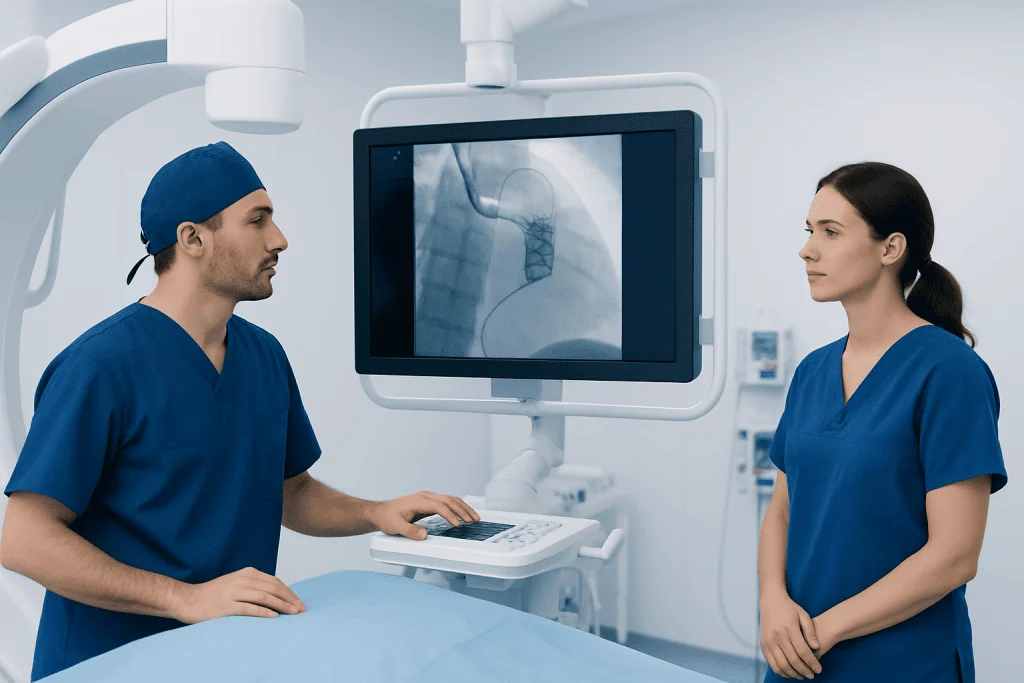
In TAVI/TAVR, a replacement valve made of biological tissue attached to a metal frame is delivered to the heart through a thin tube called a catheter. The new valve is positioned inside the diseased aortic valve, where it expands and begins directing blood flow more normally. The old valve is usually not removed.
The most common route is transfemoral access, meaning the catheter is inserted through an artery in the groin. In some cases, the arteries are too narrow, blocked or otherwise unsuitable for this route. The heart team may then consider another access route, based on the person’s anatomy and overall health.
The procedure is performed in a specialised catheterisation laboratory or hybrid operating room using continuous X-ray and echocardiographic guidance. Patients may receive local anaesthesia with sedation or general anaesthesia, depending on their clinical needs, the planned access route and local practice.
TAVI/TAVR treats the valve obstruction but does not remove every cardiovascular risk factor. Continued care for blood pressure, coronary artery disease, irregular heart rhythms and other health conditions remains important after valve replacement.
Who May Be a Candidate?

TAVI/TAVR may be an option for adults with severe aortic stenosis, especially when symptoms are present or when heart function is being affected. Symptoms can be subtle at first, and some people reduce their activities gradually without recognising how much their exercise tolerance has changed. A detailed cardiology assessment is needed before deciding on treatment.
Suitability is not determined by age alone. The heart team considers valve severity, symptoms, frailty, kidney function, lung disease, previous heart surgery, coronary artery disease, the shape and size of the aortic valve, artery access and expected long-term benefit. Surgical aortic valve replacement may remain the better option for some people, particularly where anatomy or other heart conditions require surgery.
Evaluation commonly includes an echocardiogram, electrocardiogram, blood tests, coronary assessment when appropriate, and a CT scan to measure the valve and blood vessels. These tests help the team select a valve size, plan the safest access route and identify issues that may need treatment before or alongside valve replacement.
People with aortic stenosis may also have other valve problems or heart conditions. Care should therefore be tailored rather than based on a single test result. More general information about the underlying condition is available at aortic stenosis.
What Happens Before, During and After the Procedure
Before the procedure, the team reviews imaging, medication use, allergies and medical history. Patients should provide recent test results, a list of medicines and details of prior procedures. Instructions may be given about fasting and about medicines that affect bleeding, blood pressure or diabetes; these instructions should be followed only as directed by the treating clinicians.
During TAVI/TAVR, the groin area or another access site is cleaned and numbed if local anaesthesia is used. The catheter is guided through the blood vessel to the diseased valve. The replacement valve is then expanded, either with a balloon or by self-expansion, and its position and function are checked carefully before the catheter is removed.
Afterwards, patients are monitored for blood pressure changes, bleeding at the access site, heart rhythm disturbances and valve function. The care team may perform an echocardiogram before discharge. Some patients need a temporary pacing wire, and a smaller number may require a permanent pacemaker if the new valve affects the heart’s electrical conduction system.
For people travelling internationally, the clinical team should advise when flying is medically appropriate. It is sensible to allow enough time locally for recovery, scheduled checks and any unexpected need for additional observation rather than arranging immediate travel after discharge.
Recovery Timeline and Follow-Up
Recovery after a straightforward transfemoral TAVI/TAVR is often faster than recovery after open-heart surgery. Many patients can sit up, eat and start walking with support within a short period, provided their condition is stable. Hospital stay varies according to recovery, access-site care, heart rhythm monitoring and other medical needs.
During the first days and weeks, tiredness, mild bruising and tenderness at the catheter entry site can occur. Patients are usually advised to increase activity gradually, avoid heavy lifting until cleared, take prescribed medicines consistently and monitor the access site for increasing swelling, bleeding, redness or pain.
Follow-up commonly includes a cardiology review, an echocardiogram and review of antiplatelet or anticoagulant medicines where needed. The treating team should communicate a discharge summary and follow-up recommendations to the patient’s local cardiologist or primary care clinician.
International care planning should also include practical arrangements. Patients may need a companion during the early recovery period, accessible accommodation close to the hospital, transport for appointments and adequate travel insurance that reflects their medical needs. Acibadem International’s multidisciplinary specialists and JCI-accredited hospitals support diagnosis and treatment planning for international patients.
Benefits, Risks and Safety Considerations
For appropriately selected patients, TAVI/TAVR can relieve obstruction caused by severe aortic stenosis and may improve symptoms, daily functioning and quality of life. It avoids a chest incision and the use of a heart-lung machine that are generally part of open-heart valve surgery. However, it is still a major heart procedure and requires careful preparation and monitoring.
Potential risks include bleeding, bruising or damage to blood vessels; stroke; kidney injury related to contrast dye; infection; heart attack; leakage around the new valve; and death. There is also a risk of conduction problems, which may make a permanent pacemaker necessary. Individual risk varies substantially with age, anatomy, other illnesses and procedural factors.
Safety is supported by a structured heart-team model involving interventional cardiologists, cardiac surgeons, imaging specialists, anaesthesiologists, nurses and other professionals. A reputable programme should explain why TAVI/TAVR is recommended, discuss surgical and non-surgical alternatives, describe possible complications and provide a realistic plan for recovery and follow-up.
Patients should ask whether the hospital can provide emergency cardiac surgery support, advanced imaging, intensive care and post-procedure rhythm monitoring. They should also understand who to contact after discharge, especially if they will be returning to another country.
When to Seek Medical Care
People with possible aortic stenosis should arrange a medical assessment if they develop exertional breathlessness, chest pressure, reduced exercise capacity, dizziness, fainting, unexplained fatigue or ankle swelling. These symptoms can have several causes, but they should not be ignored, particularly in older adults or people known to have a heart murmur or valve disease.
Urgent medical care is needed for severe or persistent chest pain, sudden severe shortness of breath, fainting, new weakness on one side of the body, speech difficulty, confusion, uncontrolled bleeding or a rapidly worsening condition. These symptoms require prompt emergency evaluation and should not be managed by waiting for a routine appointment.
After TAVI/TAVR, patients should contact their treating team promptly for fever, increasing pain or swelling at the access site, persistent bleeding, palpitations, new breathlessness, fainting or sudden neurological symptoms. Keeping follow-up appointments is an important part of protecting the new valve and overall heart health.
Frequently asked questions
What is the difference between TAVI and TAVR?
TAVI and TAVR are different names for the same type of treatment. Both refer to replacing a diseased aortic valve using a catheter rather than conventional open-heart surgery.
Is TAVI/TAVR suitable for everyone with aortic stenosis?
No. It is generally considered for people with severe aortic stenosis, but the best treatment depends on symptoms, valve anatomy, overall health, age, other heart conditions and long-term treatment needs. A multidisciplinary heart team compares TAVI/TAVR with surgical valve replacement and other appropriate options.
How long does recovery take after TAVI/TAVR?
Recovery varies, but many people recover more quickly than after open-heart surgery, particularly when the valve is placed through the groin artery. Hospital stay and the return to usual activities depend on heart rhythm, access-site healing, other medical conditions and the treating team's advice.
What tests are needed before a TAVI/TAVR procedure?
Assessment commonly includes echocardiography, CT imaging of the heart and blood vessels, electrocardiography and blood tests. Some patients also need coronary artery assessment or further tests to clarify symptoms and procedural risk.
What are the main risks of TAVI/TAVR?
Possible complications include bleeding, blood-vessel injury, stroke, kidney problems, valve leakage, infection and heart rhythm disturbances. Some people need a permanent pacemaker after the procedure. The heart team discusses personal risks before treatment.
Can an international patient travel home soon after TAVI/TAVR in Turkey?
Travel plans should be decided individually after the procedure and only when the treating team considers travel safe. Patients should allow time for recovery, post-procedure checks and any needed monitoring, and should take a complete medical summary for their local clinician.
References
- American Heart Association
- American College of Cardiology
- European Society of Cardiology
- National Heart, Lung, and Blood Institute
- Mayo Clinic
This article is for general information only and is not a substitute for professional medical advice. Please consult a qualified doctor about your individual situation.
TAVI in Turkey — costs, top hospitals & a free quote
JCI-accredited · board-certified surgeons · reply within 24h
Add us as a Preferred Source to see more of our trusted health content across Google Search, AI Overviews and Discover.
Check your numbers in seconds
BMI, calories, due date, blood pressure and 30+ more clinical calculators — free, instant, doctor-reviewed ranges.

More from the Health Library



Related Specialists

Dr. Ümran Karabulut Doğan
Gynecology & Obstetrics
Asst. Prof. Dr. Sibel Yıldırım Moral
Otorhinolaryngology
Dr. Faezeh Najafı
Inpatient Clinic Physicians
Dr. Ayfer Pepekal Kükrer
Gynecology & Obstetrics