Spinal stenosis Symptoms: Early Signs You Should Not Ignore

Spinal stenosis is a narrowing of spaces in the spine that can place pressure on nerves or the spinal cord. Lumbar stenosis commonly causes leg symptoms that improve when sitting or leaning forward.
Key Takeaways
- Spinal stenosis is a narrowing of spaces in the spine that can place pressure on nerves or the spinal cord.
- Lumbar stenosis commonly causes leg symptoms that improve when sitting or leaning forward.
- Cervical stenosis may affect the hands, balance, walking, or bladder and bowel function in more serious cases.
- Symptoms can overlap with other conditions, so a clinical examination and imaging may be needed for diagnosis.
- Urgent assessment is important for new bladder or bowel changes, numbness around the groin, or rapidly worsening weakness.
Spinal stenosis symptoms can begin gradually, commonly with pain, heaviness, tingling, numbness, or weakness in the legs during standing or walking. Symptoms vary according to the area of the spine affected, and early medical assessment can help identify the cause and guide appropriate care.
Overview: What Do Spinal Stenosis Symptoms Feel Like?
Spinal stenosis symptoms usually result from narrowing in the spinal canal or in the openings where spinal nerves leave the spine. This narrowing can irritate or compress nerves, causing pain, tingling, numbness, weakness, or changes in walking. The symptoms may develop slowly over months or years, although some people have little or no discomfort despite changes seen on imaging.
The most common location is the lower back, called lumbar spinal stenosis. It often causes symptoms in the buttocks, thighs, calves, or feet that become more noticeable with standing or walking. Stenosis can also occur in the neck, known as cervical spinal stenosis, where pressure may affect the spinal cord as well as nerve roots.
Symptoms are not always a sign of spinal stenosis. Arthritis, a disc problem, hip disease, circulation problems, and peripheral neuropathy can cause similar complaints. A healthcare professional can assess the pattern of symptoms and determine whether the spine is involved.
Early Signs and Common Symptoms
Early symptoms may be subtle and intermittent. A person may notice that walking distances have become shorter, that the legs feel tired or heavy, or that back discomfort increases after standing in one place. Symptoms may ease with rest, sitting, or bending forward, such as when leaning over a shopping trolley.
Common symptoms of lumbar spinal stenosis include:
- Low back pain, which may or may not be present
- Aching, burning, cramping, or heaviness in one or both legs
- Tingling, pins and needles, or numbness in the buttocks, legs, or feet
- Weakness, foot dragging, or a feeling that the legs may give way
- Leg symptoms brought on by walking or prolonged standing and relieved by sitting or bending forward
Cervical spinal stenosis can cause neck pain, pain that travels into the shoulder or arm, hand tingling, or reduced grip strength. If the spinal cord is affected, a person may develop clumsiness with buttons or handwriting, balance difficulties, stiffness in the legs, or changes in gait. These symptoms deserve timely medical review because spinal cord compression may progress if left untreated.
Why Symptoms Change With Posture and Activity
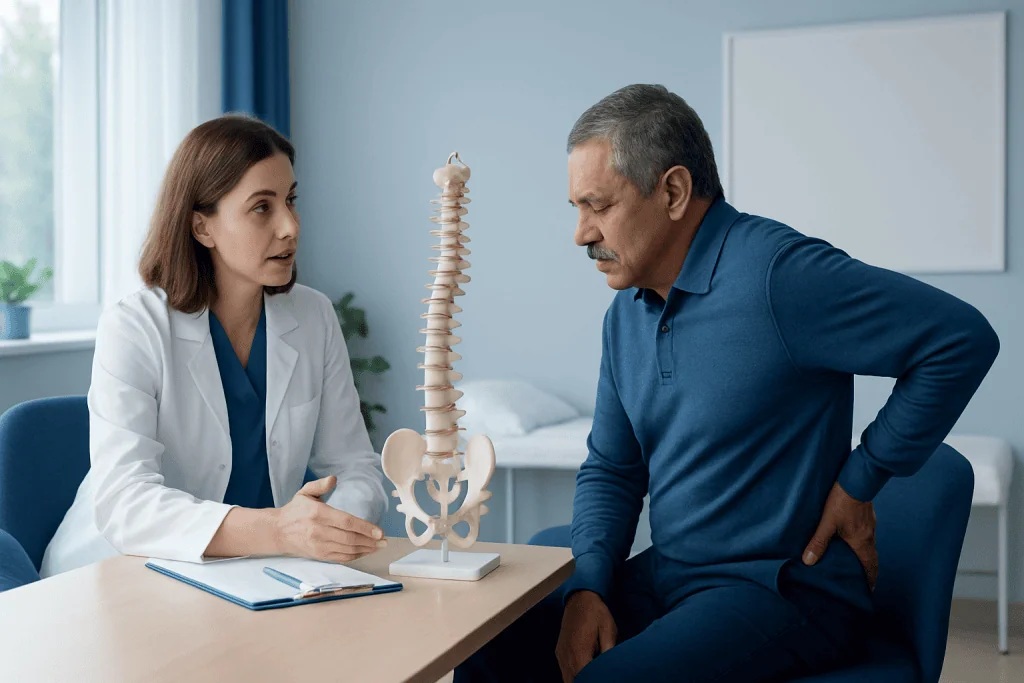
In lumbar spinal stenosis, standing upright and extending the lower back can further reduce the available space for nerves. This helps explain why symptoms often appear during walking, standing in queues, or downhill walking. Sitting or bending forward slightly opens the spinal canal in many people, reducing pressure and easing leg discomfort.
This activity-related pattern is called neurogenic claudication. It differs from muscle fatigue because it may include numbness, tingling, burning, or weakness. It can also differ from circulation-related leg pain, which commonly improves simply by stopping activity, regardless of whether the person sits or bends forward.
Symptoms do not always follow a predictable course. Some people have stable symptoms for years, while others notice increasing limitations in mobility. Keeping note of triggers, the distance that can be walked before symptoms start, and what provides relief can help make a medical consultation more informative.
Causes and Risk Factors
The most frequent cause of spinal stenosis is age-related change in the spine. Discs can lose height, facet joints can develop osteoarthritis, and supporting ligaments can thicken. Together, these changes may narrow the spinal canal or nerve openings. This is often part of the natural ageing process and does not necessarily cause symptoms.
Other possible causes include a bulging or herniated disc, vertebral slippage (spondylolisthesis), a previous spinal injury, scoliosis, inflammatory conditions, or less commonly a tumour or infection. Some people are born with a naturally narrower spinal canal, which can make symptoms occur earlier in adulthood.
Risk tends to increase with age, but spinal stenosis is not inevitable. Previous spine surgery, significant spinal injury, physically demanding work, and certain inherited skeletal conditions may also contribute. Maintaining overall mobility, muscle strength, and a healthy body weight can support spinal health, although these measures cannot reverse all structural narrowing.
Diagnosis and Assessment
Diagnosis begins with a detailed discussion of symptoms, medical history, daily activities, and any change in walking, balance, hand function, or bladder and bowel control. During a physical examination, a clinician may assess posture, spinal movement, strength, sensation, reflexes, balance, and walking pattern.
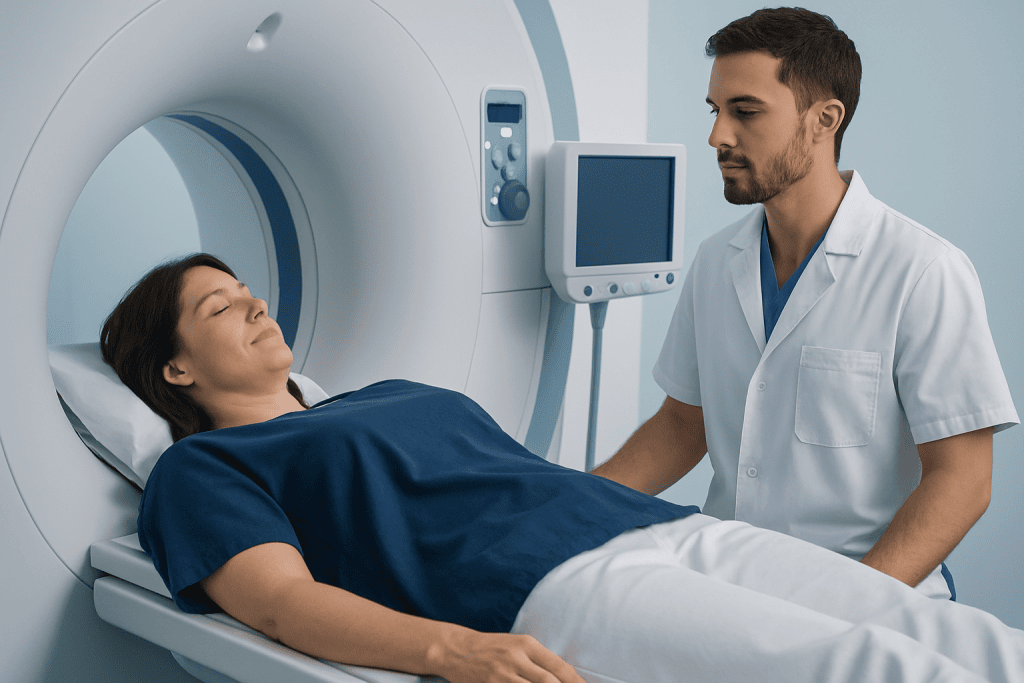
Imaging may be recommended when symptoms persist, affect function, suggest nerve compression, or when surgery is being considered. X-rays can show alignment and degenerative changes. Magnetic resonance imaging (MRI) is commonly used to examine nerves, discs, the spinal canal, and the spinal cord. Computed tomography (CT), sometimes with contrast dye in the spinal canal, may be useful in selected situations.
Imaging findings need to be interpreted alongside symptoms and examination results. Many adults have spinal narrowing on scans without pain or nerve symptoms, so treatment decisions should focus on the whole clinical picture rather than imaging alone.
Treatment Options, Including Spinal Stenosis Procedures
Treatment depends on the affected area, symptom severity, neurological findings, general health, and the impact on daily life. For mild or moderate symptoms, care may include guided exercise or physiotherapy, activity modification, education about posture and pacing, and medicines for pain when clinically appropriate. A clinician can advise whether injections may be suitable for short-term symptom relief in selected cases.
Surgery may be considered when non-surgical care has not provided adequate relief, walking or function is substantially limited, or there is progressive weakness or spinal cord compression. The main aim is to create more room for compressed nerves or the spinal cord. The relevant procedure may be a decompression operation, such as laminectomy or laminotomy; in some cases, spinal fusion is added when there is instability or vertebral slippage. More detailed information about spinal stenosis treatment options can help patients understand the available approaches.
During decompression surgery, the surgeon removes or reshapes a small amount of bone, thickened ligament, or disc material that is narrowing the nerve space. The exact steps depend on the spinal level and the cause of compression. Candidates are assessed individually, with consideration of symptoms, scan findings, neurological examination, medical conditions, and personal goals.
Recovery varies by procedure and individual health. Many people begin gentle walking soon after surgery, while return to usual activities may take weeks to months. Potential benefits include reduced leg or arm symptoms and improved walking or function; however, surgery cannot guarantee complete symptom relief. Risks include infection, bleeding, nerve injury, spinal fluid leak, blood clots, ongoing symptoms, or a need for further treatment. A spine specialist can explain the likely benefits and risks for an individual situation.
Self-Care and Daily Living
For many people, practical adjustments can reduce symptoms and support function. Short, regular periods of activity may be better tolerated than one long walk. Some individuals find that walking with slight forward support, using a stationary bicycle, or choosing gentle water-based exercise is more comfortable, but the best activity plan should be tailored with a clinician or physiotherapist.
Exercises that improve trunk, hip, and leg strength may help support movement and confidence. It is important to avoid pushing through severe pain, new numbness, or weakness. A physiotherapist can recommend movements that match the person’s symptoms and spine condition.
Good sleep, balanced nutrition, stopping smoking where relevant, and managing other health conditions can also support recovery and surgical readiness if a procedure is eventually recommended. Self-care should complement, not replace, medical assessment when neurological symptoms are persistent or progressing.
When to Seek Medical Care
A person should arrange a medical assessment for persistent back or neck pain with tingling, numbness, weakness, balance changes, or leg pain that limits walking or daily activities. Review is particularly important if symptoms are becoming more frequent, affecting sleep, or no longer improving with rest.
Urgent medical care is needed for new or worsening weakness, difficulty walking, loss of coordination, numbness in the genital or inner-thigh area, or new problems controlling urine or stool. These symptoms may indicate significant nerve or spinal cord compression and should not be managed at home.
Acibadem International’s multidisciplinary spine specialists and JCI-accredited hospitals assess and treat spinal conditions for international patients. A qualified clinician can determine whether symptoms may be related to spinal stenosis and discuss appropriate next steps.
Frequently asked questions
What is usually the first symptom of spinal stenosis?
Early symptoms often include discomfort, heaviness, tingling, or aching in the legs while standing or walking. In lumbar stenosis, these symptoms commonly improve after sitting or bending forward. Some people first notice that they cannot walk as far as they used to.
Can spinal stenosis cause symptoms in both legs?
Yes. Lumbar spinal stenosis can affect one leg or both legs, depending on which nerves are compressed. Symptoms may include pain, numbness, tingling, cramping, or weakness in the buttocks, thighs, calves, or feet.
How can cervical spinal stenosis affect the hands?
Cervical stenosis may cause tingling, numbness, pain, or weakness in an arm or hand. When the spinal cord is affected, it can also lead to hand clumsiness, difficulty with fine tasks, balance problems, or changes in walking. These symptoms should be assessed promptly by a doctor.
Does spinal stenosis always require surgery?
No. Many people manage symptoms with activity adjustments, physiotherapy, exercise, and other non-surgical treatments. Surgery is generally considered when symptoms remain significantly limiting, weakness progresses, or there is concerning spinal cord or nerve compression.
What makes spinal stenosis pain better?
Lumbar spinal stenosis symptoms often improve with sitting, resting, or bending forward slightly. Pacing activities and following a tailored exercise plan may also help. The right approach depends on the cause, severity, and location of stenosis.
When is spinal stenosis an emergency?
Urgent evaluation is needed for new bladder or bowel control problems, numbness around the groin or inner thighs, rapidly increasing weakness, major balance difficulty, or inability to walk safely. These symptoms can indicate severe nerve or spinal cord compression and require immediate medical attention.
References
- National Institute of Arthritis and Musculoskeletal and Skin Diseases
- American Academy of Orthopaedic Surgeons
- National Institute of Neurological Disorders and Stroke
- NHS
- North American Spine Society
This article is for general information only and is not a substitute for professional medical advice. Please consult a qualified doctor about your individual situation.
Joint and spine care in Turkey — expert assessment & treatment
JCI-accredited · board-certified surgeons · reply within 24h
Add us as a Preferred Source to see more of our trusted health content across Google Search, AI Overviews and Discover.