Beard transplant in Turkey: Hospitals, Safety & What to Expect

A beard transplant usually transfers individual scalp hair follicles to sparse, scarred or absent beard areas. FUE-based follicular extraction is commonly used because it allows precise placement of grafts at natural facial-hair angles.
Key Takeaways
- A beard transplant usually transfers individual scalp hair follicles to sparse, scarred or absent beard areas.
- FUE-based follicular extraction is commonly used because it allows precise placement of grafts at natural facial-hair angles.
- Results develop gradually: transplanted hairs commonly shed first, then new growth begins over subsequent months.
- Not everyone is a suitable candidate; donor hair quality, skin health, medical history and expectations all matter.
- Choosing a medically supervised, appropriately accredited provider and arranging follow-up are important for international patients.
A beard transplant in Turkey can restore or reshape facial hair by moving a person’s own healthy hair follicles into the beard area. A safe experience relies on appropriate candidacy, a qualified surgical team, clear aftercare planning and a hospital setting with robust quality standards.
Overview: Is a Beard Transplant in Turkey a Safe Option?
A beard transplant in Turkey can be a suitable option for people who want to add density, improve beard shape, cover a stable scar or restore facial hair that has not grown as expected. The procedure is generally performed by relocating a patient’s own hair follicles, most often from the scalp, into carefully planned areas of the beard, moustache, sideburns or jawline.
Safety does not depend on the destination alone. It depends on a thorough medical assessment, an experienced clinician-led team, sterile surgical practice, transparent discussion of possible outcomes and a clear plan for aftercare. International patients should confirm who will assess them, who performs each stage of the procedure, what medical support is available and how follow-up will be arranged after travel.
People considering this option can learn more about the broader process through beard transplant treatment. A natural-looking outcome requires more than placing a high number of grafts: the hairline design, direction, angle and density of each follicle must be adapted to the person’s facial features and existing beard growth.
How a Beard Transplant Works
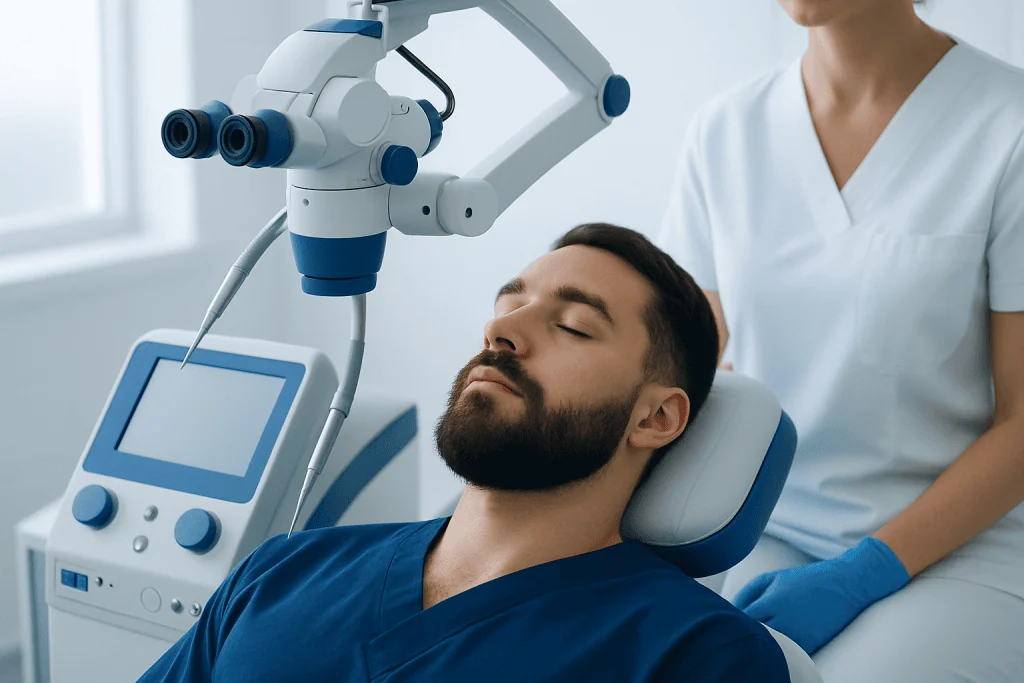
A beard transplant is an autologous hair restoration procedure, meaning it uses the patient’s own follicles. The donor area is usually the back or sides of the scalp, where hair is relatively resistant to thinning. These follicles are removed, prepared under magnification and implanted into very small recipient sites created within the planned beard area.
Follicular unit extraction, often called FUE, is widely used for facial hair restoration. With this approach, individual follicular units are taken from the donor region rather than removing a strip of scalp. Each unit may contain one or more hairs, and the surgical team selects and places them thoughtfully to avoid an overly dense or unnatural appearance in areas that normally contain finer, single-hair growth.
During implantation, the angle and direction of placement are especially important. Beard hairs grow differently on the cheeks, chin, moustache and neck. A carefully designed procedure follows these natural patterns and considers the patient’s current beard, skin tone, facial proportions and preferred grooming style. Transplanted scalp hairs may initially retain some characteristics of scalp hair, but they can usually be trimmed and maintained as part of a beard routine.
Who May Be a Suitable Candidate?

Suitable candidates generally have healthy, stable donor hair and enough follicles available to meet their goals without creating noticeable thinning in the donor area. They may have naturally sparse facial hair, uneven growth, patchy areas, a beard shape they wish to refine, or hair loss following a healed injury or surgery. The best goals are realistic and tailored to the available donor supply.
A clinician should assess the skin and the reason for limited facial-hair growth before planning surgery. Active skin infection, uncontrolled inflammatory skin disease, active acne in the treatment area or an unstable scarring process may need treatment first. Hair loss caused by conditions such as alopecia areata may be unpredictable; transplantation is generally considered only when the condition has been stable and a specialist believes it is appropriate.
Medical history matters as well. Blood-thinning medicines, bleeding conditions, diabetes, smoking, nicotine use, prior cosmetic procedures and allergies can affect planning or healing. A pre-procedure consultation should include photographs, scalp and facial-skin examination, discussion of medicines and a candid conversation about expected density, required grooming and the possibility that more than one session may be needed.
- Good candidates have adequate donor hair and healthy facial skin.
- They understand that transplanted hairs take time to grow.
- They can follow wound-care, travel and follow-up instructions.
- They have goals that are achievable with their individual donor supply.
What Happens During the Procedure?
Planning begins with an in-person assessment and beard design. The clinician discusses where density is wanted, reviews existing facial hair and marks the intended outline. A conservative, age-appropriate design is often advisable because facial preferences and natural beard patterns can change over time. Photographs may be taken to document the plan and support follow-up.
On the procedure day, the donor and recipient areas are usually trimmed as needed and numbed with local anaesthesia. The patient remains awake but should be comfortable. Individual follicles are extracted from the donor area, examined and kept in controlled conditions while the recipient sites are prepared. The surgeon or qualified clinical team then places the grafts one by one, following the planned direction of growth.
The length of the procedure varies according to the area being treated and the number of follicles required. Patients may spend much of the day at the clinic, including preparation and recovery instructions. Before discharge, they should receive written guidance on cleansing, sleeping position, activity, medication if prescribed, warning signs and contact arrangements for questions after they return home.
For international care, practical planning is part of safe treatment. Patients should allow adequate time in Turkey for assessment, the procedure and an early review if advised, rather than arranging immediate onward travel. Accommodation, local transport and a reliable way to contact the care team can make the early recovery period more manageable.
Recovery Timeline and Expected Results
In the first few days, mild swelling, redness, tenderness and small crusts around the implanted hairs are common. The donor area may also feel sensitive. Patients are usually advised not to touch, rub or pick the grafts, as the follicles need time to settle. Gentle washing instructions vary between clinics and should be followed precisely.
Most visible crusting improves over roughly one to two weeks. Strenuous exercise, swimming, direct sun exposure, helmets or anything that presses on the treated area may need to be avoided temporarily. Shaving instructions also differ by technique and healing progress; patients should wait until their clinician says it is safe, then resume grooming carefully.
It is normal for many transplanted hairs to shed in the early weeks. This is often called shock shedding and does not necessarily mean the follicles have failed. New growth commonly starts gradually after several months, with the result becoming fuller and easier to judge over the following months. Final maturation can take up to a year or longer, depending on the individual and the extent of treatment.
Long-term maintenance is usually straightforward. Transplanted hairs continue to grow and can be washed, trimmed and styled. Because the hairs come from the scalp, some people find they grow at a different rate or texture from their natural beard and may need regular trimming to blend the result.
Benefits, Risks and How Safety Is Supported
The potential benefits of a beard transplant include a more defined beard outline, improved coverage in sparse areas and the ability to camouflage selected stable scars. Because the follicles are the patient’s own, successful grafts are intended to provide lasting growth. However, no procedure can promise identical density, exact symmetry or a particular cosmetic result.
As with any minor surgical procedure, risks include temporary pain, swelling, redness, bleeding, infection, inflammation of follicles, scarring, numbness or altered sensation. There may also be uneven growth, an unnatural direction of hair, lower-than-expected graft survival or visible change in the donor area. Some of these concerns may be reduced through skilled planning and aftercare, but they cannot be removed entirely.
Patients can support safer decision-making by choosing a provider that carries out a formal medical consultation, explains the clinician’s role, uses regulated surgical standards and provides written consent information. It is reasonable to ask about infection-control protocols, emergency arrangements, follow-up access and whether the hospital holds independent quality accreditation, including Joint Commission International accreditation where applicable.
Acibadem International’s multidisciplinary specialists and JCI-accredited hospitals diagnose and treat suitable international patients, with coordinated clinical and travel planning. A consultation remains essential to determine whether a beard transplant is appropriate and to discuss the individual balance of benefits and risks.
When to Seek Medical Care
Patients should contact their treating clinician promptly if they develop worsening rather than improving pain, increasing redness or swelling, pus-like drainage, fever, significant bleeding, a spreading rash or signs of an allergic reaction. These symptoms do not always indicate a serious problem, but they should be assessed without delay.
Medical advice is also important if there is persistent numbness, unusual changes in skin colour, rapidly worsening donor-area discomfort or concerns that the grafts have been disturbed. International patients should know exactly who to contact after they leave Turkey and should seek urgent local care if they cannot reach their surgical team and symptoms are severe.
Before booking a procedure, a person should seek a dermatology or medical assessment if beard loss is sudden, occurs in round patches, is accompanied by itching or scaling, follows a new medicine, or comes with other symptoms such as fatigue or unexplained changes in body hair. Identifying and treating an underlying cause may be more appropriate than surgery in some situations.
Frequently asked questions
How long does a beard transplant in Turkey take?
The procedure length depends on the size of the area and the number of grafts needed. Many procedures take several hours and may occupy most of a day when preparation, anaesthesia, graft handling and post-procedure instructions are included. The clinic can provide a more accurate estimate after assessing the beard plan and donor area.
Is a beard transplant painful?
Local anaesthesia is commonly used, so patients should not feel sharp pain during follicle extraction or implantation. They may notice pressure, pulling or brief discomfort during the numbing injections. Mild tenderness and swelling can occur after the procedure and are usually managed with the clinician’s aftercare advice.
When can a person shave after a beard transplant?
Shaving should be avoided until the implanted follicles have settled and the skin has healed sufficiently. The exact timing varies according to the procedure and the person’s recovery, so the treating clinician’s instructions should take priority. Once cleared, patients should begin gently to avoid irritating the recipient area.
Are beard transplant results permanent?
Follicles that establish successfully in the beard area are generally expected to continue growing long term. However, outcomes vary, and not every implanted follicle will necessarily grow as intended. Natural ageing, changes in surrounding beard hair and individual healing can also affect how the result looks over time.
Can a beard transplant cover scars?
A beard transplant may help camouflage certain stable, well-healed scars when the scar tissue has sufficient blood supply and the surrounding skin is healthy. Results can be less predictable in scar tissue than in unaffected skin. A clinician should assess the scar, its cause and its stability before recommending transplantation.
How should an international patient plan recovery after a beard transplant?
Patients should allow enough time for assessment, the procedure and any early review recommended by their clinician before travelling home. They should arrange suitable accommodation, avoid a rushed itinerary and keep written aftercare instructions and contact details available. It is also helpful to identify a local healthcare professional at home in case non-urgent follow-up is needed.
References
- American Academy of Dermatology Association
- International Society of Hair Restoration Surgery
- National Health Service
- Joint Commission International
This article is for general information only and is not a substitute for professional medical advice. Please consult a qualified doctor about your individual situation.
Beard Transplant in Turkey — costs, top hospitals & a free quote
JCI-accredited · board-certified surgeons · reply within 24h
Add us as a Preferred Source to see more of our trusted health content across Google Search, AI Overviews and Discover.

Hair Transplant
Modern FUE and DHI hair restoration with natural, lasting results.
More from the Health Library



Related Specialists
Prof. Dr. Osman Bilgin Timuralp
Cardiology
Fzt. Merve Cingöz
Physical Medicine & Rehabilitation
Prof. Dr. Hüsnü Cemal Kahraman
Cardiovascular Surgery
Fzt. Ali Furkan Gürler
Physical Medicine & Rehabilitation