Gamma knife Risks & Side Effects Explained by Surgeons

Gamma Knife is a precise form of stereotactic radiosurgery that delivers focused radiation without an incision. Short-term effects may include headache, scalp tenderness, nausea, tiredness or temporary symptoms from brain swelling.
Key Takeaways
- Gamma Knife is a precise form of stereotactic radiosurgery that delivers focused radiation without an incision.
- Short-term effects may include headache, scalp tenderness, nausea, tiredness or temporary symptoms from brain swelling.
- Delayed effects can occur weeks to months later and may include swelling, tissue changes or changes in neurological symptoms.
- Serious complications are uncommon but can include seizures, bleeding within a treated lesion or new neurological problems, depending on the target area.
- Careful imaging, treatment planning and follow-up help specialists balance treatment benefit with the risk to nearby healthy tissue.
- New or worsening neurological symptoms after treatment should be assessed promptly by the treating clinical team.
Gamma Knife risks are generally related to temporary swelling or irritation in the treated brain area, and most people do not experience complications from an incision or open surgery. The possible side effects, timing and level of risk depend on the condition being treated, the location and size of the target, and a person’s overall health.
Overview: What Gamma Knife Risks Mean
Gamma Knife radiosurgery is a non-invasive radiation treatment used for carefully selected conditions in the brain and upper spinal region. Despite its name, it does not involve a surgical blade or an incision. It uses many highly focused beams of radiation that meet at a planned target, delivering a therapeutic dose while limiting exposure to surrounding tissue.
For many patients, the main Gamma Knife risks are short-lived effects such as headache, tiredness, nausea, scalp sensitivity or mild swelling in the treated area. The most important potential risks are related to radiation-induced inflammation or changes in the part of the brain being treated. These may appear soon after treatment or, more often, gradually over the following weeks or months.
The individual risk profile is not the same for every person. It is influenced by the diagnosis, the target’s size and location, previous radiation or surgery, the radiation dose, and whether treatment is being used for a tumor, blood vessel abnormality, facial pain condition or another neurological disorder. A multidisciplinary team reviews these factors before recommending treatment.
For a fuller introduction to the procedure and how treatment plans are individualized, patients can review Gamma Knife radiosurgery.
How Gamma Knife Works and Who May Be a Candidate
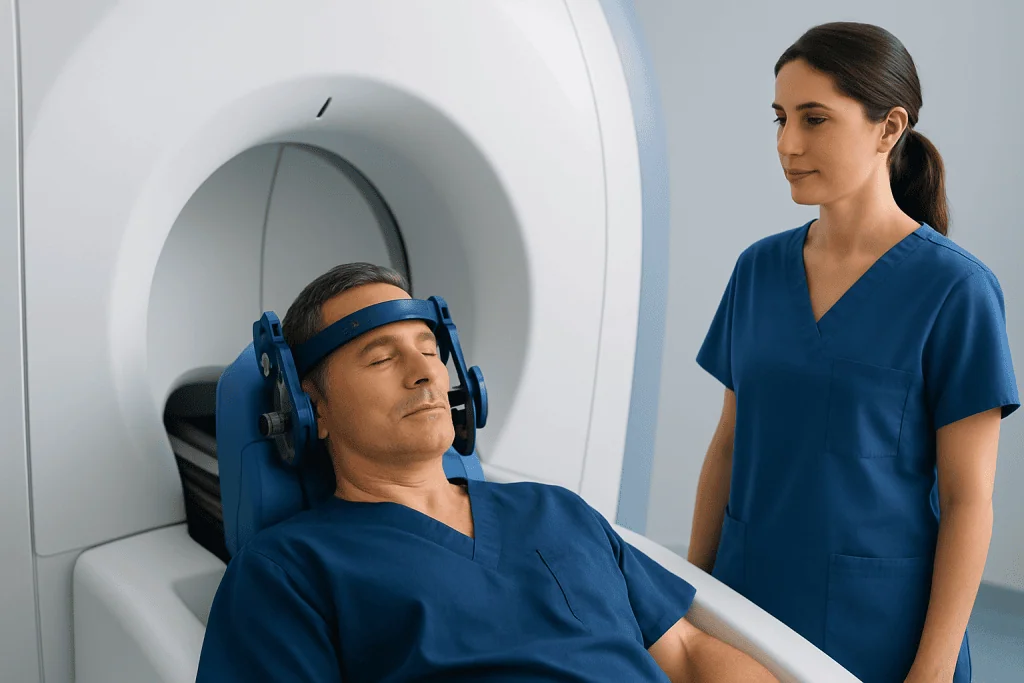
During Gamma Knife treatment, advanced imaging such as magnetic resonance imaging (MRI), computed tomography (CT) or angiography is used to map the target precisely. A neurosurgeon, radiation oncologist and medical physicist use this information to create a plan that concentrates radiation at the intended area and aims to protect nearby structures, including critical nerves and healthy brain tissue.
Gamma Knife may be considered for certain small or well-defined brain tumors, brain metastases, arteriovenous malformations (AVMs), vestibular schwannomas, trigeminal neuralgia and some pituitary tumors. It may be an alternative to open surgery for some people, or it may be used alongside surgery, medication, systemic cancer treatment or conventional radiotherapy.
Candidacy depends on more than a diagnosis alone. Specialists consider the number, size and position of targets; whether symptoms need immediate relief; prior treatments; imaging findings; and a person’s ability to lie still during planning and treatment. Gamma Knife may not be suitable when a target is very large, causes substantial pressure on the brain, or requires tissue sampling to establish a diagnosis.
For tumors that have spread to the brain, the treatment plan is usually coordinated with the wider cancer care plan. In appropriate cases, Gamma Knife can be part of treatment for brain metastases, with follow-up imaging used to assess the response over time.
What Happens During the Procedure

Preparation begins with a consultation and review of imaging. On the day of treatment, the team uses either a lightweight stereotactic head frame or a fitted mask system to keep the head in a reproducible position. A frame is typically secured with local anesthetic at the pin sites; a mask does not require pins. The approach depends on the Gamma Knife system, target and clinical plan.
After positioning, imaging is obtained or reviewed to confirm the target location. The clinical team then completes the treatment plan, defining the target and nearby sensitive structures. This planning stage is central to safety because it determines how radiation is shaped and delivered.
During radiation delivery, the person lies on a treatment couch and can communicate with staff through an intercom. The treatment itself is painless. The length of the appointment varies, as imaging, planning and treatment time depend on the complexity and number of targets.
Most patients return home the same day, although observation or an overnight stay may be recommended in selected circumstances. The team provides individualized instructions about medicines, wound care if a frame was used, activity and when to contact the hospital.
Possible Gamma Knife Side Effects and Complications
Early side effects are often mild and temporary. Headache, nausea, fatigue, dizziness and scalp discomfort can occur, particularly after frame-based treatment. Some people have minor swelling, redness or tenderness at frame pin sites. These symptoms are usually managed with rest, hydration and medications recommended by the treating team.
Brain swelling, also called edema, is one of the more clinically significant potential effects. It may cause symptoms related to the treated location, such as worsening headache, weakness, numbness, balance difficulty, speech changes, visual symptoms or seizures. The likelihood and impact of swelling vary widely. Clinicians may prescribe corticosteroids or other treatments when swelling causes symptoms.
Delayed radiation effects can develop months or occasionally longer after treatment. These may include temporary enlargement or inflammation of the treated lesion, radiation-related tissue injury, or new or worsening neurological symptoms. For some conditions, imaging changes can resemble tumor growth before the longer-term response becomes clear, so scheduled follow-up scans and expert interpretation are important.
Less common but serious risks may include persistent neurological deficits, bleeding within a treated lesion, hydrocephalus in specific clinical situations, radiation injury to nearby nerves or structures, and the need for additional treatment. The exact risk depends strongly on the diagnosis and target location. For example, treatment near the optic pathways, brainstem, hearing and balance nerves, or speech and movement areas requires particular planning precautions.
- For vestibular schwannoma, possible risks can include changes in hearing, balance, facial sensation or facial movement.
- For trigeminal neuralgia, facial numbness may occur and pain relief may take time rather than being immediate.
- For AVMs, the blood vessels may take years to close completely, and bleeding risk does not disappear immediately after treatment.
- For tumors, Gamma Knife may control a target but cannot always prevent new tumors or disease progression elsewhere.
Benefits and How Specialists Reduce Risk
The potential benefit of Gamma Knife is highly focused treatment without the incision, general anesthesia and recovery period associated with many open brain operations. For suitable patients, this can mean a shorter return to usual activities and a way to treat targets that are difficult to reach surgically. However, it is not a risk-free substitute for surgery, and it does not provide a tissue sample for diagnosis.
Risk reduction starts with selecting the right treatment for the right clinical situation. Specialists use detailed imaging, computerized dose planning and strict quality checks to shape radiation around the target. They also consider whether fractionated radiotherapy, surgery, observation, medication or a different approach may offer a better balance of benefit and risk.
Follow-up is an essential part of safe care. Imaging may be scheduled at intervals over months or years, depending on the underlying condition. Follow-up appointments assess symptoms, medication needs and imaging changes, allowing the team to identify swelling, treatment response or recurrence early.
Patients should share a complete medication list, prior radiation history, allergies and any implanted medical devices with their team. They should also ask what outcome is realistic for their specific diagnosis, how rapidly improvement may occur, which side effects are most relevant to the planned target, and what follow-up schedule is recommended.
Recovery Timeline and Self-Care After Treatment
Many people are able to go home on the day of Gamma Knife treatment. On the first day or two, rest is often helpful. Mild headache, tiredness or nausea may occur, but some people feel little or no immediate effect. If a head frame was used, small pin-site areas may remain tender for a short time.
Returning to routine activities depends on the person’s symptoms, the condition being treated and advice from the clinical team. Some patients resume light activities within a day or two, while others need more time because of fatigue, existing neurological symptoms or medication adjustments. Driving, work, exercise and travel should be discussed individually, especially for anyone who has had seizures or neurological deficits.
The therapeutic effect is usually not immediate. Tumors may shrink, stabilize or stop growing gradually over months. AVMs may take several years to close, while relief from trigeminal neuralgia can occur over weeks to months. A period of swelling or imaging change does not necessarily mean treatment has failed, but it should always be assessed by the treating specialists.
Self-care includes taking prescribed medicines exactly as directed, attending follow-up imaging, keeping a record of new symptoms and seeking advice before stopping steroids or anti-seizure medicines. Patients should not interpret scan results on their own; the treating team can explain whether a change reflects expected treatment response, swelling or a need for further care.
When to Seek Medical Care
Patients should contact their treating team promptly if they develop new or worsening headache, persistent vomiting, increasing sleepiness, fever, seizure activity, new weakness, numbness, difficulty speaking, confusion, loss of balance, vision changes or a marked change in usual neurological symptoms. These symptoms can have different causes, but they require timely clinical assessment after brain-directed treatment.
Emergency medical care is appropriate for sudden severe headache, a seizure that does not stop or repeats without recovery, loss of consciousness, sudden weakness on one side of the body, new facial drooping, severe confusion or sudden difficulty speaking. These can be signs of a neurological emergency and should not be managed at home.
Patients with questions about expected recovery, side effects or surveillance scans should use the contact route provided by their treatment center. Acibadem International’s multidisciplinary specialists and JCI-accredited hospitals diagnose and treat neurological and oncological conditions for international patients, with care plans based on individual clinical assessment.
Clear communication before and after treatment supports informed decisions. The treating clinicians can explain the specific benefits, limitations and Gamma Knife risks for the individual target, rather than relying on general risk estimates alone.
Frequently asked questions
Is Gamma Knife treatment dangerous?
Gamma Knife is generally considered a well-established, non-invasive treatment when it is recommended for an appropriate condition. It still carries risks because it delivers radiation to the brain, and the most relevant risks depend on the target location, diagnosis and prior treatments. Detailed planning and follow-up are used to reduce these risks.
What are the most common Gamma Knife side effects?
Common short-term effects include headache, tiredness, nausea, dizziness and scalp tenderness, especially if a head frame is used. Some patients have no noticeable early side effects. Symptoms caused by swelling in the treated area may develop later and should be reported to the clinical team.
Can Gamma Knife cause brain swelling?
Yes. Radiation-related swelling can occur in or around the treated area and may appear days, weeks or months after treatment. It can cause symptoms such as headache, weakness, seizures or changes related to the affected brain region, and may be treated with medication when clinically needed.
How long does recovery take after Gamma Knife?
Most people go home on the day of treatment and may return to light activities within a few days, depending on how they feel. However, the biological response to radiation develops gradually, often over months. Follow-up scans remain important even when recovery from the appointment itself is quick.
Does Gamma Knife increase the risk of cancer?
Radiation can theoretically contribute to a small long-term risk of secondary tumors, but this is considered rare. The treatment team weighs this potential risk against the expected benefit of treating the current condition. Individual factors, including age and prior radiation exposure, are considered during planning.
Can symptoms get worse after Gamma Knife before getting better?
They can. Temporary inflammation or swelling may cause existing symptoms to worsen or new symptoms to appear before the treatment effect is fully established. Any new or worsening neurological symptom should be discussed promptly with the treating team, as it may require assessment or treatment.
References
- National Cancer Institute
- American Society for Radiation Oncology
- Radiological Society of North America
- National Institute of Neurological Disorders and Stroke
- Mayo Clinic
This article is for general information only and is not a substitute for professional medical advice. Please consult a qualified doctor about your individual situation.
Gamma Knife in Turkey — costs, top hospitals & a free quote
JCI-accredited · board-certified surgeons · reply within 24h
Add us as a Preferred Source to see more of our trusted health content across Google Search, AI Overviews and Discover.

Neurology
Diagnosis and treatment of disorders of the brain, spinal cord, nerves and muscles.
51 specialists in this unitMore from the Health Library



Related Specialists

Dr. Şirin Zeynep Haskalp Arıkan
Pediatrics
Prof. Dr. Vahit Emre Özden
Orthopedic Surgery & Traumatology
Prof. Dr. Erkan Kaba
Thoracic Surgery
Dr. Umut Özbebit (m)
Aesthetic Plastic & Reconstructive Surgery