PCL Ligament Injury: Symptoms, Causes and Treatment
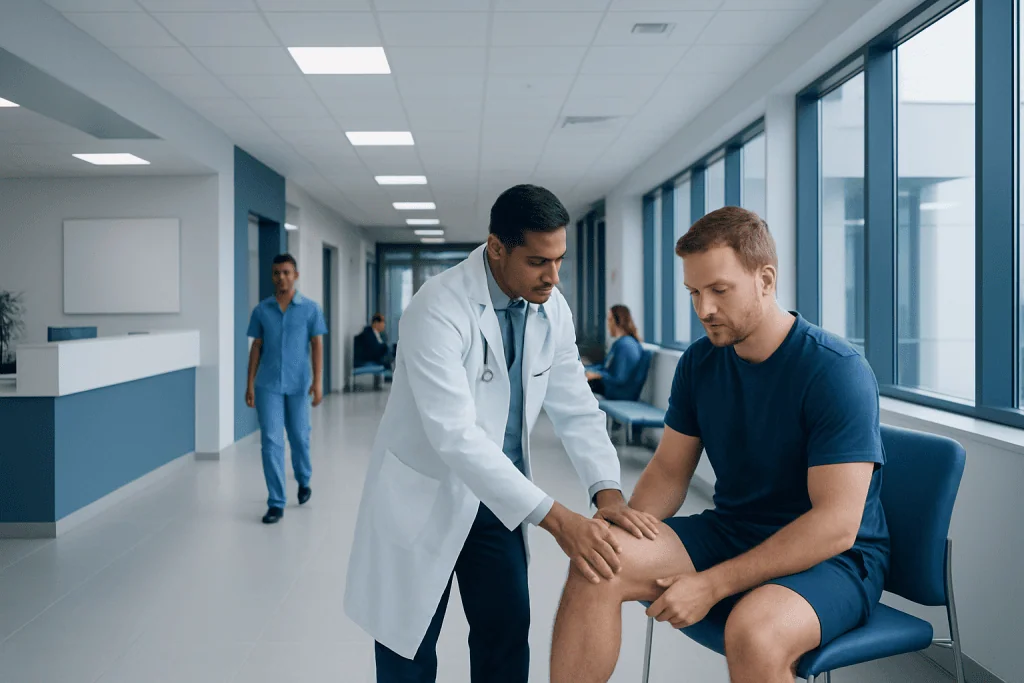
The posterior cruciate ligament (PCL) helps prevent the shinbone from moving too far backward beneath the thighbone. A direct blow to the front of a bent knee, a fall, or a twisting sports injury can damage the PCL.
Key Takeaways
- The posterior cruciate ligament (PCL) helps prevent the shinbone from moving too far backward beneath the thighbone.
- A direct blow to the front of a bent knee, a fall, or a twisting sports injury can damage the PCL.
- Symptoms may include knee pain, swelling, stiffness, and a feeling that the knee is unstable or gives way.
- Diagnosis usually combines a clinical knee examination with imaging, often including MRI.
- Physical therapy is central to recovery, and surgery is mainly considered for severe, persistent, or combined injuries.
A PCL ligament injury is damage to the posterior cruciate ligament, one of the main ligaments that keeps the knee stable. Many isolated injuries improve with appropriate rehabilitation, while more severe or combined ligament injuries may need specialist assessment and, in selected cases, surgery.
Overview: What Is a PCL Ligament Injury?
The posterior cruciate ligament, usually called the PCL, is a strong band of tissue inside the knee. It connects the thighbone (femur) to the shinbone (tibia) and works with other ligaments, muscles, cartilage, and tendons to support smooth knee movement.
Its main role is to limit excessive backward movement of the tibia relative to the femur. When the PCL is stretched or torn, the knee may feel painful, swollen, weak, or less secure, especially during activities that involve stairs, running, kneeling, squatting, or changes in direction.
PCL injuries are less common than injuries to the anterior cruciate ligament (ACL). They can occur alone, but a high-energy injury may also affect other knee ligaments, cartilage, bone, nerves, or blood vessels. Prompt assessment is particularly important after a significant accident or when the knee appears markedly unstable.
Symptoms and Severity
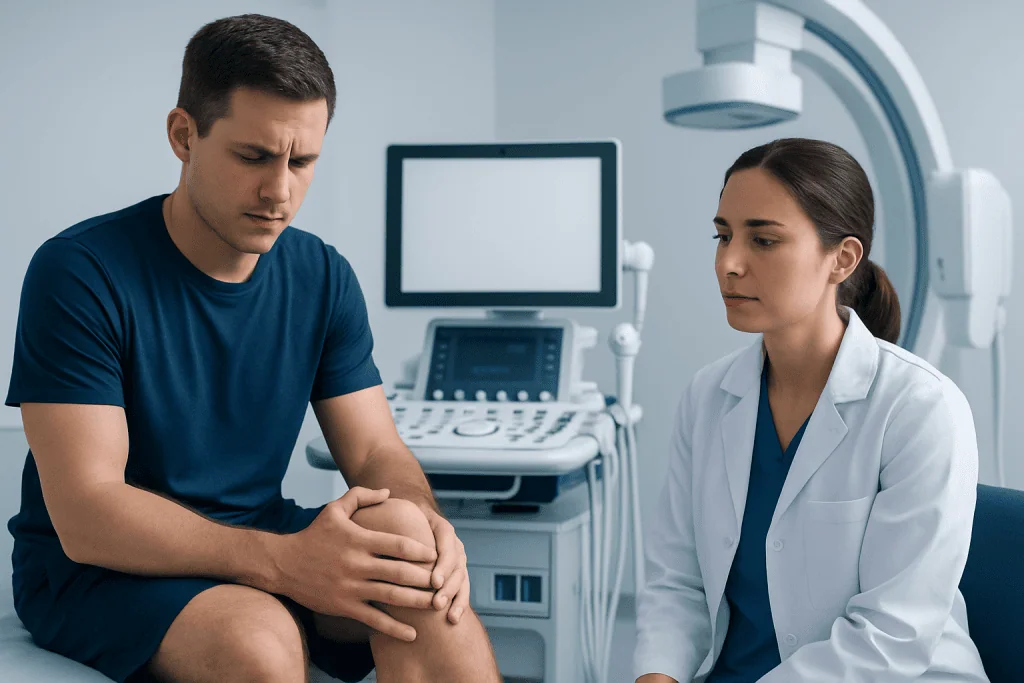
Symptoms can vary according to the extent of the injury and whether other knee structures are involved. Some people notice symptoms immediately, while others have relatively mild initial discomfort and become more aware of knee weakness during exercise or everyday movement.
Common symptoms include pain at the back of the knee, swelling, bruising, stiffness, reduced range of motion, and difficulty bearing weight. The knee may feel as though it shifts backward, buckles, or does not fully support the body. Going down stairs or slopes may be especially uncomfortable.
Clinicians may describe PCL injuries by grade. A grade 1 injury involves stretching or a small partial tear, grade 2 is a more substantial partial tear with increased looseness, and grade 3 is a complete tear with significant instability. A grade 3 injury can also occur with damage to other ligaments and needs careful evaluation.
- Mild injuries: soreness and limited swelling, with little or no feeling of instability.
- Moderate injuries: more persistent pain or swelling and difficulty with demanding activities.
- Severe injuries: obvious instability, major swelling, inability to continue activity, or signs of injury elsewhere in the knee.
Causes and Risk Factors
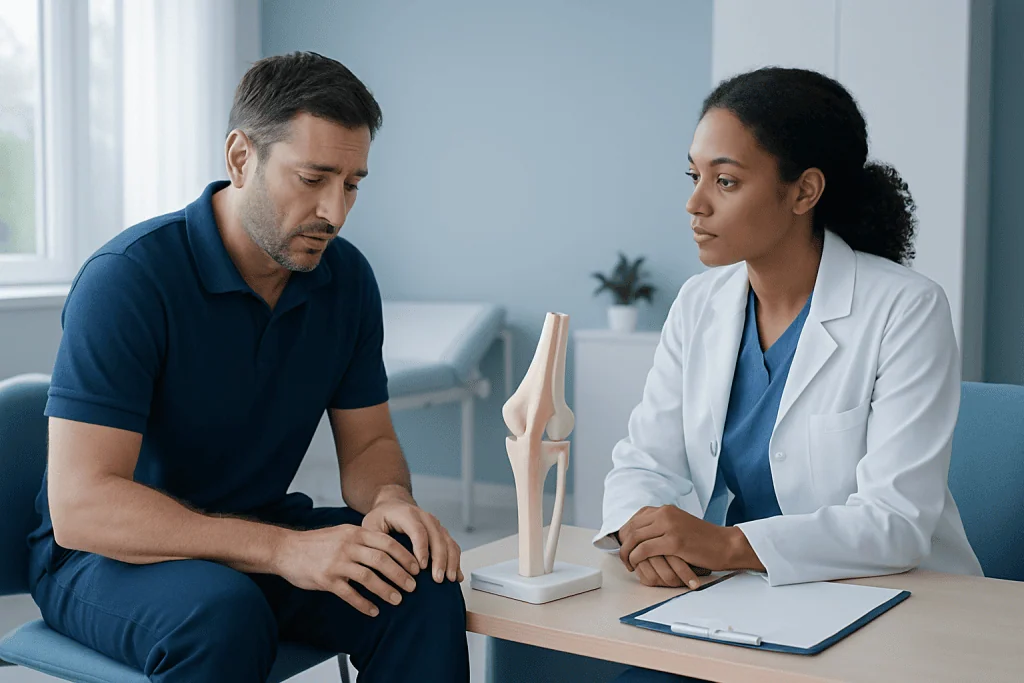
A PCL ligament injury often happens when force pushes the upper shinbone backward while the knee is bent. A classic example is the front of the knee striking a dashboard during a road traffic collision. Falling directly onto a bent knee can cause a similar injury.
Sports can also lead to PCL damage. Contact during football, rugby, or other collision sports, an awkward landing, a fall, or a forceful twist may injure the ligament. Skiing, cycling accidents, and high-impact falls are other possible causes.
Risk can be influenced by participation in contact or pivoting sports, previous knee injury, poor landing mechanics, muscle weakness, and inadequate conditioning. However, many injuries are accidental and cannot always be prevented. A clinician will consider how the injury happened because the mechanism can help identify possible associated damage.
When a PCL injury follows a major collision, knee dislocation, or severe blow, urgent assessment is important. Rarely, surrounding blood vessels or nerves may be affected, and these injuries need immediate medical care.
How a PCL Injury Is Diagnosed
Diagnosis begins with a medical history and physical examination. The clinician will ask about the injury event, symptoms, previous knee problems, sport or work demands, and any difficulty walking or bearing weight. They will assess swelling, tenderness, range of motion, muscle control, and knee stability.
Specific examination maneuvers can help identify abnormal backward movement of the tibia and assess other ligaments. Because swelling and pain can make early examination difficult, a repeat assessment may sometimes be useful after the initial inflammation has settled.
X-rays may be used to look for fractures, bone alignment problems, or a small piece of bone pulled away where the ligament attaches. Magnetic resonance imaging (MRI) is commonly used to assess the PCL and identify associated injuries to the ACL, collateral ligaments, meniscus, cartilage, or bone. Vascular tests may be needed if there are concerns about circulation after a serious injury.
An accurate diagnosis guides treatment. It is important not to assume that all knee pain after trauma is a simple sprain, particularly if there is substantial swelling, locking, instability, numbness, or an inability to bear weight.
Treatment Options
Treatment is individualized according to the severity of the PCL injury, knee stability, other injured structures, symptoms, activity goals, and general health. Many isolated grade 1 and grade 2 PCL injuries can be managed without surgery. Early care may include activity modification, ice wrapped in cloth, compression when advised, elevation, and pain relief recommended by a healthcare professional.
A brace may be recommended to support the knee and limit backward movement of the tibia during healing. A structured rehabilitation program is a central part of non-surgical treatment. Physiotherapy commonly focuses on restoring motion, reducing swelling, improving quadriceps strength, developing balance and movement control, and gradually returning to daily activity and sport.
Surgery may be considered for a complete PCL tear with significant ongoing instability, combined ligament injuries, certain bone avulsion injuries, or symptoms that persist despite appropriate rehabilitation. PCL reconstruction usually involves replacing the damaged ligament with a graft, followed by a carefully supervised rehabilitation program. The recommended timing and technique depend on the individual injury pattern.
Recovery requires patience. Returning too soon to pivoting, contact, or high-impact activity may increase the risk of further injury. The orthopedics and rehabilitation teams can set safe, functional milestones rather than relying on a fixed timetable alone.
Rehabilitation, Prevention, and Self-care
Rehabilitation aims to help the knee regain strength, movement, coordination, and confidence. Exercises are selected and progressed by a qualified clinician or physiotherapist. Quadriceps strengthening is often emphasized because strong thigh muscles can help support the knee, while some movements that place excessive backward force on the tibia may be limited during early healing.
At home, following the rehabilitation plan consistently, using a brace or crutches as instructed, and gradually increasing activity can support recovery. It is sensible to avoid deep knee bending, heavy lifting, high-impact exercise, and activities that trigger instability until the treating team advises progression.
Although accidents cannot be fully prevented, regular lower-limb strengthening, balance exercises, sport-specific conditioning, appropriate footwear, and attention to landing and turning technique may reduce the risk of knee injuries. Warming up before activity and allowing adequate recovery after training are also helpful habits.
For people returning to sport, readiness should be assessed through symptoms, knee stability, range of motion, strength, and functional testing. Feeling no pain alone does not always mean the knee is ready for demanding activity.
When to See a Doctor
Medical assessment is recommended after a knee injury that causes significant pain, swelling, reduced movement, a feeling of giving way, or difficulty walking. Early review can clarify the diagnosis and help protect the knee from avoidable strain during recovery.
Urgent medical attention is needed after a major accident, suspected knee dislocation, a visibly deformed knee, severe or rapidly increasing swelling, a cold or pale foot, numbness, weakness, or inability to feel a pulse in the foot. These symptoms may indicate an injury beyond the ligament itself.
People should also arrange review if symptoms do not improve, the knee repeatedly buckles, or pain and swelling return with normal activities. Untreated instability can contribute to altered movement patterns and may place extra stress on other structures of the knee over time.
Acibadem International’s multidisciplinary orthopedic, imaging, and rehabilitation specialists at JCI-accredited hospitals assess and treat knee ligament injuries for international patients, with care plans tailored to the injury and individual recovery needs.
Frequently asked questions
Can a PCL ligament injury heal without surgery?
Many isolated partial PCL injuries can be treated successfully without surgery, particularly when the knee remains reasonably stable. Bracing when appropriate and a structured physiotherapy program are often important parts of recovery. Surgery may be considered if instability is severe, other ligaments are injured, or symptoms continue despite rehabilitation.
How is a PCL injury different from an ACL injury?
The PCL and ACL are both cruciate ligaments inside the knee, but they have different roles. The PCL mainly limits backward movement of the shinbone, while the ACL mainly limits forward movement and contributes to rotational stability. Their injury mechanisms, symptoms, and treatment plans may therefore differ.
Can a person walk with a torn PCL?
Some people can walk with a PCL tear, especially if the injury is isolated and swelling is limited. However, walking ability does not show how severe the injury is or whether other structures are affected. A medical examination is advisable after a significant knee injury.
How long does recovery from a PCL injury take?
Recovery time varies with the grade of injury, associated damage, treatment approach, and the person’s activity goals. Non-surgical rehabilitation may take several months, while recovery after reconstruction is usually longer and requires staged rehabilitation. The treating team can provide guidance based on strength, function, and knee stability.
What exercises should be avoided after a PCL injury?
The exercises to avoid depend on the stage of healing and the treatment plan. Early after injury, activities that cause pain, swelling, instability, or excessive backward movement of the shinbone may need to be limited. A physiotherapist can prescribe exercises that build strength while protecting the healing ligament.
Does a PCL tear always cause swelling?
Swelling is common after a PCL injury, but its amount can vary. A person may have mild swelling or symptoms that become more noticeable during activity. Large swelling, severe pain, deformity, or circulation changes after injury should be assessed urgently.
References
- American Academy of Orthopaedic Surgeons
- OrthoInfo
- Mayo Clinic
- National Institute of Arthritis and Musculoskeletal and Skin Diseases
- Merck Manual Consumer Version
This article is for general information only and is not a substitute for professional medical advice. Please consult a qualified doctor about your individual situation.
Joint and spine care in Turkey — expert assessment & treatment
JCI-accredited · board-certified surgeons · reply within 24h
Add us as a Preferred Source to see more of our trusted health content across Google Search, AI Overviews and Discover.