Are AirPods Bad for You? Safe Listening Habits

AirPods are not known to cause harm simply because they use Bluetooth technology. Listening too loudly or for too long can contribute to noise-related hearing loss and tinnitus.
Key Takeaways
- AirPods are not known to cause harm simply because they use Bluetooth technology.
- Listening too loudly or for too long can contribute to noise-related hearing loss and tinnitus.
- Earbuds can trap moisture and irritate the ear canal, especially when shared, worn during exercise or used with an existing skin condition.
- Pain, drainage, persistent itching, hearing changes, dizziness or ringing should be assessed by a healthcare professional.
- Lower volume, regular listening breaks and routine cleaning can make earbud use safer and more comfortable.
AirPods and other wireless earbuds are usually safe for most people when they are clean, comfortable and used at a moderate volume. The main health concerns are noise-related hearing damage, irritation or infection in the ear canal, and reduced awareness of surroundings—not the Bluetooth signal itself.
Are AirPods bad for you? The short answer
For most people, AirPods are not harmful when they fit comfortably, are kept clean and are used at a sensible volume. Wireless earbuds do not appear to create a unique health risk because of their Bluetooth connection; Bluetooth devices use low-power radiofrequency energy, and current evidence has not established that normal use causes health problems.
The more relevant issue is sound exposure. Any headphone, including AirPods, can damage hearing if music, calls or other audio are played too loudly or for prolonged periods. Earbuds may also contribute to ear canal irritation or infection when they are dirty, shared, worn in sweaty ears or used despite pain and inflammation.
Occasional mild pressure or temporary awareness of the earbuds is often harmless. However, ear pain, fluid or discharge, significant itching, hearing loss, persistent ringing, spinning sensations or symptoms that continue after removing the earbuds deserve medical review.
How earbuds can affect the ears and hearing
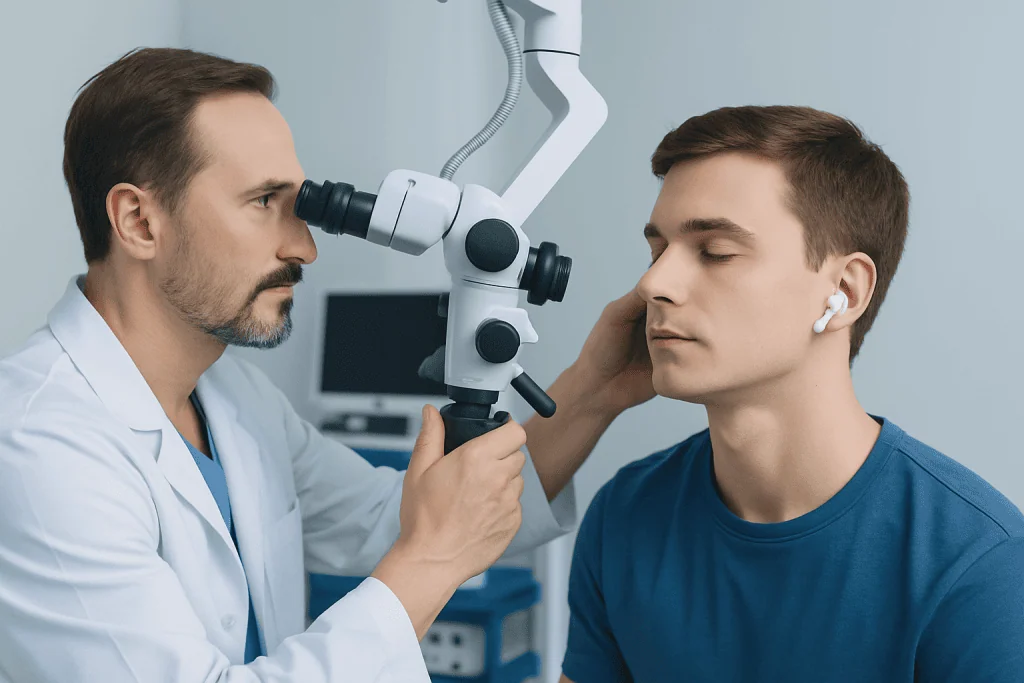
Sound reaches the eardrum through the ear canal and is then processed by delicate structures in the inner ear. Loud sound can overstimulate and injure sensory cells in the inner ear. These cells do not reliably regenerate, which is why preventing excessive noise exposure matters.
Noise-related hearing changes may develop gradually. A person may first notice muffled hearing after listening, needing to increase the volume, difficulty following conversation in restaurants, or a ringing or buzzing sound known as tinnitus. Tinnitus can have several causes, but repeated loud sound exposure is one possible contributor.
Because earbuds sit close to the eardrum, they can provide a clear, immersive sound experience even at lower settings. This can be beneficial if it helps the listener avoid turning the volume up in a noisy environment. Conversely, using earbuds to overpower traffic, gym noise or public transport can lead to unsafe listening levels.
- Volume matters more than whether earbuds are wired or wireless.
- Duration matters: a lower volume is safer for longer listening than a high volume.
- Noise-cancelling features may help some people listen at lower volumes, but they do not make prolonged loud listening safe.
Common ear symptoms linked to AirPods and other earbuds

Earbuds can create a warm, enclosed environment in the ear canal. Moisture from bathing, exercise, swimming or natural earwax may become trapped, which can soften the skin and make irritation more likely. Pressure from an ill-fitting ear tip may also cause soreness, especially after long periods of use.
Some people develop contact dermatitis, an itchy or inflamed skin reaction, from materials touching the outer ear or ear canal. This is more likely in people with eczema, sensitive skin or a known allergy. Avoiding the suspected product until the skin settles and discussing persistent symptoms with a clinician is sensible.
Earbud use does not directly create an infection in every case, but contaminated devices, frequent insertion and moisture can raise the chance of outer ear canal inflammation. This condition is commonly called otitis externa, or swimmer’s ear. Symptoms can include pain that worsens when the outer ear is touched, itching, fullness, discharge and reduced hearing.
Earwax is another practical concern. Earbuds do not necessarily cause wax overproduction, but they may press wax deeper into the canal or make a partial blockage more noticeable. Cotton swabs and other objects should not be inserted into the ear to remove wax, as this can push it deeper or injure the canal.
Bluetooth, radiation and everyday safety
Questions about AirPods often focus on Bluetooth signals. Bluetooth devices transmit using non-ionizing radiofrequency energy at low power. Non-ionizing energy does not have enough energy to directly damage DNA in the way ionizing radiation, such as X-rays, can. Major health agencies continue to monitor research on radiofrequency exposure, but current evidence has not shown a consistent health risk from normal Bluetooth earbud use.
For people who prefer to reduce unnecessary exposure for personal comfort, practical options include taking breaks, using speakerphone when appropriate or choosing wired headphones. These choices are reasonable, but they should not distract from the better-established concern: protecting hearing from excessive sound.
Earbuds can also reduce awareness of the environment. This can be important near roads, railway platforms, construction areas, while cycling, or in any situation where hearing alerts is needed. Using one earbud, pausing audio or enabling an awareness feature may improve safety in these settings.
Safer ways to use AirPods
Healthy listening habits focus on comfortable volume, regular breaks and attention to symptoms. If a nearby person can clearly hear the audio from the earbuds, the volume may be too high. Many phones also provide headphone-level notifications or listening summaries, which can help a person recognize repeated high-volume exposure.
It is helpful to lower the volume before putting earbuds in, then increase it only to a comfortable level. In loud environments, moving to a quieter space or using noise cancellation may be preferable to raising the volume. Giving the ears quiet periods during the day is also useful, particularly after concerts, sporting events or occupational noise exposure.
Cleaning is part of earbud safety. The manufacturer’s care instructions should be followed, and earbuds should be wiped gently and kept dry. They should not be shared, especially if a person has an ear infection, discharge or skin irritation. After sweating or getting caught in rain, allowing both the ears and earbuds to dry before prolonged use may reduce irritation.
- Use the lowest volume that allows comfortable listening.
- Take breaks during extended listening sessions.
- Choose ear tips that fit without pressure or pain.
- Do not wear earbuds while sleeping if they cause pressure, soreness or prevent awareness of important sounds.
- Stop using them temporarily if the ear becomes painful, itchy, swollen or wet with discharge.
When to seek medical care
Medical care is recommended for severe ear pain, sudden or significant hearing loss, discharge or bleeding from the ear, fever with ear symptoms, marked dizziness, facial weakness, or a foreign object stuck in the ear. Sudden hearing loss should be treated as urgent, as prompt assessment can be important.
A non-urgent appointment is appropriate for ringing that persists, recurring ear infections, ongoing itching or irritation, a blocked-ear sensation, worsening difficulty hearing conversations, or symptoms that do not improve after stopping earbud use. A clinician can determine whether symptoms are due to wax, infection, skin inflammation, eardrum problems, hearing loss or another cause.
Assessment often begins with questions about symptoms, noise exposure, medications and earbud habits. A doctor may examine the outer ear and eardrum with an otoscope. Hearing concerns may be evaluated with a formal hearing test, and treatment depends on the cause; options may include safe wax management, ear drops for an infection, treatment for skin inflammation or hearing-protection guidance.
Acibadem International’s multidisciplinary specialists and JCI-accredited hospitals can assess ear symptoms and hearing concerns for international patients. Evaluation may include hearing testing when clinically appropriate.
The bottom line on AirPods and ear health
AirPods are generally safe when used thoughtfully. They are not known to be harmful because they are wireless, but excessive volume, extended uninterrupted listening, poor hygiene and an uncomfortable fit can lead to preventable ear and hearing problems.
The most useful approach is simple: keep the volume moderate, take listening breaks, clean the devices, avoid sharing them and respond early to symptoms. Anyone with existing hearing loss, tinnitus, frequent ear infections, ear surgery or persistent ear discomfort should ask an ear specialist for individual advice.
Protecting hearing is a long-term habit rather than a reason to avoid all headphone use. With sensible use and timely medical attention for warning signs, most people can continue enjoying audio through earbuds safely.
Frequently asked questions
Can AirPods cause hearing loss?
AirPods can contribute to hearing loss if audio is played too loudly or for long periods, just as any other headphones can. The risk relates to total noise exposure rather than the AirPods brand or wireless technology. Keeping volume comfortable and taking breaks helps protect hearing.
Do AirPods cause ear infections?
AirPods do not automatically cause ear infections, but they can trap moisture and introduce bacteria if they are dirty or shared. Wearing them for long periods in sweaty or irritated ears may also increase the chance of outer ear canal inflammation. Pain, discharge or worsening itch should be assessed by a clinician.
Is Bluetooth radiation from AirPods dangerous?
AirPods use low-power, non-ionizing radiofrequency energy to connect by Bluetooth. Current evidence has not established that normal Bluetooth earbud use causes health problems. Sound volume and listening duration are more important health considerations.
Can AirPods push earwax deeper?
Earbuds may press existing wax inward or make a wax blockage feel more noticeable in some people. They should not be used to remove wax, and cotton swabs should not be inserted into the ear canal. A clinician can safely assess and manage troublesome wax.
Why do my ears hurt after wearing AirPods?
Pain may result from pressure from an unsuitable fit, long use, skin irritation, trapped moisture, wax or an infection. Stop using the earbuds until the pain settles and avoid inserting anything into the ear. Medical review is advised if pain is severe, persistent or accompanied by discharge, hearing changes or fever.
Should someone use AirPods with tinnitus?
People with tinnitus can often use earbuds, but should avoid loud sound because it may worsen symptoms or contribute to further hearing damage. Low, comfortable volume and regular quiet breaks are sensible. Persistent or new tinnitus should be discussed with a healthcare professional.
References
- World Health Organization
- Centers for Disease Control and Prevention
- National Institute on Deafness and Other Communication Disorders
- U.S. Food and Drug Administration
- American Academy of Otolaryngology–Head and Neck Surgery
This article is for general information only and is not a substitute for professional medical advice. Please consult a qualified doctor about your individual situation.
Explore treatments in Turkey — costs, top hospitals & a free quote
JCI-accredited · board-certified surgeons · reply within 24h
Add us as a Preferred Source to see more of our trusted health content across Google Search, AI Overviews and Discover.