Hair Transplant Cost in USA: What Patients Really Pay

A hair transplant quote should explain the planned graft number, technique, clinical team, facility care, and follow-up. Health insurance usually does not cover hair transplantation when it is performed for cosmetic hair loss.
Key Takeaways
- A hair transplant quote should explain the planned graft number, technique, clinical team, facility care, and follow-up.
- Health insurance usually does not cover hair transplantation when it is performed for cosmetic hair loss.
- FUE and FUT are established techniques, but suitability depends on donor hair, scalp health, hair-loss pattern, and personal goals.
- Transplanted follicles can provide long-lasting growth, but ongoing loss of non-transplanted hair may continue.
- A qualified medical assessment is important before surgery, especially for sudden shedding, scalp inflammation, or scarring hair loss.
Hair transplant cost in the USA is not a fixed national amount. A personal quote depends on the number of grafts needed, the chosen technique, the clinician's expertise, location, and what follow-up care is included.
Understanding Hair Transplant Cost in USA
The hair transplant cost in USA is individualized rather than set by a single national rate. It depends primarily on the number of grafts required, the extraction and implantation technique, the surgeon and clinical team, the treatment setting, and the aftercare included in the plan. Most health insurance policies classify hair transplantation for common pattern hair loss as cosmetic and therefore do not cover it.
A clear written estimate should identify what is included. Depending on the clinic, this may involve the consultation, scalp assessment, procedure-day care, local anesthesia, graft preparation, post-procedure checks, and any recommended supportive treatments. Patients should also ask whether there may be separate costs for laboratory testing, prescribed medicines, travel, or additional sessions if these are appropriate.
The lowest initial quote is not necessarily the most useful comparison. A safe plan begins with diagnosing the cause of hair loss, estimating the available donor supply, and creating a realistic hairline and coverage strategy. These steps help patients understand both the immediate plan and the likelihood of needing long-term hair-loss management.
How Hair Transplantation Works and Who May Be a Candidate
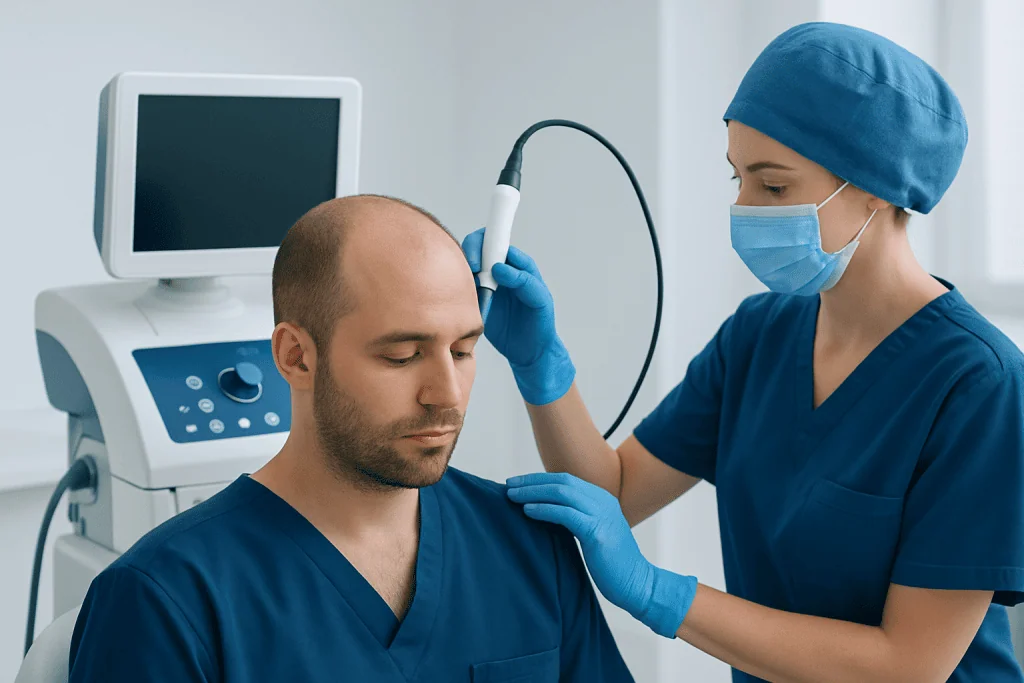
Hair transplantation moves naturally occurring groups of hairs, called follicular units or grafts, from a donor area to areas of thinning or baldness. The donor area is most often the back and sides of the scalp, where follicles may be less sensitive to the hormonal processes involved in pattern hair loss. Each graft can contain one or several hairs.
The two main surgical approaches are follicular unit extraction, known as FUE, and follicular unit transplantation, known as FUT. In FUE, individual follicular units are removed with small instruments. In FUT, a narrow strip of donor-bearing scalp is removed and divided into grafts under magnification. Both methods can produce natural-looking results when selected and performed appropriately; they differ in donor harvesting, healing, and scar pattern.
Good candidates commonly have a diagnosed, reasonably stable pattern of hair loss, adequate donor density, healthy scalp skin, and realistic expectations. A clinician may advise delaying surgery when hair loss is active or unexplained, when there is untreated scalp disease, or when donor hair is too limited. Women and men can be candidates, but diffuse thinning and some forms of scarring hair loss require particularly careful evaluation.
The Procedure and Recovery Timeline

Before treatment, the clinician reviews medical history, medicines, previous hair-loss treatments, scalp health, and family history. The consultation should include a discussion of hairline design, graft goals, donor preservation, possible alternatives, and the fact that existing hair may continue to thin over time. Photographs may be used to plan treatment and assess progress.
On the procedure day, the scalp is usually prepared and numbed with local anesthesia. The team collects donor grafts using the agreed technique, sorts them carefully, and creates tiny recipient sites at angles intended to match natural hair direction. The grafts are then placed into these sites. Procedure length varies with the treatment plan and number of grafts.
Small scabs, temporary redness, tenderness, and swelling can occur during early healing. Patients are given individual instructions on washing, sleeping position, activity, headwear, and when to resume exercise. Scratching, rubbing, smoking, and unapproved scalp products may interfere with healing and should be avoided according to the clinical team’s advice.
Transplanted hairs often shed in the first weeks after surgery; this is expected and does not necessarily mean the follicles have been lost. New visible growth commonly begins over the following months, while density and texture continue to mature gradually. The clinician can explain the expected timeline for the treated area, as the crown may develop more slowly than the frontal scalp.
Costs, Grafts, and Insurance Coverage
How much do 3,000 hair grafts cost in the USA?
There is no single reliable answer because a 3,000-graft plan can differ substantially between patients and clinics. The total estimate may reflect whether FUE or FUT is used, the complexity of donor harvesting, hair and scalp characteristics, the clinician’s involvement, geographic location, and the services included before and after surgery. A graft count alone does not describe the number of hairs per graft or guarantee a particular cosmetic result.
Some clinics describe pricing using a per-graft figure, while others provide a bundled treatment estimate. When comparing hair transplant cost USA per graft, patients should confirm exactly what that figure covers and whether it includes all clinical, facility, and follow-up elements. It is also sensible to ask how the plan would change if the final graft need differs from the initial estimate.
For people asking how much does hair transplant cost in USA with insurance, coverage should be checked directly with the insurer before scheduling treatment. Cosmetic hair restoration is usually excluded, although a policy may assess rare reconstructive circumstances differently, such as hair loss after a covered injury or medical procedure. Written confirmation of benefits, exclusions, deductibles, and authorization requirements is important.
Expected Results, Benefits, and Risks
Is hair transplant 100% successful?
No medical procedure is 100% successful. A well-planned transplant can provide lasting, natural-looking hair growth for an appropriate candidate, but graft survival, final density, scar healing, and the appearance of the surrounding native hair vary between individuals. A responsible consultation focuses on achievable improvement rather than promising complete coverage or a guaranteed result.
Potential benefits include restoring hair to selected areas, improving the framing of the face, and reducing the visual contrast between thinning and denser hair. Potential risks include temporary swelling, discomfort, crusting, bleeding, infection, delayed healing, visible scarring, uneven growth, or an unnatural-looking hairline if planning or placement is poor. Temporary shedding of nearby existing hair, sometimes called shock loss, can also occur.
What happens 10 years after a hair transplant?
Many transplanted follicles may continue growing for years because they retain characteristics of the donor area. However, the person’s original, non-transplanted hair can still thin due to aging or ongoing androgenetic hair loss. Long-term planning may include medical treatment for hair loss when suitable, periodic reassessment, or consideration of a future procedure if donor supply and scalp health allow.
Which State in the USA Is the Cheapest for Hair Transplants?
Which state in the USA is the cheapest for hair transplants?
There is no dependable, medically meaningful answer because pricing is not standardized by state and changes over time. Costs may vary within the same city according to the clinic’s clinical team, surgical setting, technique, included services, and the complexity of the individual case. Travel, accommodation, and the need for in-person follow-up may also affect the overall expense.
Rather than selecting a provider solely by state or advertised price, patients can compare detailed written plans from appropriately qualified clinicians. Important questions include who performs each stage of the procedure, how donor capacity is assessed, what aftercare is provided, how complications are managed, and whether the hairline plan is designed to remain appropriate as hair loss changes.
Recovery Self-Care and Long-Term Planning
Careful aftercare supports graft protection during the early healing period. The treating team should provide specific instructions for gentle cleansing, managing discomfort, avoiding pressure on the grafted area, and returning to work, sports, and sun exposure. Patients should follow their own clinician’s timeline because recovery needs can differ by technique, scalp condition, and extent of treatment.
Hair transplantation does not treat every cause of hair loss. Some people benefit from a broader plan that may include prescribed medical therapies, treatment of scalp conditions, nutritional assessment when clinically indicated, or non-surgical cosmetic options. Any medicine, supplement, or scalp product should be discussed with a qualified clinician, particularly before and after surgery.
Long-term success also involves protecting the donor area. Removing too many grafts can reduce donor density and limit future options, which is why a conservative, individualized strategy is valuable. Progress photographs and scheduled reviews can help the clinician assess healing, growth, and changes in untreated hair over time.
When to Seek Medical Care
A person should seek medical assessment before considering a transplant if hair loss is sudden, patchy, accompanied by itching, pain, scaling, redness, pustules, or scalp scarring. These features may point to a condition that needs diagnosis and treatment first. Medical advice is also important for rapid shedding after illness, childbirth, weight change, new medication, or major stress.
After a transplant, patients should contact their treating team promptly for worsening pain, spreading redness, fever, pus-like drainage, significant bleeding, or other unexpected symptoms. For international patients, Acibadem International offers assessment and treatment through multidisciplinary specialists at JCI-accredited hospitals, with care plans based on the individual’s hair-loss diagnosis and surgical suitability.
Frequently asked questions
Are hair grafts the same as individual hairs?
No. A graft is a naturally occurring follicular unit that may contain one or several hairs. This is why a graft number alone does not fully describe the likely visual density of a transplant.
Why can two clinics give different hair transplant estimates?
Clinics may use different methods for pricing and may include different services in their estimates. Differences can also reflect the technique, clinician involvement, facility standards, graft complexity, and follow-up arrangements.
Does health insurance cover hair transplant surgery?
Insurance commonly excludes hair transplantation performed for typical cosmetic hair loss. In uncommon reconstructive circumstances, an insurer may evaluate coverage differently, so patients should request written confirmation from their plan.
How do patients choose between FUE and FUT?
The best approach depends on donor density, hair characteristics, scalp flexibility, preferred hairstyle, expected graft needs, and tolerance for different scar patterns. A hair restoration clinician can explain how each technique fits the individual's goals and medical situation.
Can women have a hair transplant?
Yes, some women are suitable candidates. Because female-pattern thinning can be diffuse and may have several possible causes, a careful diagnosis and donor-area assessment are especially important before surgery.
Does a hair transplant stop future hair loss?
A transplant redistributes follicles but does not stop hair loss in untreated areas. A clinician may discuss ongoing monitoring and, when appropriate, medical options to help preserve existing hair.
References
- American Academy of Dermatology Association
- International Society of Hair Restoration Surgery
- U.S. Food and Drug Administration
- Mayo Clinic
This article is for general information only and is not a substitute for professional medical advice. Please consult a qualified doctor about your individual situation.
Hair transplant in Turkey — costs, graft counts & a free assessment
JCI-accredited · board-certified surgeons · reply within 24h
Add us as a Preferred Source to see more of our trusted health content across Google Search, AI Overviews and Discover.