Eyelash Mites Treatment: How It Works, Results and What to Expect

Demodex mites are common and usually harmless, but overgrowth can contribute to eyelid inflammation called Demodex blepharitis. Effective treatment focuses on the eyelid margins, where mites and their debris collect around eyelash follicles.
Key Takeaways
- Demodex mites are common and usually harmless, but overgrowth can contribute to eyelid inflammation called Demodex blepharitis.
- Effective treatment focuses on the eyelid margins, where mites and their debris collect around eyelash follicles.
- Improvement often develops gradually because treatment needs to interrupt the mites' life cycle and calm eyelid inflammation.
- A clinician can confirm the diagnosis and distinguish Demodex blepharitis from allergy, dry eye disease, infection, or other eye conditions.
- Persistent redness, pain, light sensitivity, vision changes, or significant swelling should be assessed promptly by an eye-care professional.
Eyelash mites treatment aims to reduce an overgrowth of Demodex mites on the eyelashes and eyelid margins, ease inflammation, and restore a healthier tear film. Care usually involves a clinician-guided eyelid-cleaning routine and, for confirmed Demodex blepharitis, targeted prescription treatment when appropriate.
Overview: How eyelash mites treatment works
Eyelash mites treatment is designed to manage an excess of Demodex mites around the eyelash follicles and oil glands of the eyelids. These microscopic mites are common on human skin, particularly in adults. They do not always cause symptoms, but a larger mite burden may contribute to itching, redness, crusting, dry-eye sensations, and a type of eyelid inflammation known as Demodex blepharitis.
Treatment works through two related goals: reducing mites and debris at the lid margin, and improving the inflammation and tear-film disturbance that can make the eyes feel uncomfortable. An eye-care clinician may recommend regular eyelid hygiene, treatment for associated dry eye or meibomian gland dysfunction, and a targeted prescription medicine if examination supports Demodex blepharitis. The right plan depends on symptoms, examination findings, eye health, and other medical conditions.
Most people do not need aggressive or unsupervised home remedies. Products that are not made for use around the eyes, including concentrated essential oils, can irritate the eyelid skin or ocular surface. A careful, consistent approach is generally safer and more effective than trying multiple harsh treatments.
Who may benefit from treatment and how diagnosis is made
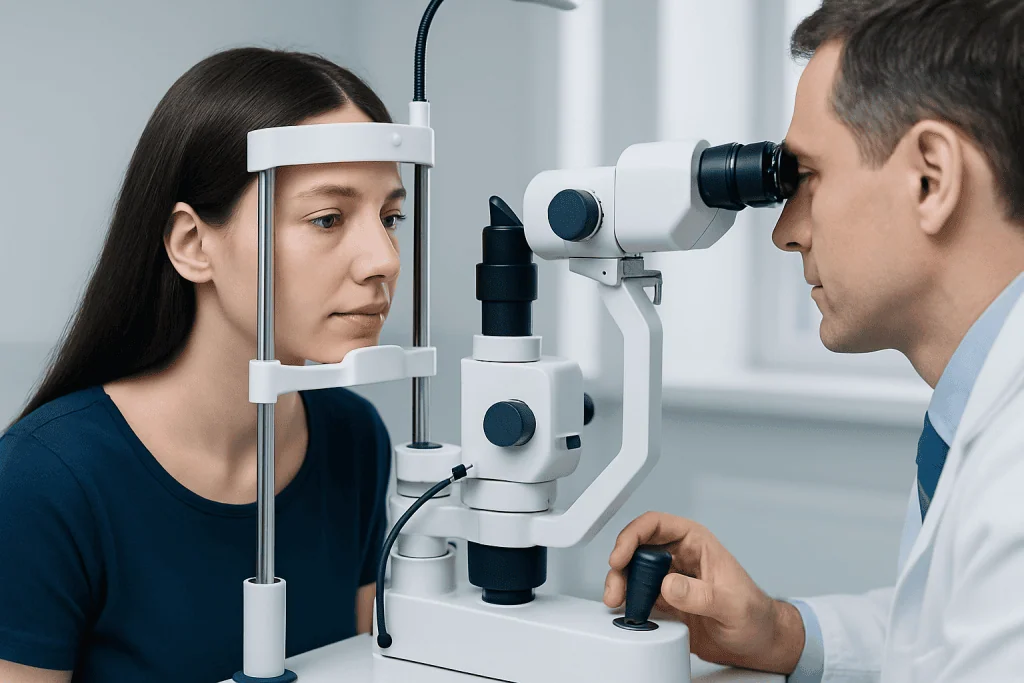
People may benefit from assessment when they have ongoing eyelid itching, burning, redness, flaky material at the lash line, recurrent styes, or dry, gritty eyes despite basic self-care. A particularly suggestive finding is cylindrical dandruff: sleeve-like deposits that cling around the base of individual eyelashes. This differs from ordinary skin flakes, which may sit more loosely on the lid margin.
An ophthalmologist or optometrist typically diagnoses suspected Demodex blepharitis during a slit-lamp examination. The clinician looks closely at the lashes, eyelid margins, tear film, and eye surface. In some cases, a lash may be examined under magnification, but this is not always necessary when the characteristic signs are present.
Similar symptoms can result from allergic eye disease, bacterial blepharitis, contact dermatitis, rosacea, seborrheic dermatitis, dry eye disease, or dysfunction of the meibomian glands. Identifying these overlapping problems matters because they may need additional care. Treatment can also be adapted for people who wear contact lenses, have sensitive skin, are pregnant or breastfeeding, or use regular eye drops.
What happens during eyelash mites treatment

Treatment is generally non-surgical and takes place mainly at home, with follow-up eye examinations as needed. At the first visit, the clinician reviews symptoms, checks vision and eye health, examines the lashes and eyelids, and explains the recommended regimen. If another cause of irritation is suspected, that condition may be addressed at the same time.
A typical plan may include gentle daily cleansing of the eyelid margins with an eye-safe product, using clean hands and a fresh applicator or pad for each eye. Warm compresses may be advised when blocked eyelid oil glands are also present. The aim is to loosen debris and support normal gland function, not to scrub the eyes forcefully.
For confirmed Demodex blepharitis, a clinician may prescribe a topical treatment formulated for the eyelids. The medicine is used for a defined course and targets the mite burden over time. Artificial tears or other dry-eye treatments may also be recommended if the eye surface is irritated. Contact lens wearers may be asked to pause lens use temporarily or follow specific hygiene instructions, depending on symptoms and the treatment selected.
Follow-up allows the clinician to check whether cylindrical dandruff, inflammation, and symptoms are improving. They can also adjust care if irritation persists, if treatment is difficult to tolerate, or if another eyelid or ocular-surface condition becomes more apparent.
Benefits, risks and the recovery timeline
The main potential benefits of eyelash mites treatment are less itching and irritation, cleaner-looking lash margins, fewer crusts or deposits, and improvement in dry-eye symptoms related to eyelid inflammation. Treatment may also support healthier eyelid oil glands and make contact lens wear more comfortable for some people. Results vary because symptoms often have more than one cause.
There is no surgical recovery period. Mild improvement may be noticed within the first few weeks, while more complete improvement often takes longer because eyelid inflammation settles gradually and the treatment course is intended to cover the mite life cycle. Consistent use is important; stopping treatment early may leave the original problem incompletely controlled.
Possible side effects depend on the specific product used. They can include temporary stinging, burning, redness, dryness, or skin irritation around the eyelids. Tell the prescribing clinician about any eye medications, skin conditions, allergies, pregnancy, breastfeeding, or history of eye surgery before starting a new treatment. Severe discomfort, increasing swelling, rash, or changes in vision should be assessed without delay.
During recovery, it is sensible to avoid eye makeup when eyelids are actively irritated, replace old eye cosmetics, clean reusable tools carefully, and avoid sharing towels or eye makeup. These steps support eyelid hygiene, although they do not replace prescribed treatment.
How long does it take to get rid of eyelash mites?
It commonly takes several weeks of consistent treatment to substantially reduce eyelash mites and improve Demodex blepharitis. The exact time differs between individuals and depends on the initial mite burden, the presence of dry eye or skin conditions such as rosacea, and how regularly the treatment plan is followed.
A targeted prescription course may be planned around the Demodex life cycle, which is measured in weeks rather than days. Symptoms may improve before all visible lash debris has cleared. Conversely, mild irritation can continue for a while even as the mite burden decreases because inflamed eyelid tissue and the tear film need time to recover.
Demodex mites are part of the normal skin ecosystem for many people, so the aim is usually control of an overgrowth and its symptoms rather than proving that every mite has been permanently eliminated. A follow-up examination is the most reliable way to assess response and decide whether ongoing eyelid hygiene or additional treatment is needed.
How to tell if Demodex mites are dying?
It is not possible to reliably tell at home whether individual Demodex mites are dying. The mites are microscopic, and changes in itching or debris do not provide a direct measure of whether they are alive. Trying to inspect lashes closely or remove deposits aggressively can further irritate the eyelids.
More useful signs of progress are a gradual reduction in cylindrical dandruff at the lash bases, less itching and redness, fewer crusts on waking, and greater comfort during the day. These changes can be uneven, especially when dry eye, allergy, or meibomian gland dysfunction is also contributing to symptoms.
An eye-care professional can assess treatment response under magnification. If symptoms worsen or there is no meaningful improvement after the advised treatment period, the clinician may review the diagnosis, check adherence and technique, and look for other conditions that require care.
Do eyelashes grow back after Demodex mites?
In many cases, eyelashes grow back after a Demodex-related eyelid problem has been treated and the inflammation is controlled. Lash shedding can occur when follicles and eyelid margins are chronically inflamed, but eyelashes normally follow a natural growth cycle and can regrow over time.
Regrowth is gradual and may take several months. It can be slower when there is ongoing eyelid inflammation, repeated rubbing or pulling of lashes, scarring disorders of the eyelids, nutritional concerns, certain medications, or another cause of hair loss. A clinician should evaluate patchy lash loss, eyelid scarring, loss of lashes in one area, or lashes that repeatedly grow inward.
Cosmetic lash extensions, false lashes, and strong lash-growth products may aggravate sensitive eyelids in some people. It is usually best to discuss their use with an eye-care professional while active eyelid inflammation is being treated.
Do eyelash mites live on pillows? When to seek medical care
Demodex mites mainly live in human hair follicles and sebaceous or oil glands, including those around the eyelashes. They may transfer briefly to fabrics such as pillowcases, towels, or makeup tools, but pillows are not considered the main source of a persistent eyelash-mite overgrowth. Routine laundering of pillowcases and towels, avoiding shared eye makeup, and replacing old eye cosmetics are reasonable hygiene measures.
Medical assessment is appropriate for symptoms that persist despite gentle eyelid hygiene, recurrent styes or eyelid inflammation, noticeable eyelash loss, or concern about a reaction to an eye product. A clinician can identify whether Demodex is involved and make sure another treatable condition is not being missed.
Urgent eye care is important for eye pain, marked swelling, strong sensitivity to light, a significant red eye, discharge with worsening symptoms, injury, or any change in vision. These symptoms are not typical signs to manage alone as eyelash mites and may indicate a different eye problem that needs prompt evaluation.
Acibadem International’s multidisciplinary specialists and JCI-accredited hospitals can assess eyelid and ocular-surface concerns for international patients, with treatment plans guided by a comprehensive eye examination.
Frequently asked questions
What is the best eyelash mites treatment?
The best treatment depends on whether an eye-care professional confirms Demodex blepharitis and whether dry eye, allergy, rosacea, or another eyelid condition is also present. Treatment commonly includes eye-safe lid hygiene and may include a prescription medicine specifically intended to reduce Demodex mites. Products not designed for the eye area should not be applied to the lash line without clinical advice.
Can eyelash mites go away on their own?
Demodex mites are commonly present on the skin and may cause no symptoms at low levels. When they are associated with significant eyelid inflammation, symptoms may persist without targeted care. A clinician can advise whether observation, regular hygiene, or prescription treatment is appropriate.
Can I wear makeup during Demodex treatment?
It is often helpful to limit or avoid eye makeup while the eyelids are actively irritated, especially if applying or removing makeup worsens symptoms. Old mascara, eyeliner, and makeup applicators may hold debris and should be replaced or cleaned according to product instructions. The treating clinician can give advice based on the severity of inflammation and the treatment being used.
Are eyelash mites contagious?
Demodex mites can be transferred through close contact and shared personal items, but they are very common and are not usually treated like a highly contagious infection. Avoiding shared eye makeup, towels, and pillowcases is a sensible precaution. Household-wide treatment is not usually needed unless a clinician recommends it.
Can tea tree oil treat eyelash mites?
Some tea tree-derived ingredients have been used in eyelid products, but concentrated tea tree oil can irritate the eyelids and eye surface. It should not be placed in or near the eyes as a home treatment. A clinician can recommend products that are appropriate for periocular use and explain how to use them safely.
Will eyelash mites cause vision loss?
Eyelash mites and Demodex blepharitis mainly affect the eyelid margins and can contribute to discomfort and dry-eye symptoms. Vision loss is not a typical effect, but blurred vision can occur temporarily when the tear film is unstable or the eye surface is irritated. Any persistent change in vision, pain, or severe redness requires prompt eye assessment.
References
- American Academy of Ophthalmology
- National Eye Institute
- American Optometric Association
- Mayo Clinic
This article is for general information only and is not a substitute for professional medical advice. Please consult a qualified doctor about your individual situation.
Hair transplant in Turkey — costs, graft counts & a free assessment
JCI-accredited · board-certified surgeons · reply within 24h