

Does Radiation Therapy Make You Lose Your Hair: How It Works, Results and What to Expect

Radiation-related hair loss occurs only where radiation is directed; it does not usually cause whole-body hair loss. Hair loss often starts 2 to 3 weeks after treatment begins and may continue for several weeks after treatment ends.
Key Takeaways
- Radiation-related hair loss occurs only where radiation is directed; it does not usually cause whole-body hair loss.
- Hair loss often starts 2 to 3 weeks after treatment begins and may continue for several weeks after treatment ends.
- Regrowth commonly begins within a few months, but recovery varies with radiation dose, treatment area, and individual factors.
- Chemotherapy is more likely than radiation to cause widespread scalp hair loss because it circulates throughout the body.
- Gentle scalp care, sun protection, and discussing skin changes with the radiation oncology team can support comfort during recovery.
Does radiation therapy make you lose your hair? Radiation can cause hair loss when the treatment field includes hair-bearing skin, such as the scalp, face, chest, or pubic area. The effect is local rather than whole-body, and hair may grow back over time, although higher radiation doses can cause permanent thinning or loss.
Overview: does radiation therapy make you lose your hair?
Does radiation therapy make you lose your hair? It can, but only when radiation is delivered to an area that contains hair follicles. For example, radiation to the brain may cause loss of scalp hair in the path of the beams, while radiation to the breast, prostate, or abdomen would not usually affect scalp hair.
Radiation therapy uses carefully planned high-energy radiation to damage cancer cells and limit their ability to divide. Hair follicles in the treatment area can also be sensitive to radiation. This may lead to temporary shedding, patchy thinning, or—less commonly—permanent hair loss in the treated skin.
The radiation oncology team plans treatment to target the tumor while protecting nearby healthy tissue as much as possible. Before treatment starts, the team can explain whether hair loss is expected, which areas may be affected, and what changes may be temporary or long-lasting.
How radiation affects hair follicles
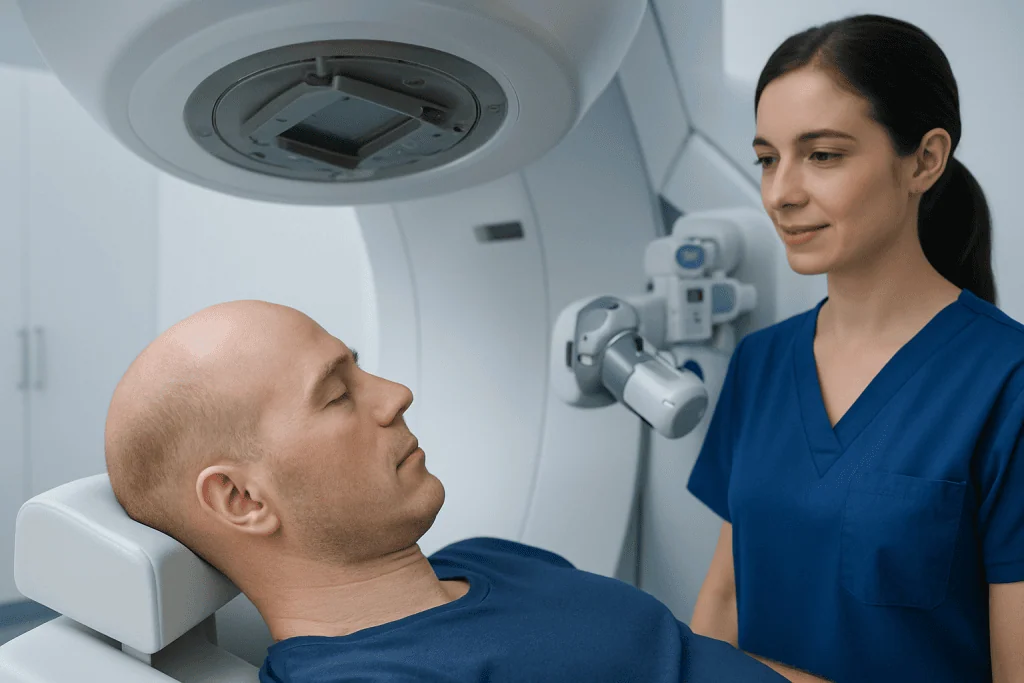
Hair grows from follicles located in the skin. Radiation can injure the rapidly dividing cells that help produce the hair shaft. When follicles in the treatment field receive enough radiation, hair may become finer, break more easily, or fall out.
The pattern of hair loss generally matches the planned radiation field. It may appear as a defined patch on the scalp after treatment for a brain tumor, or as reduced facial hair after treatment near the head and neck. Modern planning techniques aim to deliver radiation precisely, but some normal tissue exposure may be necessary to treat the cancer safely.
Whether follicles recover depends largely on the total radiation dose, how the dose is divided across sessions, the treated body site, and previous treatment in the same area. A clinician cannot always predict regrowth with certainty before therapy, but can provide an individualized expectation based on the treatment plan.
- Lower exposure: hair loss is more likely to be temporary.
- Higher exposure: follicles may be more severely damaged, increasing the chance of lasting thinning or loss.
- Repeated treatment: radiation previously given to the same skin area can reduce the likelihood of full regrowth.
Candidacy, planning, and what happens during treatment

Radiation therapy may be used to cure cancer, reduce the chance of recurrence after surgery, slow cancer growth, or relieve symptoms. It can be given alone or alongside surgery, systemic treatments, or both. The decision is made by a multidisciplinary cancer team based on the cancer type, location, stage, overall health, and the person’s priorities.
Before treatment, patients usually have a planning appointment called simulation. Imaging scans and positioning tools help the radiation team map the treatment area. Small skin marks or other positioning references may be used so the body can be placed in the same position at each session. For treatment involving the head, a fitted mask may help keep the head still; it does not deliver radiation itself.
External-beam radiation is painless while it is being delivered. A treatment session commonly lasts only a short time, although setup and careful positioning take longer. The radiation therapists leave the room during delivery but monitor and communicate with the patient throughout. Treatment is often given on weekdays over several days or weeks, depending on the treatment plan.
For people receiving cancer care abroad, Acibadem International’s multidisciplinary specialists and JCI-accredited hospitals diagnose and treat cancer for international patients, including through radiation therapy planning and delivery.
Hair loss timeline, recovery, benefits, and risks
Hair loss from radiation usually does not happen immediately. It often begins about 2 to 3 weeks after treatment starts, although timing varies. The treated skin may also become dry, itchy, tender, or darker in color as treatment continues. These effects should be reported to the radiation team, particularly if the skin becomes painful, blistered, or open.
After radiation ends, the skin needs time to heal. If the follicles recover, new hair may begin to appear within a few months. The new hair can initially have a different texture, color, density, or curl pattern. In some cases, regrowth continues gradually for a year or longer.
The principal benefit of radiation therapy is its ability to treat cancer cells in a specific body area while limiting exposure to the rest of the body. Side effects depend strongly on the area treated. Along with local hair loss and skin changes, treatment near the brain may cause fatigue or headaches, while treatment near the mouth or throat may affect swallowing. The oncology team monitors side effects and offers supportive care throughout treatment.
Permanent hair loss is possible after high-dose radiation to hair-bearing skin. It is important to ask about this possibility before treatment, especially when radiation will involve the scalp, eyebrows, eyelashes, beard area, or pubic region. The potential long-term effects are weighed against the expected benefit of treating the cancer.
Which is worse for hair loss, chemo or radiation?
Chemotherapy is generally more likely than radiation therapy to cause widespread scalp hair loss. Chemotherapy medicines travel through the bloodstream and may affect hair follicles across the body. Whether this occurs depends on the specific medicines, doses, and treatment schedule; many chemotherapy regimens do not cause complete hair loss.
Radiation-related hair loss is usually limited to the body area receiving radiation. A person having radiation to the pelvis, for example, would not be expected to lose scalp hair because of radiation. However, radiation to the head can produce noticeable, sometimes patchy scalp hair loss within the treatment field.
Some people receive chemotherapy and radiation at the same time. In that situation, the hair changes may reflect one treatment or both. The medical oncology and radiation oncology teams can explain the expected effects of each part of the care plan and discuss practical support before treatment begins.
What helps hair grow back after radiation?
There is no proven home treatment that can guarantee hair regrowth after radiation, because recovery depends on whether the follicles can repair themselves. The most helpful approach is to protect the treated skin, follow the radiation team’s instructions, and allow healing time. Avoid starting topical products, supplements, or hair-loss medicines without checking with the oncology team.
Gentle care can reduce irritation while the skin recovers. Patients may be advised to use a mild fragrance-free cleanser, pat rather than rub the area dry, avoid heat styling and chemical treatments, and use a soft brush or wide-tooth comb. Hats, scarves, wigs, or hairpieces can provide comfort and confidence while hair is thin or absent.
Sun protection is especially important for treated skin. A hat or other protective clothing is often useful, and the healthcare team can advise when sunscreen is appropriate on healing skin. Good nutrition, adequate protein intake, sleep, and management of other health conditions support general recovery, although they cannot reverse permanent follicle damage.
If hair does not regrow as expected, a radiation oncologist, dermatologist, or hair-and-scalp specialist can assess possible causes. They may discuss whether medical treatments, cosmetic options, or other supportive approaches are appropriate after the skin has fully healed.
Do you ever fully recover from radiation?
Many people recover well from radiation therapy, and common short-term effects such as tiredness and skin irritation usually improve in the weeks after treatment. However, recovery is individual and depends on the treatment site, total dose, other cancer treatments, and a person’s health before treatment.
Some changes can take months to settle, while others may be long-lasting. For hair, complete regrowth is possible when follicles have not been permanently damaged, but hair may also return thinner or with a different texture. In higher-dose areas, some hair loss can remain permanent.
Follow-up appointments are an important part of recovery. They allow the cancer team to assess treatment response, monitor for delayed effects, and address physical and emotional concerns. Patients should keep a list of symptoms and questions between visits, as even seemingly minor changes may be helpful for the team to know about.
What I wish I knew before radiation
Before radiation, many patients find it helpful to know exactly where treatment will be directed and which changes are likely to be local. Asking the team to show the treatment area on a diagram can make hair-loss expectations clearer. It can also help to ask whether hair loss is likely to be temporary, whether eyebrows or eyelashes may be affected, and when regrowth might reasonably be expected.
Planning for practical and emotional needs before treatment can make the process easier. Some people choose a shorter haircut, select a wig or head covering in advance, or arrange help with transport and daily tasks if fatigue develops. There is no right way to respond to appearance changes; support from family, counseling services, cancer support groups, or the care team can be valuable.
It is also useful to understand that side effects may build gradually rather than appearing on the first day. The radiation team should be contacted early about discomfort, skin changes, anxiety, sleep difficulties, or concerns about eating and drinking. Early support can often improve comfort and help patients continue treatment as planned.
When to seek medical care
Patients should contact their radiation oncology team promptly if treated skin becomes severely painful, blistered, bleeding, open, or shows signs of infection such as increasing redness, warmth, swelling, drainage, or fever. New or worsening symptoms related to the treatment area should not be managed alone.
Urgent medical evaluation is needed for serious symptoms such as difficulty breathing, chest pain, sudden confusion, a seizure, severe or rapidly worsening headache, new weakness, or inability to keep fluids down. These symptoms may not always be caused by radiation, but they need timely assessment.
Routine follow-up remains important even when recovery seems to be going smoothly. The cancer care team can review healing, answer questions about hair regrowth, and coordinate further care when needed.
Frequently asked questions
Does radiation therapy make you lose all your hair?
Radiation therapy does not usually cause all-over hair loss. It affects hair only in the area exposed to radiation, so scalp hair loss is mainly expected when the head or scalp is treated. The amount of loss depends on the radiation dose and the size of the treatment field.
How long after radiation does hair loss start?
Hair loss often begins around 2 to 3 weeks after radiation starts, but the timing can vary. Shedding may continue during treatment and for a period after it ends. The radiation oncology team can provide a more individualized timeline.
Will hair grow back after radiation to the brain?
Hair may grow back after radiation to the brain if the follicles recover. Regrowth often begins within several months, but it can take a year or longer to reach its fullest level. Higher treatment doses can lead to permanent thinning or hair loss in some areas.
Can I dye or style my hair during radiation therapy?
It is usually best to avoid hair dye, bleaching, perms, chemical straightening, and heat styling on or near treated skin during radiation. These can irritate sensitive skin and fragile hair. The radiation team can advise when normal styling is safe to resume.
Is radiation hair loss painful?
Hair shedding itself is not usually painful. However, the skin in the treatment area may become dry, itchy, tender, or sensitive. Patients should tell their care team about discomfort so they can receive appropriate skin-care guidance.
Can radiation cause hair loss years later?
Most radiation-related hair changes appear during treatment or soon afterward. If follicles have been permanently affected, thinning or absent hair may persist long term. New hair loss occurring years later should be discussed with a doctor because it may have another cause.
References
- American Cancer Society
- National Cancer Institute
- Cancer Research UK
- American Society for Radiation Oncology
- Macmillan Cancer Support
This article is for general information only and is not a substitute for professional medical advice. Please consult a qualified doctor about your individual situation.
Radiation Therapy in Turkey — costs, top hospitals & a free quote
JCI-accredited · board-certified surgeons · reply within 24h

Radiation Oncology
Precision radiotherapy and radiosurgery using advanced linear accelerators and image-guided techniques.
26 specialists in this unitMore from the Health Library


Related Specialists
Prof. Dr. Haldun Akgöz
Cardiology
Assoc. Prof. Dr. Özgüç Takmaz
Gynecology & Obstetrics
Dr. Gürhan Şişman
Gastroenterology
Assoc. Prof. Dr. Zerrin Boyacı
Otorhinolaryngology