Periacetabular Osteotomy: An Evidence-Based Patient Guide
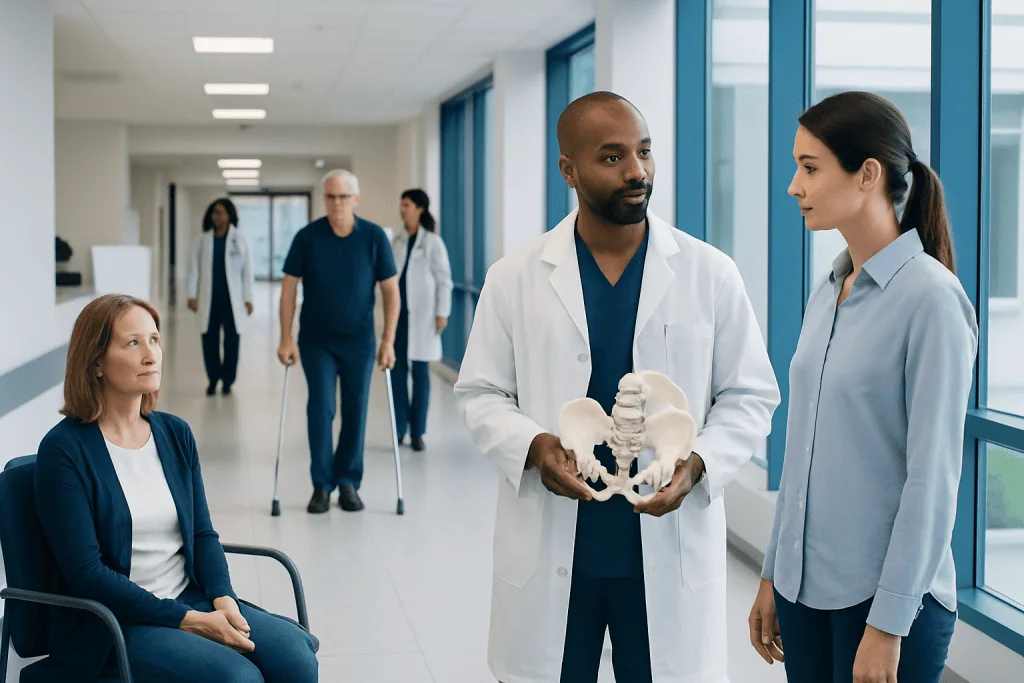
Periacetabular osteotomy reorients the hip socket to provide better coverage and stability for the femoral head. It is most often considered for adolescents and adults with painful hip dysplasia who have limited or no advanced hip arthritis.
Key Takeaways
- Periacetabular osteotomy reorients the hip socket to provide better coverage and stability for the femoral head.
- It is most often considered for adolescents and adults with painful hip dysplasia who have limited or no advanced hip arthritis.
- Careful imaging and specialist assessment are essential because candidacy depends on hip shape, cartilage health, symptoms, and overall function.
- Recovery is gradual and commonly includes protected weight bearing, physiotherapy, and several months of rehabilitation.
- Like all major bone surgery, PAO has risks, but experienced hip-preservation teams use planning and follow-up to reduce avoidable complications.
Periacetabular osteotomy (PAO) is a hip-preserving operation used mainly for symptomatic hip dysplasia, where the hip socket does not adequately cover the femoral head. By repositioning the socket, PAO can improve hip stability, reduce damaging joint contact forces, and may help delay arthritis progression in carefully selected patients.
Overview: What Is Periacetabular Osteotomy?
Periacetabular osteotomy, often called PAO, is a hip-preserving operation designed to treat certain forms of hip dysplasia. In hip dysplasia, the acetabulum (hip socket) is too shallow, angled unfavorably, or otherwise shaped so that it does not sufficiently cover the rounded top of the thigh bone, known as the femoral head. This can concentrate pressure on a smaller area of cartilage and the labrum, contributing to activity-related groin pain, instability, labral injury, and earlier osteoarthritis in some people.
During a PAO, an orthopedic surgeon makes controlled cuts around the acetabulum while keeping the joint surface connected to its blood supply. The socket is then carefully rotated into a more supportive position and fixed with screws. The aim is not to replace the hip, but to improve the mechanics of the person’s own joint.
PAO is a specialized procedure rather than a routine treatment for every type of hip pain. It is generally considered when symptoms, examination findings, and imaging all show that inadequate socket coverage is a key cause of the problem. A specialist in hip preservation can explain whether periacetabular osteotomy treatment is appropriate after a complete assessment.
How Hip Dysplasia Affects the Joint
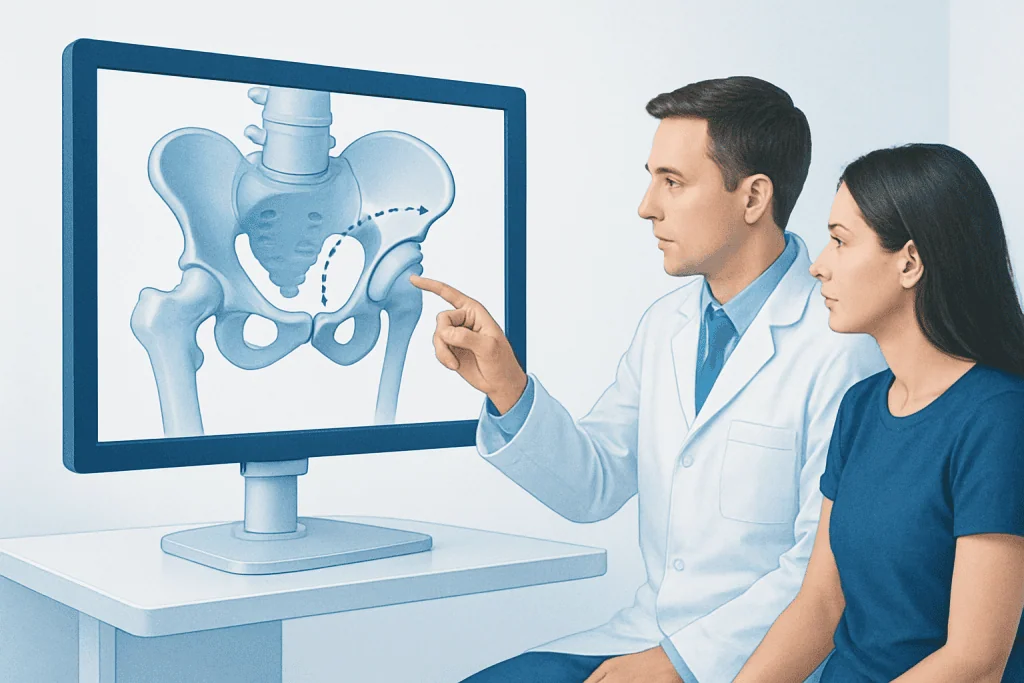
The hip is a ball-and-socket joint. For smooth, stable movement, the acetabulum needs to cover and support the femoral head while allowing the joint to move freely. Developmental dysplasia may be identified in infancy, childhood, adolescence, or adulthood. Some people have mild dysplasia and few symptoms for years, while others develop pain as activity levels increase or as repetitive loading affects the labrum and cartilage.
Hip dysplasia is not caused by a single factor in every person. It may relate to developmental differences before or after birth, family history, breech positioning, or other influences on hip formation. Symptoms can emerge gradually and may be mistaken for a muscle strain, tendon problem, or other source of pelvic or lower-back discomfort.
In adults, common concerns include groin pain, pain after prolonged standing or walking, a sense of catching or giving way, reduced tolerance for sport, and stiffness. However, symptoms alone do not diagnose dysplasia. The position and shape of the hip must be interpreted with clinical findings and high-quality imaging. Related structural problems may also be evaluated, including hip dysplasia and femoroacetabular impingement.
Periacetabular Osteotomy Indications and Candidacy
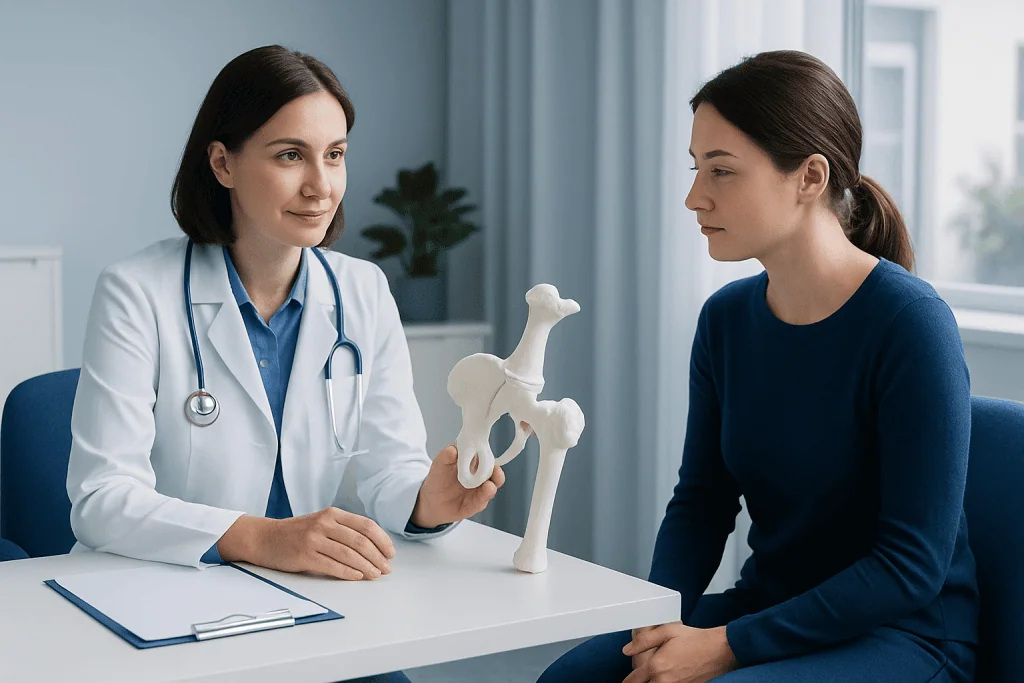
Periacetabular osteotomy indications usually include symptomatic acetabular dysplasia in a person whose hip joint still has a reasonable amount of healthy cartilage. PAO is most commonly performed in adolescents and younger to middle-aged adults, but age alone does not decide suitability. The condition of the cartilage, degree of arthritis, hip range of motion, bone anatomy, general health, and the person’s goals are all important.
Surgeons commonly look for persistent hip symptoms that affect daily life or activities, imaging evidence of undercoverage or unfavorable socket orientation, and a good likelihood that repositioning the socket will improve joint mechanics. Some patients also have a labral tear or cartilage injury. These findings may be addressed during planning, but a labral tear by itself does not automatically mean PAO is needed.
PAO is usually less suitable when there is advanced osteoarthritis, markedly limited hip motion from joint degeneration, or a hip shape that cannot be adequately corrected by socket reorientation. In those circumstances, other treatments may be more appropriate. A hip-preservation evaluation may include discussion of non-surgical care, arthroscopy in selected settings, or joint replacement when arthritis is advanced.
- History of pain, instability, reduced activity tolerance, or mechanical hip symptoms
- Physical examination of hip movement, strength, gait, and pain triggers
- X-rays that measure coverage and orientation of the hip socket
- CT or MRI when more detailed assessment of bone anatomy, labrum, or cartilage is needed
- Review of medical history, smoking status, bone health, and rehabilitation needs
The Periacetabular Osteotomy Approach: What Happens During Surgery
The periacetabular osteotomy approach is planned individually because each hip has a different pattern of dysplasia and alignment. Before surgery, the team uses X-rays and, when needed, three-dimensional imaging to decide how far the acetabulum should be moved. The desired correction aims to improve coverage without creating excessive coverage or impingement.
PAO is performed under anesthesia. Through an incision near the front of the pelvis, the surgeon carefully creates several bone cuts around the acetabulum. This separates the socket from the surrounding pelvic bone while preserving key tissues, including its blood supply. The socket is rotated into the planned position, checked with imaging in the operating room, and secured with metal screws.
The operation may include additional procedures in selected cases, such as treatment of associated labral or femoral-shape problems. The exact plan should be discussed in advance, including the expected incision, fixation method, hospital stay, pain-control plan, and whether any additional hip procedure is likely. Surgical decisions are tailored to anatomy rather than based on a single standard template.
Benefits, Limitations, and Periacetabular Osteotomy Outcomes
The potential benefit of PAO is improved hip mechanics. Better socket coverage can distribute forces more evenly across the joint, which may reduce pain, improve stability, and support a return to daily activities or selected sports after rehabilitation. For people who are well selected and have limited arthritis, periacetabular osteotomy outcomes reported in orthopedic research generally support meaningful symptom and function improvement.
Results vary between individuals. Outcomes are influenced by the degree of cartilage damage before surgery, the severity and pattern of dysplasia, the accuracy of correction, muscle recovery, adherence to rehabilitation, body weight, smoking, and other health factors. PAO cannot restore cartilage that has already been extensively lost, and it cannot guarantee that osteoarthritis or future hip replacement will never be needed.
People reviewing research may encounter the phrase “periacetabular osteotomy PubMed” when searching published medical studies. It is helpful to remember that study populations, surgical techniques, follow-up periods, and outcome measures differ. A surgeon can help place research findings in the context of an individual hip, rather than using an average result to predict a personal outcome.
Possible risks include bleeding, infection, blood clots, wound problems, nerve or blood-vessel injury, fracture, delayed bone healing, nonunion, overcorrection or undercorrection, persistent pain, stiffness, and the need for further surgery. Some people later choose screw removal if hardware becomes bothersome after bone healing. A detailed consent discussion should cover the risks most relevant to the individual.
Recovery Timeline and the Periacetabular Osteotomy Protocol
Recovery after PAO requires patience because the pelvic bone cuts need time to heal. Hospital stay varies according to the person’s progress, pain control, and local care pathway. Early care focuses on safe mobility, preventing complications, managing discomfort, and learning how to move while protecting the operated hip.
A periacetabular osteotomy protocol commonly includes crutches or another walking aid with restricted or partial weight bearing for an initial period. The exact duration differs between surgical teams and depends on follow-up X-rays and bone healing. Physiotherapy usually begins with gentle movement, safe transfers, and muscle activation before progressing to gait training, strength, balance, and functional activity.
Many people can gradually increase everyday activity over the following months, but full recovery is not immediate. Desk-based work may be possible earlier than physically demanding work, depending on recovery and job requirements. Return to driving, exercise, impact activity, and sport should be guided by the surgical and rehabilitation team rather than by a fixed calendar date.
Helpful preparation includes arranging support at home, avoiding smoking or nicotine products because they can impair bone healing, following instructions about medicines, and attending all planned reviews. New or worsening symptoms should be reported promptly. Acibadem International’s multidisciplinary specialists in JCI-accredited hospitals support diagnosis, surgical planning, and rehabilitation for international patients with complex hip conditions.
When to Seek Medical Care
Medical assessment is appropriate for persistent groin or side-of-hip pain, limping, recurrent hip catching, a feeling that the hip is unstable, or pain that limits walking, work, sleep, or sport. People with a history of childhood hip dysplasia, a family history of hip problems, or symptoms that have not improved with appropriate rest and physiotherapy may benefit from review by an orthopedic specialist.
Urgent medical care is important for severe hip pain after a fall or injury, inability to bear weight, fever with a painful or swollen joint, sudden major leg swelling, chest pain, or shortness of breath. These symptoms can have causes that need prompt assessment and are not specific to hip dysplasia or PAO.
For those considering surgery, seeking an opinion from a surgeon experienced in hip preservation can clarify the diagnosis, available options, expected rehabilitation, and realistic goals. Bringing prior imaging, treatment history, and a description of activities that worsen symptoms can make the consultation more useful.
Frequently asked questions
What is periacetabular osteotomy used for?
Periacetabular osteotomy is mainly used to treat symptomatic hip dysplasia when the hip socket does not provide enough coverage for the femoral head. The operation repositions the socket to improve joint stability and load distribution while preserving the person’s own hip joint.
Is periacetabular osteotomy the same as a hip replacement?
No. PAO is a joint-preserving procedure that changes the position of the existing hip socket. Hip replacement removes damaged joint surfaces and replaces them with artificial components, and it is more often considered when arthritis is advanced.
How long does recovery from periacetabular osteotomy take?
Recovery is gradual and often extends over several months. Early recovery usually involves protected weight bearing and structured physiotherapy, while return to demanding work, impact exercise, or sport may take longer and should be individualized.
Who is a good candidate for PAO?
A good candidate often has painful hip dysplasia, imaging that confirms correctable socket undercoverage or malorientation, and limited joint arthritis. A hip-preservation surgeon assesses cartilage condition, hip movement, anatomy, overall health, and personal goals before recommending surgery.
Can PAO prevent hip arthritis?
PAO may improve abnormal hip loading and can potentially slow further joint damage in an appropriately selected hip. It does not guarantee prevention of arthritis, especially if significant cartilage damage or arthritis is already present before surgery.
What are the main risks of periacetabular osteotomy?
Risks include infection, bleeding, blood clots, nerve or blood-vessel injury, delayed bone healing, fracture, persistent pain, stiffness, and the possible need for additional surgery. The treating team explains individual risk factors and monitors recovery closely.
References
- American Academy of Orthopaedic Surgeons
- International Hip Dysplasia Institute
- National Institute of Arthritis and Musculoskeletal and Skin Diseases
- American Association of Hip and Knee Surgeons
- PubMed, National Library of Medicine
This article is for general information only and is not a substitute for professional medical advice. Please consult a qualified doctor about your individual situation.
Joint and spine care in Turkey — expert assessment & treatment
JCI-accredited · board-certified surgeons · reply within 24h
Add us as a Preferred Source to see more of our trusted health content across Google Search, AI Overviews and Discover.