Mm Treatment Support: How It Works, Results and What to Expect

Multiple myeloma is usually managed with a personalized combination of treatments and supportive care rather than one single treatment. Treatment choices depend on disease features, symptoms, kidney function, overall health, prior therapy and transplant eligibility.
Key Takeaways
- Multiple myeloma is usually managed with a personalized combination of treatments and supportive care rather than one single treatment.
- Treatment choices depend on disease features, symptoms, kidney function, overall health, prior therapy and transplant eligibility.
- Many people receive treatment in phases: initial therapy, possible stem cell transplant, consolidation or maintenance, and treatment at relapse if needed.
- Supportive care for bone health, infections, anemia, pain, blood clots and emotional wellbeing is an important part of MM treatment support.
- New therapies continue to improve options for relapsed or difficult-to-treat myeloma, but no universal cure is currently available.
MM treatment support refers to the coordinated care used to treat multiple myeloma and manage its effects on the body and everyday life. It may include anti-myeloma medicines, stem cell transplantation for suitable patients, bone protection, infection prevention, symptom relief and regular monitoring.
MM Treatment Support: How It Works
MM treatment support is the coordinated plan used to treat multiple myeloma (MM), a cancer of plasma cells in the bone marrow, while also preventing or managing complications. It is not one procedure or medicine. Instead, it brings together anti-myeloma treatment, laboratory and imaging follow-up, symptom management, and practical support tailored to the individual.
The main goal is to reduce the number of myeloma cells, relieve symptoms, protect organs and help achieve the deepest and longest possible response. The plan may address bone damage, anemia, kidney problems, infection risk, pain, fatigue and the emotional or practical effects of living with a long-term cancer diagnosis.
Care is usually led by a hematologist or medical oncologist with experience in blood cancers. Depending on a person’s needs, the wider team can include transplant specialists, radiation oncologists, nephrologists, orthopedic specialists, pain clinicians, pharmacists, nurses, dietitians and rehabilitation professionals.
How Multiple Myeloma Treatment Is Planned
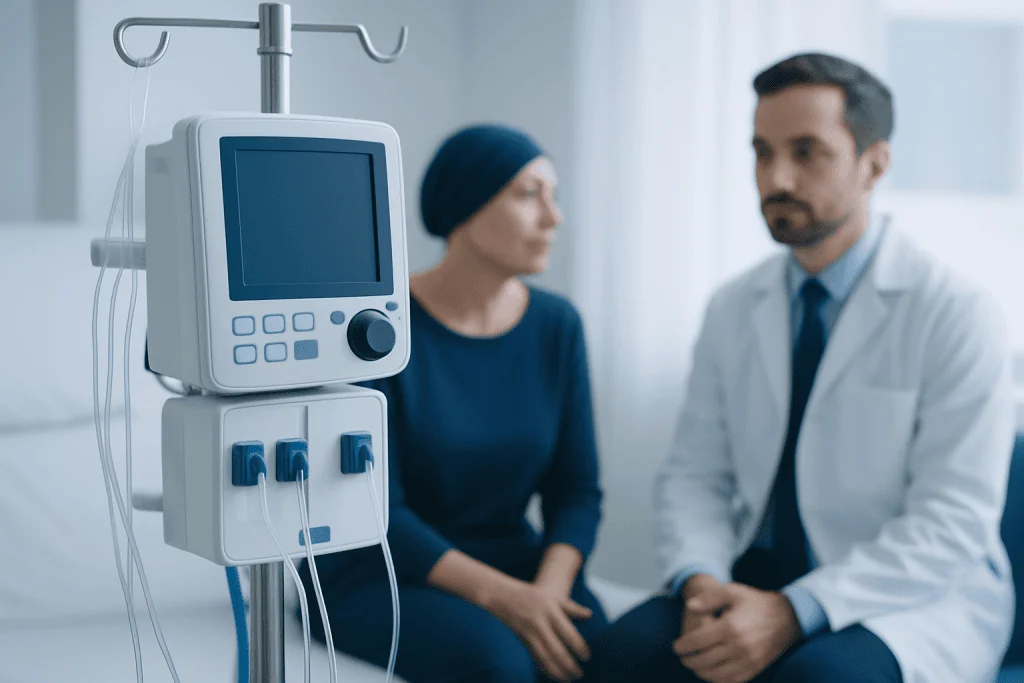
Before treatment begins, the care team confirms the diagnosis and assesses how active the myeloma is. Blood and urine tests measure abnormal proteins, blood counts, calcium and kidney function. A bone marrow examination helps identify the type and amount of myeloma cells, while genetic testing on these cells can identify features that influence risk and treatment planning.
Imaging may be used to look for bone lesions or areas of active disease. The exact scan varies by circumstance and may include low-dose whole-body CT, MRI or PET-CT. These results help distinguish active myeloma requiring treatment from earlier precursor conditions that may be monitored instead.
Doctors also consider age, fitness, other health conditions, frailty, kidney function, nerve symptoms, personal goals and whether high-dose therapy with an autologous stem cell transplant may be appropriate. A treatment plan should be reviewed at regular intervals because myeloma response and personal circumstances can change over time.
- Initial therapy aims to bring the disease under control quickly and deeply.
- Transplant may be considered for medically fit patients after initial therapy.
- Maintenance treatment may help sustain a response after first-line treatment.
- Relapsed disease is treated according to previous therapies, response duration and current health needs.
Candidacy and the Step-by-Step Treatment Journey

People with symptomatic, active multiple myeloma are generally candidates for treatment. Treatment is commonly recommended when myeloma causes or is likely to cause organ damage, such as anemia, kidney impairment, high calcium levels, bone lesions, or certain biomarkers indicating a high likelihood of near-term progression. People with smoldering myeloma often have close monitoring rather than immediate standard treatment, although selected high-risk cases may be discussed individually.
The first phase is usually induction therapy, which combines medicines from different classes. Common classes include proteasome inhibitors, immunomodulatory drugs, corticosteroids and monoclonal antibodies. These are often given in repeating treatment cycles, using oral medicines, injections, infusions or a combination. The exact regimen is selected according to disease risk, kidney function, transplant plans and potential side effects.
For eligible patients, stem cells are collected from the bloodstream after induction. High-dose chemotherapy is then used to treat remaining myeloma cells before the patient’s own collected stem cells are returned. This is called an autologous stem cell transplant. It is not suitable or necessary for everyone, and the decision is individualized.
After induction with or without transplant, a person may receive consolidation treatment or lower-intensity maintenance therapy. Follow-up includes blood and urine tests, assessment of symptoms, and imaging or bone marrow testing when clinically needed. The team uses these findings to judge response and adjust care safely.
Benefits, Risks and Recovery Timeline
The potential benefit of treatment is a reduction in myeloma activity, often leading to improvement in anemia, bone pain, kidney function and other symptoms related to the disease. A deep response can provide a longer period of disease control. However, response varies, and no treatment can promise a particular outcome for an individual.
Side effects depend on the medicines and procedures used. They can include tiredness, low blood counts, nausea, bowel changes, rash, blood clot risk, infections and peripheral neuropathy, which may cause numbness, tingling or pain in the hands and feet. Steroids can affect sleep, mood, appetite and blood sugar. Doctors may adjust treatment, offer preventive medicines or provide supportive therapies to reduce these effects.
Recovery during standard outpatient treatment varies from cycle to cycle. Many people can continue some regular activities but need planned rest and protection from infection. Recovery after an autologous stem cell transplant is more intensive: hospitalization or frequent outpatient monitoring may be needed, blood counts commonly fall for a period, and recovery of energy and immune function can take weeks to months.
Supportive measures may include bone-strengthening medicines, vaccination planning, antiviral or antibiotic prevention when indicated, transfusions, pain management, physiotherapy and nutritional advice. New or worsening symptoms should be reported promptly rather than managed alone.
What Is the Most Successful Treatment for Multiple Myeloma?
There is no single “most successful” treatment for every person with multiple myeloma. The most effective approach is usually a personalized combination of therapies that matches the biology of the myeloma, the person’s overall health and previous treatment history. For newly diagnosed patients, multi-drug induction therapy is commonly used, with autologous stem cell transplant considered for those who are eligible.
For many transplant-eligible patients, induction treatment followed by transplant and maintenance therapy can produce a deep and durable response. For patients who are not candidates for transplant, modern medicine combinations can still control myeloma effectively and may be continued or adjusted over time.
At relapse, treatment may involve a new combination of medicines, antibody-based therapy, targeted options, cellular therapies or clinical trials, depending on availability and suitability. The best plan is made through a discussion with a myeloma specialist, balancing likely benefit with safety, convenience and the person’s treatment goals.
Is There a Breakthrough in Myeloma Treatment Expected in 2026?
Research in multiple myeloma is progressing rapidly, particularly in immune-based treatments. Options such as CAR T-cell therapy and bispecific antibodies have expanded treatment possibilities for some people whose myeloma has returned after several earlier therapies. Researchers are also studying how to use these treatments earlier, more safely and in combinations that may produce longer-lasting responses.
It is not possible to predict a single breakthrough that will apply to everyone in 2026. New treatments must complete clinical trials and undergo review by health authorities before they become routinely available, and availability differs between countries and healthcare systems.
People interested in emerging options can ask their specialist whether a clinical trial or a newer approved therapy may be relevant to their situation. A clinical trial can be appropriate for some patients, but it has potential benefits and uncertainties that should be discussed carefully with the treating team.
How Many Rounds of Chemo Is Normal for Multiple Myeloma?
There is no fixed number of chemotherapy rounds that is normal for all people with multiple myeloma. In modern care, treatment often involves combination regimens delivered in cycles, and not every medicine used is considered conventional chemotherapy. The number of cycles depends on the treatment goal, response, tolerability, transplant eligibility and the specific regimen selected.
Initial therapy is often given for several cycles before stem cell collection and possible transplant, or for a planned period before moving to maintenance therapy. If a transplant is planned, timing is coordinated to allow adequate disease control while preserving the ability to collect stem cells. In other cases, treatment may continue until disease progression or unacceptable side effects.
High-dose chemotherapy used before an autologous stem cell transplant is generally a single planned treatment phase rather than repeated indefinitely. The myeloma team will explain the intended schedule, how response is measured and what changes may be needed if side effects occur or the disease does not respond as expected.
How Close Is a Cure for Multiple Myeloma?
At present, multiple myeloma is generally considered treatable but not reliably curable. Many people experience long periods of remission or disease control, especially with newer treatment combinations, but myeloma can return because small numbers of cancer cells may remain in the body.
Some patients have very deep responses that last many years. Doctors may use highly sensitive tests for minimal residual disease (MRD) in selected situations to detect tiny amounts of remaining myeloma. A negative MRD result is encouraging and is often associated with better outcomes, but it does not by itself confirm a cure.
Ongoing research aims to produce longer remissions and, ultimately, cures through earlier use of highly effective immune therapies, more precise risk-based treatment and improved monitoring. Regular specialist follow-up remains important even when symptoms are absent and test results are stable.
When to Seek Medical Care
Anyone with multiple myeloma should contact their care team promptly for a fever, chills, new shortness of breath, chest pain, confusion, unusual bleeding, severe vomiting or diarrhea, sudden weakness, or a marked change in urine output. These symptoms can have many causes, but infection, low blood counts, kidney problems and treatment complications need timely assessment.
Urgent medical care is particularly important for new severe back pain, weakness or numbness in the legs, difficulty walking, or loss of bladder or bowel control. These symptoms may indicate pressure on the spinal cord and require rapid evaluation.
Between appointments, people should report increasing fatigue, worsening bone pain, tingling or numbness, medication side effects, signs of infection or difficulty managing daily activities. Acibadem International’s multidisciplinary specialists and JCI-accredited hospitals diagnose and treat multiple myeloma for international patients, with care plans coordinated around clinical needs and follow-up.
Frequently asked questions
What does MM treatment support include?
MM treatment support includes medicines directed at multiple myeloma and care for the condition’s complications and treatment side effects. This can involve bone protection, infection prevention, transfusions when needed, kidney monitoring, pain management, rehabilitation and emotional support.
Can multiple myeloma be treated without a stem cell transplant?
Yes. Many people are treated effectively without an autologous stem cell transplant because of age, other medical conditions, personal preference or disease-specific factors. Modern drug combinations and maintenance approaches can be used for patients who are not transplant candidates.
How is response to myeloma treatment measured?
Doctors monitor abnormal proteins in blood and urine, blood counts, kidney function and symptoms. Bone marrow testing, imaging and minimal residual disease testing may also be used in selected situations to assess how deeply the disease has responded.
What supportive care helps protect bones in multiple myeloma?
Bone-strengthening medicines may be recommended for appropriate patients, alongside assessment of calcium and vitamin D needs, safe activity advice and pain management. New focal bone pain, fractures or severe back pain should be assessed promptly because myeloma can weaken bones.
Can people with multiple myeloma receive vaccines?
Vaccination can be an important part of infection prevention, but the timing and vaccine type should be discussed with the treating team. Immune responses may be reduced during treatment, and some live vaccines may not be appropriate for people with weakened immunity.
What should a person ask at a myeloma treatment appointment?
Helpful questions include the goals of treatment, expected benefits, likely side effects, treatment schedule, transplant eligibility and how response will be monitored. It is also reasonable to ask about supportive care, fertility concerns where relevant, clinical trials and when to contact the team urgently.
References
- National Cancer Institute
- International Myeloma Foundation
- American Cancer Society
- National Comprehensive Cancer Network
- European Society for Medical Oncology
This article is for general information only and is not a substitute for professional medical advice. Please consult a qualified doctor about your individual situation.
Oncology care in Turkey — second opinion and treatment plan
JCI-accredited · board-certified surgeons · reply within 24h
Add us as a Preferred Source to see more of our trusted health content across Google Search, AI Overviews and Discover.

More from the Health Library



Related Specialists

Prof. Dr. Erkin İsmail
General Surgery
Dr. Senem Almaç Deniz
Otorhinolaryngology
Dr. Ayşe Dişli Gürler
Gynecology & Obstetrics
Dr. Mehmet Ali Sayan
Anesthesiology